Bently Nevada 3300/01-02-00 Interface Card | 4-20mA Signal Converter for DCS Integration
Description
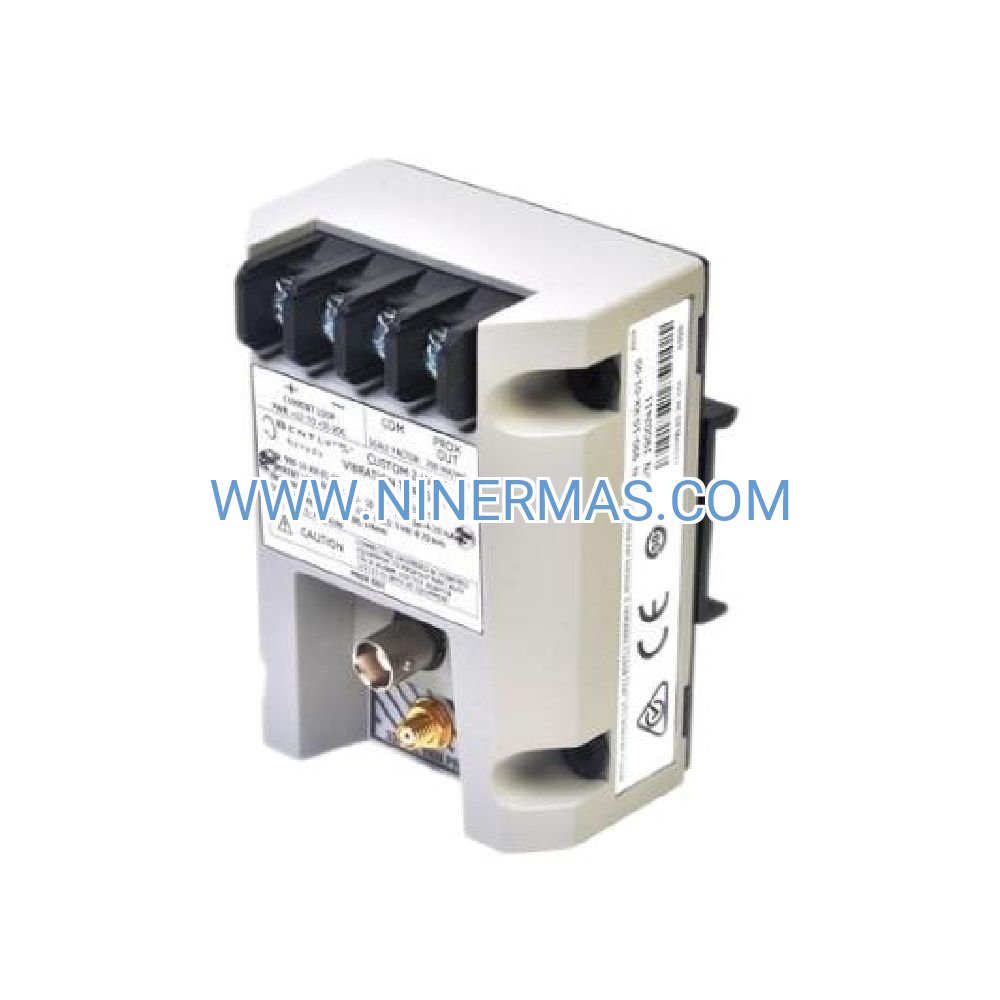
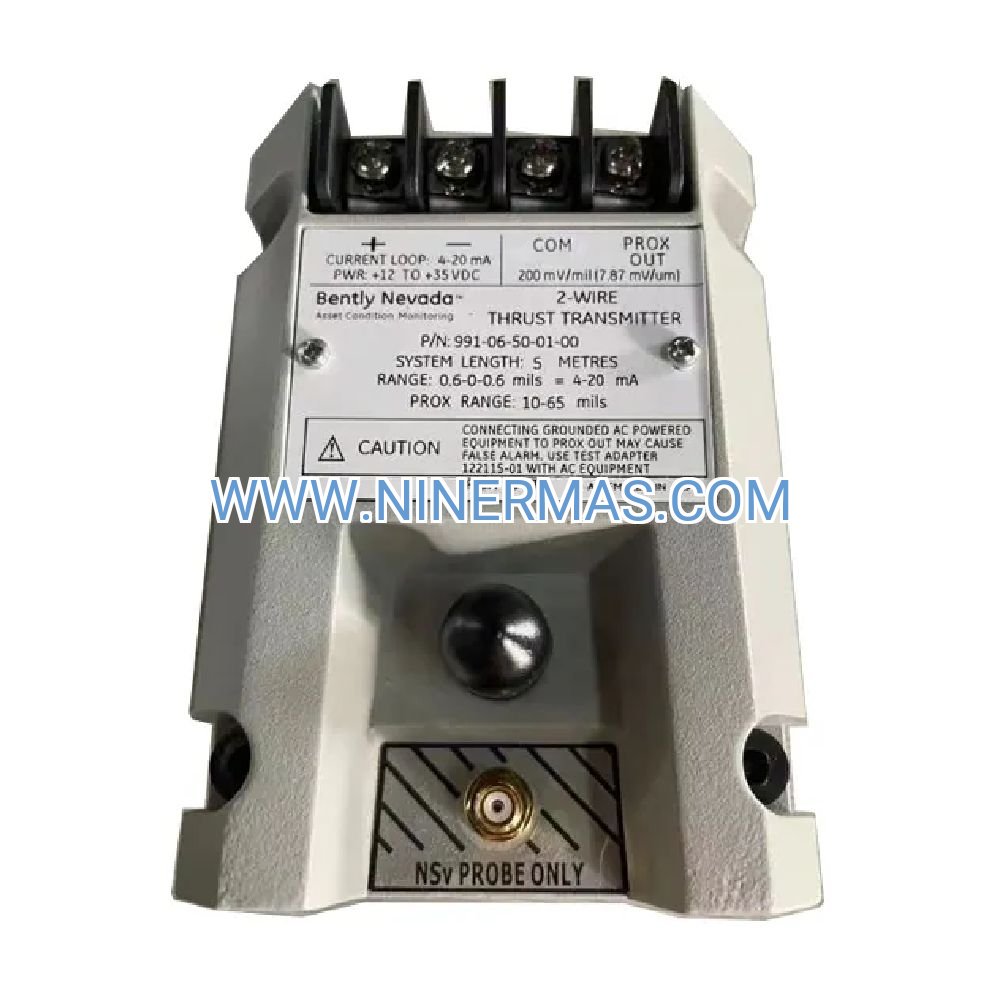
Bently Nevada 3300/01-02-00 Interface Card (Industrial-Grade Signal Conversion System)
The Bently Nevada 3300/01-02-00 (Model 44120-01) is a precision interface card designed for industrial vibration monitoring and machinery protection systems. Through advanced signal conditioning technology, it converts proximity sensor signals into standardized 4-20mA or 0-10V DC outputs, enabling seamless integration with DCS (Distributed Control Systems), PLC, SCADA, and other industrial automation platforms.
Ideal for power generation plants, petrochemical facilities, steel mills, paper manufacturing, and heavy machinery operations, this interface card addresses critical challenges including incompatible signal formats, measurement accuracy degradation, real-time monitoring gaps, and alarm response delays in rotating equipment protection systems.
With standardized design and customizable configuration options, the 3300/01-02-00 delivers exceptional signal fidelity, electromagnetic immunity, long-term stability, and plug-and-play compatibility. It serves design engineers, system integrators, maintenance teams, and plant operators seeking reliable vibration monitoring solutions. Contact our application engineers for selection guidance and technical quotations.
Core Functions & Advantages
Precision Signal Conditioning
Converts eddy current proximity sensor signals (200mV/mil typical) to industry-standard 4-20mA current loop or 0-10V voltage output with ±0.5% linearity, ensuring accurate vibration amplitude representation for critical machinery monitoring.
Universal DCS/PLC Compatibility
Standardized analog outputs interface directly with major control systems (Honeywell, Emerson DeltaV, Siemens PCS7, Rockwell ControlLogix), eliminating custom signal converters and reducing integration complexity by approximately 40%.
Industrial-Grade Reliability
Operates continuously in harsh environments (-30°C to +65°C ambient), features galvanic isolation (1500V DC), and provides transient protection against electrical noise, ensuring 99.9% uptime in demanding industrial applications.
Comprehensive Diagnostic Capabilities
Built-in sensor health monitoring detects open circuits, short circuits, and out-of-range conditions, with dedicated fault relay outputs enabling predictive maintenance and reducing unplanned downtime by up to 35%.
Flexible Configuration Options
Field-adjustable zero and span settings accommodate various sensor types (5mm, 8mm, 11mm probes) and measurement ranges, with DIP switch or potentiometer configuration requiring no specialized programming tools.
Compact DIN-Rail Mounting
Space-efficient design (22.5mm width) fits standard 35mm DIN rails, allowing high-density installations in control cabinets while maintaining proper thermal management and serviceability.
Typical Application Scenarios
This interface card is engineered for applications demanding high signal integrity, continuous operation reliability, and seamless control system integration, particularly in:
Power Generation & Turbomachinery
Monitors steam turbines, gas turbines, and generator bearings in power plants, converting shaft vibration and axial position measurements to control room displays. Supports critical protection systems requiring sub-millisecond response times for emergency shutdowns.
Petrochemical & Refining Operations
Integrates with compressor, pump, and blower monitoring systems in hazardous area classifications (when paired with appropriate barriers). Enables centralized condition monitoring for rotating equipment across process units, reducing manual rounds by 60%.
Steel & Metal Processing
Provides real-time vibration data from rolling mills, continuous casters, and large motor-driven systems to DCS platforms. Facilitates coordinated control strategies linking vibration levels with process parameters like speed and load.
Pulp & Paper Manufacturing
Monitors paper machine dryer sections, refiners, and stock pumps, transmitting vibration trends to plant historians for long-term analysis. Supports predictive maintenance programs by correlating vibration patterns with bearing wear and misalignment.
Marine Propulsion & Offshore Platforms
Converts shaft vibration and thrust position signals from main engines and auxiliary machinery to vessel automation systems. Withstands marine environmental stresses including salt fog, vibration, and temperature cycling.
Technical Parameters & Selection Guide
To facilitate engineering design and procurement, we provide standardized electrical, mechanical, and environmental specifications. Custom configurations are available for specialized project requirements.
Key Specifications:
- Input Signal: Proximity sensor (200mV/mil typical, -1V to -24V DC sensor supply)
- Output Signal: 4-20mA (loop-powered or externally powered) or 0-10V DC (selectable)
- Accuracy: ±0.5% of full scale (including linearity, hysteresis, repeatability)
- Response Time: <10ms (10-90% step response)
- Power Supply: 24V DC ±20% (18-30V DC), <3W consumption
- Isolation: 1500V DC input-to-output, 500V DC output-to-ground
- Operating Temperature: -30°C to +65°C ambient (derated above 55°C)
- Protection Rating: IP20 (for panel mounting), IP65 optional with sealed housing
- Mounting: 35mm DIN rail (EN 50022), 22.5mm width × 90mm height × 114mm depth
- Certifications: CE, UL508, RoHS compliant
- MTBF: >100,000 hours (MIL-HDBK-217F)
Selection Recommendations:
When specifying the 3300/01-02-00 interface card, consider the following project parameters: sensor type and gap voltage range, required output signal format (current vs. voltage), control system input specifications, ambient temperature and enclosure rating, power supply availability, and mounting space constraints. For applications requiring redundant monitoring, dual-channel configurations are recommended. Our application engineers can review your P&ID and instrument datasheets to recommend optimal configurations—please provide sensor model numbers, measurement ranges, and control system I/O specifications.
Extended Functionality & Integration
Multi-Channel Rack Systems
The 3300/01-02-00 integrates into Bently Nevada 3300 series rack-mount chassis, supporting up to 16 channels per rack with common power distribution and backplane communication. Ideal for large turbine-generator sets requiring 20+ vibration measurement points.
Digital Communication Options
When paired with 3300 XL communication gateways, vibration data can be transmitted via Modbus RTU/TCP, HART, or proprietary protocols to asset management software (System 1, AMS Suite), enabling advanced diagnostics and predictive analytics.
Alarm & Relay Outputs
Configurable setpoint relays (SPDT, 5A @ 250V AC) provide local alarm indication and emergency shutdown initiation independent of DCS communication, meeting SIL-rated safety requirements when properly configured.
Calibration & Verification
Factory calibration certificates traceable to NIST standards are available. Field verification can be performed using precision millivolt sources and 4-20mA simulators, with documented procedures provided in the technical manual.
Delivery, Service & Quality Assurance
Lead Time: Standard catalog items ship within 3-5 business days from regional warehouses. Custom-configured units or large project quantities require 2-3 weeks. Expedited processing available for critical outages.
Warranty: 12-month manufacturer warranty covering defects in materials and workmanship. Extended warranty and spare parts programs available for long-term service agreements.
Technical Support: Remote commissioning assistance via phone/email during installation and startup. On-site support and training available in major industrial regions (subject to location and scope). Annual calibration and health check services offered.
Documentation Package: Each unit includes installation manual, wiring diagrams, dimensional drawings, configuration worksheets, and test certificates. CAD models (STEP, DWG) and PLC sample code available upon request for system integrators.
Quality Certifications: Manufactured under ISO 9001:2015 quality management system. Products undergo 100% functional testing, burn-in cycles, and environmental stress screening prior to shipment.
Frequently Asked Questions (FAQ)
Q: How does the Bently Nevada 3300/01-02-00 interface card connect to existing proximity sensor systems?
A: The interface card accepts standard -24V DC powered eddy current proximity sensors via BNC or terminal block connections. Sensor cable length up to 9 meters (30 feet) is supported with proper shielding. Verify sensor output impedance and gap voltage range match card input specifications (typically 200mV/mil sensitivity). Consult wiring diagram in manual for proper shield grounding to minimize EMI.
Q: What is the maximum number of interface cards that can be installed in one monitoring system?
A: In standalone DIN-rail configuration, quantity is limited only by cabinet space and power supply capacity. For rack-mount systems, the 3300 chassis accommodates up to 16 cards per rack, with multiple racks networked for large machinery trains (e.g., 64+ channels for combined-cycle power plants). Each card operates independently, so partial system failures do not affect other channels.
Q: What energy savings or efficiency improvements can be expected with this interface card?
A: While the interface card itself is a monitoring component (not a control actuator), it enables condition-based maintenance strategies that reduce energy waste. By detecting bearing wear, misalignment, and imbalance early, operators can schedule repairs during planned outages rather than running degraded equipment at reduced efficiency. Case studies show 15-25% reduction in maintenance-related downtime and associated energy losses in continuous process industries.
Q: What are the environmental and installation requirements for the 3300/01-02-00 interface card?
A: Standard units are rated IP20 for clean control room environments with -30°C to +65°C ambient temperature. Install in ventilated enclosures away from direct heat sources; derate above 55°C. For harsh environments (high humidity, dust, corrosive atmospheres), specify IP65-rated sealed housing or install in NEMA 4X/IP66 junction boxes. Maintain 50mm clearance above/below for convection cooling. Avoid mounting near high-current conductors or VFD output cables to prevent EMI coupling.
Q: Does the interface card support remote monitoring and data acquisition protocols?
A: The 3300/01-02-00 provides analog 4-20mA/0-10V outputs compatible with any DCS/PLC/SCADA analog input module. For digital communication (Modbus, HART, OPC), pair with Bently Nevada 3300 XL communication gateways or third-party analog-to-digital converters. Direct Ethernet connectivity requires upgrading to 3500 series rack systems with embedded web servers and API access. Consult system architecture diagram for integration options.
Q: Can I use this interface card with non-Bently Nevada proximity sensors?
A: Yes, the 3300/01-02-00 is compatible with industry-standard 8mm eddy current proximity sensors from manufacturers like SKF, IFM, Metrix, and Sensonics, provided they operate on -18V to -24V DC supply and produce 200mV/mil or 7.87V/mm output sensitivity. Verify sensor frequency response (typically DC to 10kHz) meets your application requirements. Non-standard sensors may require field calibration adjustments using zero/span potentiometers.
Request Selection Support & Quotation
To receive a detailed selection proposal, technical specification sheet, or project quotation, please provide the following information to our application engineering team:
- Project name and application description (e.g., steam turbine vibration monitoring upgrade)
- Number of measurement points and sensor types (model numbers if available)
- Required output signal format (4-20mA or 0-10V) and control system make/model
- Environmental conditions (ambient temperature range, enclosure rating, hazardous area classification)
- Power supply specifications (voltage, available capacity)
- Delivery timeline and installation support requirements
Our engineers will provide one-on-one selection assistance, application notes, and integration guidance within 24 hours.
© 2026 NINERMAS COMPANY LIMITED. All rights reserved. Original Source: https://ninermas.com Contact: sale@ninermas.com | +0086 187 5021 5667

Contact Info
-
Address:22 / F, South Wo Hang building, 148 Wing Lok Street, Sheung Wan, Western District, Hong Kong
-
Phone:+8618750215667
-
Email: