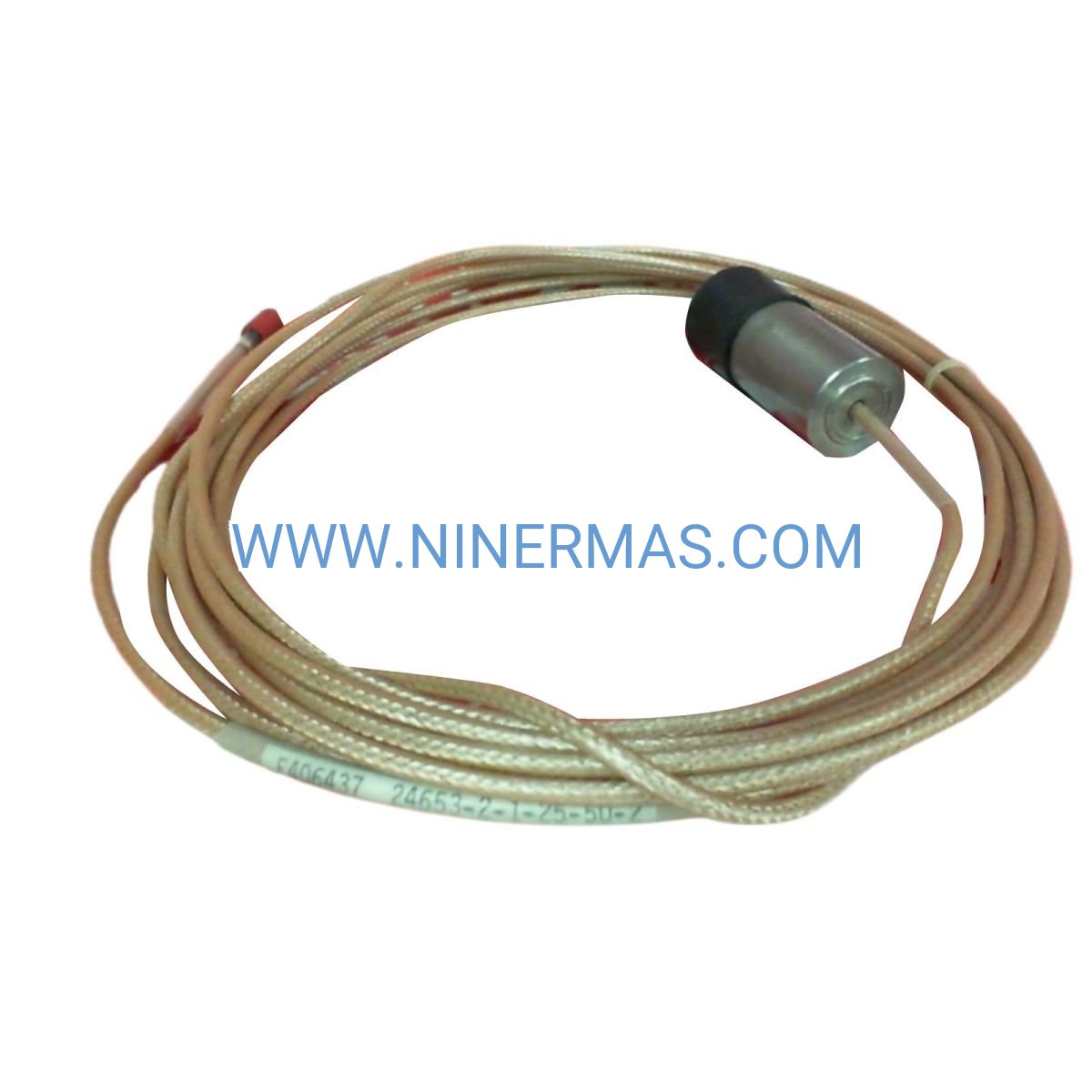
Bently Nevada Proximity Sensor System | 8mm Eddy Current Probe | Industrial Vibration Monitoring Solution
Description
Bently Nevada Proximity Sensor System (Industrial Vibration Monitoring Solution)
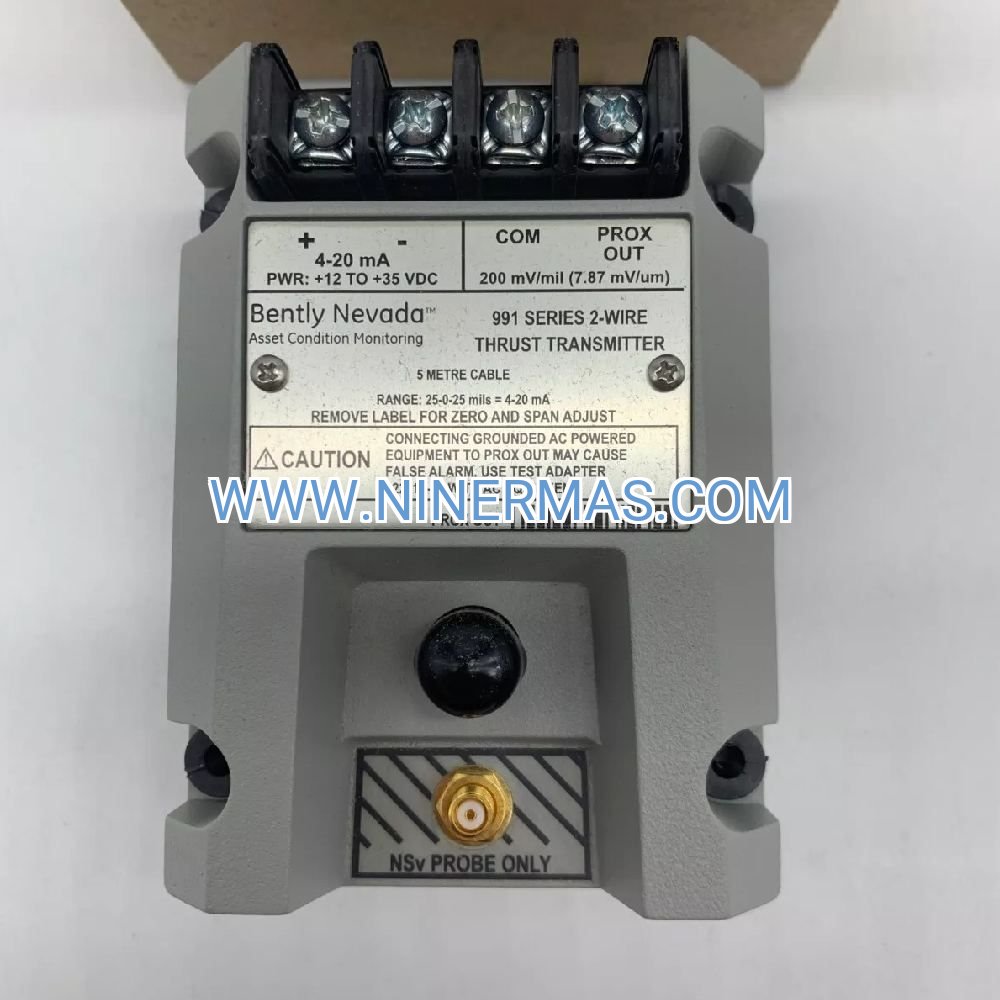
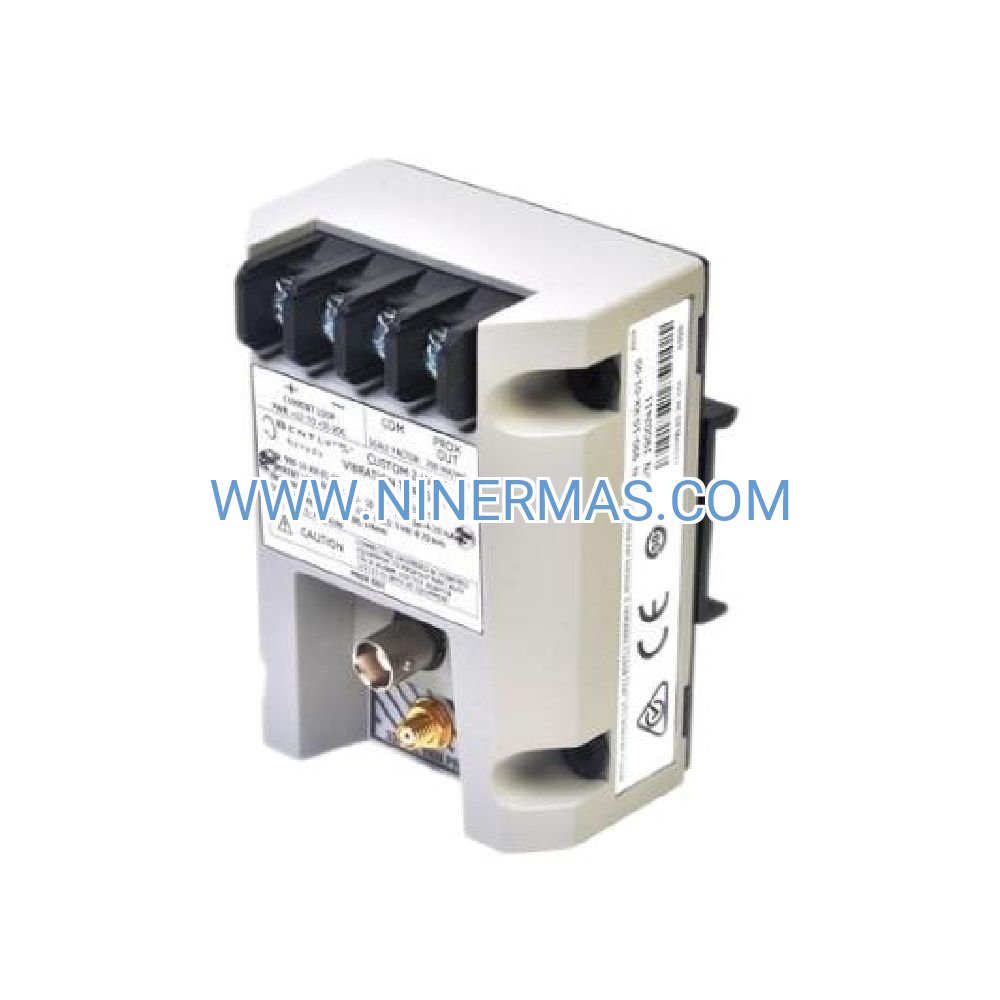
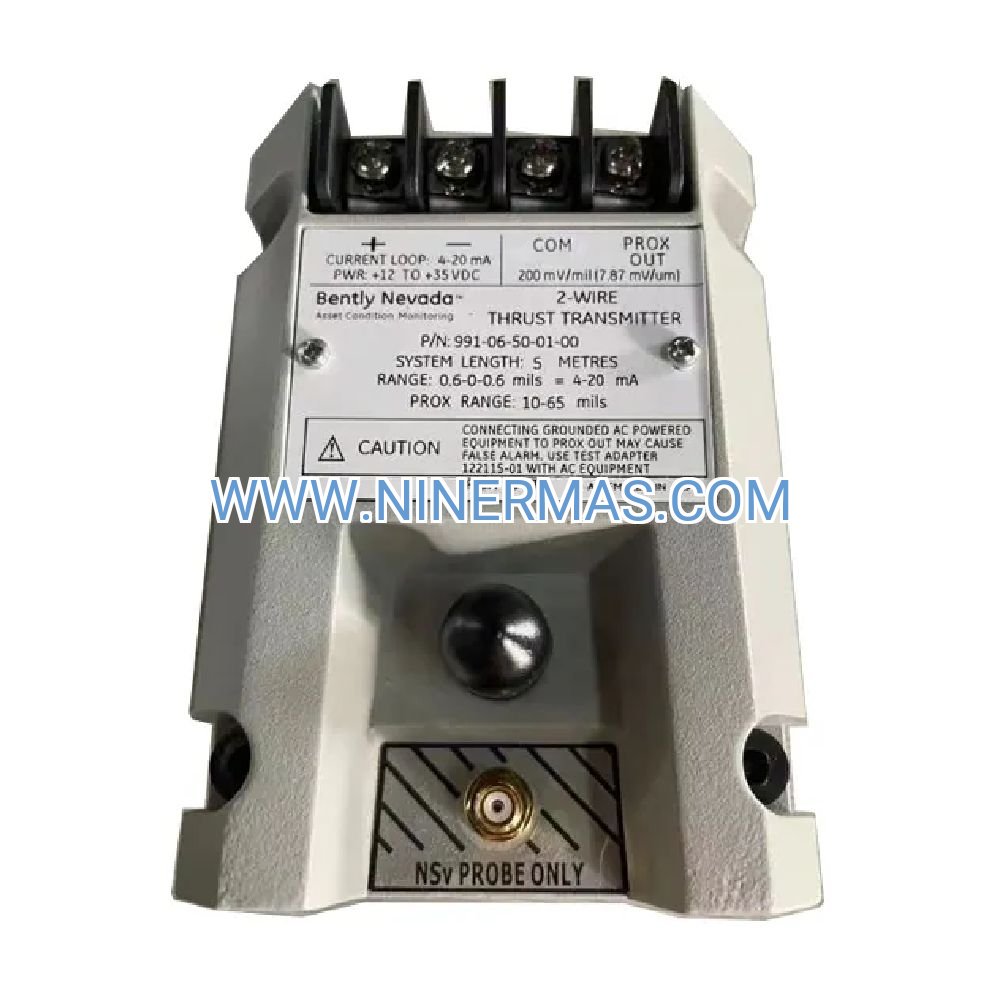
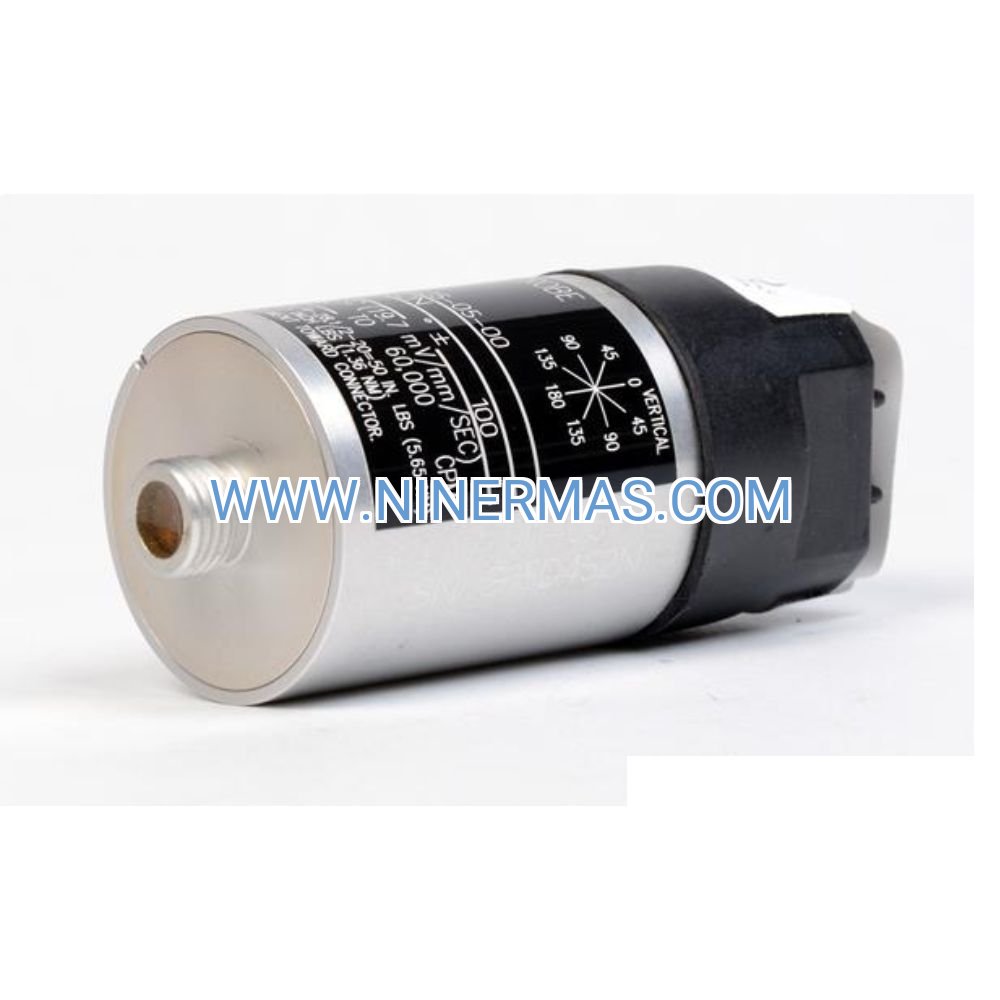
The Bently Nevada 24653-2-1-25-50-2 proximity sensor system is a precision industrial monitoring device designed for real-time vibration and shaft displacement measurement in rotating machinery. Utilizing advanced eddy current sensing technology with an 8mm probe and 25-foot armored extension cable, this system delivers accurate, non-contact monitoring to ensure operational safety and prevent catastrophic equipment failures.
Engineered for demanding industrial environments including power generation plants, petrochemical facilities, compressor stations, and turbomachinery applications, this sensor addresses critical challenges such as bearing wear detection, rotor eccentricity monitoring, shaft vibration analysis, and early fault diagnosis. It enables condition-based maintenance strategies that reduce unplanned downtime and extend asset lifespan.
Through field-proven design and industry-standard compatibility, this proximity sensor system offers reliable performance, straightforward installation, robust environmental protection, and seamless integration with existing monitoring infrastructure. Ideal for design engineers, maintenance teams, system integrators, and plant operators seeking dependable vibration monitoring solutions. Contact our application engineers for customized selection guidance and technical specifications.
Core Features & Advantages
High-Precision Eddy Current Sensing
The 8mm probe utilizes non-contact eddy current technology to measure shaft displacement with exceptional accuracy, eliminating mechanical wear and enabling continuous monitoring without interference to rotating components.
Extended Measurement Range
With a 0-50 mils (0-1.27mm) linear measurement range and DC to 10kHz frequency response, the system captures both static displacement and dynamic vibration signals across a wide spectrum of machinery operating conditions.
Rugged Armored Cable Construction
The 25-foot (7.6m) armored extension cable provides superior mechanical protection and electromagnetic shielding, ensuring signal integrity in harsh industrial environments with high electrical noise, temperature extremes, and physical hazards.
Universal System Compatibility
Designed to integrate seamlessly with Bently Nevada 3300 series monitors and other industry-standard proximitor systems, enabling straightforward retrofits and expansions of existing vibration monitoring networks.
Comprehensive Environmental Protection
Built to withstand industrial operating conditions including temperature fluctuations, moisture exposure, chemical contamination, and mechanical shock, ensuring long-term reliability with minimal maintenance requirements.
Simplified Installation & Commissioning
Factory-calibrated probe and cable assembly reduces installation time and eliminates field calibration complexity. Clear documentation and standardized mounting hardware facilitate rapid deployment by maintenance personnel.
Typical Application Scenarios
This proximity sensor system is engineered for applications demanding continuous vibration monitoring, precise shaft position measurement, and early fault detection, particularly in:
Steam & Gas Turbine Monitoring
Monitors shaft radial vibration and axial position in power generation turbines, detecting bearing degradation, rotor imbalance, and thermal growth to prevent catastrophic failures and optimize maintenance intervals.
Centrifugal & Axial Compressor Protection
Provides real-time shaft displacement monitoring in oil & gas compression systems, petrochemical process compressors, and air separation units, enabling surge detection and rotor stability analysis.
Large Motor & Generator Surveillance
Tracks rotor eccentricity and bearing clearance changes in high-value rotating electrical machines, supporting predictive maintenance programs and reducing unplanned outages in critical infrastructure.
Pump & Blower Condition Monitoring
Measures shaft vibration in industrial pumps, induced draft fans, and process blowers, identifying cavitation, misalignment, and mechanical looseness before performance degradation occurs.
Industrial Gearbox & Coupling Analysis
Detects torsional vibration and shaft displacement anomalies in high-speed gearboxes and flexible couplings used in steel mills, paper machines, and material handling systems.
Technical Parameters & Selection Guide
To facilitate engineering design and equipment selection, we provide standardized technical specifications. Custom configurations are available to meet specific project requirements.
Key Technical Specifications:
- Probe Diameter: 8mm (5/16 inch)
- Measurement Range: 0-50 mils (0-1.27mm) linear range
- Frequency Response: DC to 10kHz (-3dB)
- Cable Length: 25 feet (7.6 meters) armored extension
- Cable Type: Low-noise coaxial with stainless steel armor
- Operating Temperature: -40°C to +125°C (probe), -40°C to +85°C (cable)
- Target Material: Ferrous metals (steel, iron alloys)
- Mounting Thread: Standard 5/8-18 UNF thread
- System Compatibility: Bently Nevada 3300 series proximitor systems
- Environmental Rating: IP65 equivalent (when properly installed)
Selection Recommendations:
When selecting a proximity sensor system, consider the following critical parameters: shaft diameter and material composition, required measurement range and resolution, operating speed and vibration frequency spectrum, ambient temperature and environmental conditions, available mounting space and probe installation geometry, and compatibility with existing monitoring infrastructure. For application-specific guidance, please provide your machinery specifications, operating parameters, and monitoring objectives. Our application engineers will recommend the optimal sensor configuration and mounting arrangement.
Extended Capabilities
Multi-Channel Integration: Supports installation of multiple probes (typically X-Y orthogonal pairs plus axial position) for comprehensive rotor behavior analysis and three-dimensional vibration vector monitoring.
Remote Monitoring Compatibility: Sensor output integrates with distributed control systems (DCS), programmable logic controllers (PLC), and cloud-based condition monitoring platforms via standard 4-20mA or voltage signal interfaces.
Advanced Diagnostics Support: Enables sophisticated analysis techniques including orbit plots, Bode diagrams, polar plots, waterfall spectra, and shaft centerline position tracking for root cause failure analysis.
Delivery, Service & Quality Assurance
Lead Time: Standard catalog items typically ship within 3-5 business days; custom configurations require 2-3 weeks for engineering and production.
Warranty Coverage: 12-month manufacturer warranty covering material defects and workmanship under normal operating conditions.
Technical Support: Comprehensive application engineering assistance including sensor selection, installation guidance, calibration verification, and troubleshooting support via phone, email, and remote consultation.
Documentation Package: Each system includes detailed product datasheet, installation instructions, wiring diagrams, calibration certificates, and dimensional drawings to facilitate proper installation and commissioning.
Quality Certifications: Manufactured under ISO 9001 quality management system with full traceability and compliance documentation available upon request.
Frequently Asked Questions (FAQ)
Q: How do I integrate this Bently Nevada proximity sensor system with my existing vibration monitoring infrastructure?
A: This sensor is designed for direct compatibility with Bently Nevada 3300 series proximitor systems and other industry-standard monitors accepting -24VDC powered eddy current probes. Connection requires proper cable termination to the proximitor input, verification of probe gap voltage (typically 7-10VDC at operating clearance), and system calibration using the provided sensitivity data. Our engineers can provide detailed integration schematics and commissioning procedures specific to your monitoring platform.
Q: What is the optimal installation clearance (gap) between the 8mm probe and the shaft surface?
A: The recommended operating gap is typically 40-60 mils (1.0-1.5mm) from the shaft surface, which positions the sensor in the linear region of its measurement range. This allows monitoring of both inward and outward shaft displacement. Exact gap setting depends on expected vibration amplitude and shaft runout characteristics. Installation should follow API 670 guidelines for machinery protection systems.
Q: Can this proximity sensor system achieve energy savings or efficiency improvements?
A: While the sensor itself does not directly reduce energy consumption, it enables condition-based maintenance strategies that prevent efficiency-degrading faults such as bearing wear, rotor imbalance, and misalignment. Early detection of these issues can maintain optimal machinery efficiency and prevent energy losses associated with degraded equipment performance, potentially reducing operational costs by 15-30% compared to reactive maintenance approaches.
Q: What environmental protection does the armored cable provide, and what is the IP rating?
A: The stainless steel armored cable construction provides excellent mechanical protection against physical damage, crush resistance, and electromagnetic interference shielding. When properly installed with appropriate cable glands and sealing, the system achieves IP65 equivalent protection against dust ingress and water jets. The probe itself is designed for continuous exposure to industrial environments including oil mist, coolant spray, and temperature cycling.
Q: Does this sensor support remote monitoring and data acquisition for Industry 4.0 applications?
A: Yes, when connected to compatible proximitor monitors or vibration transmitters, the sensor output can be interfaced with modern SCADA systems, DCS platforms, and IIoT gateways. Many Bently Nevada monitors offer Modbus, OPC-UA, or 4-20mA outputs that enable integration with cloud-based predictive maintenance platforms, mobile monitoring applications, and enterprise asset management systems for real-time condition tracking and automated alert generation.
Q: What is the expected service life of the proximity sensor probe and cable assembly?
A: Under normal industrial operating conditions with proper installation and environmental protection, the proximity sensor system typically provides 10-15 years of maintenance-free operation. The non-contact sensing principle eliminates mechanical wear, and the robust construction resists environmental degradation. Periodic inspection of cable integrity and connector condition is recommended as part of routine plant maintenance procedures.
Request Technical Support & Custom Solutions
For detailed application engineering assistance, custom sensor configurations, or project-specific quotations, please provide the following information: project name and application description, machinery type and operating parameters (speed, temperature, environment), required measurement range and frequency response, number of monitoring points and probe locations, existing monitoring system details and interface requirements, installation constraints and mounting specifications.
Our application engineers will provide comprehensive selection guidance, dimensional drawings, wiring schematics, and competitive pricing within 24-48 hours.
© 2026 NINERMAS COMPANY LIMITED. All rights reserved.
Original Source: https://ninermas.com
Contact: sale@ninermas.com | +0086 187 5021 5667

Contact Info
-
Address:22 / F, South Wo Hang building, 148 Wing Lok Street, Sheung Wan, Western District, Hong Kong
-
Phone:+8618750215667
-
Email: