


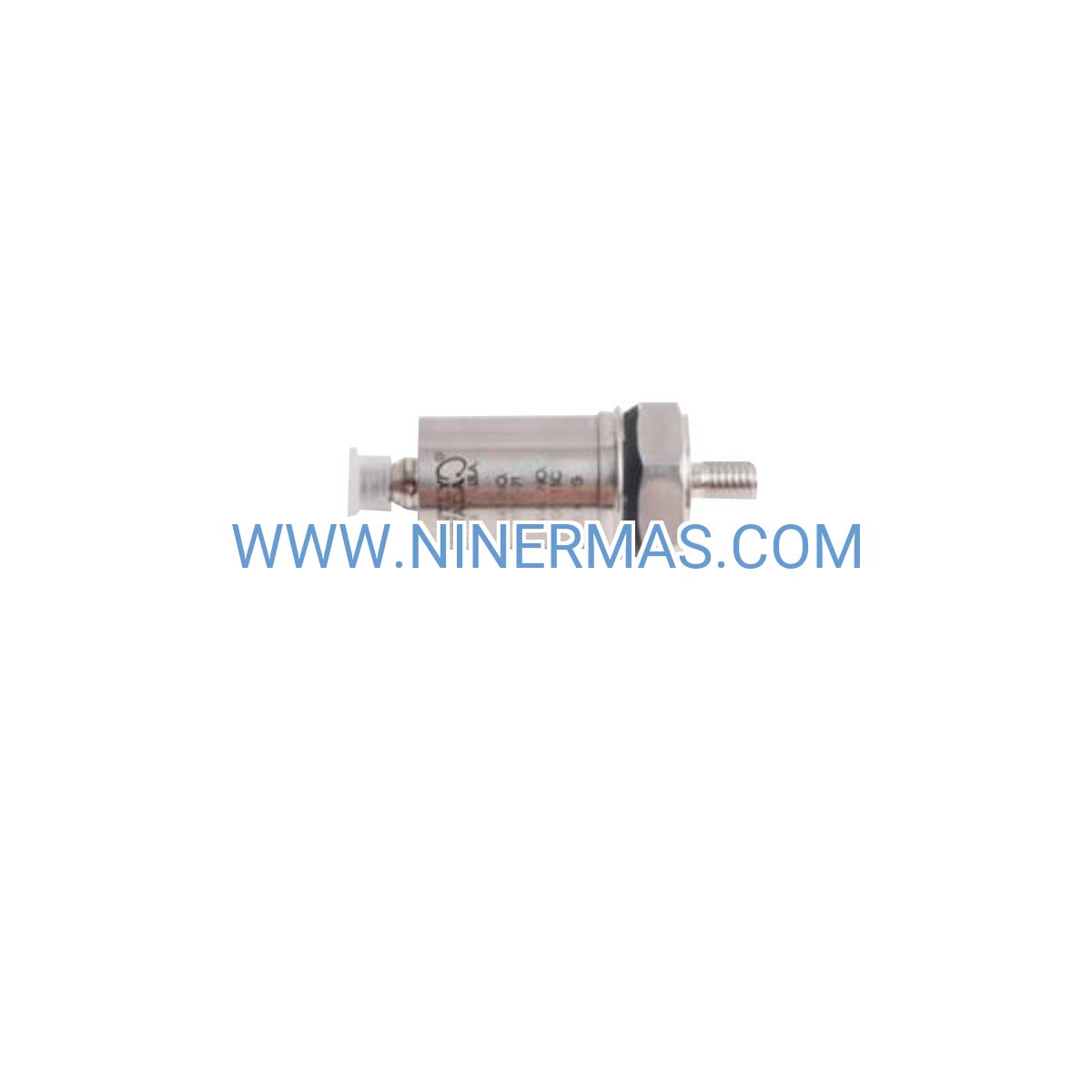
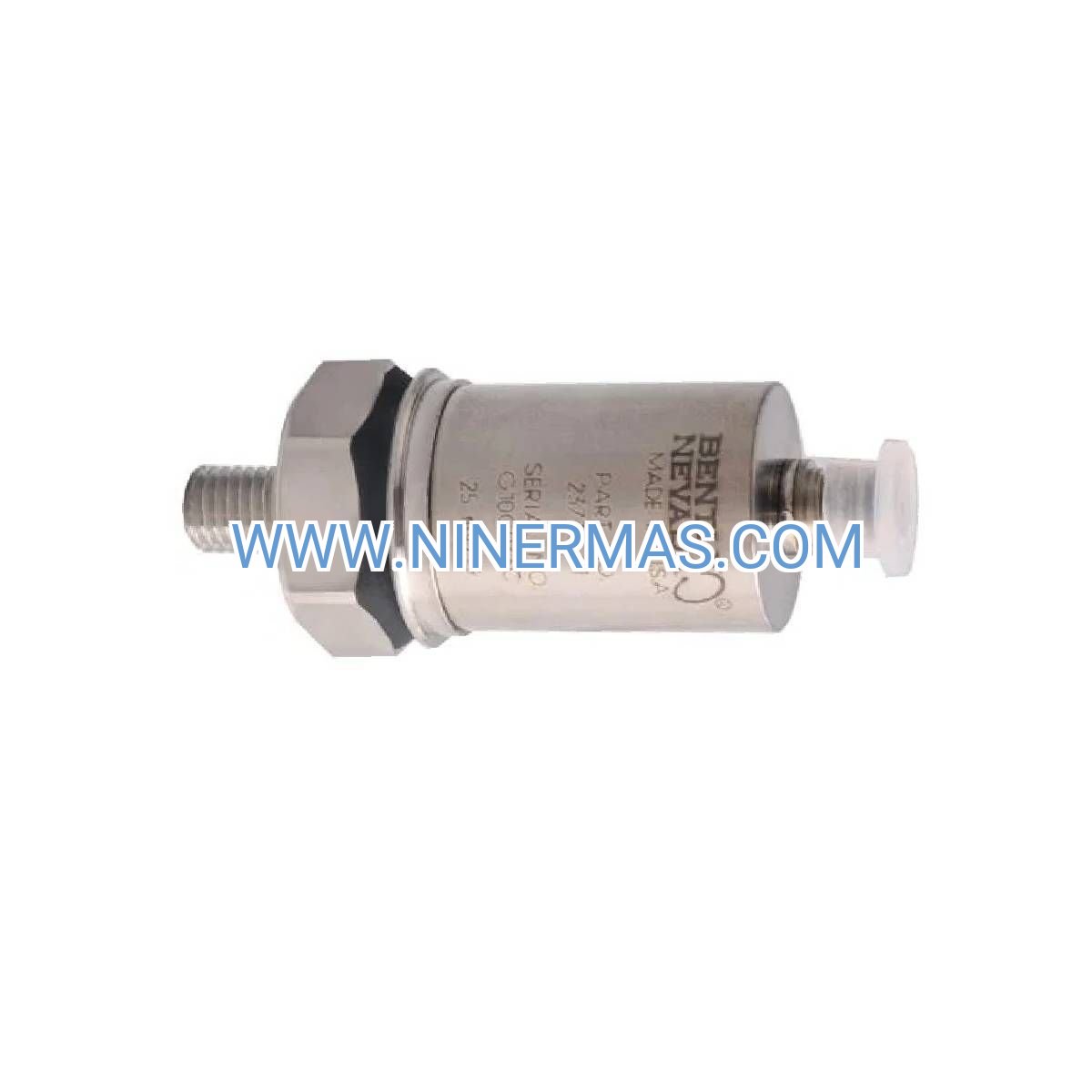
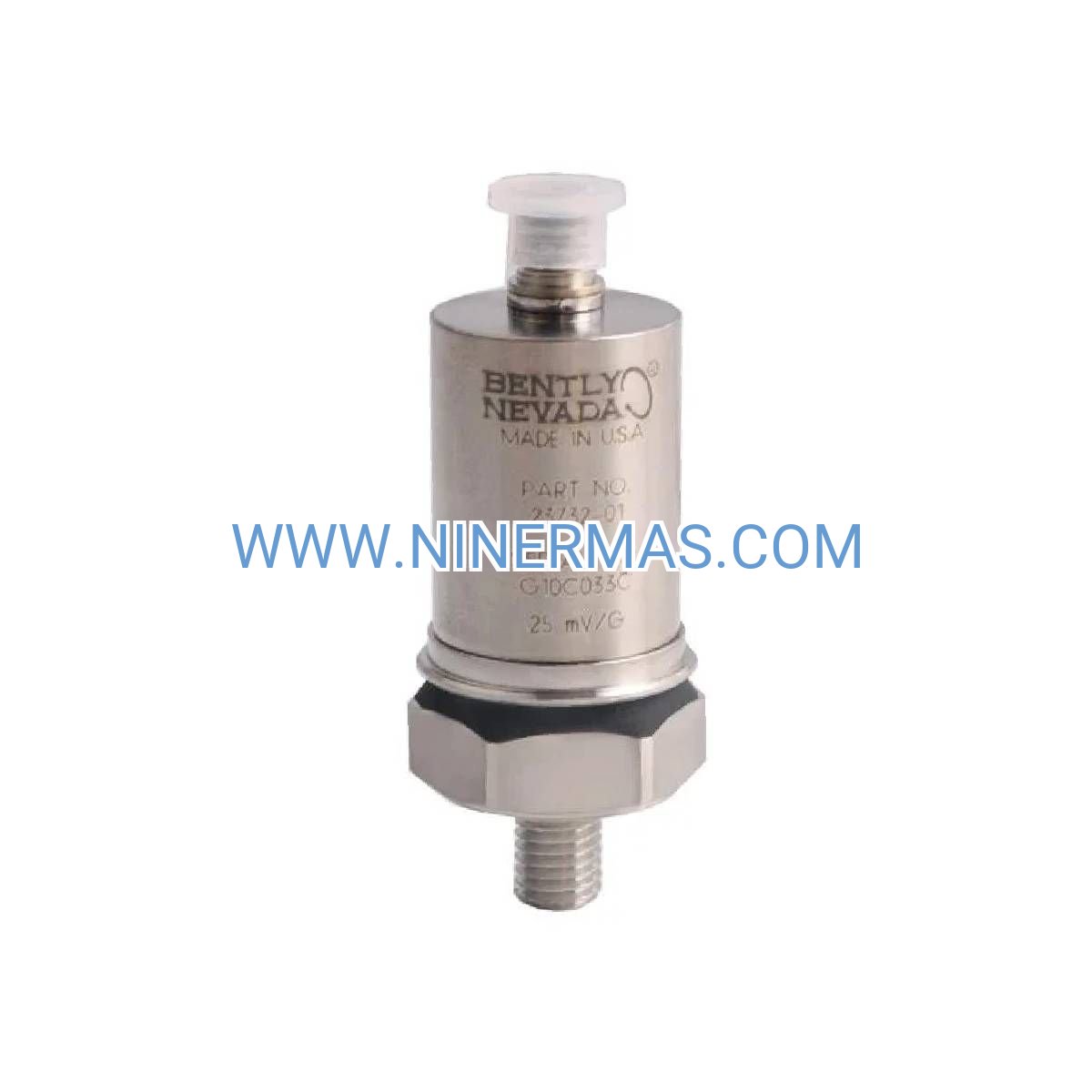
Description
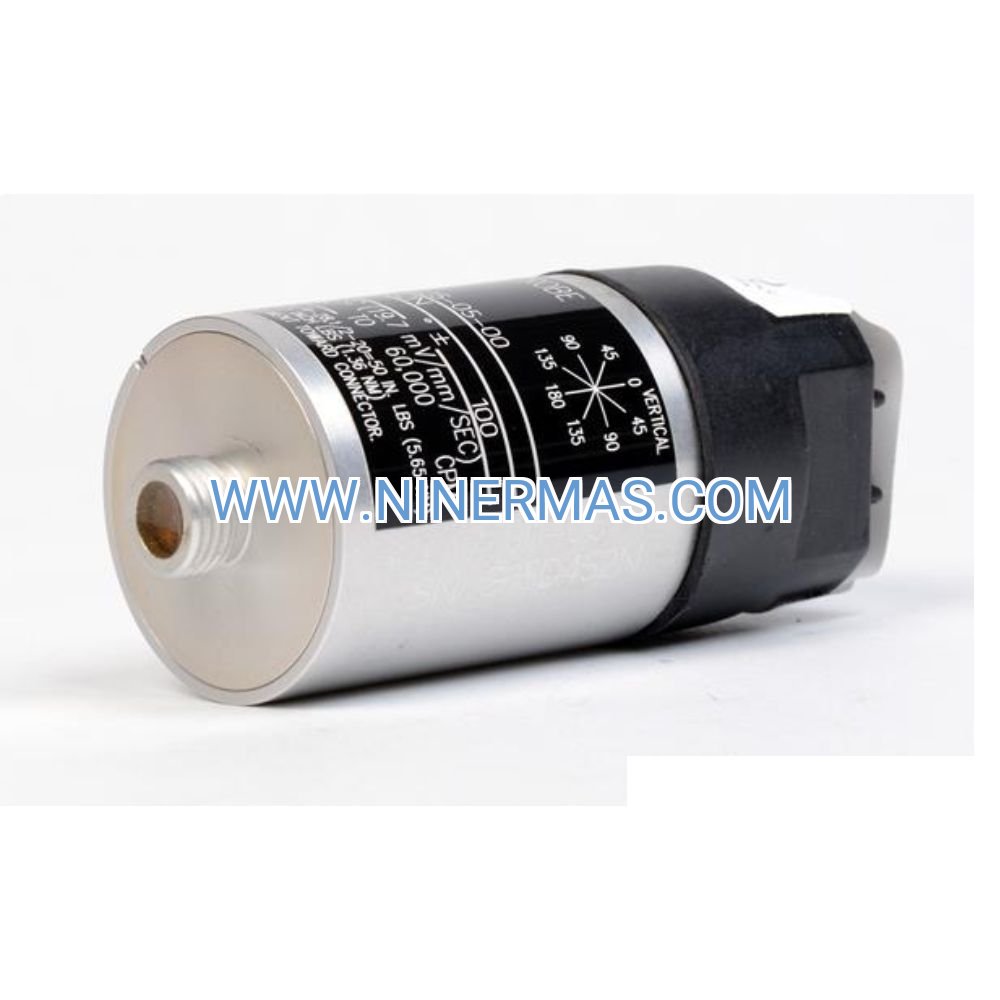
23732-01 Precision Accelerometer (Industrial-Grade Vibration Sensor)
The 23732-01 accelerometer represents a proven solution for high-frequency vibration analysis in mission-critical rotating machinery. Engineered with hermetically sealed stainless steel construction and IEPE technology, this sensor enables predictive maintenance teams to detect bearing wear, gear mesh anomalies, and mechanical looseness before catastrophic failures occur. Designed for turbomachinery, centrifugal pumps, and high-speed compressors, the 23732-01 delivers consistent performance across temperature extremes from -54°C to +121°C.
Maintenance engineers and reliability professionals rely on this accelerometer for its exceptional signal-to-noise ratio and extended frequency response up to 10 kHz. The sensor integrates seamlessly with condition monitoring systems, portable analyzers, and permanent protection installations. With 100 mV/g sensitivity and ±50 g measurement range, the 23732-01 captures both steady-state vibration signatures and transient shock events that indicate developing faults.
Whether you're implementing a new vibration monitoring program or upgrading legacy sensors, the 23732-01 provides the accuracy and durability required for industrial environments. Its standardized 1/4-28 UNF mounting and 2-pin MIL-C-5015 connector ensure straightforward installation and compatibility with existing infrastructure.
Core Features & Benefits
✓ Extended Frequency Response (2 Hz - 10 kHz): Captures low-frequency imbalance through high-frequency bearing defect signatures in a single sensor, eliminating the need for multiple transducers and reducing installation costs by up to 40%.
✓ Hermetically Sealed Construction: Stainless steel housing withstands moisture, oil mist, and chemical exposure in refineries, pulp mills, and offshore platforms, delivering 10+ year service life in harsh industrial environments.
✓ IEPE Output Technology: Industry-standard constant current interface enables cable runs up to 300 meters without signal degradation, simplifying installations in large facilities and reducing wiring infrastructure expenses.
✓ Wide Temperature Range (-54°C to +121°C): Maintains calibration accuracy across extreme thermal conditions found in steam turbines, cryogenic pumps, and desert climate installations without requiring temperature compensation.
✓ High Resonant Frequency (≥25 kHz): Ensures flat frequency response throughout the measurement range, preventing resonance-induced measurement errors that compromise diagnostic accuracy in high-speed machinery analysis.
✓ Compact Lightweight Design (60 grams): Minimizes mass loading effects on small bearings and lightweight structures, enabling accurate measurements on equipment where heavier sensors would alter vibration characteristics.
Typical Application Scenarios
→ Steam Turbine Generator Protection: Power generation facilities deploy the 23732-01 on turbine bearing housings to monitor blade pass frequencies, thrust bearing condition, and rotor balance. The sensor's extended frequency range captures both 1X running speed vibration and high-frequency bearing defect signatures, enabling early detection of thrust bearing wear that could lead to catastrophic blade rubs. Integration with automated protection systems prevents unplanned outages that cost $500,000+ per day in lost generation capacity.
→ Centrifugal Compressor Monitoring: Petrochemical plants install these accelerometers on multi-stage compressor casings to detect impeller rub, seal degradation, and gear mesh wear. The 100 mV/g sensitivity resolves subtle changes in vibration amplitude that indicate developing problems 4-6 weeks before failure, allowing scheduled maintenance during planned turnarounds rather than emergency shutdowns that disrupt production schedules.
→ Critical Process Pump Surveillance: Refineries and chemical plants mount the 23732-01 on pump bearing caps to track cavitation, mechanical seal leakage, and bearing deterioration. The sensor's resistance to oil contamination and temperature extremes ensures reliable operation in environments where standard accelerometers fail within months, reducing sensor replacement costs and maintenance labor.
→ High-Speed Gearbox Diagnostics: Wind turbines and industrial gearboxes benefit from the 23732-01's ability to resolve individual gear tooth mesh frequencies and bearing defect patterns. Analysts use the high-frequency data to perform envelope analysis and spectral kurtosis calculations that identify localized bearing spalls and gear tooth cracks at early stages, extending gearbox life by 30-50% through timely interventions.
→ Paper Machine Roll Monitoring: Pulp and paper mills install these sensors on dryer cans, calendar rolls, and press sections where moisture and temperature extremes challenge sensor reliability. The hermetically sealed design survives steam leaks and wash-down procedures while providing continuous vibration data that prevents web breaks and quality defects caused by bearing failures.
Technical Parameters & Selection Guide
| Specification | Value | Application Consideration |
|---|---|---|
| Sensitivity | 100 mV/g (±10%) | Optimal for general machinery; use 500 mV/g for low-vibration equipment |
| Frequency Range | 2 Hz to 10 kHz (±3 dB) | Covers imbalance (1X) through bearing defects (5-10 kHz) |
| Measurement Range | ±50 g peak | Suitable for most rotating equipment; use ±100 g for impact applications |
| Operating Temperature | -54°C to +121°C | Standard range; specify high-temp version for >121°C applications |
| Electrical Interface | 2-pin MIL-C-5015 | Military-grade connector; requires compatible mating cable |
| Mounting Thread | 1/4-28 UNF stud | Standard industrial mount; adapters available for M6 or M8 threads |
| Excitation Requirement | 18-30 VDC constant current | Verify monitoring system provides IEPE/ICP power |
| Housing Material | Stainless steel (hermetic) | Corrosion-resistant; suitable for washdown environments |
| Weight | 60 grams | Mass loading <10% for structures >600 grams |
Selection Criteria: Choose the 23732-01 when your application requires general-purpose vibration monitoring on rotating equipment operating between 600-60,000 RPM. The 100 mV/g sensitivity provides adequate signal strength for most industrial machinery without overloading analyzer inputs during high-vibration events. For ultra-low vibration equipment (precision spindles, small motors), consider higher sensitivity alternatives. For shock and impact monitoring (forging presses, crushers), specify sensors with ±100 g or higher measurement ranges.
Installation Best Practices: Mount the sensor directly to machined bearing caps or structural steel using 25-30 lb-in torque. Avoid painted surfaces, which reduce high-frequency transmission by 40-60%. For temporary measurements, magnetic bases are acceptable below 2 kHz; permanent installations require stud mounting for full frequency response. Maintain cable separation from power conductors to prevent electromagnetic interference.
Extended Functions
Multi-Channel Integration: The 23732-01 pairs with 4-channel, 8-channel, and 16-channel data acquisition systems for synchronized multi-point measurements. This enables operating deflection shape analysis, cross-channel phase measurements, and transfer function calculations used in modal analysis and balancing procedures. Systems supporting simultaneous sampling rates of 25.6 kHz or higher capture the sensor's full 10 kHz bandwidth without aliasing.
Wireless Retrofit Capability: When combined with battery-powered wireless transmitters, the 23732-01 enables vibration monitoring on rotating equipment in hazardous areas or locations where cable installation is cost-prohibitive. Wireless nodes with IEPE input channels support the sensor's constant current requirements while transmitting data via industrial protocols including WirelessHART, ISA100, and private mesh networks.
Advanced Diagnostic Algorithms: Modern condition monitoring platforms apply machine learning algorithms to 23732-01 data streams, automatically detecting anomalies that deviate from baseline vibration signatures. Envelope analysis, cepstrum editing, and time-synchronous averaging extract bearing defect frequencies, gear mesh harmonics, and modulation patterns that indicate developing faults weeks before traditional threshold alarms trigger.
API 670 Compliance: The 23732-01 meets requirements for machinery protection systems specified in API Standard 670 (Machinery Protection Systems) when installed with compatible monitors and configured per manufacturer guidelines. This certification is mandatory for turbomachinery in petroleum, chemical, and gas industries where equipment failures pose safety and environmental risks.
Delivery & Service
Lead Time: Stock items ship within 3-5 business days via express courier with tracking. Custom configurations (special cables, mounting adapters, calibration certificates) require 2-3 weeks for factory preparation. Expedited processing available for critical outage support with 24-48 hour delivery to major industrial centers.
Warranty Coverage: All 23732-01 accelerometers include a comprehensive 12-month warranty covering manufacturing defects, material failures, and calibration drift exceeding ±10% of nominal sensitivity. Warranty service includes free replacement units shipped within 48 hours to minimize downtime during critical monitoring applications.
Technical Support: Our application engineering team provides pre-sale consultation on sensor selection, mounting methods, and system integration. Post-sale support includes installation guidance, troubleshooting assistance, and vibration analysis training. Remote support available via phone and video conference during equipment commissioning and startup phases.
Documentation Package: Each sensor ships with calibration certificate traceable to NIST standards, dimensional drawings, electrical specifications, and mounting instructions. Digital resources include 3D CAD models (STEP/IGES formats), installation videos, and integration guides for common monitoring platforms including SKF @ptitude, Emerson AMS, and Rockwell FactoryTalk.
FAQ
What mounting torque specification ensures optimal high-frequency response for the 23732-01 accelerometer?
Apply 25-30 lb-in (2.8-3.4 N·m) to the 1/4-28 UNF stud using a calibrated torque wrench. Under-torquing reduces high-frequency transmission, while over-torquing risks thread damage. Prepare mounting surfaces to 63 micro-inch finish or better, removing all paint, rust, and coatings that act as mechanical filters attenuating frequencies above 2 kHz.
How does cable length affect measurement accuracy with IEPE accelerometers like the 23732-01?
Cable capacitance limits maximum length based on monitoring system input impedance. For systems with 1 MΩ input impedance, cable runs up to 300 meters (1000 feet) introduce <1% amplitude error. Low-noise coaxial cable (30 pF/ft capacitance) is recommended. Avoid cable routing near VFDs, welders, and high-current conductors that induce electromagnetic interference exceeding the sensor's 10 mV noise floor.
Can the 23732-01 replace proximity probes for turbomachinery vibration monitoring applications?
Accelerometers and proximity probes serve complementary roles in comprehensive monitoring strategies. The 23732-01 excels at detecting high-frequency bearing defects, gear mesh issues, and blade pass frequencies (500 Hz - 10 kHz). Proximity probes measure low-frequency shaft displacement, rotor eccentricity, and thrust position (0-500 Hz). API 670 protection systems typically specify both sensor types for complete coverage of machinery failure modes.
What signal conditioning requirements must monitoring systems meet for proper 23732-01 operation?
The sensor requires 18-30 VDC constant current excitation (2-10 mA typical) provided by IEPE/ICP-compatible inputs. Verify your data acquisition system, analyzer, or monitor specifies "IEPE," "ICP," or "constant current" input mode. Voltage-mode inputs and charge amplifiers are incompatible. AC coupling with 0.5-2 Hz high-pass filters removes DC bias while preserving low-frequency vibration signals.
How frequently should industrial accelerometers undergo recalibration to maintain measurement accuracy?
ISO 10816 and ISO 20816 standards recommend annual calibration verification for sensors in critical protection applications. The 23732-01 typically maintains ±10% sensitivity tolerance for 3-5 years under normal operating conditions. Recalibrate immediately after drop events, exposure to temperatures exceeding +121°C, or when trending data shows unexplained baseline shifts. NIST-traceable calibration services available with 5-10 business day turnaround.
What environmental factors most commonly cause premature accelerometer failure in industrial installations?
Moisture ingress through damaged connectors accounts for 40% of field failures. Inspect cable connections quarterly and apply dielectric grease to prevent corrosion. Mechanical shock from improper handling causes 25% of failures—always transport sensors in protective cases. Temperature excursions beyond rated limits degrade piezoelectric elements; verify surface temperatures before installation. Cable flexing near the connector stresses internal wiring; use strain relief and avoid sharp bend radii <1 inch.
Ready to Enhance Your Predictive Maintenance Program?
Contact our vibration monitoring specialists to discuss your specific application requirements, receive technical recommendations on sensor placement and system configuration, or request a detailed quotation. Our team supports installations worldwide with application engineering, commissioning assistance, and ongoing technical support to maximize your equipment reliability and uptime performance.
© 2026 NINERMAS COMPANY LIMITED. All rights reserved.
Original Source: https://ninermas.com
Contact: sale@ninermas.com | +0086 187 5021 5667
PDF Specification
Download PDF file here:
Click to Download PDF

Contact Info
-
Address:22 / F, South Wo Hang building, 148 Wing Lok Street, Sheung Wan, Western District, Hong Kong
-
Phone:+8618750215667
-
Email:
