Description
Industrial-Grade Standalone Vibration Monitor (Dual Analog Output Architecture)
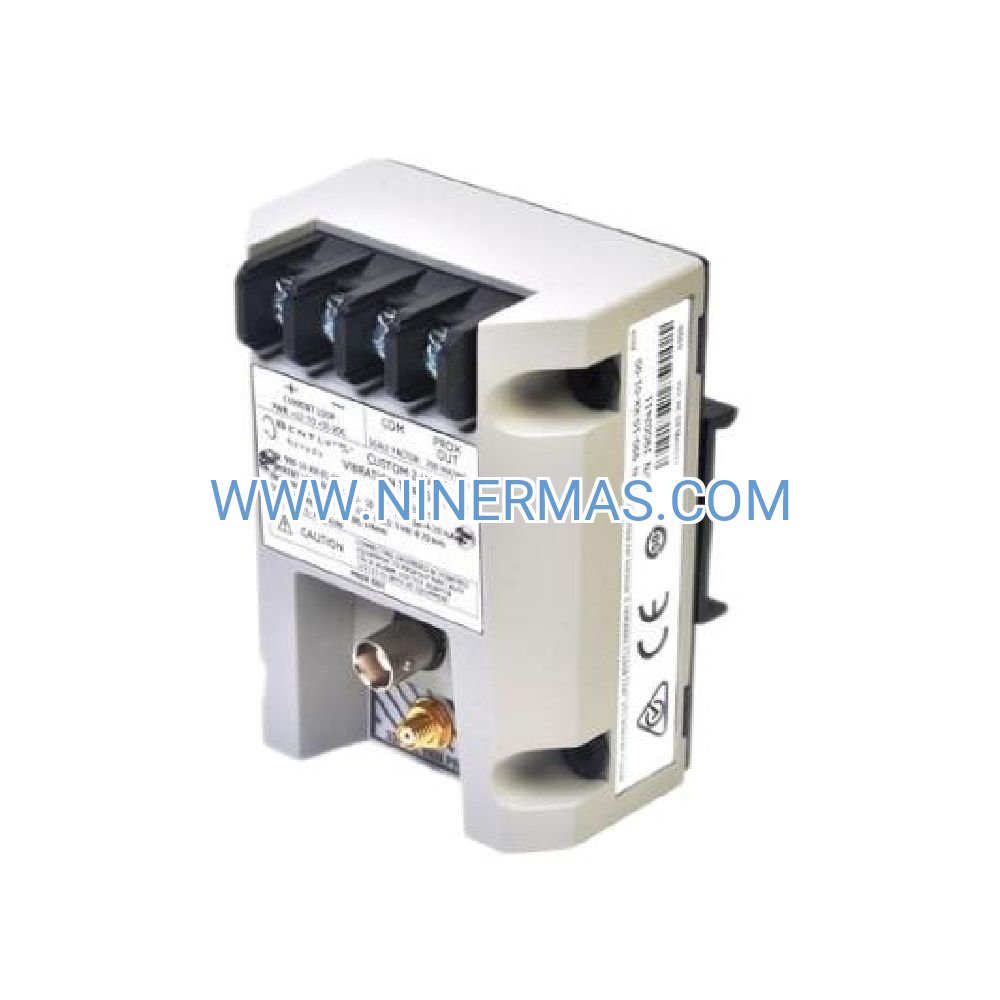
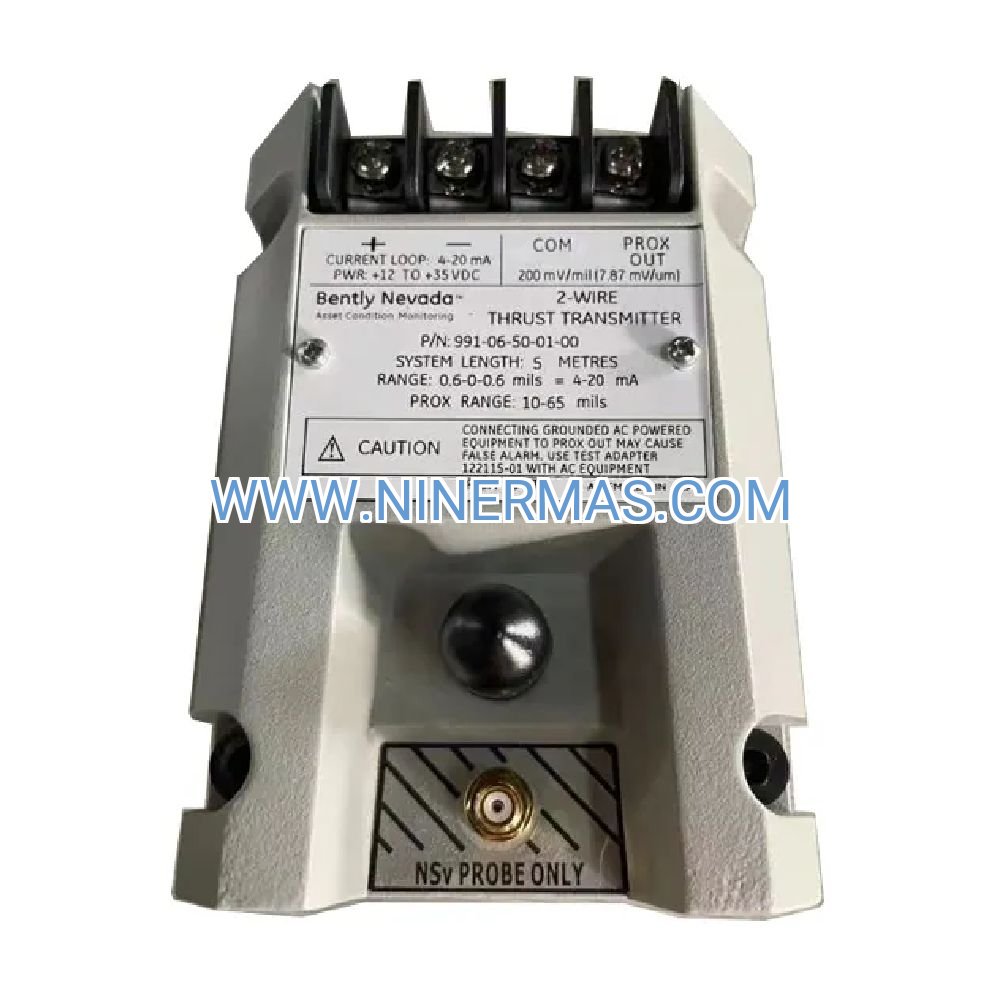
The Bently Nevada 2300/20 delivers enterprise-class vibration monitoring in a compact, standalone package engineered for seamless PLC and DCS integration. Featuring dual independent 4-20mA analog outputs with integrated loop power supply, this monitor eliminates external signal conditioning requirements while providing real-time machinery health data to your control system. Designed for cost-conscious applications demanding reliable protection without rack-based infrastructure complexity.
Built on Bently Nevada's proven monitoring technology, the 2300/20 serves as the ideal solution for distributed monitoring architectures, retrofit installations, and OEM machinery packages where space constraints and budget considerations drive design decisions. Its self-contained design reduces total installed cost by 60-70% compared to traditional modular systems while maintaining industrial-grade accuracy and reliability.
Whether protecting critical pumps, motors, compressors, or gearboxes, the 2300/20 provides the measurement precision and output flexibility required for effective predictive maintenance programs. Direct compatibility with all major PLC brands—including Allen-Bradley, Siemens, Schneider Electric, and Mitsubishi—ensures straightforward integration into existing automation infrastructure.
Core Capabilities & Technical Advantages
→ Dual Independent 4-20mA Current Loop Outputs
Two galvanically isolated analog channels enable simultaneous monitoring of multiple vibration parameters (velocity + acceleration, radial + axial, or two bearing positions). Internal 24Vdc loop power supply drives loads up to 600Ω per channel, eliminating external power distribution requirements and simplifying field wiring.
→ High-Precision 16-Bit Signal Processing
Advanced DSP architecture delivers 0.3662 µA resolution with ±1% full-scale accuracy across the entire -30°C to +65°C operating range. 100ms update rate (10 samples/second) captures transient vibration events during machine start-up, load changes, and fault conditions.
→ Flexible Transducer Compatibility
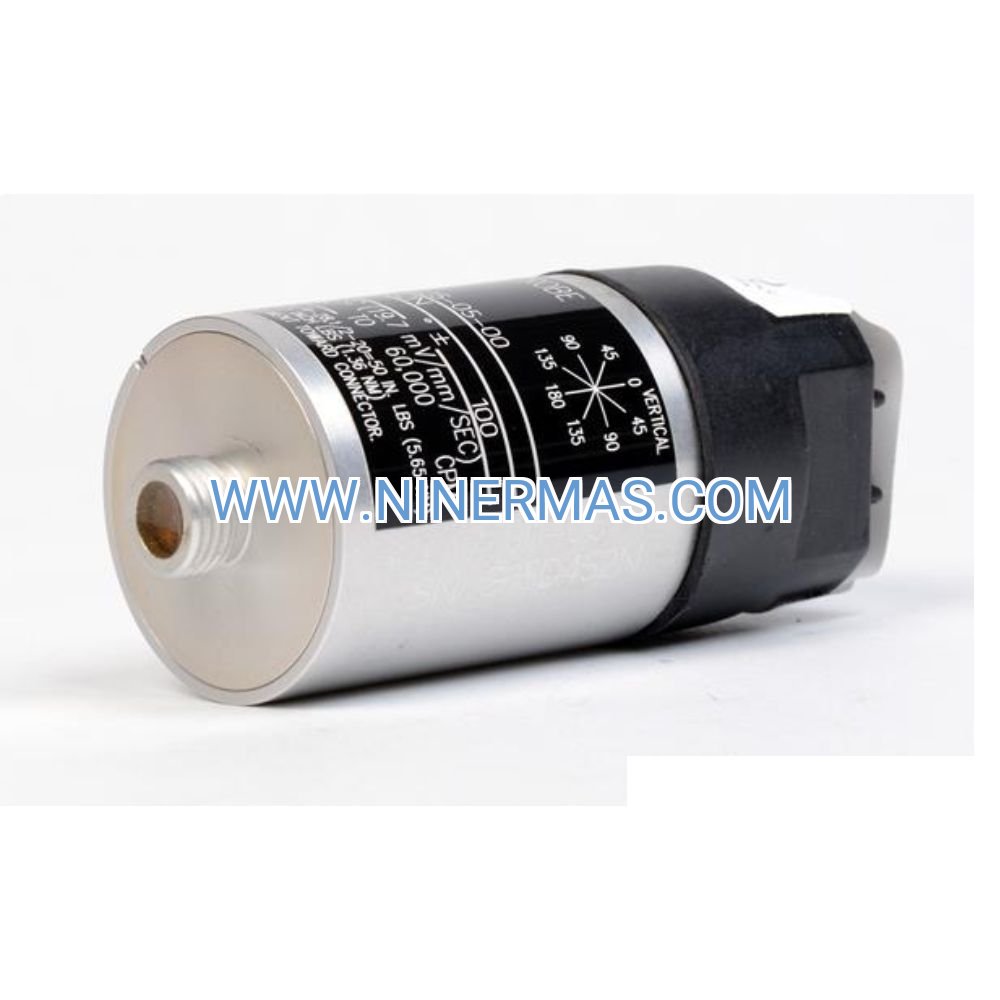
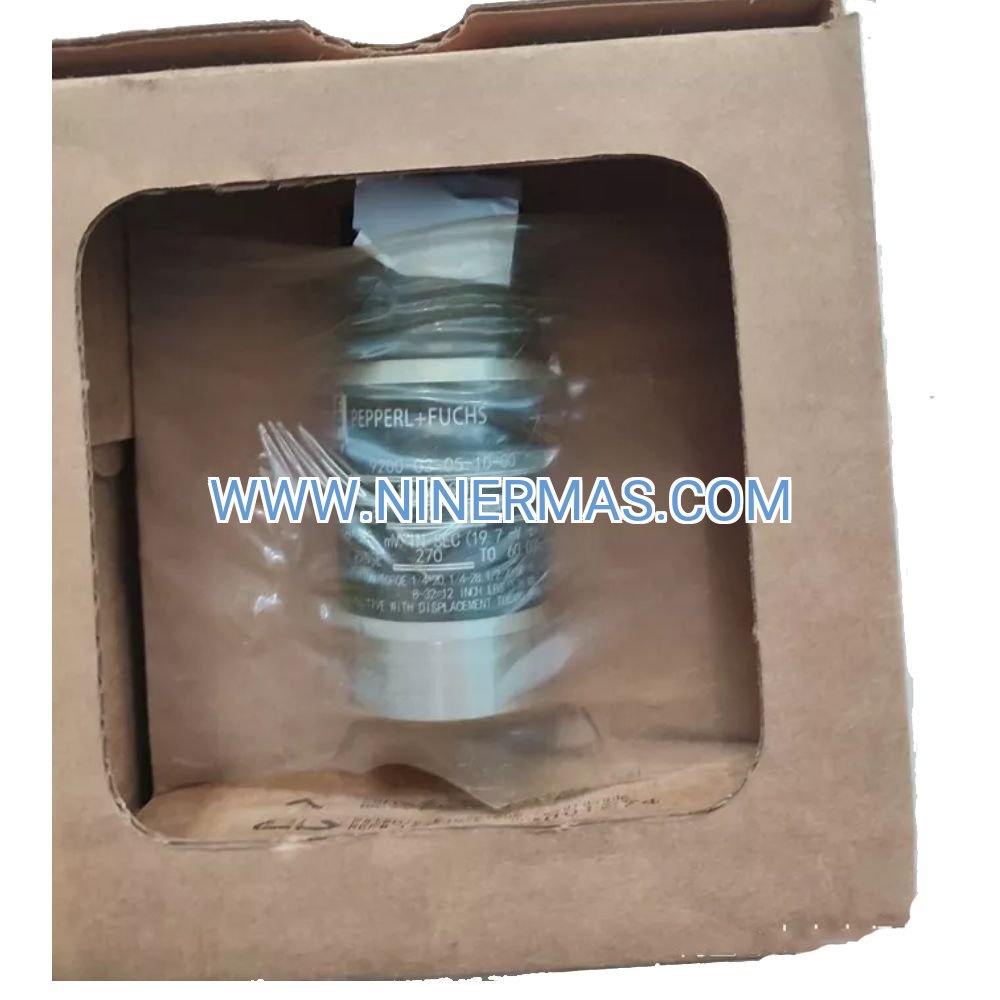
Accepts industry-standard accelerometers (IEPE/ICP) and velocity sensors with configurable sensitivity ranges. Automatic sensor fault detection via clamp current output (default 2mA) alerts operators to open circuits, short circuits, or transducer failures before false alarms occur.
→ Compact DIN Rail Mounting System
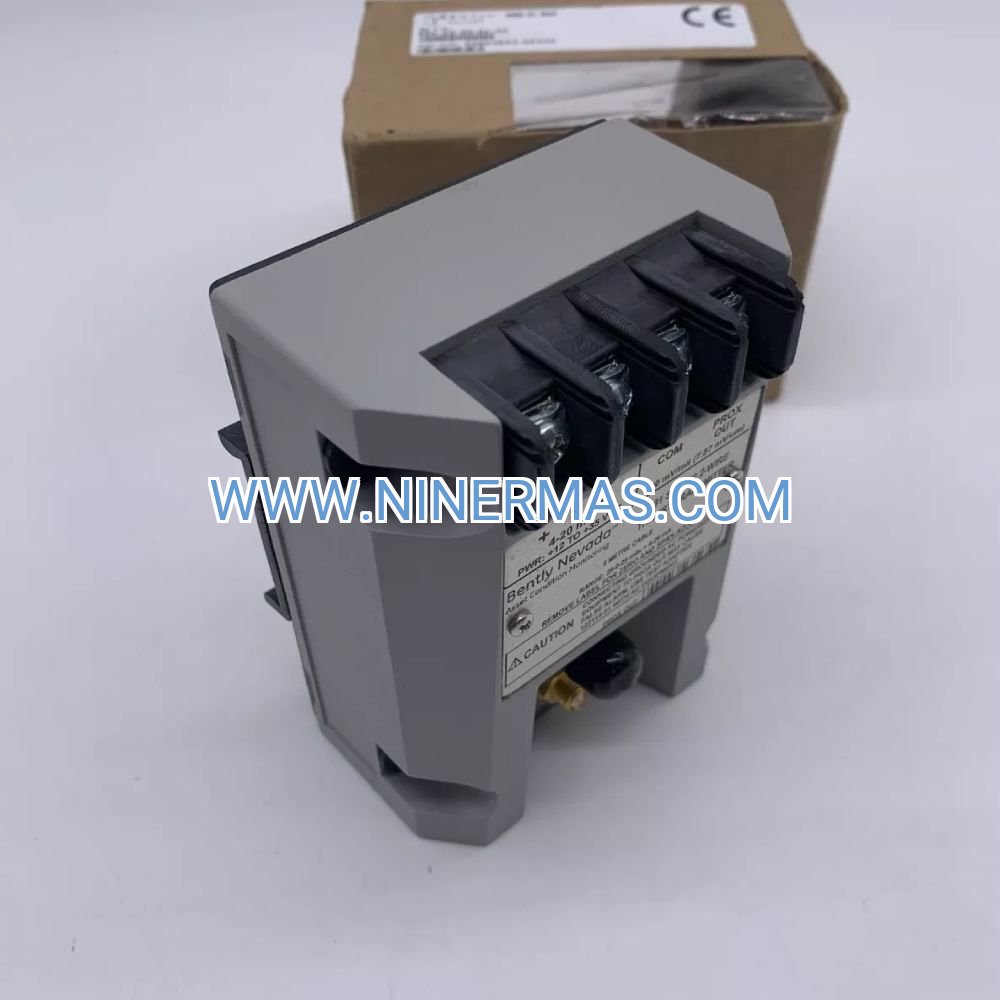
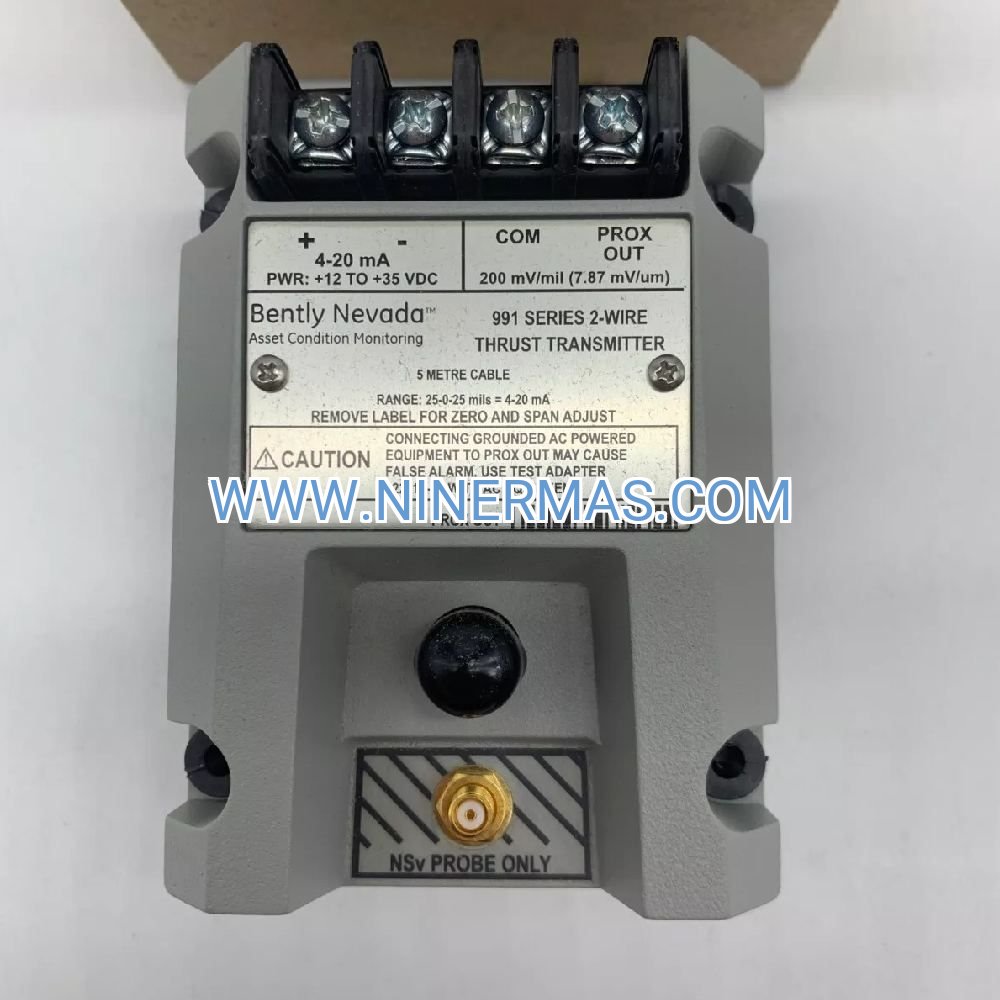
Space-efficient 127×127×76mm (5×5×3 inch) enclosure mounts directly on standard 35mm DIN rail using included adapter clip. Alternative panel-mount configuration available for custom installations. Rugged aluminum housing withstands 3g continuous vibration for reliable operation in harsh industrial environments.
✓ Hazardous Area Certifications Available
Option code -02 provides ATEX Zone 2, IECEx, and CSA Class I Division 2 approvals for explosive atmosphere applications in petrochemical, mining, and pharmaceutical facilities.
✓ USB Configuration Interface
Intuitive Windows-based software enables rapid setup of measurement ranges, alarm thresholds, output scaling, and transducer parameters. Configuration stored in non-volatile memory survives power interruptions without data loss.
Typical Application Scenarios
Centrifugal Pump Monitoring in Water Treatment Plants
Municipal water utilities deploy the 2300/20 on critical service pumps where bearing failures cause service disruptions and regulatory compliance issues. Configure Output 1 for overall vibration velocity (0-20 mm/s RMS) to detect imbalance and misalignment, while Output 2 tracks high-frequency acceleration (0-5g) for early bearing defect detection. Integration with SCADA systems enables automated pump rotation based on vibration trends, extending bearing life by 40-60%.
HVAC Chiller Compressor Protection
Commercial building operators protect multi-million dollar screw and centrifugal compressors using 2300/20 monitors connected to BACnet or Modbus-enabled PLCs. The 100ms update rate captures rapid vibration changes during capacity modulation and hot gas bypass operation. Configurable alarm delays prevent nuisance trips during normal load cycling while ensuring immediate shutdown for catastrophic failures.
Conveyor Drive Motor Surveillance in Mining Operations
Open-pit and underground mines monitor belt conveyor drive motors in remote locations where wireless connectivity is unreliable. Hardwired 4-20mA signals transmit up to 1000 meters (3280 feet) over shielded twisted-pair cable to central control rooms. Dual outputs enable simultaneous monitoring of motor and gearbox vibration from a single monitor, reducing hardware costs and installation labor.
Industrial Fan Arrays in Power Generation Facilities
Coal, gas, and nuclear power plants deploy multiple 2300/20 units on forced draft fans, induced draft fans, and cooling tower fans. Standardized 4-20mA outputs interface directly with existing DCS analog input cards (Emerson DeltaV, Honeywell Experion, ABB 800xA) without protocol conversion. Centralized trending and alarming through the DCS historian enables cross-unit performance comparison and fleet-wide optimization.
Technical Specifications & Selection Criteria
| Parameter | Specification | Selection Notes |
|---|---|---|
| Analog Output Type | 4-20mA current loop (2-wire) | Passive input required on PLC/DCS |
| Output Channels | 2 independent, galvanically isolated | Configure for different parameters or redundancy |
| Loop Power Supply | Internal 24Vdc ±10% | No external power injection required |
| Load Resistance | 0-600Ω per channel | Calculate based on cable length and input impedance |
| Voltage Compliance | 0-12Vdc across load | Ensures operation with long cable runs |
| Output Accuracy | ±1.0% of full scale | Over full temperature range |
| Resolution | 16-bit (0.3662 µA) | Equivalent to 0.0015% of span |
| Update Rate | 100ms (10 Hz) | Suitable for real-time trending and control |
| Transducer Input | IEPE/ICP accelerometer or velocity sensor | Configurable sensitivity: 10-1000 mV/g or mV/mm/s |
| Measurement Range | User-configurable via software | Typical: 0-20 mm/s velocity, 0-10g acceleration |
| Operating Temperature | -30°C to +65°C (-22°F to +149°F) | Suitable for outdoor and high-temperature environments |
| Storage Temperature | -40°C to +85°C (-40°F to +185°F) | Withstands extreme shipping and storage conditions |
| Humidity Tolerance | 5-95% RH, non-condensing | Use NEMA 4/IP65 enclosure for condensing environments |
| Vibration Resistance | 3g continuous, 10-2000 Hz | Self-monitoring capability for installation validation |
| Shock Resistance | 30g, 11ms half-sine pulse | Survives accidental impacts during installation |
| Power Supply | 18-30Vdc, 8W maximum | Compatible with standard 24Vdc industrial power |
| Mounting | 35mm DIN rail or panel mount | Adapter included; panel hardware sold separately |
| Dimensions | 127 × 127 × 76mm (5.0 × 5.0 × 3.0 in) | Compact footprint for space-constrained panels |
| Weight | 1.03 kg (2.27 lb) | Lightweight for easy handling and installation |
| Enclosure Rating | IP20 (standard), IP54 with optional cover | Specify cover for dusty or damp locations |
Selection Guidance: Choose the 2300/20-00 for standard industrial environments. Specify 2300/20-02 when ATEX/IECEx/CSA hazardous area certifications are required. For applications requiring higher IP ratings, order optional protective cover (part number 2300-COVER-IP54).
Advanced Integration Features
Multi-Parameter Monitoring Flexibility
Configure the dual outputs for complementary measurement strategies: Output 1 for broadband overall vibration (10-1000 Hz) to detect common faults like imbalance, misalignment, and looseness; Output 2 for high-frequency enveloped acceleration (500-10,000 Hz) to identify bearing defects in early stages. This dual-parameter approach increases fault detection sensitivity by 35-50% compared to single-parameter monitoring.
Predictive Maintenance Integration
The 4-20mA outputs feed directly into CMMS systems (SAP PM, IBM Maximo, Infor EAM) via PLC/DCS interfaces, enabling automated work order generation when vibration exceeds configurable thresholds. Historical trending data supports RCA (Root Cause Analysis) and FMEA (Failure Mode Effects Analysis) initiatives, reducing unplanned downtime by 25-40%.
Alarm Logic Customization
Program up to four alarm setpoints per output channel (Alert, Danger, Fault, Sensor Error) with independent time delays to prevent false trips during transient conditions. Alarm states transmitted via output clamp current (2mA = sensor fault, 22mA = high alarm) enable PLC-based shutdown logic without additional discrete I/O wiring.
Remote Diagnostics Capability
USB configuration port supports laptop connection for on-site troubleshooting and parameter adjustment without removing the monitor from service. Export configuration files for documentation, backup, or replication across multiple identical installations.
Delivery Timeline & Service Commitments
Standard Lead Time: 3-5 business days for stock configurations (2300/20-00). Custom configurations and hazardous area certified units (2300/20-02) ship within 10-15 business days.
Warranty Coverage: 24-month manufacturer's warranty covering defects in materials and workmanship. Extended warranty options available for critical applications requiring 5-year coverage.
Technical Support: Unlimited phone and email support during business hours (GMT+8, 9:00-18:00 Monday-Friday). Emergency support available for critical installations via +0086 187 5021 5667.
Documentation Package: Each unit ships with installation manual, quick start guide, configuration software CD (Windows 7/10/11 compatible), USB cable, and calibration certificate traceable to NIST/PTB standards.
Training Resources: Access to online video tutorials covering installation best practices, PLC integration examples (Rockwell RSLogix, Siemens TIA Portal, Schneider Unity Pro), and troubleshooting procedures.
Frequently Asked Questions
How do I connect the 2300/20 monitor to my Allen-Bradley CompactLogix PLC?
Connect the 4-20mA output terminals to a 1769-IF4 or 1769-IF8 analog input module configured for current input mode (passive, non-powered). In RSLogix 5000, scale the raw input (0-32767 counts) to engineering units using the SCL (Scale) instruction. Example: for 0-20 mm/s range, multiply raw value by 0.00061 (20 ÷ 32767). Set input filter to 10ms for optimal noise rejection.
What cable specifications are required for reliable 4-20mA signal transmission?
Use 18-22 AWG shielded twisted-pair cable (Belden 8761, Alpha 6412, or equivalent). Maximum cable length: 1000 meters (3280 feet) with 600Ω load resistance. Connect shield drain wire to monitor chassis ground terminal only—do not ground at PLC end to avoid ground loops. For outdoor installations or high-EMI environments, specify double-shielded cable with 95% braid coverage.
Can the 2300/20 reduce energy consumption in my facility's vibration monitoring system?
Yes. The integrated loop power supply eliminates the need for separate 24Vdc power distribution to field transmitters, reducing panel space requirements by 30-40% and cutting installation labor by 2-3 hours per monitor. The 8W maximum power consumption is 60% lower than equivalent rack-based systems, saving approximately $15-25 per year in energy costs per monitor (based on $0.12/kWh industrial rates).
What are the installation requirements for DIN rail mounting?
Mount on standard 35mm DIN rail (EN 50022) using the included spring-loaded adapter clip. Ensure minimum 25mm (1 inch) clearance on both sides for ventilation and cable routing. Tighten mounting screw to 0.5 Nm (4.4 lb-in) torque. For panel mounting, drill four M4 holes on 120mm × 120mm centers and secure with M4 × 20mm screws (not included).
Does the monitor support remote configuration and firmware updates?
Configuration changes require local USB connection via the front-panel port—remote configuration is not supported to maintain cybersecurity compliance with IEC 62443 standards. Firmware updates are released quarterly and installed via USB using the configuration software. Update process takes 3-5 minutes and does not require monitor removal from service (hot-swappable firmware).
How does the 2300/20 compare to wireless vibration sensors for retrofit applications?
The 2300/20 offers deterministic update rates (100ms vs. 15-60 minute wireless intervals), zero battery maintenance, and immunity to RF interference—critical advantages in metal-enclosed switchgear rooms and underground installations. While wireless sensors excel in temporary monitoring and inaccessible locations, the 2300/20 provides superior reliability for permanent installations requiring real-time alarming and control system integration.
Take the Next Step in Machinery Protection
Ready to implement cost-effective vibration monitoring with proven industrial reliability? Contact our technical sales team for application-specific recommendations, PLC integration support, and volume pricing for multi-unit deployments. Request a detailed quotation including recommended transducers, cables, and mounting accessories tailored to your machinery configuration.
© 2026 NINERMAS COMPANY LIMITED. All rights reserved.
Original Source: https://ninermas.com
Contact: sale@ninermas.com | +0086 187 5021 5667
PDF Specification
Download PDF file here:
Click to Download PDF

Contact Info
-
Address:22 / F, South Wo Hang building, 148 Wing Lok Street, Sheung Wan, Western District, Hong Kong
-
Phone:+8618750215667
-
Email: