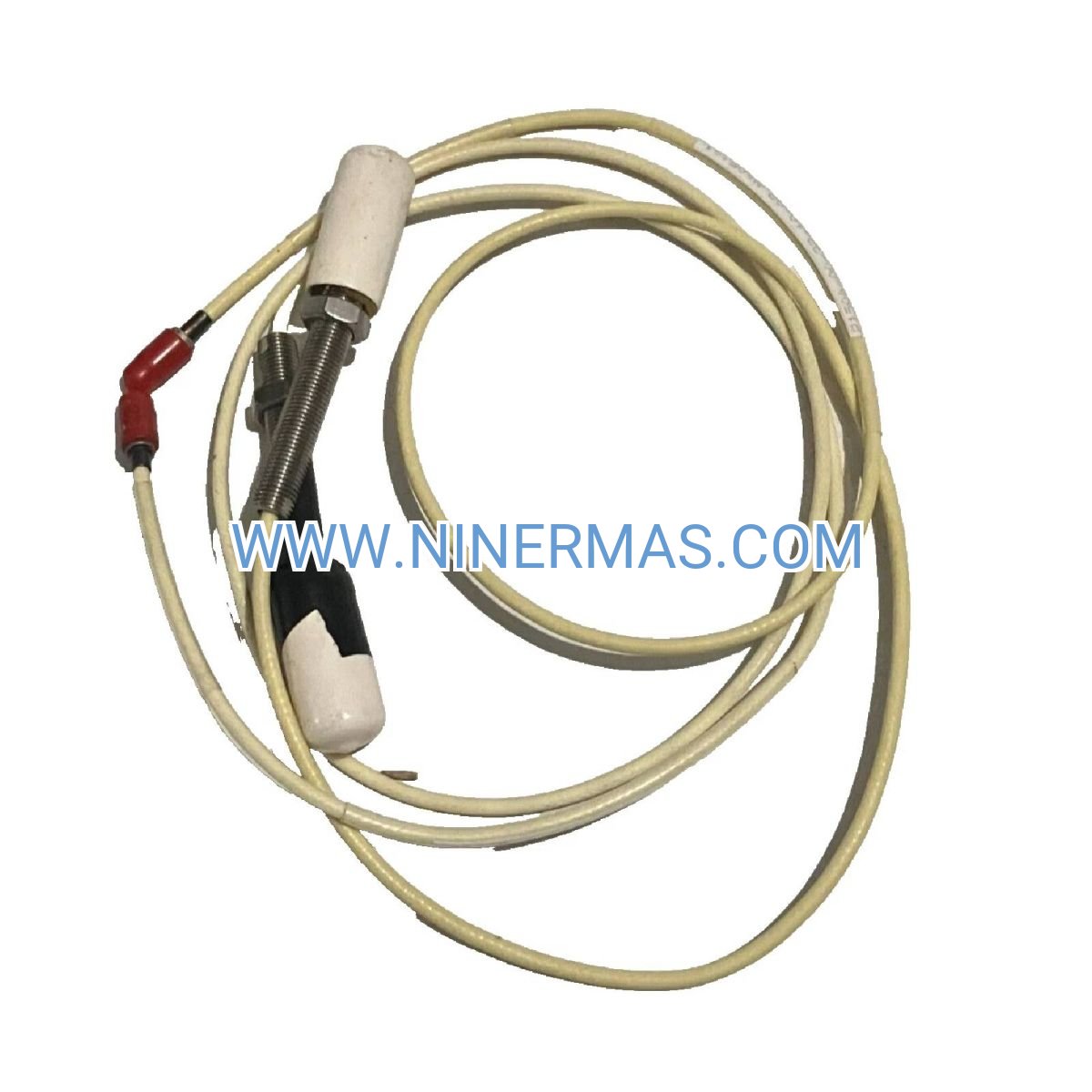
Bently Nevada 21504 Proximity Transducer System | 8mm 3300 XL NSv | API 670 Certified
Description
Bently Nevada 21504 Proximity Transducer System (Industrial-Grade Vibration Monitoring Solution)
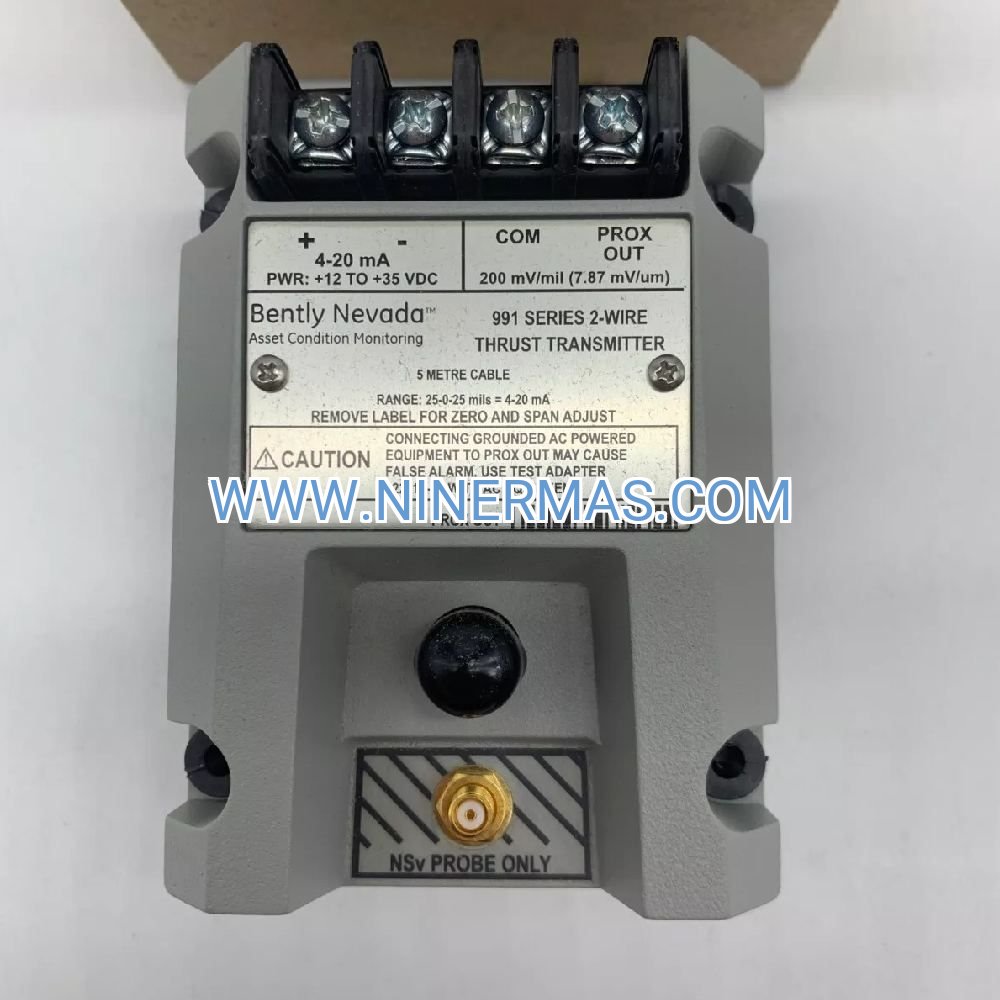
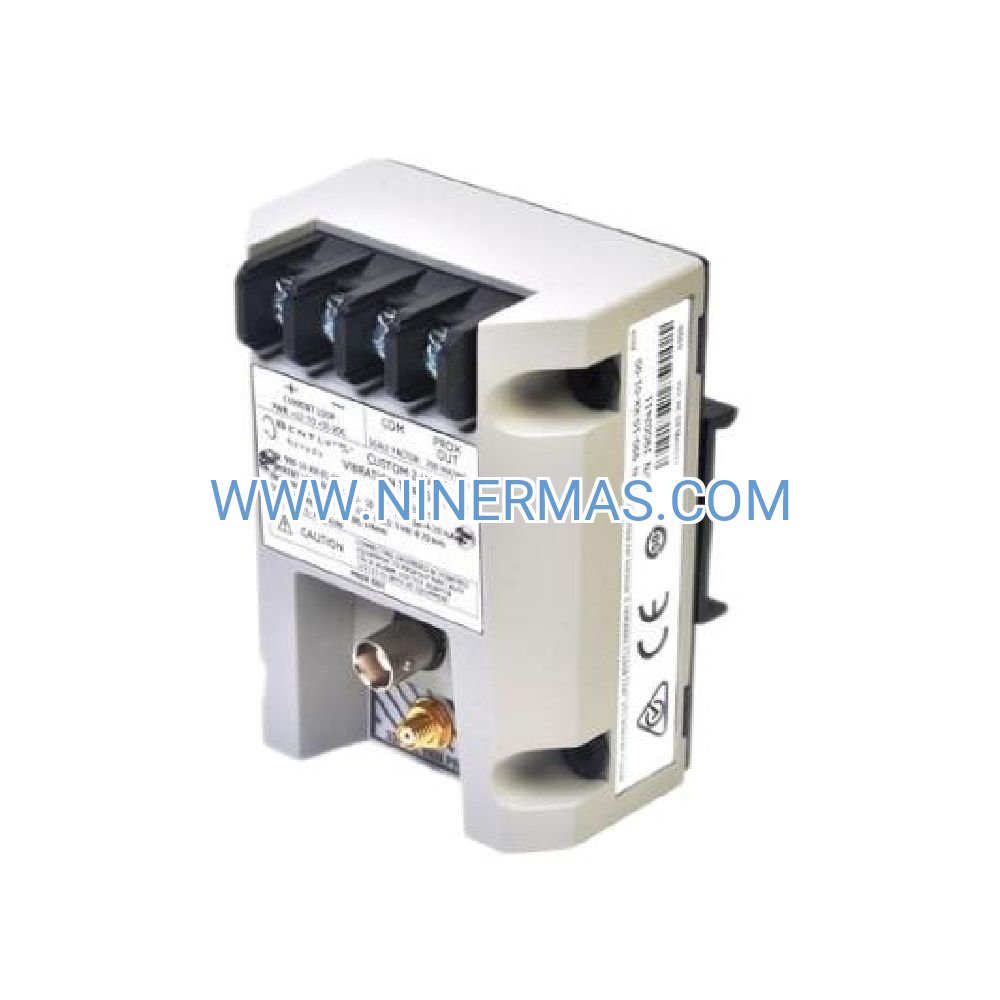
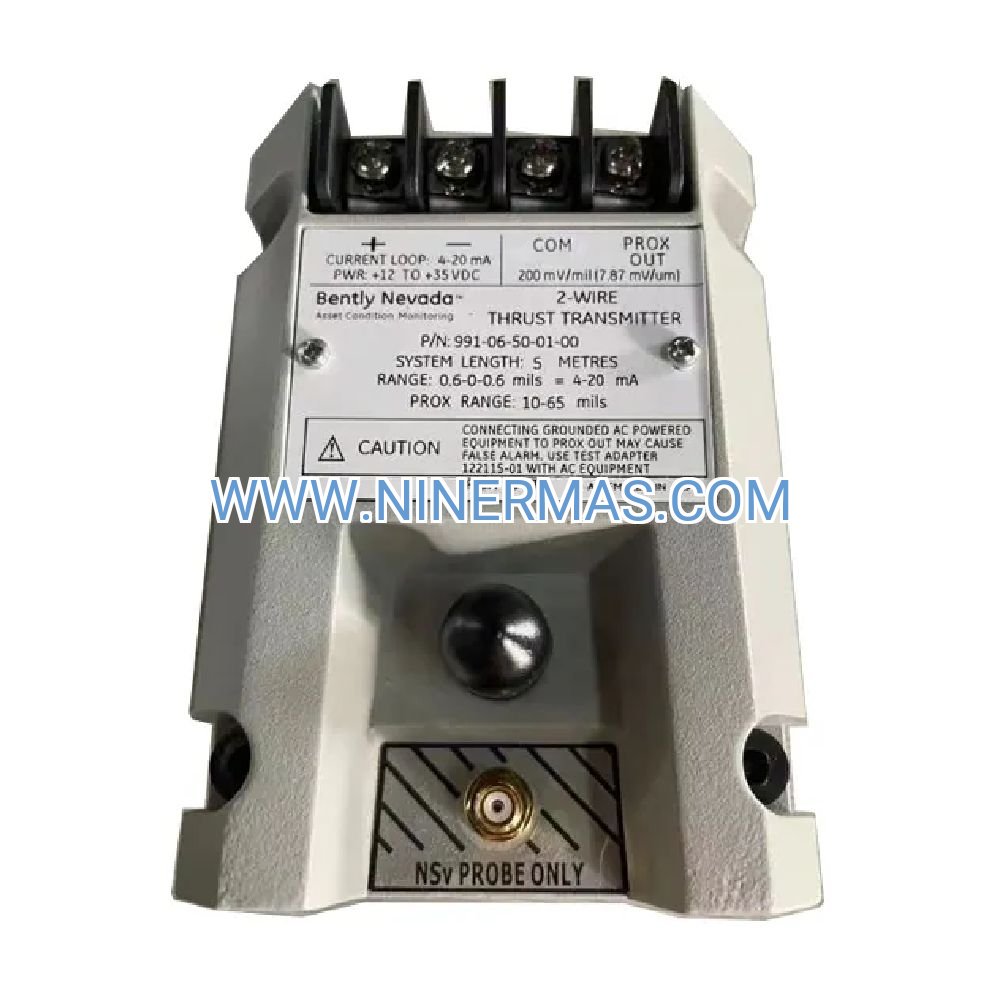
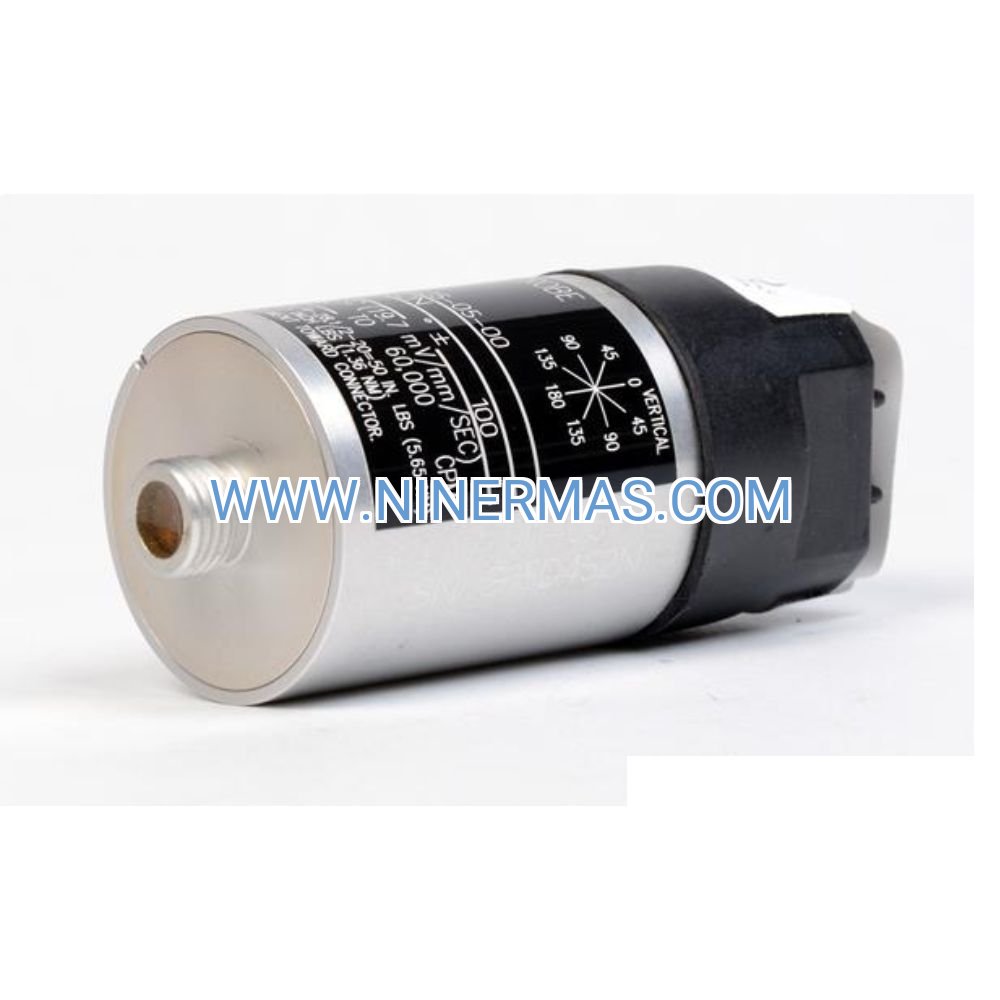
The Bently Nevada 21504-00-32-10-02 Proximity Transducer System is a high-precision industrial monitoring device designed for real-time shaft vibration and axial position measurement in rotating machinery. Through advanced eddy current sensing technology and the proven 3300 XL NSv proximitor design, this system delivers reliable, continuous monitoring of critical turbomachinery assets including steam turbines, gas turbines, compressors, and high-speed pumps.
Engineered for demanding industrial environments such as power generation plants, petrochemical facilities, oil & gas processing units, and heavy manufacturing operations, the 21504 system addresses critical challenges including unexpected equipment failures, costly unplanned downtime, bearing wear detection delays, and inadequate early fault warning capabilities. The 8mm probe configuration provides optimal sensitivity for standard shaft monitoring applications while maintaining excellent linearity across the measurement range.
Featuring full API 670 and ISO 20816 certification with factory calibration traceability, this transducer system offers proven reliability, superior signal stability, seamless integration with existing DCS/PLC platforms, and comprehensive technical documentation support. Ideal for reliability engineers, maintenance teams, OEM equipment manufacturers, and EPC contractors requiring certified vibration monitoring solutions. Contact our application engineers for customized cable lengths, mounting configurations, and system integration guidance.
Core Features & Technical Advantages
- High-Precision Eddy Current Sensing
Utilizes proven eddy current technology with 8mm sensing distance, delivering ±1% linearity across the full measurement range. Provides accurate detection of shaft displacement, vibration amplitude, and axial position changes with minimal temperature drift. - API 670 & ISO 20816 Certified Performance
Fully compliant with API 670 (5th Edition) machinery protection system standards and ISO 20816 vibration severity guidelines. Each system includes factory calibration certificates and traceability documentation required for critical machinery installations. - 3300 XL NSv Proximitor Electronics
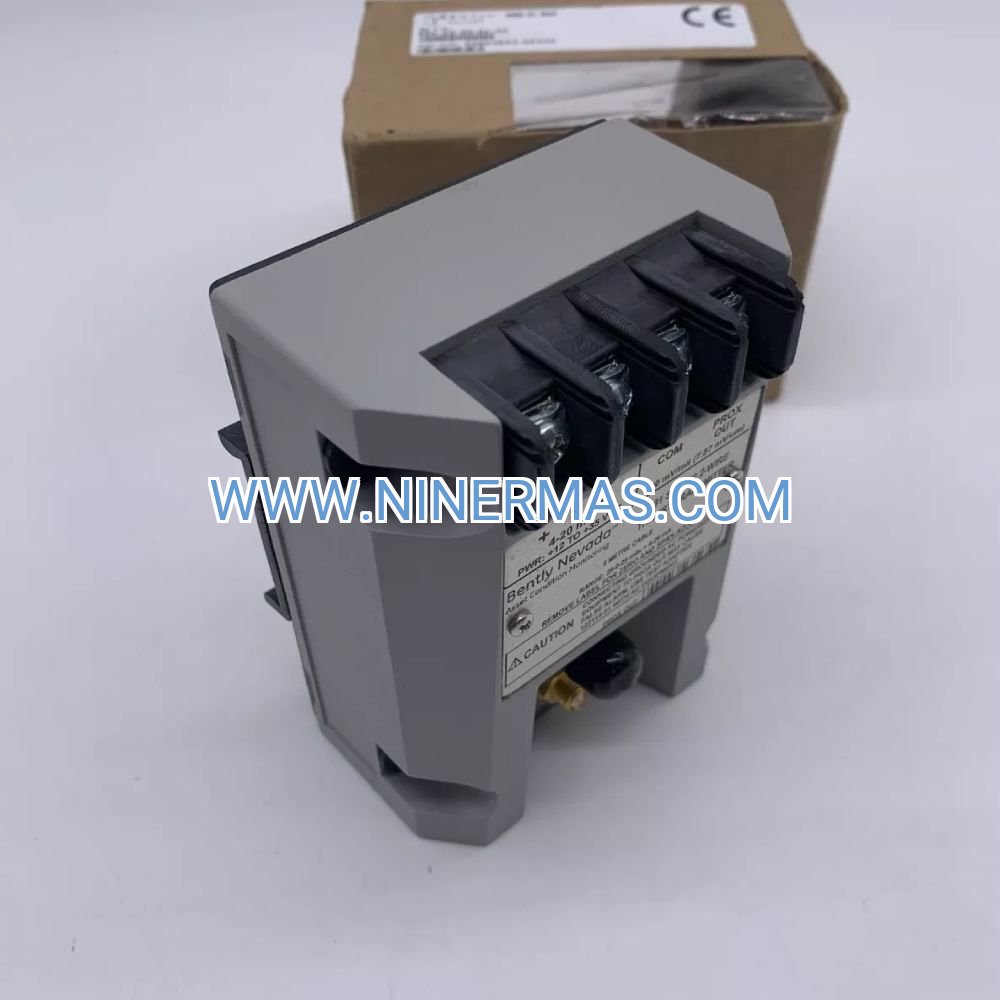
Features the industry-standard 3300 XL NSv proximitor module with -24 VDC buffered output, enabling direct connection to most DCS, PLC, and vibration monitoring systems. Provides excellent noise immunity and signal integrity over extended cable runs. - Rugged Industrial Construction
Probe and extension cable rated for continuous operation in temperatures from -40°C to +125°C, with IP67 environmental protection. Stainless steel probe housing resists corrosive atmospheres, moisture, and mechanical shock in harsh industrial environments. - Flexible Cable Configuration
Standard 32-foot (9.75m) armored extension cable with custom lengths available from 5 to 100 feet. Low-capacitance cable design maintains signal quality and calibration accuracy regardless of cable length variations. - Comprehensive System Protection
Built-in fault detection for open circuit, short circuit, probe damage, and cable integrity issues. Proximitor provides diagnostic OK/NOT OK relay outputs for automated alarm integration and predictive maintenance scheduling. - Universal Mounting Compatibility
Probe features standard 5/8-18 UNF threaded mounting with adjustable gap setting. Compatible with Bently Nevada mounting brackets, adapters, and XY probe holder assemblies for radial and thrust position monitoring.
Typical Application Scenarios
This proximity transducer system is engineered for applications demanding continuous vibration monitoring, precise shaft position measurement, and reliable machinery protection, particularly in:
- Steam & Gas Turbine Monitoring
Monitors radial vibration and axial thrust position in power generation turbines, providing early warning of bearing wear, rotor imbalance, misalignment, and thrust bearing failure. Essential for API 670-compliant turbine protection systems. - Centrifugal & Axial Compressor Protection
Detects shaft vibration, rotor eccentricity, and surge conditions in critical process compressors used in refineries, chemical plants, and gas processing facilities. Enables automated shutdown before catastrophic failure occurs. - High-Speed Rotating Equipment
Suitable for motors, generators, blowers, and fans operating above 3,600 RPM where traditional accelerometer-based monitoring lacks sufficient frequency response. Provides accurate measurement through startup, steady-state, and coast-down conditions. - Pump & Gearbox Condition Monitoring
Tracks shaft displacement and bearing clearance changes in critical pumps, gearboxes, and drive systems. Supports predictive maintenance programs by identifying developing faults weeks before failure, reducing unplanned downtime by up to 40%. - OEM Machinery Integration
Factory-installed by turbomachinery OEMs as part of complete vibration monitoring packages. Provides standardized interface for end-user monitoring systems and meets insurance/warranty requirements for critical rotating assets.
Technical Specifications & Selection Guide
To ensure optimal performance and compatibility, the Bently Nevada 21504 system is available in multiple configurations. Below are the key specifications for model 21504-00-32-10-02:
| Parameter | Specification |
|---|---|
| Probe Type | 8mm diameter eddy current proximity probe |
| Sensing Distance | 2.0mm typical (with 4140 steel target) |
| Linearity | ±1% over calibrated range |
| Frequency Response | 0 to 10 kHz (-3dB) |
| Extension Cable Length | 32 feet (9.75m) armored cable |
| Proximitor Model | 3300 XL NSv (included in system) |
| Output Signal | -24 VDC buffered output, 4mA source |
| Power Requirement | -24 VDC ±5%, 25mA typical |
| Operating Temperature | Probe: -40°C to +125°C | Proximitor: -30°C to +65°C |
| Environmental Rating | Probe: IP67 | Proximitor: IP20 (panel mount) |
| Compliance Standards | API 670 (5th Ed.), ISO 20816, CE marked |
| Mounting Thread | 5/8-18 UNF (standard industrial) |
| Target Material | Optimized for 4140 steel, compatible with most ferrous alloys |
Selection Guidance: When specifying a proximity transducer system, consider the following factors: shaft diameter and material (affects probe size selection), required sensing distance and gap tolerance, ambient temperature and environmental conditions (chemical exposure, moisture, vibration), available mounting space and orientation (radial vs. axial), cable routing distance from probe to monitoring panel, and integration requirements with existing monitoring systems (DCS, PLC, or dedicated vibration monitors). For non-standard applications including high-temperature environments (>125°C), exotic shaft materials (titanium, Inconel), or extended cable runs (>100 feet), consult with our application engineering team for customized system recommendations and calibration services.
System Integration & Customization Options
- Custom Cable Lengths: Available from 5 to 100 feet to match your installation requirements without signal degradation
- Probe Mounting Hardware: Complete selection of mounting brackets, XY holders, and adjustable clamps for various machine configurations
- Multi-Channel Packages: Coordinated probe sets for XY radial vibration monitoring with matched calibration
- Extension Cables & Adapters: Field-replaceable extension cables and junction boxes for maintenance flexibility
- Calibration Services: Factory recalibration with NIST-traceable certification for compliance verification
- System Documentation: Complete installation drawings, wiring diagrams, and configuration files for DCS integration
Delivery, Service & Quality Assurance
Lead Time: Standard 21504 configurations ship from stock within 3-5 business days. Custom cable lengths and special configurations typically require 10-15 business days for assembly and calibration verification.
Warranty Coverage: All Bently Nevada proximity transducer systems include a comprehensive 24-month manufacturer warranty covering materials and workmanship. Extended warranty programs available for critical applications.
Technical Support: Our application engineering team provides pre-sale consultation for system selection, installation guidance including gap setting and alignment procedures, and post-installation troubleshooting support. Remote diagnostic assistance and on-site commissioning services available based on project location and scope.
Documentation Package: Each system ships with complete technical documentation including calibration certificates with traceability data, installation and maintenance manuals, electrical wiring diagrams and termination details, dimensional drawings for mounting preparation, and recommended spare parts list for long-term maintenance planning.
Quality Certifications: Manufactured under ISO 9001:2015 quality management system. All systems undergo 100% factory testing including calibration verification, output signal validation, and environmental stress screening prior to shipment.
Frequently Asked Questions (FAQ)
Q: How does the Bently Nevada 21504 proximity transducer system integrate with existing DCS or PLC control systems?
A: The 3300 XL NSv proximitor provides a standard -24 VDC buffered output (4mA source) that connects directly to most industrial control system analog input modules. The output voltage is proportional to probe gap distance, typically calibrated to 200 mV/mil (7.87 V/mm). Most modern DCS and PLC systems accept this signal type without additional signal conditioning. We provide detailed wiring diagrams and scaling parameters for common platforms including Honeywell, Emerson DeltaV, Siemens PCS7, and Allen-Bradley ControlLogix.
Q: What is the maximum number of proximity probes that can be monitored on a single turbomachinery installation?
A: A typical turbine or compressor monitoring system uses 2 probes per bearing (XY radial configuration) plus 1-2 probes for axial thrust position, resulting in 6-10 probes for a standard single-shaft machine. Large multi-stage compressor trains may require 20-30 probes. Each probe requires its own dedicated proximitor module and cable system. We can supply coordinated multi-probe packages with matched calibration for optimal measurement accuracy.
Q: What level of energy savings or reliability improvement can be expected from implementing proximity transducer monitoring?
A: While proximity transducers don't directly reduce energy consumption, they enable condition-based maintenance strategies that prevent catastrophic failures and optimize equipment performance. Industry studies show that predictive maintenance programs using continuous vibration monitoring reduce unplanned downtime by 35-50%, extend bearing life by 20-30%, and decrease maintenance costs by 25-40% compared to reactive or time-based maintenance approaches. Early fault detection prevents secondary damage that often costs 5-10 times more than the original component replacement.
Q: What are the environmental requirements and protection ratings for installation?
A: The 8mm proximity probe is rated IP67 (dust-tight and protected against temporary immersion), suitable for outdoor installation and washdown environments. The probe operates reliably from -40°C to +125°C, covering most industrial applications. The 3300 XL NSv proximitor module is rated IP20 and must be mounted in a protected control panel or junction box with ambient temperature maintained between -30°C and +65°C. For extremely harsh environments (corrosive atmospheres, high vibration, or temperatures exceeding standard ratings), we offer specialized probe materials and protective coatings.
Q: Can the system support remote monitoring and data acquisition for Industry 4.0 applications?
A: Yes, the -24 VDC output from the proximitor can be connected to modern data acquisition systems, edge computing devices, or IIoT gateways that support standard analog inputs. Many customers integrate these signals with platforms like OSIsoft PI, GE Predix, or Siemens MindSphere for cloud-based analytics and remote monitoring. The proximitor also provides OK/NOT OK relay outputs that can trigger email/SMS alerts through connected monitoring systems. For advanced applications, the analog output can be digitized at high sample rates (10+ kHz) to enable detailed spectral analysis and machine learning-based fault prediction.
Q: What is the typical calibration interval and how is calibration performed?
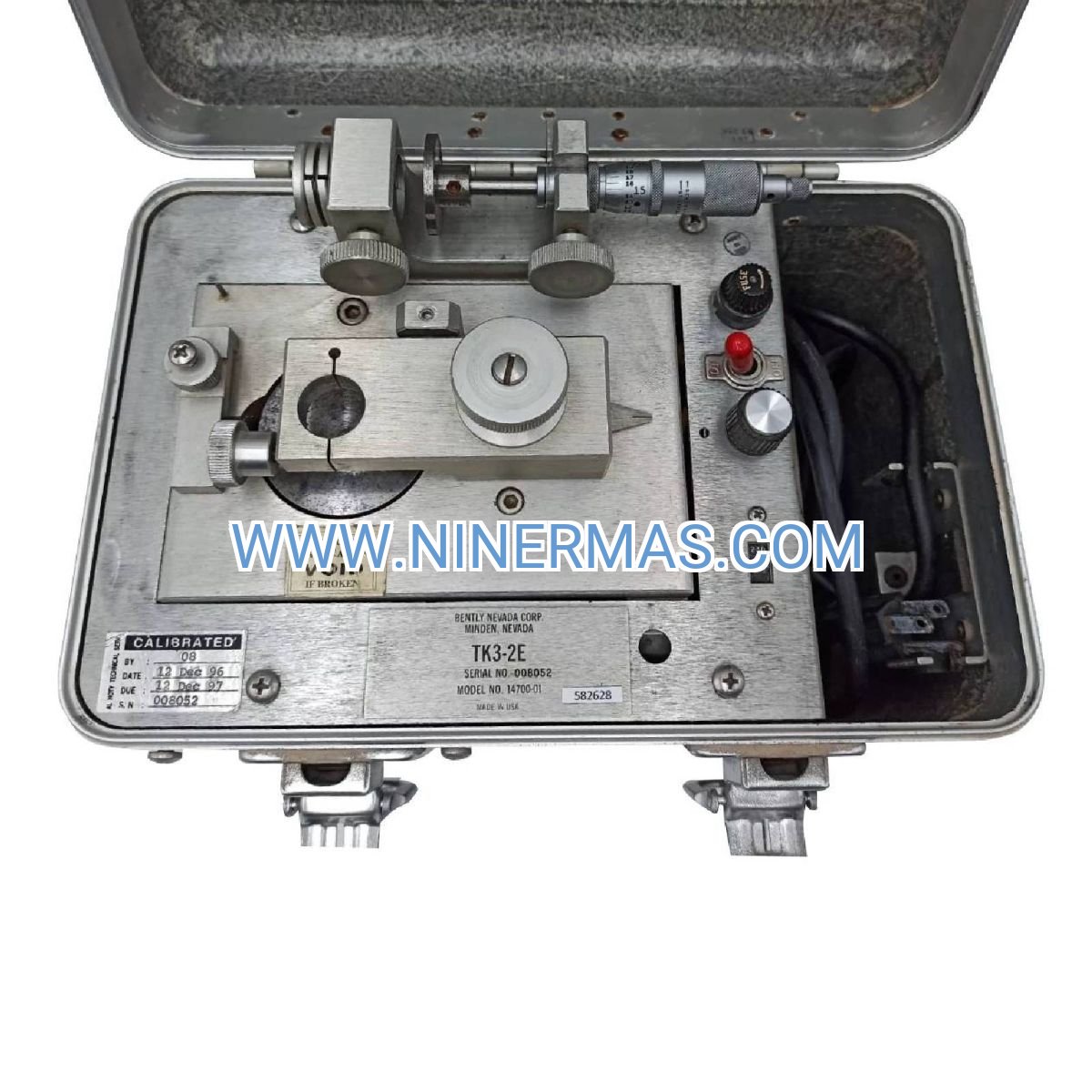
A: Bently Nevada proximity transducer systems are extremely stable and typically maintain calibration accuracy for 3-5 years under normal operating conditions. However, many industries (power generation, aerospace, nuclear) require annual or biennial calibration verification for compliance purposes. Calibration can be performed in-situ using a precision micrometer and calibration target, or the probe can be returned to an authorized calibration laboratory for NIST-traceable certification. We provide detailed calibration procedures and can supply certified calibration targets and fixtures. For critical applications, we recommend maintaining calibrated spare probes to minimize downtime during recalibration cycles.
Request Technical Consultation & Custom Quotation
To receive a detailed application review, customized system configuration, and project-specific pricing, please provide the following information to our engineering team:
- Project name and application type (turbine, compressor, pump, etc.)
- Machine specifications: shaft diameter, operating speed (RPM), and shaft material
- Number of monitoring points required (radial and axial positions)
- Cable length requirements from each probe to control panel
- Environmental conditions: temperature range, humidity, chemical exposure
- Integration requirements: DCS/PLC model, input module specifications, communication protocols
- Compliance requirements: API 670, ISO standards, industry-specific certifications
- Project timeline and delivery schedule
Our application engineers will provide one-on-one consultation to ensure optimal sensor selection, mounting configuration, and system integration for your specific machinery protection requirements.
© 2026 NINERMAS COMPANY LIMITED. All rights reserved. Original Source: https://ninermas.com | Contact: sale@ninermas.com | +0086 187 5021 5667

Contact Info
-
Address:22 / F, South Wo Hang building, 148 Wing Lok Street, Sheung Wan, Western District, Hong Kong
-
Phone:+8618750215667
-
Email: