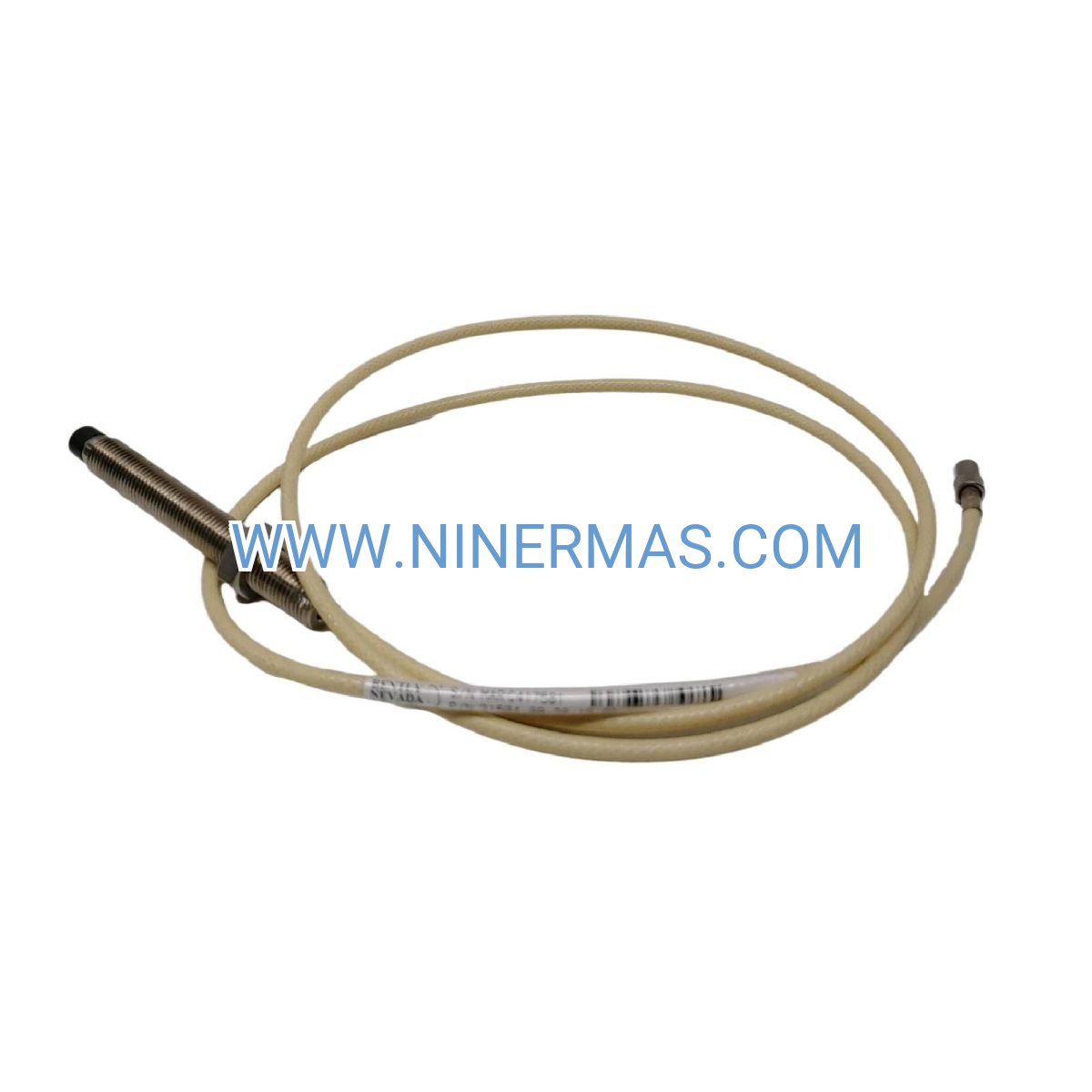
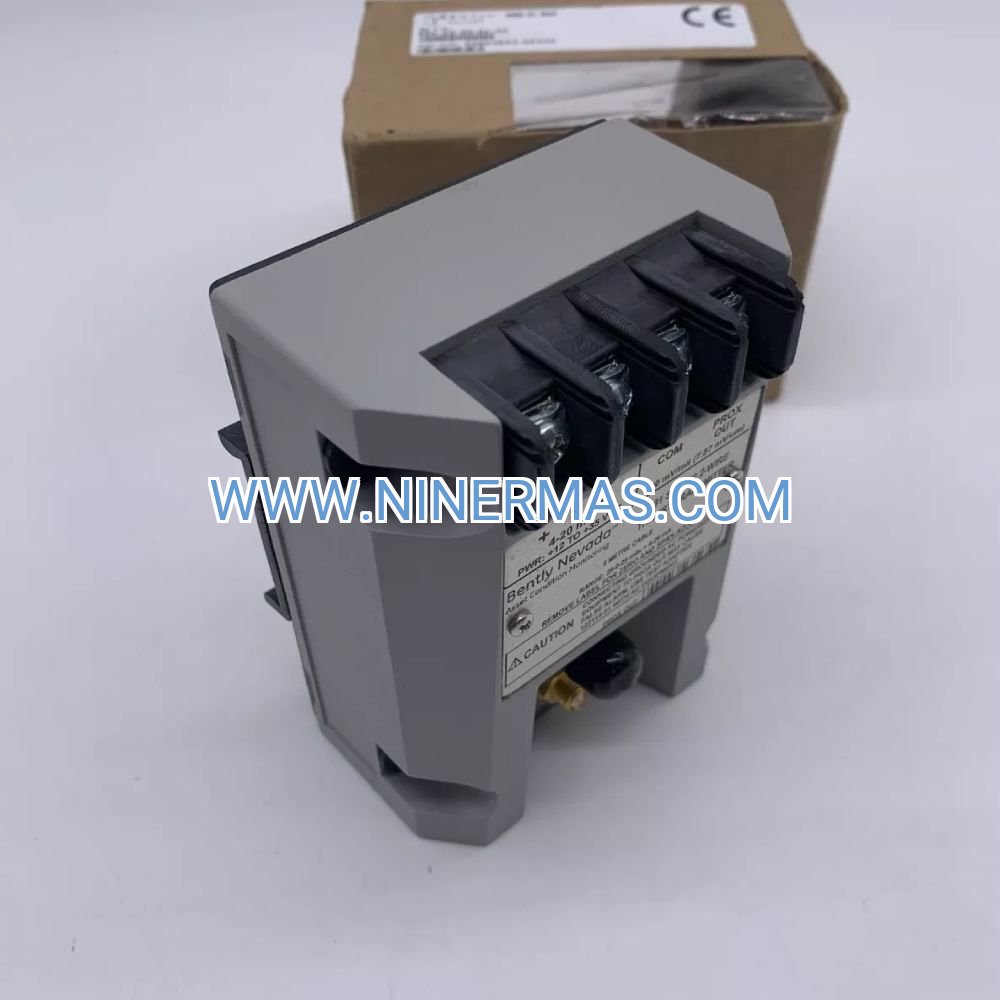
Bently Nevada 21504 Overspeed Detection Module | TMR Triple Modular Redundant | API 670 Certified
Description
Bently Nevada 21504 Overspeed Detection Module (TMR Triple Modular Redundant Protection System)
The Bently Nevada 21504 Overspeed Detection Module is an industrial-grade turbomachinery protection device that utilizes Triple Modular Redundant (TMR) architecture to deliver fail-safe overspeed monitoring and emergency shutdown capabilities. Through real-time speed signal processing and multi-channel voting logic, it ensures continuous protection against catastrophic overspeed events in critical rotating equipment.
Designed for high-risk applications in power generation, oil & gas processing, petrochemical plants, compressor stations, and steam/gas turbine systems, this module addresses challenges such as delayed fault detection, single-point failure risks, nuisance trips, and inadequate response time during transient overspeed conditions.
With standardized configuration options and field-customizable alarm setpoints, the 21504 module offers API 670 compliance, sub-10ms response time, hot-swappable redundancy, and seamless integration with Bently Nevada 3500 monitoring frameworks—making it the preferred choice for EPC contractors, plant engineers, OEM integrators, and maintenance teams. Contact our application engineers for site-specific configuration guidance and technical support.
Core Features & Advantages
- Triple Modular Redundant (TMR) Architecture
Three independent processing channels continuously monitor speed signals and employ 2-out-of-3 voting logic to eliminate false trips caused by single-channel faults, ensuring maximum uptime and safety integrity level (SIL 3 capable). - Ultra-Fast Response Time
Detects overspeed conditions and triggers shutdown relays in less than 10 milliseconds, minimizing mechanical stress and preventing blade failure, bearing damage, or catastrophic disintegration in turbomachinery. - Multi-Speed Monitoring & Configurable Setpoints
Supports simultaneous monitoring of multiple speed thresholds (alarm, danger, trip) with field-adjustable setpoints via configuration software, accommodating variable operating profiles and startup/shutdown sequences. - API 670 Compliance & Industry Certification
Fully compliant with API 670 5th Edition standards for vibration, axial position, and overspeed protection systems, meeting stringent requirements for upstream oil & gas and power generation facilities. - Comprehensive Diagnostic & Self-Test Functions
Built-in continuous self-diagnostics monitor channel health, sensor integrity, and relay coil status, with front-panel LED indicators and relay outputs for remote alarm annunciation and SCADA integration. - Hot-Swappable & Redundant Design
Field-replaceable modules with bumpless transfer capability allow maintenance without system shutdown, reducing MTTR (Mean Time To Repair) and supporting 24/7 continuous operation requirements. - Intuitive Configuration Interface
Compatible with Bently Nevada System 1 software and 3500 Rack Configuration tools, offering graphical setup, real-time trending, event logging, and remote diagnostics via Ethernet or serial communication.
Typical Application Scenarios
This module is engineered for environments demanding the highest levels of machinery protection and operational continuity, including:
- Steam & Gas Turbine Protection in Power Plants
Prevents runaway overspeed during load rejection or governor failure events, safeguarding multi-million-dollar turbine-generator sets and ensuring grid stability compliance. - Compressor & Pump Overspeed Monitoring in Oil & Gas
Protects centrifugal compressors, pipeline booster pumps, and LNG refrigeration trains from overspeed-induced mechanical failure, meeting API 617 and API 672 safety standards. - Petrochemical & Refinery Rotating Equipment
Monitors critical process compressors, expanders, and blowers in ethylene crackers, FCC units, and hydrogen plants, where unplanned shutdowns result in significant production losses. - Marine Propulsion & Offshore Platform Systems
Provides redundant overspeed protection for main propulsion turbines, emergency generator sets, and fire water pumps on FPSOs, drilling rigs, and LNG carriers. - Industrial Gas Turbine & Combined Cycle Plants
Integrates with DCS and ESD systems to deliver coordinated overspeed trip logic for Frame 6, Frame 7, and aeroderivative gas turbines in cogeneration and district heating applications.
Technical Parameters & Selection Guide
To facilitate engineering design and procurement, we provide standardized specifications and application-specific configuration options:
| Parameter | Specification |
|---|---|
| Model Number | 21504-00-28-10-02 |
| Architecture | Triple Modular Redundant (TMR), 2oo3 Voting |
| Speed Input Range | 0 – 100,000 RPM (configurable) |
| Response Time | < 10 ms (from overspeed detection to relay actuation) |
| Setpoint Accuracy | ±0.1% of configured speed |
| Input Signal Type | Magnetic pickup, proximity probe, or optical encoder |
| Relay Outputs | 3 x SPDT (Form C), 5A @ 30VDC / 250VAC |
| Power Supply | 24 VDC ±20% or 120/240 VAC (optional) |
| Operating Temperature | -30°C to +65°C (-22°F to +149°F) |
| Enclosure Rating | IP54 (NEMA 12 equivalent), rack-mount or standalone |
| Communication Protocol | Modbus RTU/TCP, Ethernet/IP (optional) |
| Compliance Standards | API 670, IEC 61508 (SIL 3), CE, UL/cUL |
| Dimensions (H x W x D) | 241.3 mm x 24.4 mm x 241.8 mm (full-height module) |
| Weight | 0.2 kg (module only) |
Selection Recommendations:
When specifying the 21504 module, consider the following parameters: maximum operating speed, number of speed sensors (single or dual), required SIL level, environmental conditions (temperature, humidity, vibration), available power supply, and integration requirements with existing DCS/PLC systems. For complex applications involving variable-speed drives, multi-stage turbines, or hazardous area installations (Class I Div 2), consult our application engineers with site-specific data sheets. We provide complimentary configuration file templates and pre-commissioning support.
Extended Functionality & Integration Options
- Dual-Channel Speed Input – Accepts two independent speed sensors for enhanced reliability and cross-channel validation
- Remote Reset & Inhibit Functions – Supports DCS-controlled trip reset and maintenance bypass via hardwired or network commands
- Event Recording & Trend Analysis – Logs overspeed events with timestamp, peak speed, and duration for root cause analysis and regulatory reporting
- HART Protocol Support – Enables digital communication over 4-20mA loops for advanced diagnostics and asset management integration
- Hazardous Area Certification – Available with ATEX, IECEx, and CSA approvals for Zone 2 / Class I Div 2 installations
- Cybersecurity Hardening – Optional secure boot, encrypted communication, and role-based access control for critical infrastructure protection
Delivery, Service & Quality Assurance
Lead Time: Standard catalog items ship within 3-5 business days; custom-configured modules require 10-15 business days. Expedited service available for emergency shutdowns and critical path projects.
Warranty: 12-month manufacturer's warranty covering defects in materials and workmanship. Extended warranty and spares kits available upon request.
Technical Support: Complimentary pre-sales application engineering, configuration file generation, and commissioning checklists. Post-sales support includes remote diagnostics, firmware updates, and on-site startup assistance (subject to geographic availability and service agreement terms).
Documentation Package: Each module ships with complete electrical schematics, terminal block wiring diagrams, configuration software (System 1 compatible), quick-start guide, and calibration certificates. CAD drawings (DWG/PDF) and 3D STEP models available for panel design and layout.
Quality Certifications: Manufactured under ISO 9001:2015 quality management system. Factory acceptance testing (FAT) reports and material traceability documentation provided for critical service applications.
Frequently Asked Questions (FAQ)
Q: How does the Bently Nevada 21504 overspeed detection module integrate with existing turbine control systems?
A: The 21504 module accepts standard speed sensor inputs (magnetic pickup, proximity probe, or TTL encoder) and provides hardwired relay outputs for direct connection to emergency shutdown (ESD) logic or turbine trip solenoids. It also supports Modbus RTU/TCP and Ethernet/IP protocols for integration with DCS, SCADA, or PLC systems, enabling remote monitoring, setpoint adjustment, and alarm annunciation without disrupting the hardwired safety chain.
Q: What is the maximum number of speed monitoring channels supported by a single 21504 module?
A: Each 21504 module monitors one primary speed input with TMR processing. For applications requiring dual-channel redundancy (e.g., two independent speed sensors on the same shaft), you can configure two modules in a 1oo2 or 2oo2 voting architecture, or use the dual-input variant (consult factory for part number suffix). Multi-machine installations typically deploy one module per turbine or compressor train.
Q: What level of energy savings or efficiency improvement can be expected from deploying overspeed protection?
A: Overspeed detection modules do not directly reduce energy consumption; their primary function is safety and asset protection. However, by preventing catastrophic failures and unplanned shutdowns, they minimize costly emergency repairs, production downtime, and secondary damage to gearboxes, couplings, and driven equipment—indirectly preserving overall plant efficiency and avoiding energy waste from restart cycles and load shedding.
Q: What are the environmental and installation requirements for the 21504 module?
A: The module is rated for -30°C to +65°C ambient temperature and IP54 / NEMA 12 enclosure protection, suitable for indoor control rooms and weatherproof outdoor enclosures. It requires a clean, dry mounting location with adequate ventilation (avoid direct sunlight or heat sources). For hazardous area installations (Zone 2 / Class I Div 2), specify the ATEX/IECEx certified variant and ensure proper grounding and cable gland sealing per local electrical codes.
Q: Can the 21504 module support remote monitoring and data acquisition for predictive maintenance programs?
A: Yes. When integrated with Bently Nevada System 1 software or third-party condition monitoring platforms via Modbus or Ethernet/IP, the module provides real-time speed trending, alarm history, diagnostic status, and event logs. This data enables predictive analytics, anomaly detection, and integration with enterprise asset management (EAM) systems such as SAP PM or IBM Maximo, supporting transition from reactive to proactive maintenance strategies.
Q: Is field calibration or periodic recertification required for the overspeed detection module?
A: The 21504 module is factory-calibrated and does not require routine field calibration under normal operating conditions. However, API 670 and plant-specific safety management systems may mandate periodic proof testing (e.g., annual or biennial) to verify relay operation, setpoint accuracy, and sensor loop integrity. We recommend documenting test results and maintaining calibration certificates for regulatory audits and insurance compliance.
Request a Custom Solution
To receive a detailed application-specific configuration, technical datasheet, or budget quotation, please provide the following information to our engineering team:
- Project name and end-user facility location
- Equipment type (turbine, compressor, pump) and manufacturer/model
- Operating speed range (minimum, normal, maximum, trip setpoint)
- Speed sensor type and signal characteristics (frequency, voltage, pulse rate)
- Number of monitoring points and redundancy requirements (1oo1, 1oo2, 2oo3)
- Environmental conditions (temperature, humidity, hazardous area classification)
- Power supply availability (24 VDC, 120 VAC, 240 VAC)
- Communication protocol and DCS/PLC interface requirements
- Applicable industry standards and certification needs (API 670, SIL, ATEX)
Our application engineers will respond within one business day with a tailored recommendation, configuration file template, and project timeline.
© 2026 NINERMAS COMPANY LIMITED. All rights reserved.
Original Source: https://ninermas.com
Contact: sale@ninermas.com | +0086 187 5021 5667

Contact Info
-
Address:22 / F, South Wo Hang building, 148 Wing Lok Street, Sheung Wan, Western District, Hong Kong
-
Phone:+8618750215667
-
Email: