Bently Nevada 21500 Velomitor Velocity Sensor | ISO 10816 Vibration Monitoring | Industrial Grade
Description
Bently Nevada 21500 Velomitor Velocity Sensor (Industrial-Grade Vibration Monitoring System)
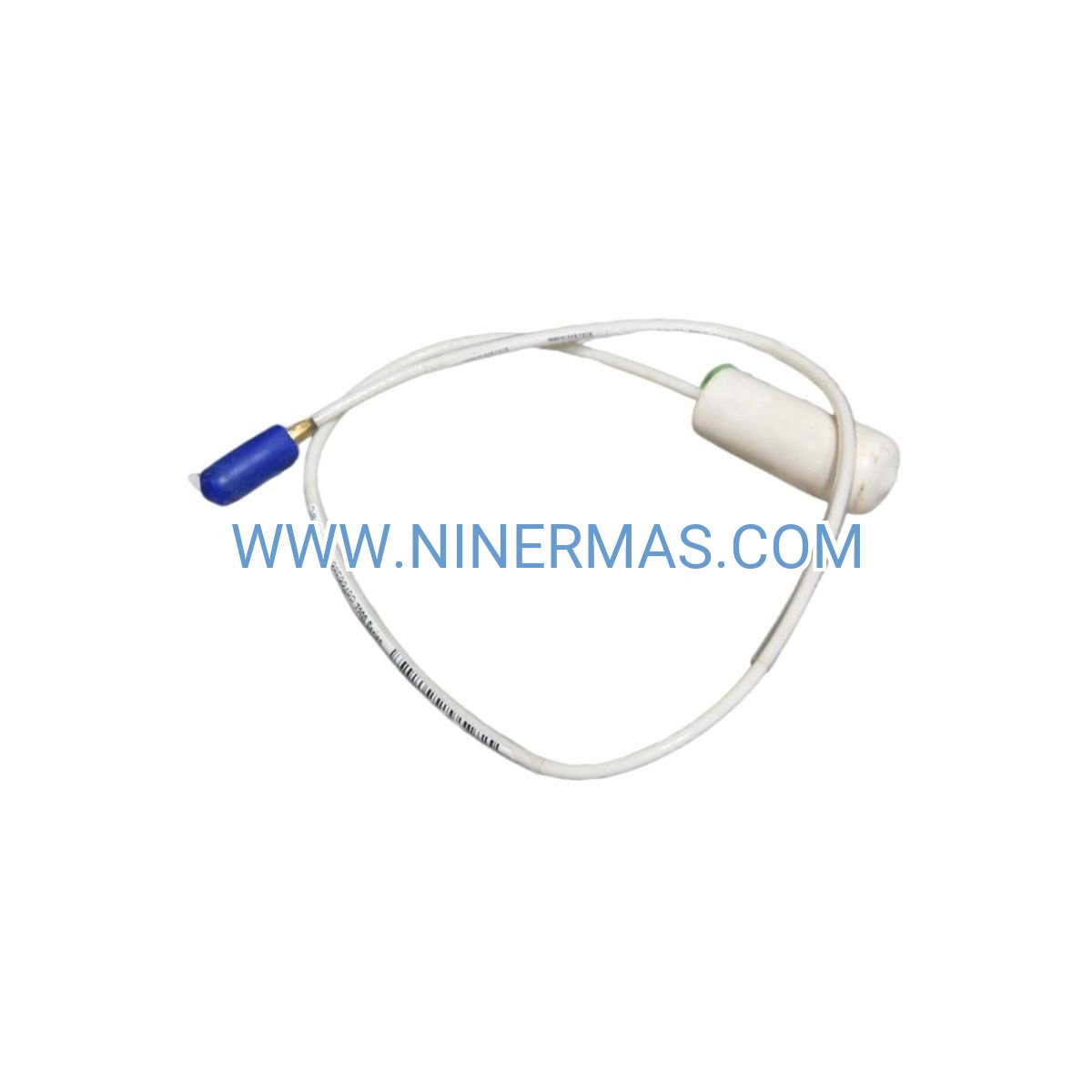
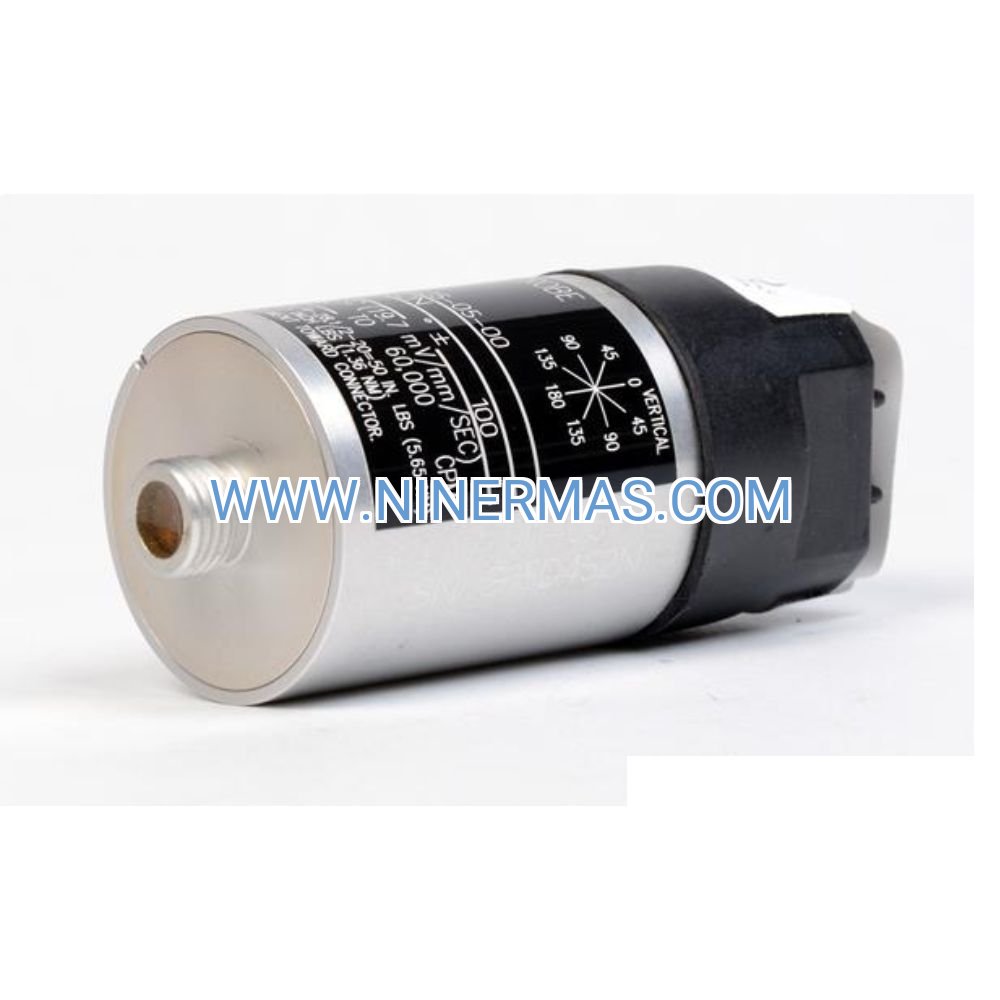
The Bently Nevada 21500 Velomitor velocity sensor is a precision industrial vibration monitoring device designed for rotating machinery condition assessment. Through advanced piezoelectric sensing technology and integrated signal conditioning, it delivers real-time velocity measurements that enable early fault detection, predictive maintenance scheduling, and equipment protection across critical industrial assets.
Engineered for high-reliability applications including turbines, compressors, pumps, motors, and gearboxes, this sensor addresses common challenges such as unexpected equipment failures, excessive downtime, inaccurate vibration data, and costly reactive maintenance. It is widely deployed in power generation plants, petrochemical facilities, manufacturing operations, and heavy industrial environments where continuous machinery health monitoring is essential.
With ISO 10816 compliance, rugged construction, and field-proven performance, the 21500 series offers seamless integration with DCS/SCADA systems, compatibility with industry-standard monitoring platforms, and flexible mounting options. Ideal for plant engineers, maintenance teams, reliability specialists, and system integrators seeking to optimize asset performance and reduce unplanned outages. Contact our application engineers for customized selection guidance and technical specifications.
Core Features & Advantages
- High-Precision Velocity Measurement
Delivers accurate vibration velocity data across 10Hz to 1kHz frequency range with 100mV/mm/s sensitivity, enabling detection of bearing wear, unbalance, misalignment, and mechanical looseness before catastrophic failure occurs. - ISO 10816 Compliance for Machinery Evaluation
Fully compliant with ISO 10816 international standards for rotating machinery vibration assessment, ensuring measurement consistency and facilitating condition-based maintenance decision-making across global operations. - Rugged Industrial Construction
Hermetically sealed stainless steel housing with IP67 protection rating withstands harsh environments including temperature extremes (-40°C to +120°C), moisture, oil contamination, and mechanical shock—ensuring long-term reliability in demanding applications. - Integrated Signal Conditioning
Built-in electronics provide low-impedance voltage output compatible with standard PLC, DCS, and vibration monitoring systems, eliminating the need for external signal conditioners and simplifying installation. - Versatile Mounting & Installation
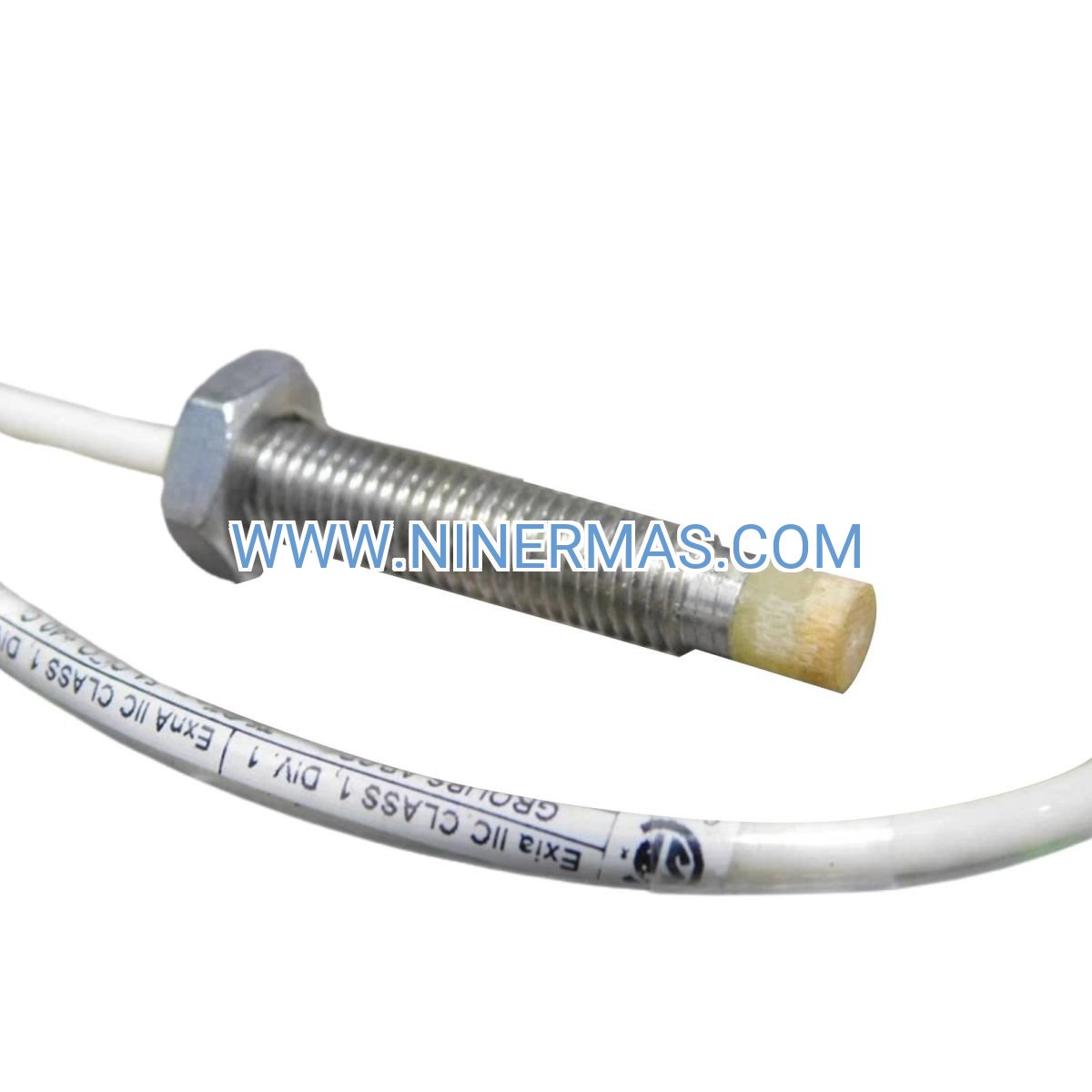
Supports multiple mounting configurations (stud, adhesive, magnetic base) with standard M10 thread, allowing flexible deployment on various machine surfaces and quick sensor repositioning during commissioning or troubleshooting. - Wide Application Compatibility
Proven performance across diverse rotating equipment types and speeds, from low-speed fans (300 RPM) to high-speed turbomachinery (12,000+ RPM), making it a universal solution for multi-asset monitoring programs.
Typical Application Scenarios
The Bently Nevada 21500 Velomitor sensor is engineered for applications demanding continuous vibration monitoring, high measurement accuracy, and long-term operational stability, particularly in:
- Power Generation & Turbomachinery
Monitors steam turbines, gas turbines, generators, and auxiliary equipment in power plants, detecting rotor imbalance, bearing degradation, and blade fouling to prevent forced outages and optimize maintenance intervals. - Oil & Gas Processing Facilities
Protects critical rotating equipment including compressors, pumps, and blowers in upstream, midstream, and downstream operations, ensuring process continuity and compliance with safety regulations in hazardous environments. - Manufacturing & Heavy Industry
Provides real-time condition monitoring for production machinery such as motors, gearboxes, fans, and conveyors in steel mills, cement plants, paper mills, and automotive manufacturing, reducing unplanned downtime and maintenance costs. - Water & Wastewater Treatment
Ensures reliable operation of pumps, blowers, and agitators in municipal and industrial water treatment facilities, supporting predictive maintenance strategies and extending equipment service life. - HVAC & Building Systems
Monitors large chillers, cooling tower fans, and air handling units in commercial buildings and data centers, enabling proactive maintenance and energy efficiency optimization.
Technical Parameters & Selection Guide
To facilitate engineering design and equipment selection, we provide comprehensive technical specifications for the Bently Nevada 21500 series. Custom configurations are available to meet specific project requirements.
| Parameter | Specification |
|---|---|
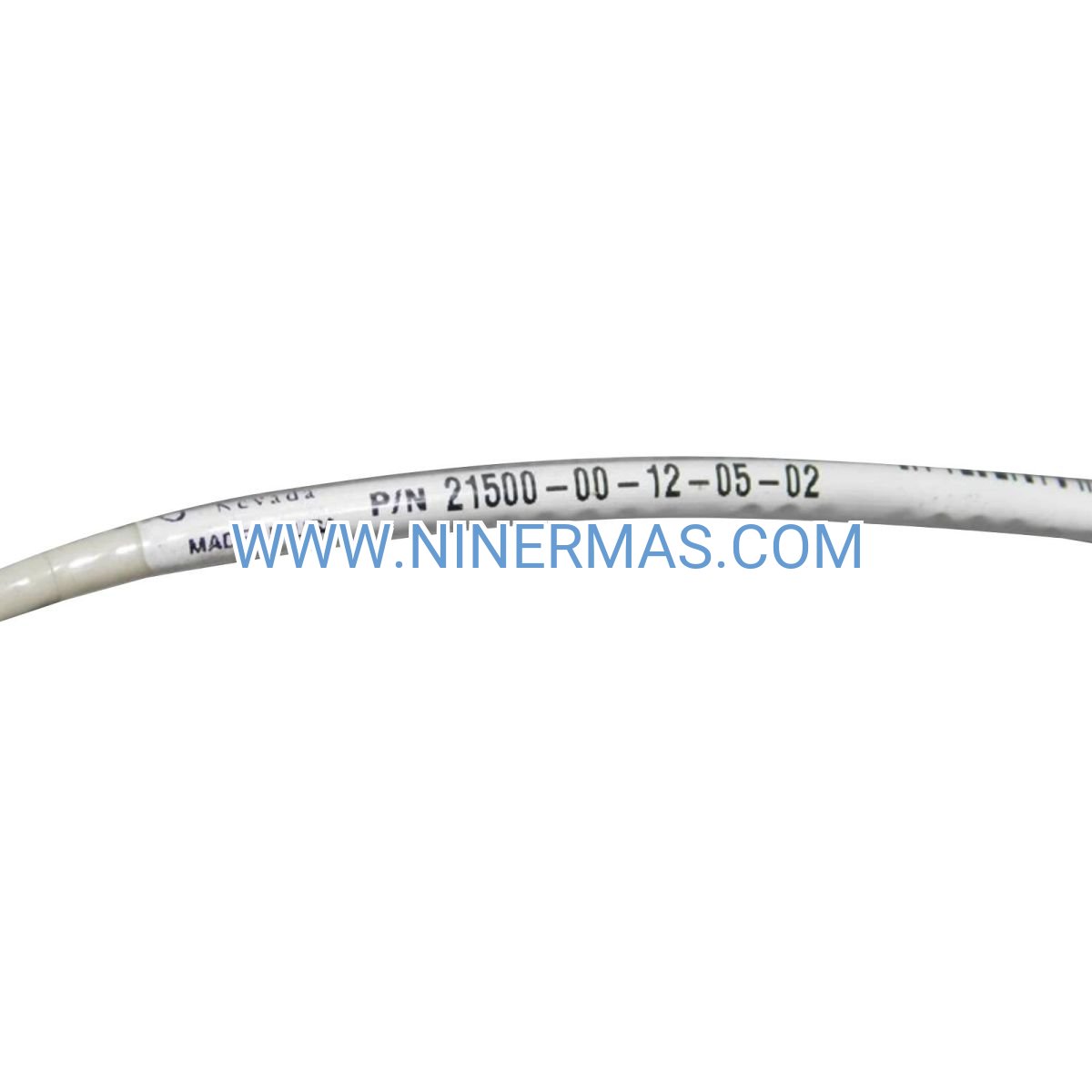
| Model Number | 21500-00-12-05-02 |
| Sensor Type | Piezoelectric Velocity Sensor (Velomitor) |
| Frequency Range | 10 Hz to 1 kHz (±3 dB) |
| Sensitivity | 100 mV/(mm/s) ±5% |
| Measurement Range | 0 to 50 mm/s RMS (typical) |
| Output Signal | Low-impedance voltage (< 100Ω) |
| Power Supply | 18-30 VDC, constant current (2-20 mA) |
| Operating Temperature | -40°C to +120°C (-40°F to +248°F) |
| Protection Rating | IP67 (hermetically sealed) |
| Housing Material | Stainless steel (316L) |
| Mounting Thread | M10 x 1.5 (standard) |
| Cable Connection | Integral 2-meter cable with connector |
| Weight | Approximately 200g |
| Compliance Standards | ISO 10816, API 670 |
Selection Recommendations: When specifying vibration sensors, consider the following factors: machinery type and operating speed, expected vibration levels and frequency content, ambient temperature and environmental conditions, mounting surface characteristics, required cable length and connector type, compatibility with existing monitoring systems, and applicable industry standards. For assistance with sensor selection, please provide equipment details including machine type, rated speed (RPM), bearing configuration, operating environment, and monitoring system interface requirements. Our application engineers will recommend the optimal sensor configuration and provide installation guidance.
System Integration & Connectivity
- DCS/SCADA Integration: Standard 4-20mA or 0-10V output interfaces directly with distributed control systems, enabling real-time vibration trending and alarm management within existing plant automation infrastructure.
- Vibration Monitoring Systems: Compatible with Bently Nevada 3500 series monitors, portable analyzers, and third-party condition monitoring platforms supporting velocity input channels.
- Wireless Connectivity Options: Can be paired with wireless transmitters (available separately) for retrofit applications where cabling is impractical, supporting IIoT and Industry 4.0 initiatives.
- Multi-Point Monitoring: Multiple sensors can be deployed across a single machine or production line, with centralized data acquisition and analysis for comprehensive asset health assessment.
Delivery, Service & Quality Assurance
Lead Time: Standard catalog items typically ship within 3-5 business days from stock. Custom configurations or large quantity orders require 2-4 weeks production time depending on specifications.
Warranty Coverage: All Bently Nevada 21500 sensors include a 12-month manufacturer warranty covering defects in materials and workmanship. Extended warranty options are available upon request.
Technical Support: Comprehensive technical assistance includes pre-sales application consulting, installation guidance, commissioning support, and troubleshooting. Remote support and on-site service are available based on project location and requirements.
Documentation Package: Each sensor ships with complete technical documentation including product datasheet, installation instructions, wiring diagrams, calibration certificate, and dimensional drawings—facilitating seamless integration and compliance with quality management systems.
Quality Certifications: Manufactured under ISO 9001 quality management system with full traceability. Complies with CE, RoHS, and applicable industry standards for industrial instrumentation.
Frequently Asked Questions (FAQ)
Q: How does the Bently Nevada 21500 Velomitor velocity sensor integrate with existing vibration monitoring systems?
A: The sensor provides a standard low-impedance voltage output (100 mV/mm/s) that connects directly to most vibration monitors, PLCs, and data acquisition systems supporting velocity input. It requires a constant-current power supply (18-30 VDC, 2-20 mA) which is typically provided by the monitoring system. Wiring is straightforward using the integral cable and connector—consult your monitoring system documentation for specific input channel configuration.
Q: What is the maximum number of sensors that can be connected to a single monitoring channel?
A: Each sensor requires a dedicated monitoring channel due to its active output design. For multi-point monitoring, use a multi-channel vibration monitor or data acquisition system with sufficient input channels. Typical installations use 2-4 sensors per machine (horizontal, vertical, axial directions on drive and non-drive ends).
Q: What level of energy savings or maintenance cost reduction can be expected with vibration monitoring?
A: While the sensor itself does not directly save energy, implementing condition-based maintenance using vibration monitoring typically reduces maintenance costs by 20-30% and unplanned downtime by 40-50% compared to reactive maintenance approaches. Actual savings depend on equipment criticality, current maintenance practices, and failure history. Early detection of developing faults prevents catastrophic failures and extends equipment life by 15-25%.
Q: What are the installation environment requirements and protection rating?
A: The sensor is rated IP67 (dust-tight and protected against temporary immersion) and operates reliably in temperatures from -40°C to +120°C. It withstands typical industrial environments including moisture, oil mist, and moderate chemical exposure. Avoid direct steam impingement, continuous submersion, or corrosive atmospheres beyond stainless steel compatibility. Ensure proper mounting surface preparation (clean, flat, rigid) for accurate measurements.
Q: Can the sensor support remote monitoring and data acquisition via industrial protocols?
A: The sensor outputs an analog voltage signal that can be digitized by monitoring systems supporting Modbus, OPC UA, Profibus, or other industrial protocols. For direct wireless connectivity, pair the sensor with a compatible wireless transmitter or edge gateway device. Many modern vibration monitoring platforms offer cloud connectivity for remote access, trending, and predictive analytics.
Q: Is factory calibration included, and how often does recalibration need to be performed?
A: Each sensor is factory-calibrated and ships with a calibration certificate traceable to national standards. Under normal operating conditions, recalibration is recommended every 2-3 years or per your facility's calibration management program. Field verification can be performed using a portable vibration calibrator to confirm sensor accuracy without removing it from service.
Request Technical Selection Support
To receive a detailed sensor selection recommendation, technical specification sheet, or project quotation, please provide the following information: Project name and application, Equipment type and model (pump, motor, turbine, etc.), Operating speed range (RPM), Expected vibration levels, Mounting location and surface type, Ambient temperature range, Monitoring system interface requirements, Quantity required, and Delivery timeline. Our application engineers will provide one-on-one consultation to ensure optimal sensor selection and successful project implementation.
© 2026 NINERMAS COMPANY LIMITED. All rights reserved.
Original Source: https://ninermas.com
Contact: sale@ninermas.com | +0086 187 5021 5667

Contact Info
-
Address:22 / F, South Wo Hang building, 148 Wing Lok Street, Sheung Wan, Western District, Hong Kong
-
Phone:+8618750215667
-
Email: