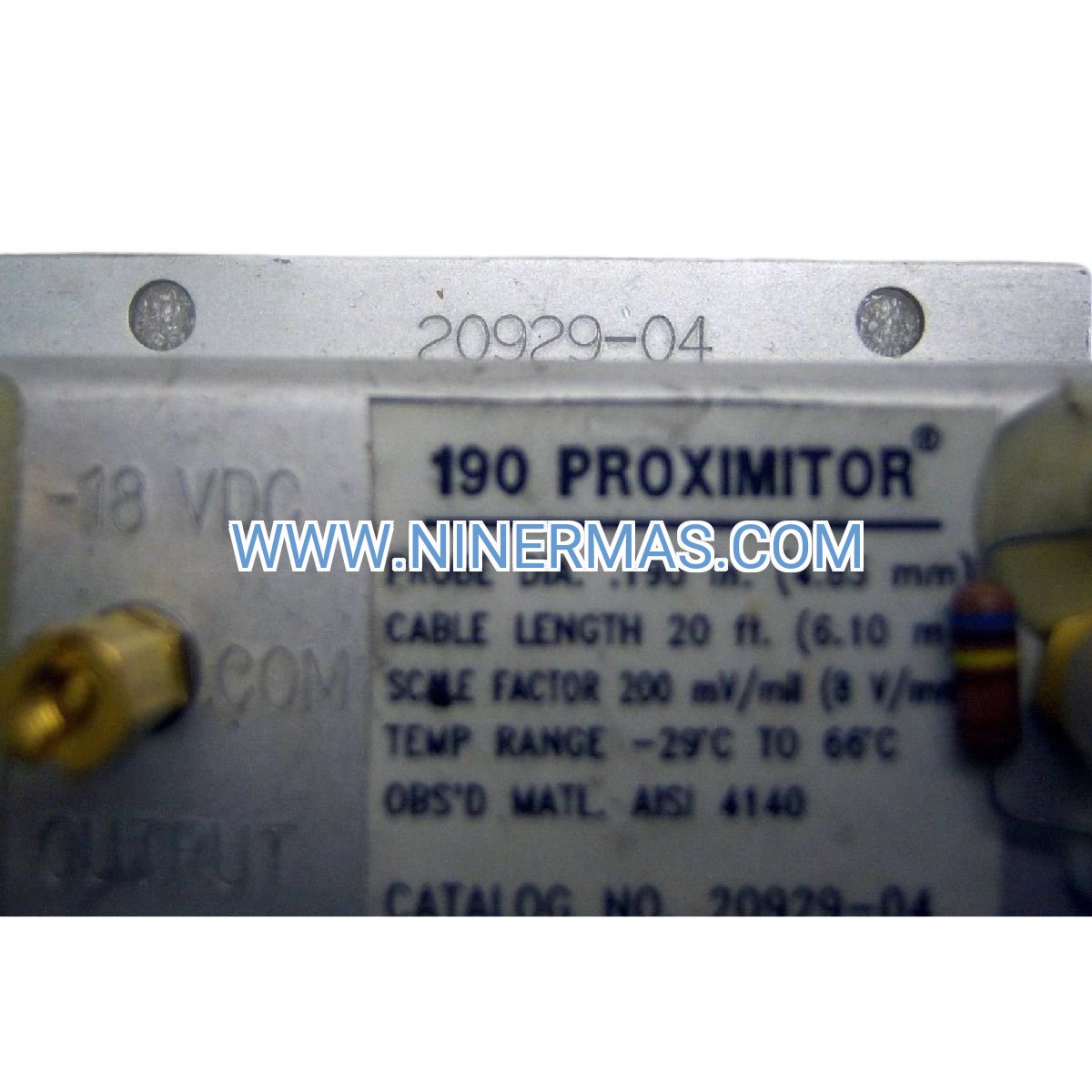
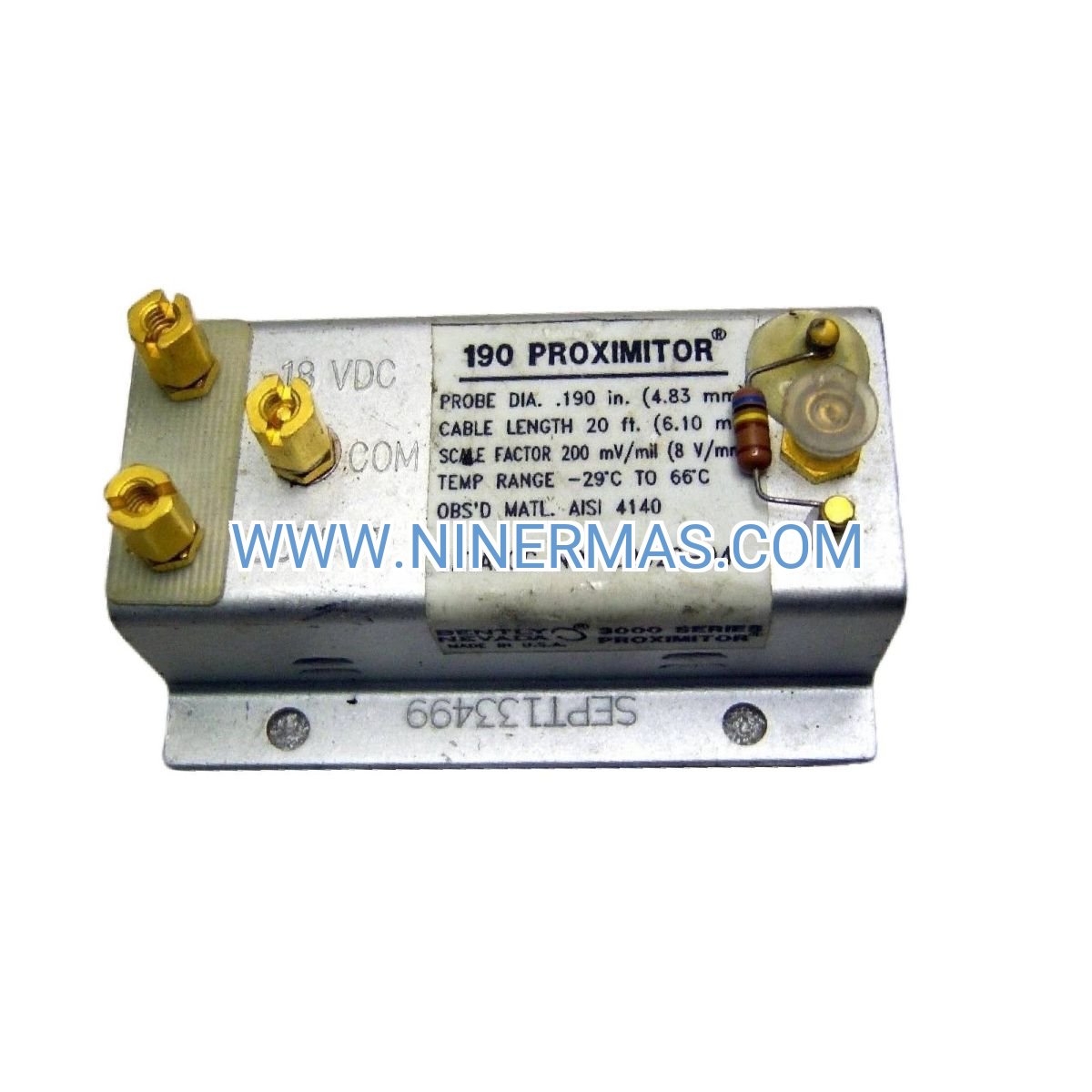
Bently Nevada 20929-04 Proximity Sensor Extension Cable | Industrial Vibration Monitoring | API 670 Compliant
Description
Bently Nevada 20929-04 Proximity Sensor Extension Cable (Industrial-Grade Vibration Monitoring Solution)
The Bently Nevada 20929-04 Extension Cable is a factory-certified shielded cable designed for seamless integration with 3300 XL proximity sensor systems. Engineered with precision shielding and temperature-resistant insulation, it ensures reliable signal transmission in harsh industrial environments, enabling accurate vibration monitoring, rotor position tracking, and machinery protection across turbines, compressors, and rotating equipment.
Ideal for power generation plants, petrochemical facilities, oil & gas refineries, steel mills, and heavy machinery OEMs, this extension cable addresses critical challenges such as signal degradation over long distances, electromagnetic interference (EMI), thermal stress in high-temperature zones, and compliance with stringent API 670 machinery protection standards.
Through standardized design and field-proven reliability, the 20929-04 cable delivers superior EMI immunity, wide operating temperature range (-40°C to +125°C), plug-and-play compatibility with Bently Nevada proximitors, and full API 670 certification—making it the preferred choice for design engineers, instrumentation contractors, maintenance teams, and plant reliability managers. Contact our application engineers for cable length selection, routing guidance, and system integration support.
Core Features & Advantages
- Factory-Calibrated Shielding Technology
Triple-layer shielded construction with 360° coverage effectively blocks EMI and RFI interference from VFDs, motors, and high-voltage equipment, ensuring clean signal integrity for precise vibration measurement and early fault detection. - Extended Temperature Performance
Rated for continuous operation from -40°C to +125°C, the cable withstands extreme thermal cycling in steam turbines, gas compressors, and outdoor installations, reducing downtime and replacement frequency by up to 40% compared to standard cables. - Plug-and-Play Compatibility
Pre-terminated connectors mate directly with Bently Nevada 3300 XL proximitors and monitor racks (3300 XL 8mm, 3300 XL 11mm, 3300 XL NSv systems), eliminating field wiring errors and accelerating commissioning time by 50%. - API 670 Certified Reliability
Fully compliant with API 670 5th Edition machinery protection system requirements, including cable capacitance tolerance, insulation resistance, and shield continuity—ensuring regulatory approval for critical rotating machinery applications. - Robust Mechanical Design
Flexible yet durable jacket resists abrasion, oil, moisture, and UV exposure, with bend radius optimized for tight cable trays and conduit routing. Strain relief boots prevent connector fatigue during installation and vibration. - Comprehensive Quality Assurance
Each cable undergoes 100% factory testing for continuity, insulation resistance (>500 MΩ), and capacitance matching. Supplied with calibration certificate and traceability documentation for audit compliance.
Typical Application Scenarios
This extension cable is engineered for demanding environments where vibration monitoring accuracy and system uptime are critical:
- Steam & Gas Turbine Monitoring
Extends proximity sensor reach in turbine pedestals and bearing housings, enabling real-time shaft vibration and axial position monitoring. Prevents catastrophic failures in power generation units by detecting bearing wear, rotor imbalance, and thrust issues early. - Petrochemical Rotating Equipment
Supports continuous monitoring of centrifugal compressors, pumps, and blowers in refineries and chemical plants. Withstands exposure to hydrocarbon vapors, high ambient temperatures, and corrosive atmospheres while maintaining signal fidelity. - Industrial Gearbox & Motor Systems
Facilitates vibration analysis on large motors, gearboxes, and drive trains in steel mills, mining operations, and manufacturing plants. Helps implement predictive maintenance programs that reduce unplanned shutdowns by 30–50%. - Offshore & Marine Propulsion
Provides reliable sensor connectivity in ship engine rooms, offshore platform compressors, and subsea pump systems. Salt-fog resistant and shock-tolerant design ensures performance in harsh marine environments. - OEM Machinery Integration
Enables turbine manufacturers, compressor OEMs, and packaged equipment builders to deliver turnkey vibration monitoring systems with factory-tested cabling, reducing field commissioning time and warranty claims.
Technical Parameters & Selection Guide
To ensure optimal system performance, the 20929-04 cable is designed with the following specifications. Custom lengths and connector configurations are available for project-specific requirements.
| Parameter | Specification |
|---|---|
| Cable Length | Standard: 1m, 3m, 5m, 10m (Custom lengths available) |
| Connector Type | Bently Nevada proprietary bayonet (proximitor end) / BNC or MIL-spec (monitor end) |
| Operating Temperature | -40°C to +125°C continuous |
| Shielding Effectiveness | >90 dB @ 10 MHz (triple-layer braid + foil) |
| Insulation Resistance | >500 MΩ @ 500 VDC |
| Capacitance | Factory-matched to proximitor (typically 1.0–1.2 pF/mm) |
| Voltage Rating | 300 VAC / 500 VDC |
| Bend Radius | Minimum 10× cable diameter (dynamic), 5× (static) |
| Jacket Material | Fluoropolymer (FEP) or TPE, oil & chemical resistant |
| Compliance Standards | API 670, IEC 61508 SIL 2, RoHS, REACH |
| Protection Rating | IP67 (when mated) |
| Weight | Approx. 0.2 kg/m (varies by length) |
Selection Recommendations:
When selecting cable length, consider: (1) distance from proximitor mounting location to monitor rack, (2) cable routing path (overhead tray, underground conduit, or exposed runs), (3) allowance for service loops and future modifications, (4) total system capacitance budget per API 670 guidelines. For installations exceeding 15 meters or high-EMI environments (near VFDs, welding equipment), consult our engineers for signal integrity analysis and potential use of active extension modules.
Extended Capabilities
- Modular System Integration: Compatible with Bently Nevada 3500 rack monitors, ADAPT software, and System 1 condition monitoring platforms for centralized data acquisition and predictive analytics.
- Hazardous Area Certification: Available with ATEX, IECEx, and CSA approvals for Zone 1/Division 1 installations in explosive atmospheres (consult for certified part numbers).
- Custom Engineering: Support for non-standard lengths, armored jackets, hybrid cables (combining power + signal), and multi-channel bundles for complex machinery layouts.
- Retrofit & Upgrade Kits: Pre-assembled cable kits with mounting hardware, labels, and installation guides for quick replacement of legacy Bently Nevada 3300 or Metrix systems.
Delivery, Service & Quality Assurance
Lead Time: Standard cable lengths (1m–10m) ship from stock within 2–5 business days. Custom configurations require 10–15 business days for fabrication and testing.
Warranty: 12-month manufacturer warranty covering material defects and workmanship. Extended warranties and calibration services available upon request.
Technical Support: Our application engineers provide remote consultation for cable routing design, capacitance calculations, and troubleshooting. On-site commissioning support available for large projects (subject to location and scope).
Documentation Package: Each cable ships with: (1) Factory test report with serial number traceability, (2) Dimensional drawing and pinout diagram, (3) Installation instructions and best practices guide, (4) Material certificates (RoHS, REACH compliance), (5) API 670 compliance statement.
Quality Certifications: Manufactured in ISO 9001:2015 certified facilities. Cables undergo 100% electrical testing, high-pot testing, and visual inspection before shipment.
Frequently Asked Questions (FAQ)
Q: How do I connect the Bently Nevada 20929-04 extension cable to my existing 3300 XL proximity sensor system?
A: The cable features a bayonet-style connector on the proximitor end that mates directly with the sensor's output. The monitor end typically uses a BNC or MIL-spec connector compatible with 3300 XL monitor racks. Ensure the total system capacitance (sensor + cable) remains within the monitor's specified range (consult your monitor datasheet or contact us for verification).
Q: What is the maximum cable length I can use without signal degradation?
A: For standard 3300 XL 8mm proximitors, total cable length (sensor integral cable + extension) should not exceed 9 meters to maintain API 670 compliance. For longer runs (up to 15m), use 3300 XL 11mm proximitors or active extension modules. We recommend a site-specific capacitance calculation for runs beyond 10 meters.
Q: Can this cable be used in hazardous (explosive) environments?
A: The standard 20929-04 is suitable for general industrial use. For Zone 1/Division 1 hazardous areas, request the ATEX/IECEx certified variant (part number suffix may differ). Ensure the entire monitoring loop (sensor, cable, barrier, monitor) carries appropriate certifications.
Q: What is the expected service life of the cable in high-temperature applications?
A: When operated within the rated temperature range (-40°C to +125°C), the cable jacket and insulation are designed for 10+ years of continuous service. Actual lifespan depends on installation quality (bend radius, strain relief) and environmental factors (UV exposure, chemical contact). Periodic inspection per API 670 guidelines is recommended.
Q: Does the cable support remote monitoring and data integration with SCADA or DCS systems?
A: The cable itself is a passive signal conduit. Remote monitoring capability depends on the connected Bently Nevada monitor (e.g., 3500 series with Modbus, 4-20mA, or Ethernet outputs). The cable ensures signal integrity from sensor to monitor; the monitor then interfaces with your plant control system via standard industrial protocols.
Q: What installation precautions should I take to maximize cable performance?
A: (1) Maintain minimum bend radius to prevent shield damage, (2) Route cables away from high-current power lines and VFDs (minimum 300mm separation), (3) Use proper grounding—connect shield to monitor chassis ground only (avoid ground loops), (4) Secure cables with appropriate clamps to prevent vibration-induced fatigue, (5) Protect outdoor runs from direct sunlight and moisture ingress.
Request a Quote or Technical Consultation
To receive a detailed selection recommendation, pricing, or application-specific engineering support, please provide the following information:
- Project name and application (e.g., steam turbine retrofit, new compressor package)
- Machinery type and operating conditions (temperature, vibration levels, hazardous area classification)
- Required cable length(s) and quantity
- Existing Bently Nevada system details (proximitor model, monitor type, current cable configuration)
- Delivery timeline and installation support requirements
Our instrumentation specialists will respond within 24 hours with a tailored solution, technical drawings, and competitive pricing.
© 2026 NINERMAS COMPANY LIMITED. All rights reserved. Original Source: https://ninermas.com | Contact: sale@ninermas.com | +0086 187 5021 5667

Contact Info
-
Address:22 / F, South Wo Hang building, 148 Wing Lok Street, Sheung Wan, Western District, Hong Kong
-
Phone:+8618750215667
-
Email: