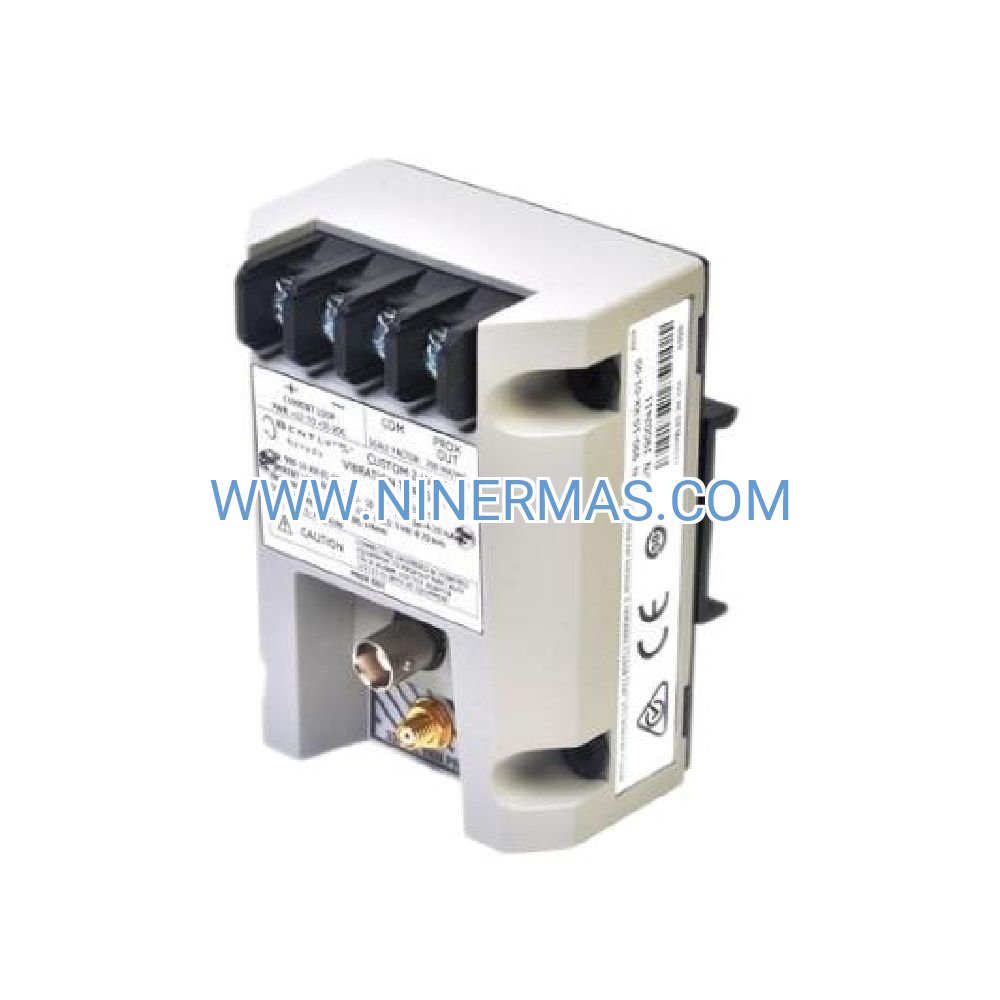
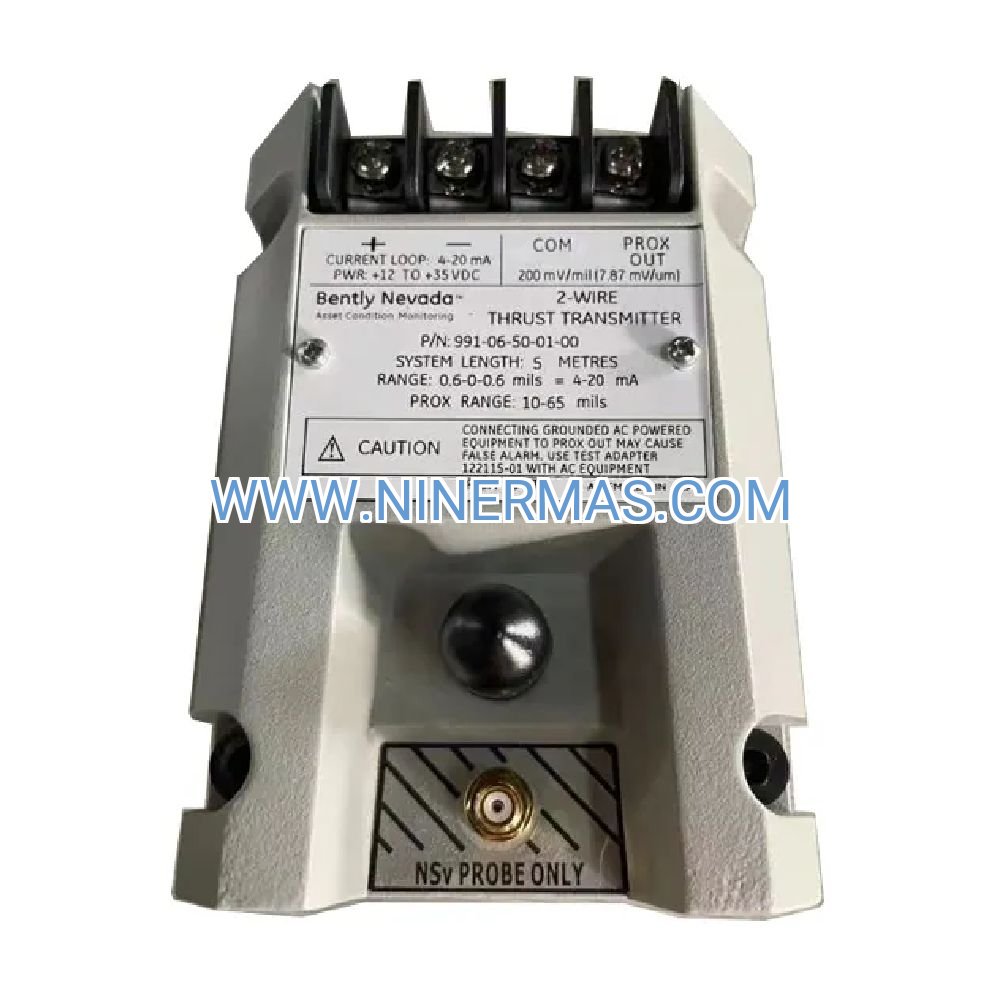
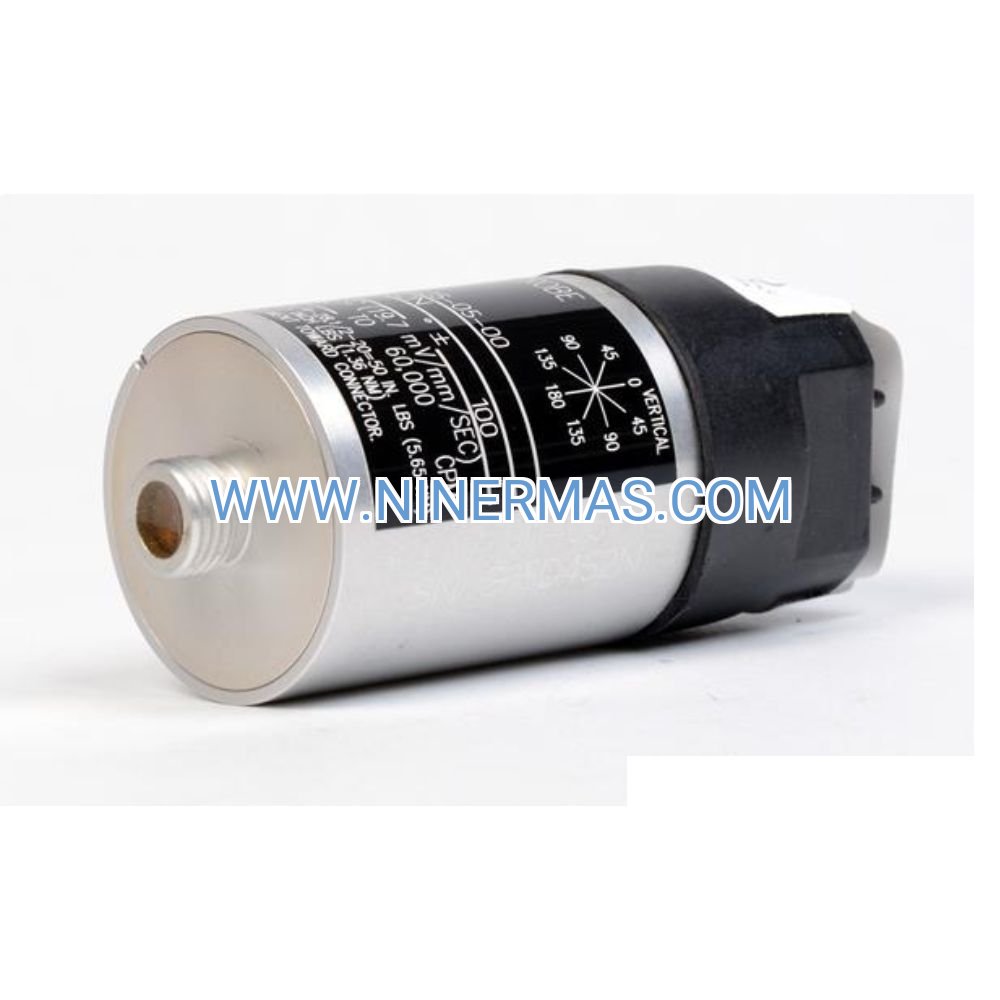
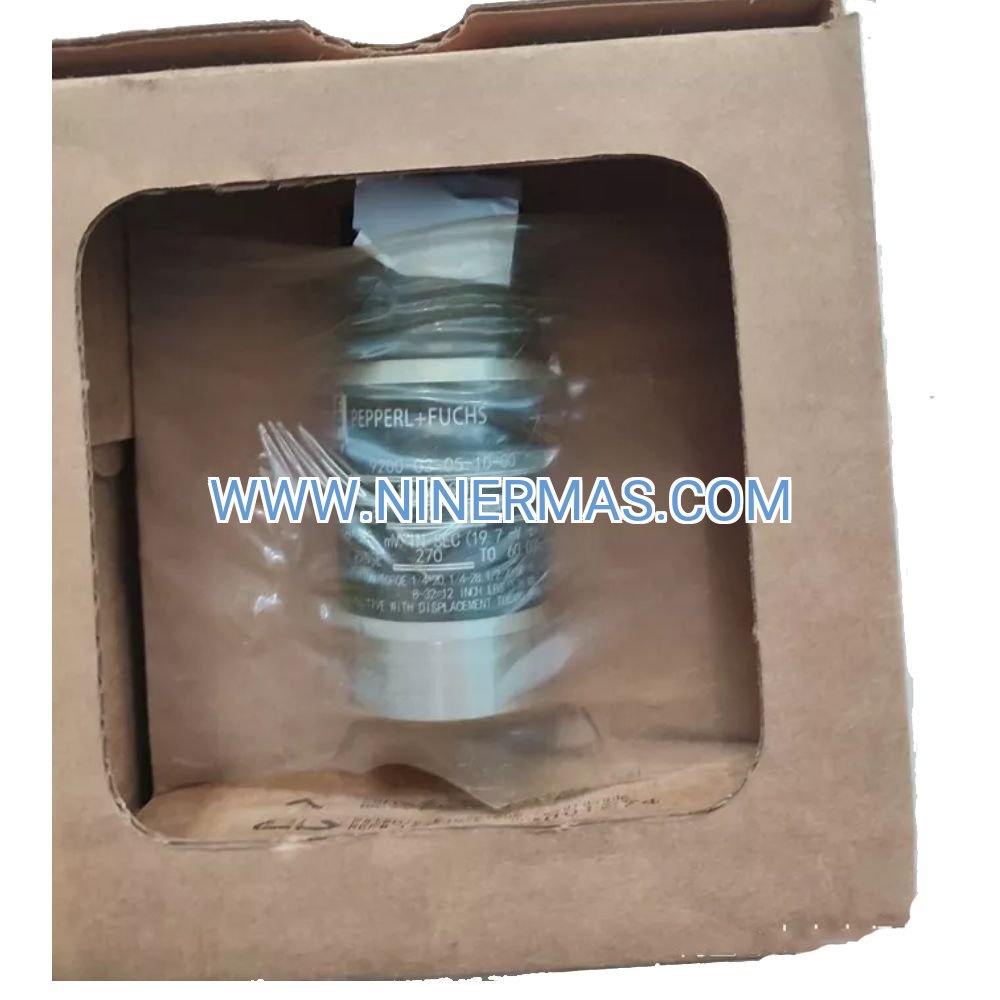
Bently Nevada 1900/55 Proximity Sensor System | API 670 Certified Industrial Vibration Monitor
Description
Bently Nevada 1900/55 Proximity Sensor System (Industrial-Grade Vibration Monitoring Solution)
The Bently Nevada 1900/55 Proximity Sensor System is a precision industrial monitoring device designed for critical rotating machinery applications. Through advanced eddy current sensing technology and API 670-compliant signal conditioning, it delivers real-time shaft displacement, vibration, and position measurement with exceptional accuracy and reliability.
Ideal for turbomachinery monitoring in power generation plants, oil & gas facilities, petrochemical refineries, steel mills, and heavy industrial manufacturing environments. This system helps prevent catastrophic equipment failures by detecting abnormal vibration patterns, shaft eccentricity, bearing wear, rotor imbalance, and thermal growth issues before they escalate into costly downtime.
Engineered with field-proven reliability and backed by comprehensive technical support, the 1900/55 system features factory calibration, wide temperature tolerance, and seamless integration with DCS/SCADA platforms. Suitable for design engineers, maintenance teams, instrumentation contractors, and OEM equipment manufacturers seeking dependable condition monitoring solutions. Contact our application engineers for customized configuration and technical consultation.
Core Features & Advantages
- API 670 Compliance & Industry Standards
Fully compliant with API 670 4th Edition requirements for vibration, axial position, and eccentricity monitoring systems, ensuring regulatory acceptance and insurance qualification for critical machinery installations. - Wide Frequency Response & High Precision
DC to 10 kHz bandwidth captures both low-frequency shaft position and high-frequency vibration events, with ±1% linearity across the full measurement range, enabling accurate fault diagnosis and trending analysis. - Extended Temperature Range & Harsh Environment Durability
Operates reliably from -40°C to +177°C (-40°F to +350°F) ambient conditions, with IP65-rated sensor construction resistant to moisture, dust, oil mist, and chemical exposure common in industrial settings. - Factory Calibration & Plug-and-Play Integration
Each system ships with traceable calibration certificates and pre-configured sensitivity settings, reducing commissioning time and eliminating field calibration errors. Compatible with standard 3300 XL framework mounting. - Comprehensive Protection Functions
Built-in diagnostics detect sensor cable faults, open circuits, short circuits, and out-of-range conditions, with isolated 4-20mA output and relay alarm contacts for fail-safe integration with plant safety systems. - Flexible Output & Communication Options
Provides buffered -10V to +10V proportional output, 4-20mA loop-powered signal, and optional Modbus RTU/TCP protocol support for seamless connectivity to PLCs, DCS platforms, and remote monitoring SCADA networks.
Typical Application Scenarios
This proximity sensor system is engineered for demanding industrial environments where continuous machinery health monitoring is mission-critical:
- Steam & Gas Turbine Monitoring
Monitors shaft radial vibration, thrust position, and differential expansion in power generation turbines, preventing blade rubs, bearing failures, and catastrophic rotor damage in 24/7 base-load operations. - Centrifugal Compressor & Pump Protection
Tracks impeller eccentricity, surge conditions, and bearing clearance changes in critical process compressors and high-pressure pumps used in oil refining, LNG liquefaction, and chemical production facilities. - Large Motor & Generator Bearing Surveillance
Detects early-stage bearing degradation, rotor bow, and thermal growth anomalies in electric motors above 500 HP and synchronous generators, reducing unplanned outages and maintenance costs. - Industrial Fan & Blower Condition Monitoring
Provides continuous vibration surveillance for induced draft fans, forced draft blowers, and exhaust gas handling equipment in cement kilns, steel furnaces, and waste-to-energy plants. - Gearbox & Coupling Alignment Verification
Enables precision shaft alignment measurement and coupling wear detection in multi-stage gearboxes, rolling mills, and paper machine drive trains, extending component service life.
Technical Parameters & Selection Guide
To facilitate engineering design and system specification, we provide standardized configuration options with customization capabilities for project-specific requirements:
| Parameter | Specification |
|---|---|
| Model Number | 1900/55-01-00-01-01 |
| Measurement Range | 0 to 100 mils (0 to 2.54 mm) typical |
| Frequency Response | DC to 10 kHz (-3dB) |
| Linearity Error | ±1% of full scale |
| Operating Temperature | -40°C to +177°C (-40°F to +350°F) |
| Power Supply | -24 VDC ±10% (typical) |
| Output Signal | -10V to +10V proportional, 4-20mA optional |
| Sensor Type | 8mm eddy current proximity probe |
| Cable Length | 5m or 9m standard (custom lengths available) |
| Protection Rating | IP65 (sensor), IP20 (proximitor housing) |
| Compliance Standards | API 670, ISO 20816, IEC 61508 |
| Mounting Thread | M18 x 1.5 or 3/4"-16 UNF |
Selection Recommendations: When specifying this system, consider the following parameters: maximum shaft displacement amplitude, shaft surface material and finish (conductivity requirements), installation space constraints, ambient temperature extremes, required output signal type (voltage/current), and integration protocol (analog/digital). For complex applications involving multiple measurement points, high-temperature environments, or hazardous area classifications, please provide detailed operating conditions to our application engineering team for optimized system configuration and compliance verification.
Extended Capabilities & Integration Options
- Multi-Channel Monitoring Systems: Scalable architecture supports 4, 8, 16, or 32-channel rack-mounted configurations for comprehensive turbomachinery monitoring with centralized data acquisition and alarm management.
- Hazardous Area Certifications: Available with ATEX Zone 1, IECEx, and CSA Class I Division 2 approvals for installation in explosive atmosphere environments (oil platforms, chemical plants, gas processing facilities).
- Wireless Transmission Modules: Optional WirelessHART or ISA100.11a adapters enable cable-free installation in retrofit applications or remote monitoring locations with encrypted data security.
- Predictive Analytics Integration: Compatible with System 1 condition monitoring software and third-party vibration analysis platforms for FFT spectrum analysis, trend forecasting, and machine learning-based anomaly detection.
Delivery, Service & Quality Assurance
Lead Time: Standard catalog configurations ship within 3-5 business days from regional distribution centers. Custom-configured systems with special cable lengths, mounting adapters, or certification packages require 10-15 business days for factory assembly and testing.
Warranty Coverage: All systems include a comprehensive 12-month manufacturer warranty covering materials and workmanship defects. Extended warranty programs (24/36 months) available for critical application support.
Technical Support: Complimentary remote commissioning assistance, troubleshooting guidance, and application engineering consultation provided via phone, email, and video conference. On-site installation supervision and training services available (subject to location and scope).
Documentation Package: Each shipment includes complete electrical schematics, mechanical installation drawings, wiring diagrams, calibration certificates, operation manuals (English/Chinese), and quick-start commissioning guides for streamlined integration and maintenance reference.
Quality Certifications: Manufactured under ISO 9001:2015 quality management system with full material traceability, factory acceptance testing (FAT) protocols, and compliance documentation for regulatory submissions.
Frequently Asked Questions (FAQ)
Q: How does the Bently Nevada 1900/55 proximity sensor system integrate with existing DCS or PLC control systems?
A: The system provides industry-standard -10V to +10V analog output or 4-20mA current loop signals that connect directly to universal analog input modules on most DCS/PLC platforms (Honeywell, Emerson, Siemens, Allen-Bradley, Yokogawa). For digital integration, optional Modbus RTU/TCP communication modules enable direct data exchange with SCADA networks. Wiring typically requires shielded twisted-pair cable with proper grounding to minimize electrical noise interference.
Q: What is the maximum number of sensors that can be monitored with a single proximitor housing?
A: The standard 1900/55 configuration is a single-channel system (one proximitor per sensor probe). For multi-point monitoring applications, rack-mounted chassis systems are available supporting 4 to 32 channels with shared power supply and centralized alarm outputs, reducing installation footprint and wiring complexity.
Q: What level of energy savings or efficiency improvement can be expected from implementing vibration monitoring?
A: While the sensor itself does not directly reduce energy consumption, early detection of mechanical faults (imbalance, misalignment, bearing wear) prevents efficiency degradation that typically increases energy usage by 5-15% in rotating equipment. Predictive maintenance enabled by continuous monitoring reduces unplanned downtime by 30-50% and extends mean time between failures (MTBF) by 40-60%, delivering significant operational cost savings.
Q: What are the environmental installation requirements and protection ratings for harsh industrial conditions?
A: The proximity probe features IP65-rated construction suitable for outdoor installation with protection against dust ingress and water jets. The proximitor housing is IP20-rated and should be mounted in a clean, dry control cabinet or junction box. Operating ambient temperature range is -40°C to +177°C for the probe, and -40°C to +85°C for the proximitor electronics. For corrosive atmospheres or extreme humidity, stainless steel probe housings and conformal-coated circuit boards are available.
Q: Can the system support remote monitoring and cloud-based data acquisition for Industry 4.0 applications?
A: Yes, when integrated with compatible edge gateway devices or IIoT data concentrators, the analog output signals can be digitized and transmitted to cloud platforms via MQTT, OPC UA, or RESTful API protocols. This enables remote vibration trending, mobile alert notifications, and integration with enterprise asset management (EAM) systems for centralized fleet monitoring across multiple plant locations.
Q: What technical information is needed to request a customized quotation or application-specific configuration?
A: Please provide the following details for accurate system sizing and pricing: (1) Machinery type and operating speed range (RPM), (2) Shaft diameter and surface material, (3) Expected maximum vibration amplitude, (4) Number of measurement points required, (5) Ambient temperature and environmental conditions, (6) Preferred output signal type and communication protocol, (7) Hazardous area classification (if applicable), (8) Installation mounting constraints and cable routing distance. Our application engineers will respond within 24 hours with technical recommendations and commercial quotation.
Request Technical Consultation & Custom Solutions
For detailed system configuration, engineering drawings, compliance documentation, or project-specific pricing, please submit the following information to our technical sales team:
- Project name and application overview
- Equipment type and operating parameters (speed, temperature, environment)
- Number of monitoring points and measurement requirements
- Preferred communication interface and control system integration
- Installation timeline and delivery schedule
- Regulatory compliance requirements (API, ATEX, IECEx, etc.)
Our certified application engineers will provide one-on-one consultation, system architecture recommendations, and comprehensive technical proposals tailored to your specific machinery protection needs.
© 2026 NINERMAS COMPANY LIMITED. All rights reserved. Original Source: https://ninermas.com
Contact: sale@ninermas.com | +0086 187 5021 5667

Contact Info
-
Address:22 / F, South Wo Hang building, 148 Wing Lok Street, Sheung Wan, Western District, Hong Kong
-
Phone:+8618750215667
-
Email: