Description
Industrial RMS Velocity Transmitter for Critical Machinery Protection
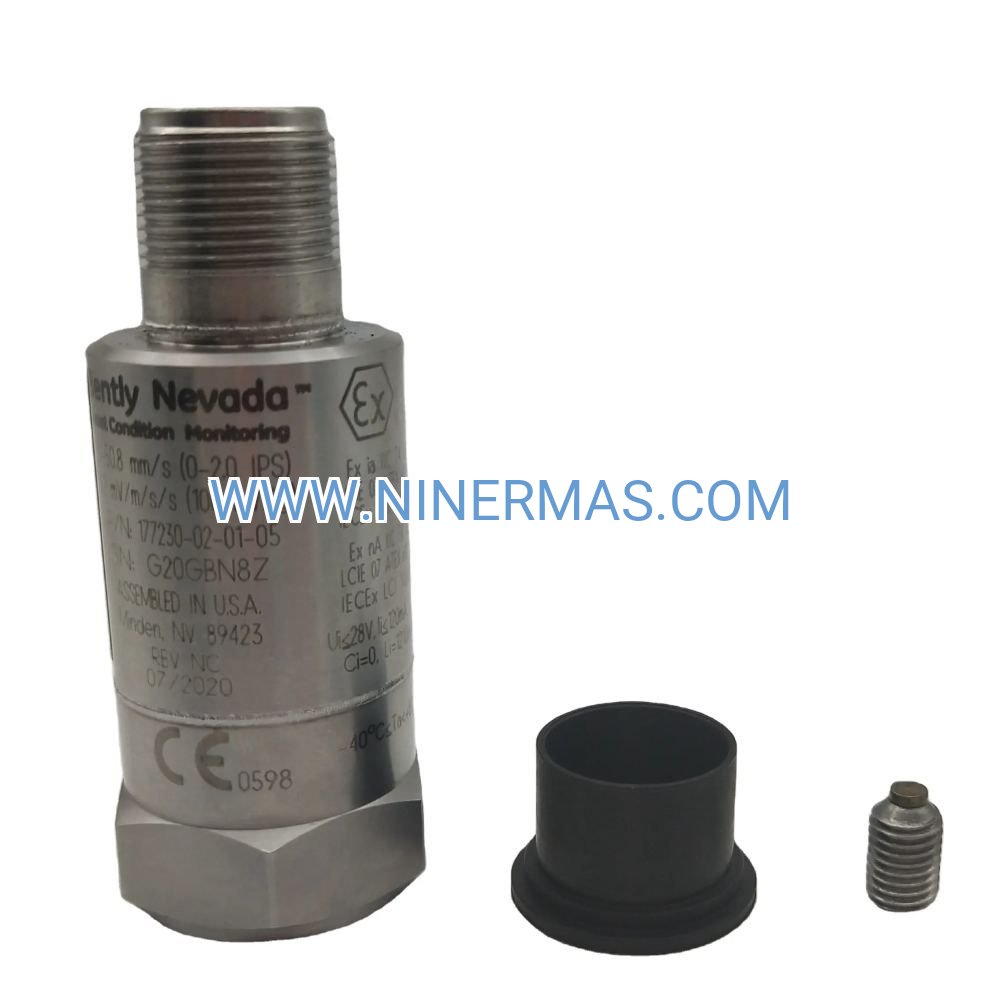
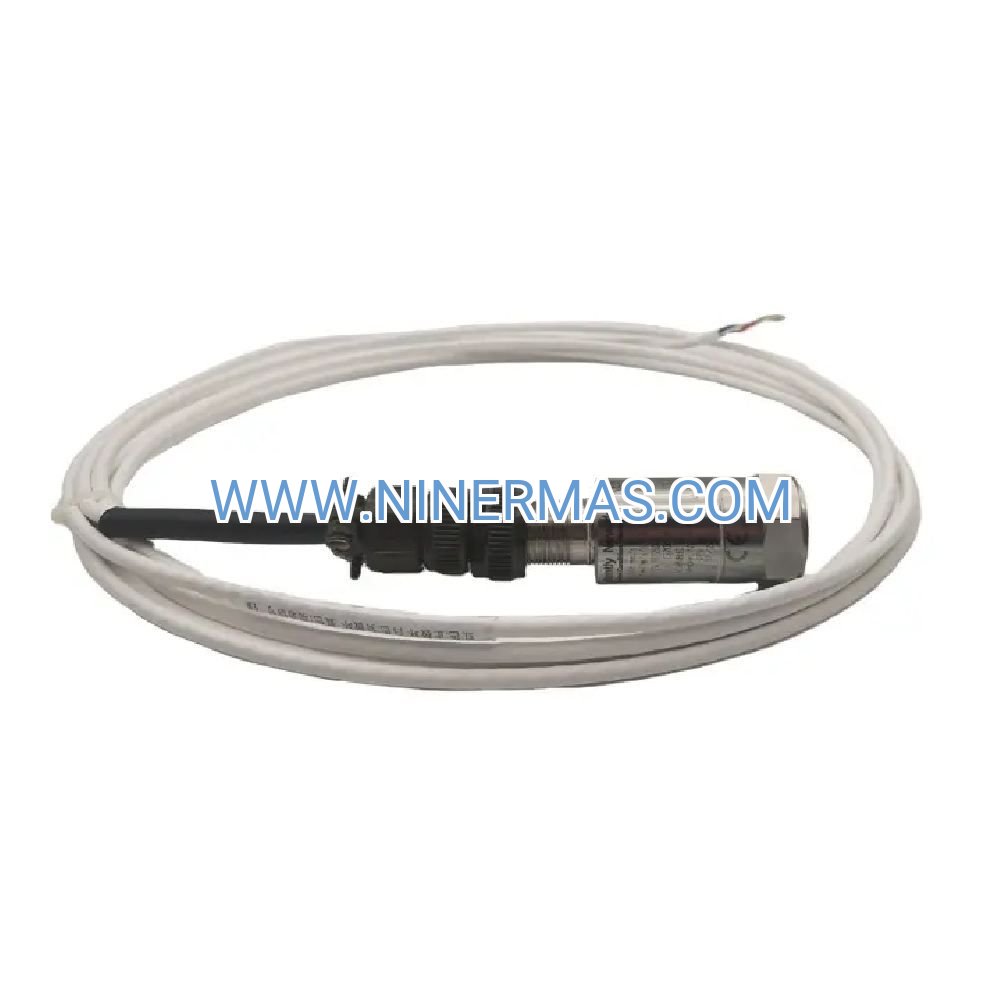
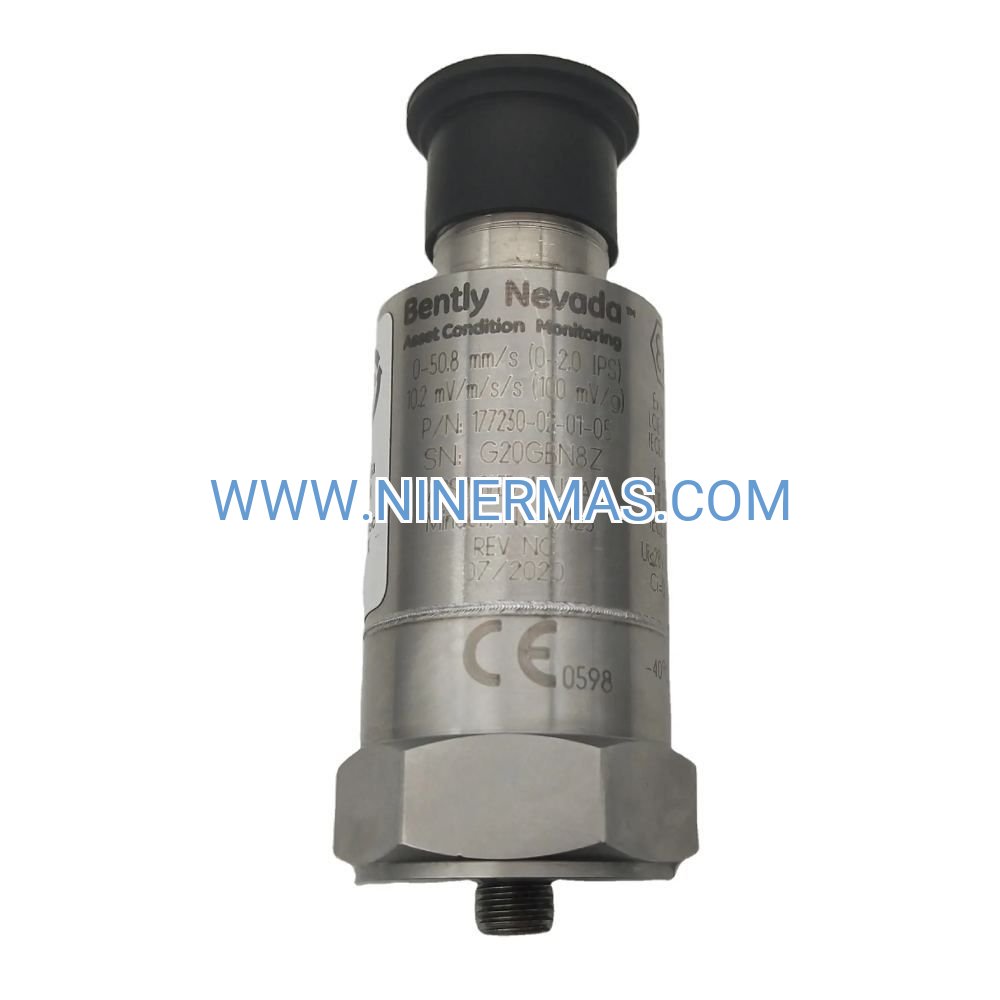
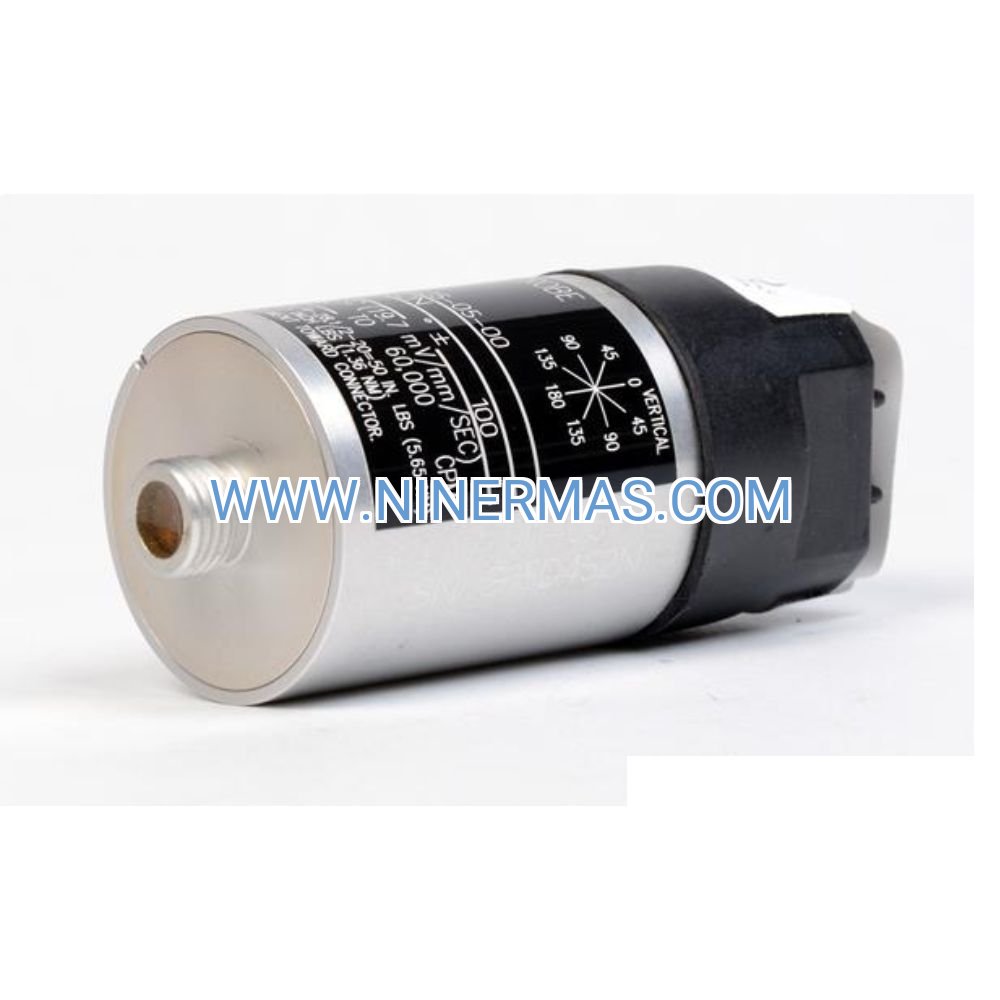
The 177230-01-01-CN represents a field-proven solution for continuous vibration velocity monitoring on rotating equipment. Built around a precision piezoelectric sensing element and integrated signal conditioning electronics, this transmitter converts mechanical vibration into a standardized 4-20 mA current signal proportional to RMS velocity magnitude. The aerospace-grade 316L stainless steel enclosure ensures decades of maintenance-free operation in corrosive industrial atmospheres, from offshore platforms to chemical processing facilities.
Designed for engineers who demand reliable data, this sensor addresses the fundamental challenge of early fault detection in bearings, gearboxes, and coupled machinery. Unlike displacement probes that require target surfaces or accelerometers needing integration circuits, this velocity transmitter delivers ISO 10816-compliant measurements directly to your control system. Whether you're implementing a predictive maintenance program or upgrading legacy monitoring infrastructure, the 177230 series provides the measurement accuracy and environmental resilience required for mission-critical applications.
With a frequency bandwidth spanning 10 Hz to 1 kHz, the sensor captures both low-frequency unbalance signatures and high-frequency bearing defect patterns in a single measurement. The factory-calibrated 25.4 mm/s (1.0 in/s) RMS range suits 95% of general industrial machinery, eliminating guesswork in sensor specification while the current loop output ensures noise immunity over cable runs exceeding 1,000 meters.
Key Performance Features & Business Value
- → Direct RMS Velocity Output: Eliminates signal processing complexity — connect directly to DCS analog inputs for immediate vibration severity indication per ISO 10816 standards, reducing commissioning time by 60% compared to raw accelerometer systems
- → Extended Thermal Range (-40°C to +85°C): Single sensor model covers arctic refrigeration compressors to steam turbine bearing housings, reducing spare parts inventory and simplifying procurement across multi-site operations
- → Intrinsic Ground Loop Immunity: >10⁸ ohm electrical isolation with 600 Vrms breakdown voltage prevents measurement corruption in electrically noisy environments with variable frequency drives and welding equipment
- → Corrosion-Proof Construction: 316L stainless steel housing and MIL-C-5015 connector withstand salt spray, chemical vapors, and washdown procedures — proven in offshore oil platforms and food processing plants for 20+ year service life
- → Self-Powered Loop Design: Requires only 4-20 mA loop supply from receiving instrument — no separate excitation voltage or signal conditioner needed, reducing installation cost by $200-400 per measurement point
- ✓ Compact Footprint (25.4mm × 66mm): Minimal mass loading on small bearing housings and tight installation spaces where larger sensors would affect machinery dynamics or interfere with maintenance access
Proven Application Scenarios Across Industries
1. Power Generation — Steam & Gas Turbine Monitoring
Challenge: Turbine bearing failures cause unplanned outages costing $500K-2M per day in lost generation capacity, yet traditional proximity probes only measure shaft displacement, missing bearing housing resonances and pedestal structural issues.
Solution: Install 177230 transmitters on each bearing housing in horizontal and vertical orientations to complement shaft vibration measurements. The 10 Hz low-frequency response detects oil whirl instabilities while 1 kHz bandwidth captures blade pass frequencies and gear mesh harmonics.
Value Delivered: Early detection of bearing wear patterns enables planned maintenance during scheduled outages, preventing catastrophic failures and extending bearing life by 30-40% through optimized lubrication and alignment corrections.
2. Petrochemical Processing — Centrifugal Pump Reliability
Challenge: Pump cavitation and impeller erosion develop gradually, but by the time operators notice performance degradation, internal damage requires complete pump replacement rather than impeller refurbishment.
Solution: Mount sensors on pump casing near bearing locations with 4-20 mA outputs wired to DCS alarm modules. Configure two-stage alarms at 7.1 mm/s (alert) and 11.2 mm/s (danger) per ISO 10816-3 Group 2 criteria.
Value Delivered: Automated shutdown protection prevents secondary damage to seals and couplings, reducing mean repair cost from $18K (full pump rebuild) to $4K (impeller replacement). Vibration trending identifies optimal pump operating points to minimize cavitation.
3. Mining Operations — Conveyor Drive Monitoring
Challenge: Belt conveyor gearbox and motor bearing failures halt production lines processing 2,000 tons/hour, with replacement parts requiring 6-8 week lead times in remote locations.
Solution: Deploy transmitters on gearbox housings and motor bearing caps with wireless 4-20 mA converters for retrofit installations. The rugged 316L construction survives dust, moisture, and mechanical shock in open-pit environments.
Value Delivered: Condition-based maintenance replaces fixed-interval servicing, reducing bearing replacement frequency by 45% while eliminating 80% of unplanned downtime through early fault warnings.
4. Marine Propulsion — Main Engine & Auxiliary Systems
Challenge: Shipboard machinery operates in corrosive salt spray with temperature swings from -20°C (arctic routes) to +60°C (engine room ambient), causing premature sensor failures and false alarms.
Solution: Specify 177230 with Option 05 (ATEX/IECEx certification) for engine room installations. The sealed connector and wide thermal range eliminate seasonal recalibration requirements.
Value Delivered: Continuous monitoring during voyages enables condition-based port maintenance scheduling, avoiding costly mid-ocean repairs and ensuring compliance with classification society machinery monitoring requirements.
5. HVAC Infrastructure — Chiller Compressor Protection
Challenge: Large centrifugal chiller failures during peak cooling demand cause building evacuations and data center thermal shutdowns, yet most facilities lack continuous vibration monitoring on HVAC equipment.
Solution: Integrate transmitters with building automation systems (BACnet/Modbus gateways) to provide real-time vibration data alongside temperature and pressure parameters.
Value Delivered: Predictive alerts enable after-hours repairs during low-demand periods, maintaining tenant comfort while reducing emergency service premiums by 70%.
Complete Technical Parameters & Selection Data
| Parameter | Specification | Notes |
|---|---|---|
| Model Designation | 177230-01-01-CN | 25.4mm/s range, RMS output, CN certification |
| Measurement Range | 0 to 25.4 mm/s RMS (0 to 1.0 in/s RMS) | Covers ISO 10816 zones A-D for most machinery |
| Frequency Response | 10 Hz to 1 kHz (±3 dB) (600 to 60,000 CPM) | RMS averaging across full bandwidth |
| Output Signal | 4-20 mA DC | Linear proportional to velocity magnitude |
| Loop Resistance | 0-750 ohms maximum | Supports cable runs >1 km with 18 AWG wire |
| Power Supply | 18-30 VDC (loop powered) | No separate excitation required |
| Electrical Isolation | >10⁸ ohms @ 50 VDC | Prevents ground loop interference |
| Dielectric Strength | 600 Vrms (<1 mA leakage) | Tested per IEC 61010-1 |
| Operating Temperature | -40°C to +85°C (-40°F to +185°F) | Continuous duty rating |
| Storage Temperature | -51°C to +93°C | Non-operating limits |
| Housing Material | 316L stainless steel | ASTM A276 / UNS S31603 |
| Connector Type | 3-pin MIL-C-5015 (316L SS) | Mates with MS3106A-10SL-3P |
| Mounting Thread | ¼-28 UNF standard M6×1, M8×1.25 optional | Adapters included |
| Mounting Torque | 4-7 N·m (35-62 in-lbf) | Critical for frequency response accuracy |
| Dimensions | Ø25.4mm × 66mm H (Ø1.0" × 2.6" H) | Excluding connector and stud |
| Weight | 131 g (4.62 oz) | Minimal mass loading effect |
| Shock Survival | 1,000 g peak | Drop test certified (non-operating) |
| Sealing Rating | IP65 equivalent | Dust-tight, water jet resistant |
| Calibration | Factory calibrated | NIST-traceable certificate included |
| Certifications | CSA/NRTL/C (Option 05) ATEX/IECEx (Option 05) | Hazardous area approvals available |
Selection Guide by Machinery Type
| Equipment Category | Typical Speed Range | Recommended Model |
|---|---|---|
| Low-speed crushers, mills (<600 RPM) | 10-600 Hz | 177230-00-01 (12.7 mm/s range) |
| General industrial pumps, fans, motors | 600-3600 RPM | 177230-01-01 (this model) ✓ |
| High-speed compressors, turbines | 3600-10,000 RPM | 177230-02-01 (50.8 mm/s range) |
| Reciprocating equipment (impacts) | Variable | 177230-01-02 (peak output option) |
Extended Capabilities & Integration Options
Multi-Channel Monitoring Systems
Combine multiple 177230 transmitters with Bently Nevada 3500 rack systems or third-party data acquisition platforms for comprehensive machinery diagnostics. Each sensor provides independent radial measurements (horizontal/vertical/axial) to construct full vibration orbit patterns and identify misalignment, unbalance, and looseness conditions.
Wireless Retrofit Solutions
Pair with 4-20 mA wireless transmitters (WirelessHART, ISA100) to add vibration monitoring to existing equipment without conduit installation. Ideal for rotating equipment in hazardous areas or remote locations where wiring costs exceed $50/meter.
Predictive Analytics Integration
Stream 4-20 mA data to cloud-based condition monitoring platforms via IoT gateways for machine learning-based anomaly detection, remaining useful life (RUL) prediction, and fleet-wide performance benchmarking across multiple facilities.
Temporary Measurement Capability
Use with magnetic mounting bases for route-based data collection and machinery acceptance testing. The compact form factor and current output enable portable measurements with handheld 4-20 mA indicators or data loggers.
Delivery Timeline & Comprehensive Support
Standard Lead Time: 3-5 business days for stock items | 4-6 weeks for custom configurations with special certifications
Warranty Coverage: 24-month manufacturer's warranty covering defects in materials and workmanship under normal operating conditions. Extended warranty programs available for critical applications.
Technical Support Services:
- Pre-sales application engineering consultation for sensor selection and mounting location optimization
- Installation support including torque specifications, cable routing guidelines, and DCS integration assistance
- Post-installation commissioning verification and baseline vibration data interpretation
- Ongoing troubleshooting support for signal quality issues and alarm setpoint optimization
Documentation Package: Each shipment includes factory calibration certificate with NIST traceability, dimensional drawings, wiring diagrams, mounting hardware specifications, and quick-start installation guide.
Frequently Asked Questions — Technical Guidance
Q1: How does this velocity transmitter compare to accelerometer-based monitoring for bearing fault detection?
A: Velocity measurements provide superior sensitivity to bearing defects in the 100-1000 Hz range where most rolling element failures generate energy. Accelerometers require integration to velocity (adding noise) or operate in acceleration units that overemphasize high frequencies. For general machinery monitoring per ISO 10816, velocity transmitters offer the optimal balance of fault sensitivity and measurement stability.
Q2: Can I install this sensor on equipment with existing vibration switches without interference?
A: Yes — the 177230's high electrical isolation (>10⁸ ohms) prevents ground loop interactions with mechanical vibration switches, proximity probes, or other sensors sharing the same bearing housing. Mount sensors at least 50mm apart to avoid mechanical coupling effects.
Q3: What cable type and maximum length can I use with the 4-20 mA output?
A: Use shielded twisted-pair cable (18-22 AWG) with the shield grounded at the receiving instrument only. Maximum cable length depends on loop resistance: with 24 VDC supply and 250-ohm receiver, you can run 1,200 meters of 18 AWG cable (10 ohms/km). For longer distances, use 4-20 mA repeaters or wireless converters.
Q4: How do I set appropriate alarm thresholds for my specific machinery?
A: Start with ISO 10816 guidelines: for Group 2 machinery (medium machines 15-75 kW on rigid foundations), set Alert at 7.1 mm/s RMS and Danger at 11.2 mm/s RMS. Establish baseline measurements during commissioning and adjust thresholds ±20% based on actual operating conditions. Trending over 30-90 days reveals normal variability patterns.
Q5: Is this sensor suitable for reciprocating compressors with high shock loads?
A: The 177230-01-01 (RMS output) is optimized for rotating equipment. For reciprocating machinery with impact events, specify the 177230-01-02 variant with peak output and 3 Hz low-frequency response to capture piston slap and valve impacts. The 1,000g shock rating protects electronics during installation but doesn't indicate measurement range.
Q6: Can I use magnetic mounting for permanent installations to simplify sensor replacement?
A: Magnetic bases are acceptable for temporary measurements but not recommended for permanent monitoring due to coupling variability affecting frequency response above 500 Hz. For permanent installations requiring easy replacement, use threaded stud mounts with quick-disconnect couplings or specify sensors with integral mounting studs.
Implement Proactive Machinery Protection Today
Transition from reactive maintenance to predictive reliability with field-proven vibration monitoring technology. Our application engineers are available to review your machinery inventory, recommend optimal sensor placement, and configure alarm strategies tailored to your operational priorities.
Next Steps: Contact our technical team with your equipment list and monitoring objectives for a customized sensor specification and budget proposal. Volume pricing available for multi-unit installations and site-wide monitoring system deployments.
PDF Specification
Download PDF file here:
Click to Download PDF

Contact Info
-
Address:22 / F, South Wo Hang building, 148 Wing Lok Street, Sheung Wan, Western District, Hong Kong
-
Phone:+8618750215667
-
Email: