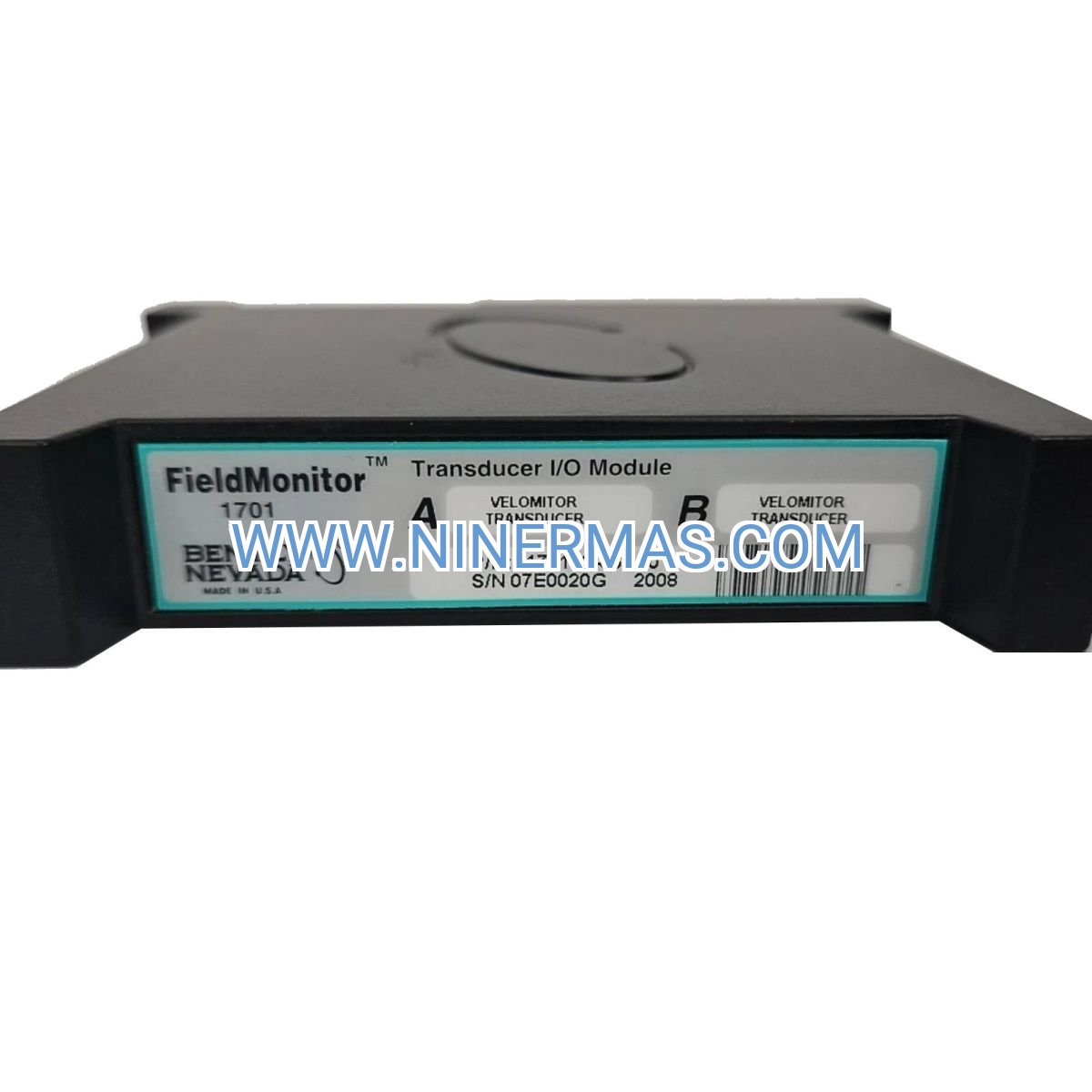
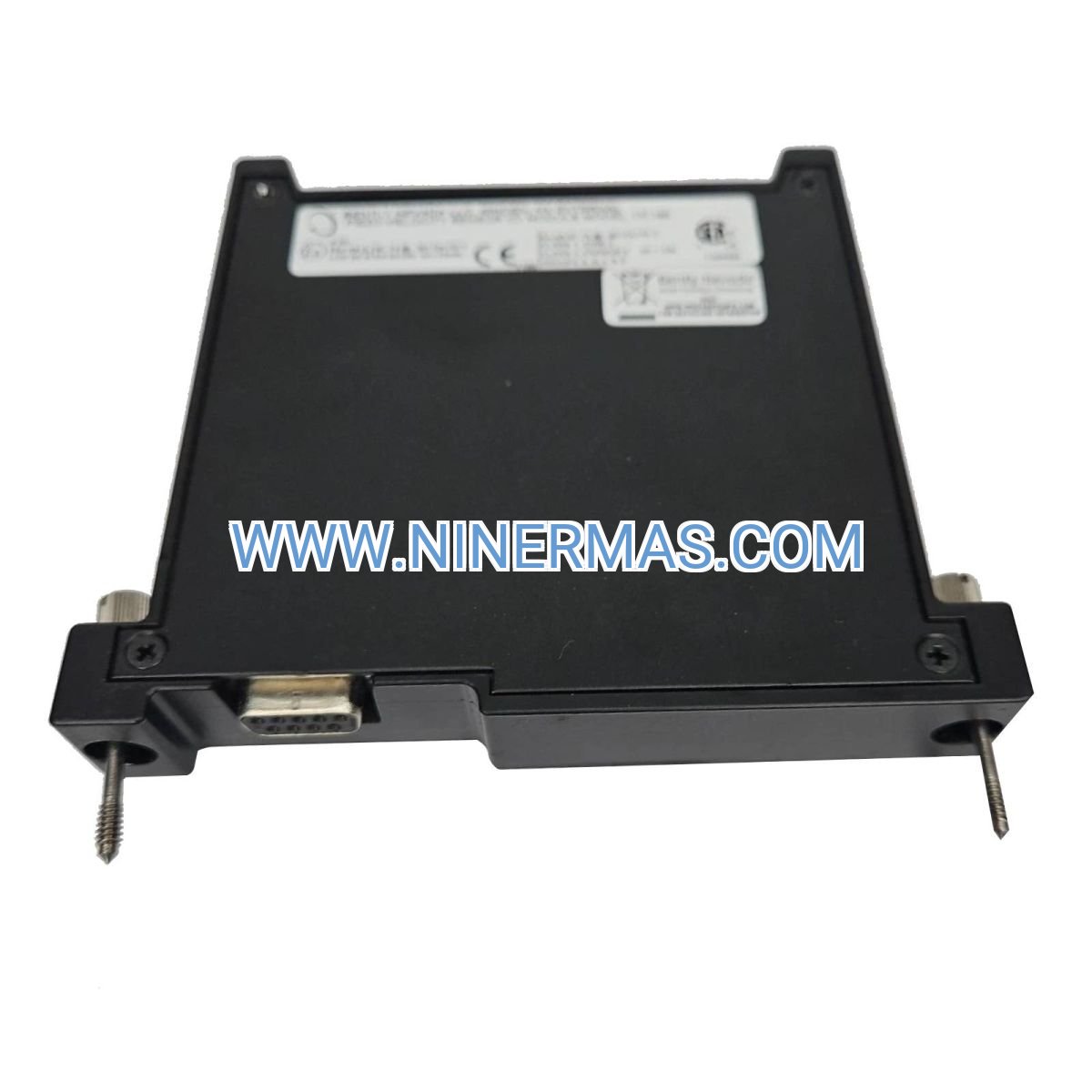
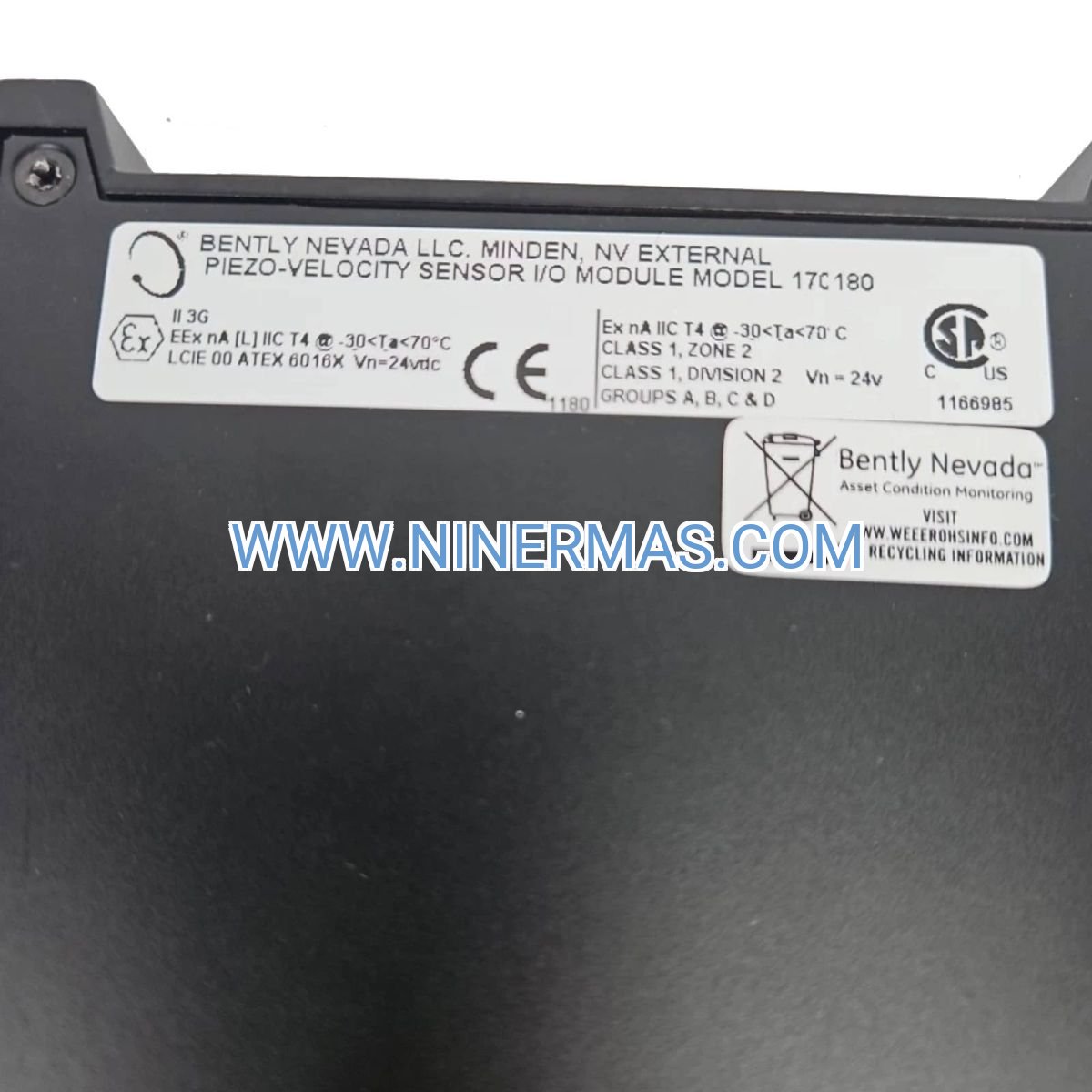
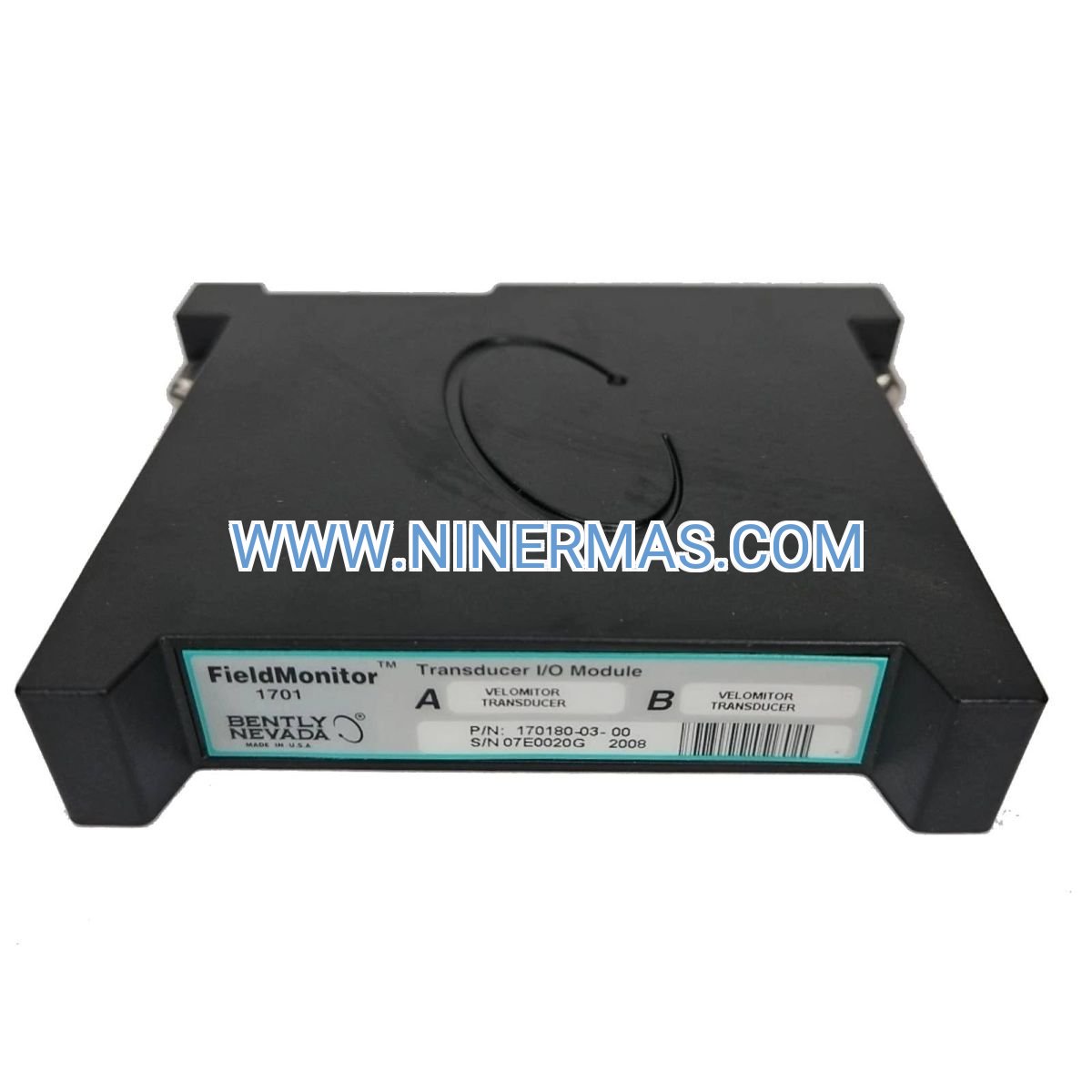
Bently Nevada 170180-03-00 Proximity Sensor | API 670 Vibration Monitoring | Factory Calibrated
Description
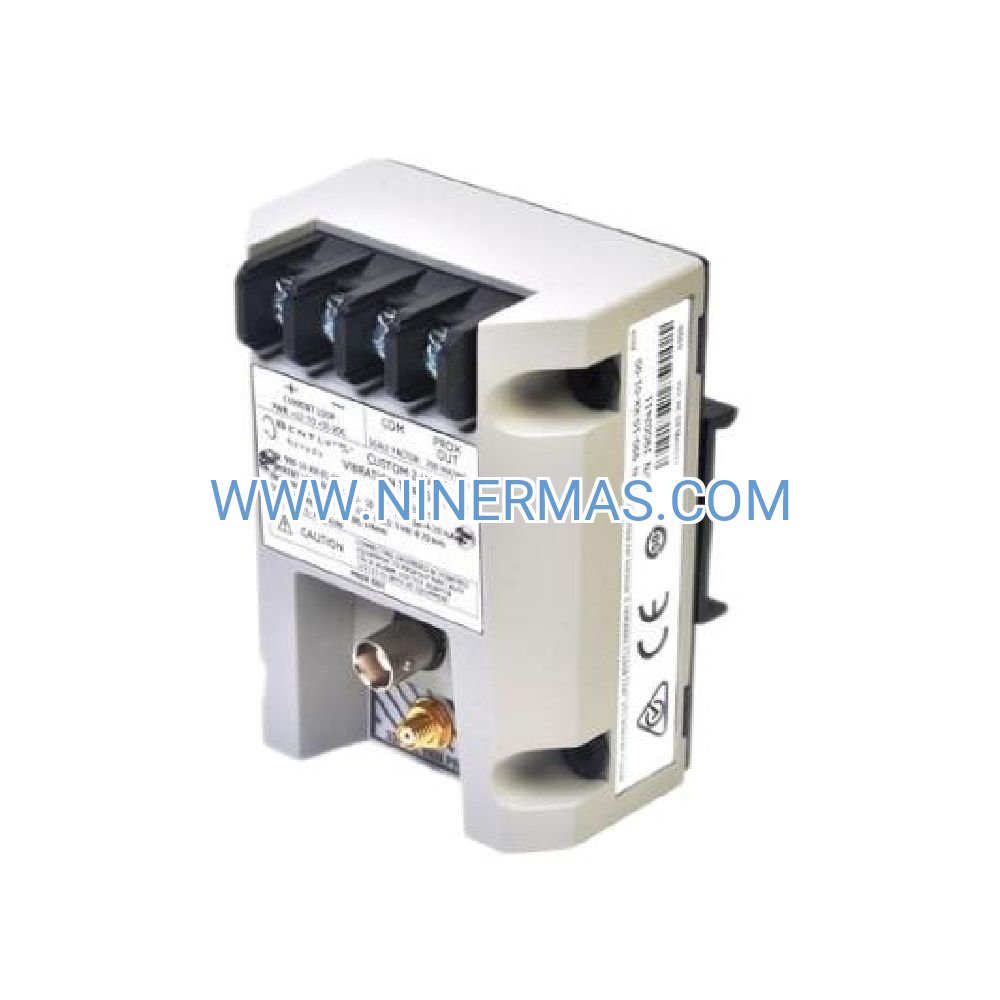
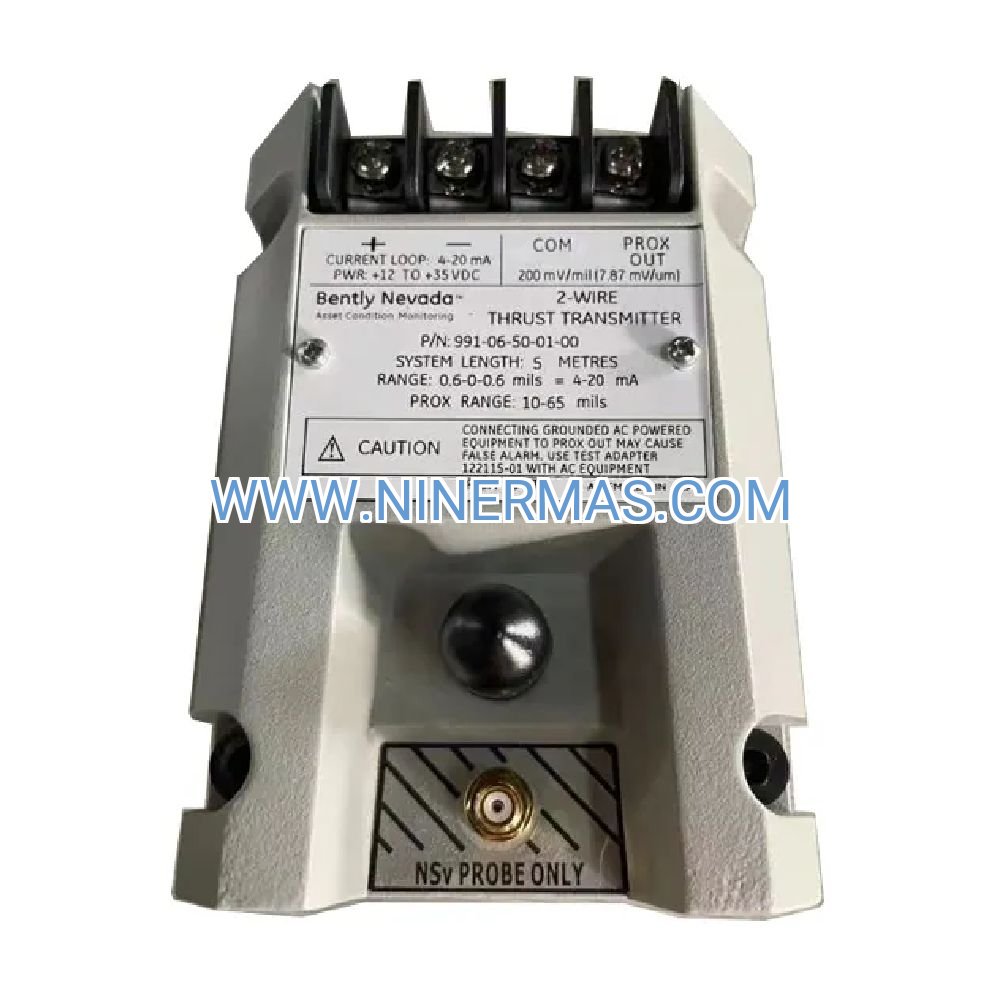
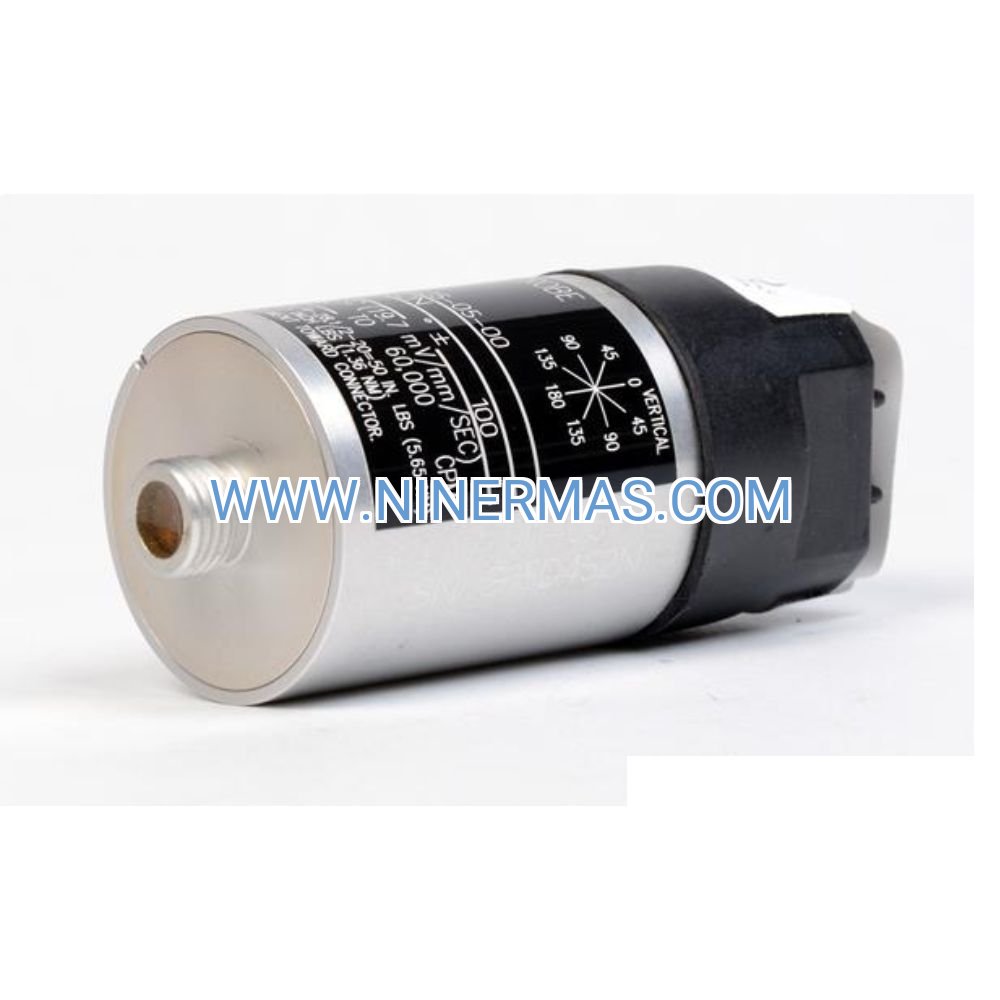
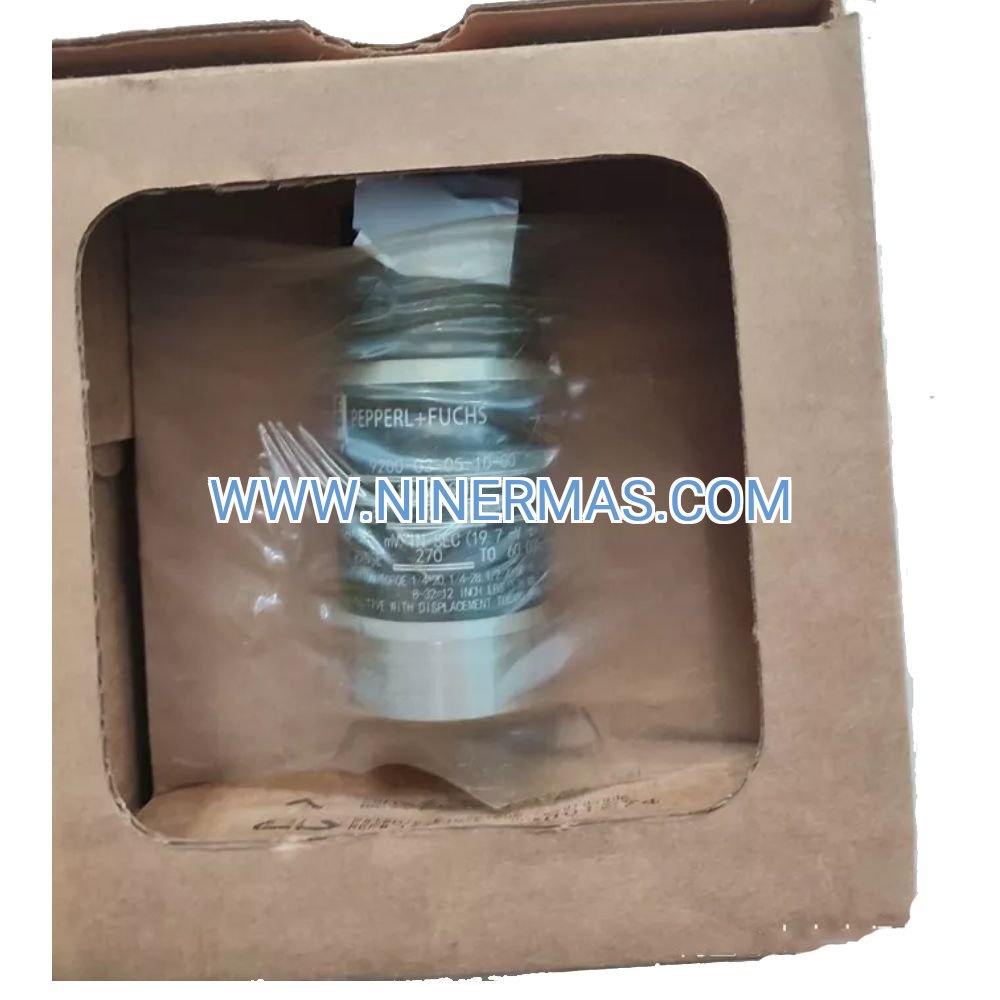
Bently Nevada 170180-03-00 Proximity Sensor System (Factory-Calibrated Vibration Monitoring Solution)
The Bently Nevada 170180-03-00 is a factory-calibrated proximity sensor system designed for precision vibration monitoring and shaft displacement measurement in rotating machinery. Through advanced eddy current sensing technology and integrated signal conditioning, it delivers reliable, real-time monitoring of critical equipment health, enabling predictive maintenance and preventing catastrophic failures.
Ideal for power generation plants, oil & gas facilities, petrochemical refineries, steel mills, and heavy industrial manufacturing environments where continuous monitoring of turbines, compressors, pumps, motors, and gearboxes is essential. This system addresses common challenges including bearing wear detection, shaft vibration analysis, rotor eccentricity measurement, thrust position monitoring, and early fault detection before equipment damage occurs.
Engineered with API 670 compliance and proven field reliability, the 170180-03-00 offers factory calibration accuracy, wide frequency response (DC to 10 kHz), extended temperature range (-40°C to +177°C), and seamless integration with Bently Nevada monitoring systems. Suitable for design engineers, maintenance teams, instrumentation contractors, and plant operators requiring certified vibration monitoring solutions. Contact our application engineers for system configuration, installation guidance, and technical specifications.
Core Features & Technical Advantages
Factory-Calibrated Precision
Each sensor system undergoes rigorous factory calibration to ensure measurement accuracy of ±1% across the full operating range, eliminating field calibration requirements and reducing commissioning time by up to 60%.
API 670 Compliance Certified
Fully compliant with API Standard 670 for machinery protection systems, meeting stringent requirements for vibration monitoring in critical rotating equipment applications across petroleum, chemical, and power generation industries.
Wide Frequency Response Range
DC to 10 kHz bandwidth captures both slow-roll shaft position and high-frequency vibration events, providing comprehensive monitoring from startup through full-speed operation and detecting bearing defects, unbalance, misalignment, and resonance conditions.
Extended Environmental Capability
Operating temperature range of -40°C to +177°C (-40°F to +350°F) with IP65/IP67 protection rating ensures reliable performance in harsh industrial environments including outdoor installations, high-temperature zones, and corrosive atmospheres.
Integrated Signal Conditioning
Built-in proximitor electronics convert raw sensor signals to industry-standard -2 to -18 Vdc output, compatible with DCS systems, PLCs, vibration monitors, and data acquisition systems without external signal processors.
Long-Term Stability & Reliability
Solid-state construction with no moving parts, hermetically sealed sensor probe, and industrial-grade components deliver MTBF exceeding 100,000 hours, minimizing maintenance costs and unplanned downtime.
Typical Application Scenarios
This proximity sensor system is engineered for demanding industrial environments requiring continuous vibration monitoring and shaft displacement measurement:
Power Generation & Turbomachinery
Steam turbines, gas turbines, and hydro generators require precise shaft vibration and axial position monitoring to prevent bearing failures, blade rubs, and catastrophic rotor damage. The 170180-03-00 provides real-time data for condition-based maintenance programs, reducing forced outages by up to 40%.
Oil & Gas Processing Facilities
Centrifugal compressors, reciprocating compressors, and pipeline pumps in upstream, midstream, and downstream operations demand API 670-compliant monitoring systems. This sensor enables early detection of mechanical seal wear, impeller damage, and coupling misalignment before production losses occur.
Petrochemical & Refining Plants
Critical process pumps, blowers, and agitators handling corrosive fluids and operating at elevated temperatures benefit from the sensor's extended temperature rating and chemical-resistant construction, ensuring safety compliance and asset protection.
Steel & Metal Manufacturing
Rolling mill drives, induced draft fans, and kiln support rollers subject to heavy loads and thermal cycling require robust vibration monitoring. The system's wide frequency range captures both low-speed imbalance and high-frequency gear mesh defects.
Pulp & Paper Production
Paper machine dryer sections, refiners, and vacuum pumps operating in high-humidity, high-temperature environments utilize this sensor's environmental sealing and stability for continuous 24/7 monitoring without drift or false alarms.
Technical Specifications & Selection Guide
To ensure optimal system performance and compatibility, the Bently Nevada 170180-03-00 offers the following standardized specifications:
Sensor Probe Specifications:
- Sensing Range: 0 to 80 mils (0 to 2.0 mm) typical
- Linearity: ±1% of full scale over calibrated range
- Frequency Response: DC to 10 kHz (-3 dB)
- Operating Temperature: -40°C to +177°C (-40°F to +350°F)
- Probe Thread: 8 mm or 5/16-24 UNF (specify at order)
- Cable Length: Standard 5 meters (custom lengths available)
Proximitor Electronics:
- Output Signal: -2 to -18 Vdc (200 mV/mil or 7.87 mV/μm)
- Power Supply: -18 to -24 Vdc, 15 mA typical
- Output Impedance: <100 Ω
- Temperature Coefficient: <0.02%/°C
- Housing: DIN rail mount or panel mount options
- Protection Rating: IP65 (panel mount), IP20 (DIN rail)
System Configuration:
- Target Material: Ferrous metals (4140 steel, 416 stainless recommended)
- Installation Gap: 40 mils (1.0 mm) nominal for optimal linearity
- Mounting: Threaded probe with jam nut or compression fitting
- Certifications: API 670, CE, RoHS compliant
Selection Considerations:
When specifying the 170180-03-00 system, please provide: shaft diameter and material, maximum vibration amplitude expected, operating speed range (RPM), ambient temperature at installation point, mounting constraints (radial/axial clearance), and interface requirements (DCS/PLC input specifications). Our application engineers will recommend probe length, cable routing, and system integration approach to ensure measurement accuracy and long-term reliability.
Advanced Integration Capabilities
Bently Nevada 3500 Monitoring System Compatibility
Direct interface with 3500/42M, 3500/45, and 3500/46M monitor modules for multi-channel vibration analysis, alarm management, and trending. Supports both radial and thrust position measurements with automatic OK/Alert/Danger status indication.
DCS & SCADA Integration
Standard 4-20 mA output option (via external transmitter) or direct voltage input to Honeywell, Emerson DeltaV, Siemens PCS7, and Yokogawa Centum systems. Modbus RTU/TCP and OPC UA protocols available for enterprise-level data integration.
Wireless Monitoring Solutions
Compatible with Bently Nevada Ranger Pro wireless vibration transmitters for retrofit applications where cable installation is cost-prohibitive. Maintains full API 670 compliance with encrypted data transmission.
Predictive Maintenance Software
Seamless data export to System 1 condition monitoring software, enabling FFT analysis, orbit plots, Bode diagrams, and machine learning-based anomaly detection for advanced diagnostics and remaining useful life prediction.
Delivery, Service & Quality Assurance
Lead Time & Availability:
Standard 170180-03-00 configurations ship within 3-5 business days from regional distribution centers. Custom cable lengths, special probe threads, or explosion-proof certifications require 2-3 weeks for factory configuration. Expedited shipping available for critical outage support.
Warranty & Support:
All sensor systems include a comprehensive 12-month manufacturer warranty covering materials and workmanship defects. Extended warranty programs (up to 36 months) available for high-criticality applications. Technical support includes remote diagnostics, installation guidance, and troubleshooting assistance via phone, email, or video conference.
Documentation Package:
Each system ships with factory calibration certificate (traceable to NIST standards), installation manual with dimensional drawings, wiring diagrams, recommended mounting procedures, and integration guidelines for common monitoring platforms. CAD models (STEP/IGES format) available upon request for design integration.
Field Service & Commissioning:
On-site installation supervision, system commissioning, and operator training services available through our global service network. Post-installation verification testing ensures measurement accuracy and proper alarm setpoint configuration per API 670 requirements.
Frequently Asked Questions (FAQ)
Q: How does the Bently Nevada 170180-03-00 proximity sensor system integrate with existing vibration monitoring infrastructure?
A: The system outputs industry-standard -2 to -18 Vdc signals compatible with most DCS, PLC, and dedicated vibration monitors. For Bently Nevada 3500 racks, direct connection to monitor modules requires no additional signal conditioning. Third-party systems may need barrier interfaces for intrinsically safe installations. Provide your monitoring system model for specific wiring recommendations.
Q: What is the maximum number of sensors that can be monitored on a single rotating machine?
A: Typical configurations use 2 sensors per bearing (X-Y radial vibration) plus 1-2 thrust position sensors, totaling 8-12 channels for a four-bearing machine. API 670 mandates minimum two radial sensors per critical bearing. System architecture depends on machinery criticality, operating speed, and protection requirements.
Q: What energy savings or efficiency improvements can be achieved with this vibration monitoring system?
A: While the sensor itself doesn't directly reduce energy consumption, early detection of mechanical faults (misalignment, imbalance, bearing wear) prevents efficiency degradation that typically increases energy use by 5-15%. Condition-based maintenance enabled by continuous monitoring reduces unnecessary preventive maintenance, extending mean time between overhauls by 30-50%.
Q: What are the environmental and installation requirements for the proximity sensor probe?
A: Probe operates reliably from -40°C to +177°C with IP65 sealing against dust and water ingress. Mounting requires 40 mils (1.0 mm) gap to ferrous target surface, with ±10 mils adjustment range. Avoid installation near strong magnetic fields (>100 Gauss) or RF interference sources. Conduit sealing recommended for outdoor or washdown environments.
Q: Does the system support remote monitoring and data acquisition for predictive maintenance programs?
A: Yes, the analog output integrates with SCADA systems, cloud-based IoT platforms, and Bently Nevada System 1 software for remote trending, alarm notification, and advanced analytics. Modbus RTU/TCP and OPC UA protocols enable enterprise-level data integration. Wireless options available using Ranger Pro transmitters with 4-20 mA or digital output.
Q: Can the sensor system be used in hazardous area classifications (Class I Div 1/2 or ATEX zones)?
A: Standard 170180-03-00 is suitable for non-hazardous areas. For Class I Div 1/2 (NEC 505/506) or ATEX Zone 1/2 applications, specify intrinsically safe (IS) barriers or explosion-proof housings at time of order. Factory Mutual (FM) and ATEX certifications available with 3-4 week lead time for certified configurations.
Request Technical Support & Custom Configuration
To receive detailed application engineering support, system selection guidance, or project-specific quotations, please provide the following information: project name and location, equipment type and criticality level, shaft diameter and material specification, operating speed range (minimum/maximum RPM), expected vibration levels, number of measurement points required, ambient temperature and environmental conditions, existing monitoring system (if retrofit), and electrical area classification. Our certified vibration specialists will deliver comprehensive recommendations including sensor placement drawings, cable routing plans, and integration specifications within 24-48 hours.
© 2026 NINERMAS COMPANY LIMITED. All rights reserved.
Original Source: https://ninermas.com
Contact: sale@ninermas.com | +0086 187 5021 5667

Contact Info
-
Address:22 / F, South Wo Hang building, 148 Wing Lok Street, Sheung Wan, Western District, Hong Kong
-
Phone:+8618750215667
-
Email: