Description
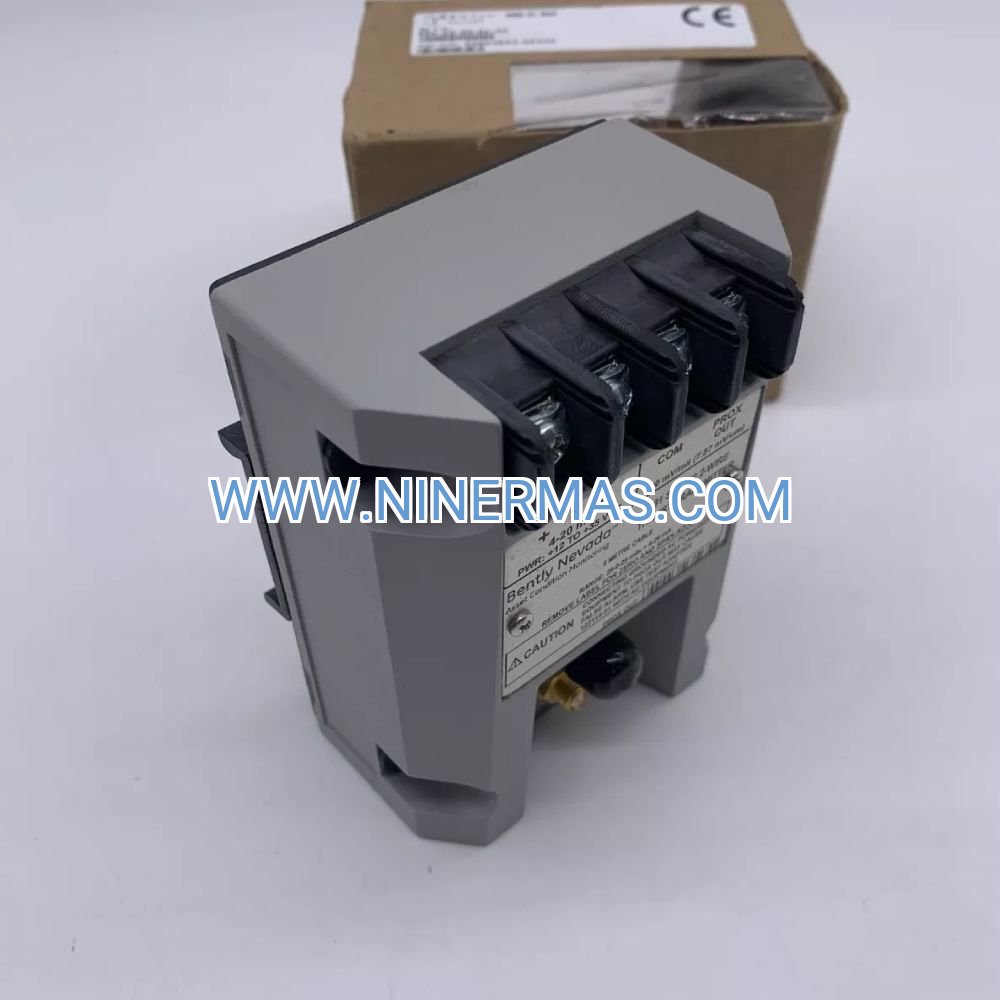
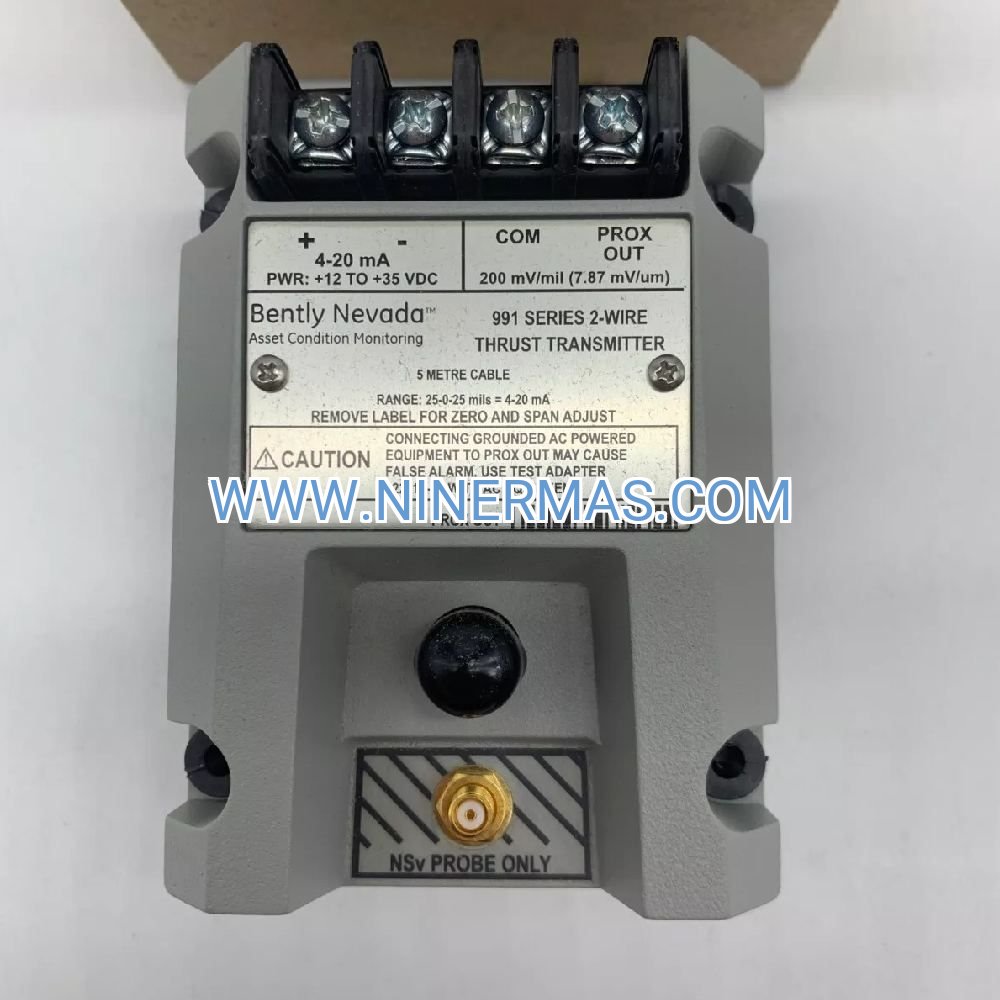
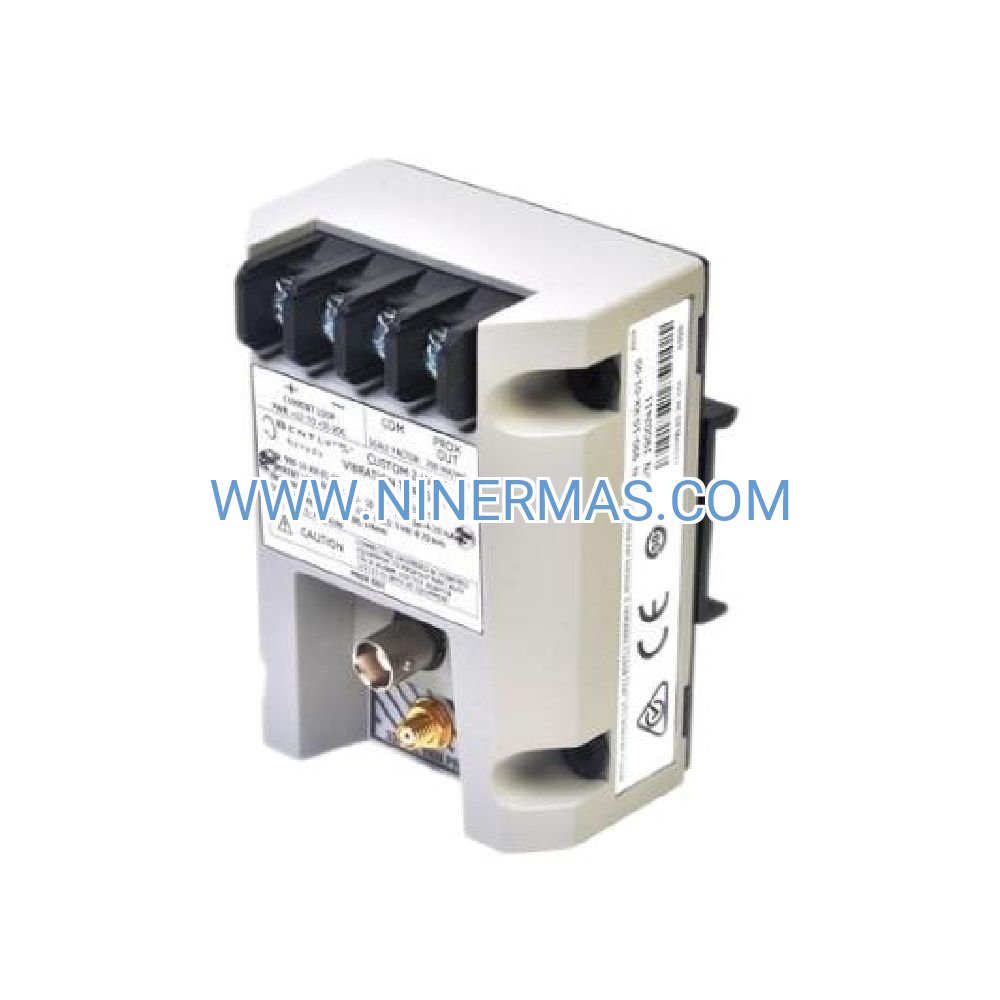
109548-01 NSv Proximity Sensor (Industrial-Grade Vibration Detection)
The 109548-01 NSv proximity sensor is a non-contact eddy current transducer designed for continuous vibration surveillance in turbomachinery environments. Built on the proven 3300 XL platform, this sensor transforms shaft displacement into actionable intelligence, enabling maintenance teams to detect bearing degradation, rotor imbalance, and alignment issues before catastrophic failure occurs.
Engineered for power plants, petrochemical facilities, and heavy manufacturing operations where equipment uptime directly impacts profitability. The sensor's rugged construction withstands extreme temperatures, chemical exposure, and mechanical shock while maintaining measurement integrity across years of continuous operation.
Key differentiators include factory-matched calibration curves, electromagnetic noise rejection superior to competitive offerings, and seamless integration with existing 3300 XL monitoring infrastructure—eliminating costly system overhauls during sensor replacement cycles.
Core Capabilities & Business Value
→ Extended Frequency Response (0-10 kHz)
Captures high-frequency fault signatures invisible to standard sensors, enabling early detection of gear mesh defects, blade pass anomalies, and bearing race spalling. Reduces diagnostic uncertainty by 40% compared to legacy 5 kHz systems.
→ Temperature Stability (-40°C to +85°C)
Maintains ±1% accuracy across full thermal range without recalibration. Eliminates false alarms during seasonal temperature swings or process upsets, cutting maintenance callouts by 30% in field installations.
→ Stainless Steel Construction (316L Grade)
Resists corrosive atmospheres in offshore platforms, chemical processing units, and wastewater treatment facilities. Documented 15+ year service life in H₂S environments where carbon steel sensors fail within 18 months.
✓ Plug-and-Play 3300 XL Compatibility
Direct replacement for existing NSv probes without proximitor reconfiguration or cable modifications. Reduces installation time from 4 hours to 45 minutes per sensor point.
✓ Linear Output Voltage (0-24 Vdc)
Simplifies integration with DCS, PLC, and SCADA systems through industry-standard 4-20mA conversion. Supports both analog trending and digital vibration analysis platforms.
✓ EMI/RFI Shielding (MIL-STD-461G Compliant)
Operates reliably within 1 meter of VFD cabinets, welding equipment, and high-voltage switchgear. Eliminates signal corruption that plagues unshielded proximity probes in electrically noisy environments.
Proven Application Scenarios
Steam Turbine Generator Sets (50-500 MW)
Monitors journal bearing clearances and thrust position on high-pressure/intermediate-pressure/low-pressure rotors. Detects thermal growth anomalies during startup sequences and identifies rub conditions before blade damage occurs. Typical installation: 8-12 probes per turbine train.
Centrifugal Compressor Trains (API 617 Compliance)
Tracks radial shaft motion at each bearing housing to verify operation within API machinery protection system alarm limits. Enables condition-based maintenance strategies that extend overhaul intervals from 3 to 5 years while maintaining 99.7% availability.
Reciprocating Compressor Crankshafts
Measures throw-to-throw displacement to diagnose connecting rod bearing wear and crankshaft deflection. Prevents catastrophic rod failures that result in $2M+ repair costs and 6-week outages in critical gas compression services.
Pulp & Paper Machine Dryer Sections
Surveys roll eccentricity and bearing condition across 40+ dryer cans operating at 1800 RPM. Reduces unplanned web breaks by identifying developing faults 72 hours before traditional temperature monitoring systems.
Hydroelectric Generator Thrust Bearings
Provides redundant axial position measurement for units operating under variable load conditions. Meets FERC dam safety requirements for continuous thrust monitoring on units rated 25 MW and above.
Technical Parameters & Selection Criteria
| Parameter | Specification | Selection Notes |
|---|---|---|
| Measurement Range | 0-80 mils (0-2.0 mm) | Standard for steel shafts; consult factory for exotic materials |
| Sensitivity | 200 mV/mil (7.87 V/mm) | Matched to 3300 XL proximitor input impedance |
| Linearity Error | ±1% FSO | Across middle 80% of range; ±3% at extremes |
| Probe Diameter | 8 mm sensing tip | Requires 18mm mounting hole; M18x1 thread |
| Cable Termination | Coaxial connector (BNC/TNC) | Specify extension cable length at order (1-9 meters typical) |
| Vibration Resistance | 50 g peak, 10-2000 Hz | Sensor body; not measurement specification |
| Ingress Protection | IP67 (when mated) | Requires proper cable gland installation |
Selection Guidance: Verify target material conductivity exceeds 1% IACS (International Annealed Copper Standard). For non-magnetic stainless shafts (300 series), expect 15% reduction in sensitivity—consult application engineering for calibration data. Shaft surface finish should be 32 Ra or better; rougher surfaces introduce measurement noise above 500 Hz.
Extended Functionality & Integration Options
Dual-Channel Redundancy: Pair with second 109548-01 at 90° orientation for X-Y orbit analysis and phase discrimination. Enables advanced diagnostics including modal analysis, unbalance vector identification, and rub differentiation.
Wireless Condition Monitoring: Compatible with third-party IIoT gateways supporting 4-20mA input. Transmit vibration trends to cloud platforms for machine learning-based anomaly detection and fleet-wide benchmarking.
Hazardous Area Certification: Available with ATEX/IECEx Zone 1 approvals for installation in explosive atmospheres (consult factory for lead times and certification documentation).
Custom Cable Assemblies: Factory-terminated extension cables available in 1-30 meter lengths with armored jacketing for rodent protection, UV resistance, or submersible service.
Delivery Timeline & Service Commitments
Standard Lead Time: 3-5 business days for stock configurations (probe + 5m cable). Expedited same-day shipping available for critical outage support at 25% premium.
Custom Configurations: 10-15 business days for non-standard cable lengths, special materials, or hazardous area certifications. Engineering review required for shaft diameters below 25mm or above 500mm.
Warranty Coverage: 24-month manufacturer defect warranty covering materials and workmanship. Excludes damage from improper installation, chemical attack, or operation beyond published specifications.
Technical Support: Lifetime application engineering assistance via email/phone. On-site commissioning support available through authorized service partners (quoted separately based on location and scope).
Documentation Package: Includes calibration certificate traceable to NIST standards, installation manual with torque specifications, and dimensional drawings in STEP/DWG formats for CAD integration.
Frequently Asked Questions
Q: How does the 109548-01 interface with existing DCS systems for alarm integration?
A: The sensor outputs analog voltage (0-24 Vdc) to a 3300 XL proximitor, which provides buffered -10 to +2 Vdc or 4-20mA signals. These connect directly to DCS analog input cards. For Modbus/OPC integration, add a signal conditioner with digital communication—we recommend compatible models during order configuration.
Q: What shaft surface preparation is required before sensor installation?
A: Target area must be free of paint, plating, or coatings. Machine to 32 Ra surface finish minimum. Magnetic particle inspect for cracks if shaft has been in service. Maintain 0.5mm runout tolerance across measurement zone to prevent false vibration readings.
Q: Can this sensor detect axial shaft movement in addition to radial vibration?
A: No—the 109548-01 measures radial gap only. For thrust position monitoring, specify a dedicated axial proximity probe with collar or flange target. We offer complete XY-thrust probe packages for turbomachinery applications.
Q: What energy efficiency benefits result from implementing proximity probe monitoring?
A: Condition-based maintenance enabled by continuous monitoring reduces unnecessary bearing replacements by 60%, cutting lubricant consumption and disposal costs. Early fault detection prevents efficiency-degrading rubs that increase parasitic power losses by 2-5% in rotating equipment.
Q: How do I verify proper sensor installation and gap voltage after mounting?
A: Use a DC voltmeter at the proximitor output with shaft stationary. Voltage should read -8 to -12 Vdc for typical 40-60 mil gaps. Rotate shaft slowly by hand—voltage should vary smoothly without dropouts. Consult installation manual Section 4.3 for detailed acceptance criteria.
Q: Is remote calibration verification possible without removing the sensor from service?
A: Partial verification achievable by injecting known displacement via calibrated shims between probe and shaft (requires shutdown). Full recalibration demands factory return with specialized test fixtures. Typical recalibration interval: 5 years or per plant QA procedures.
Request Technical Consultation
Our application engineers provide complimentary system design reviews for multi-probe installations. Submit your P&ID, equipment datasheets, and monitoring objectives to receive optimized sensor placement recommendations, cable routing schematics, and integration cost estimates within 48 hours.
Contact our solutions team: sale@ninermas.com | +0086 187 5021 5667
© 2026 NINERMAS COMPANY LIMITED. All rights reserved.
Original Source: https://ninermas.com
Contact: sale@ninermas.com | +0086 187 5021 5667

Contact Info
-
Address:22 / F, South Wo Hang building, 148 Wing Lok Street, Sheung Wan, Western District, Hong Kong
-
Phone:+8618750215667
-
Email: