Description
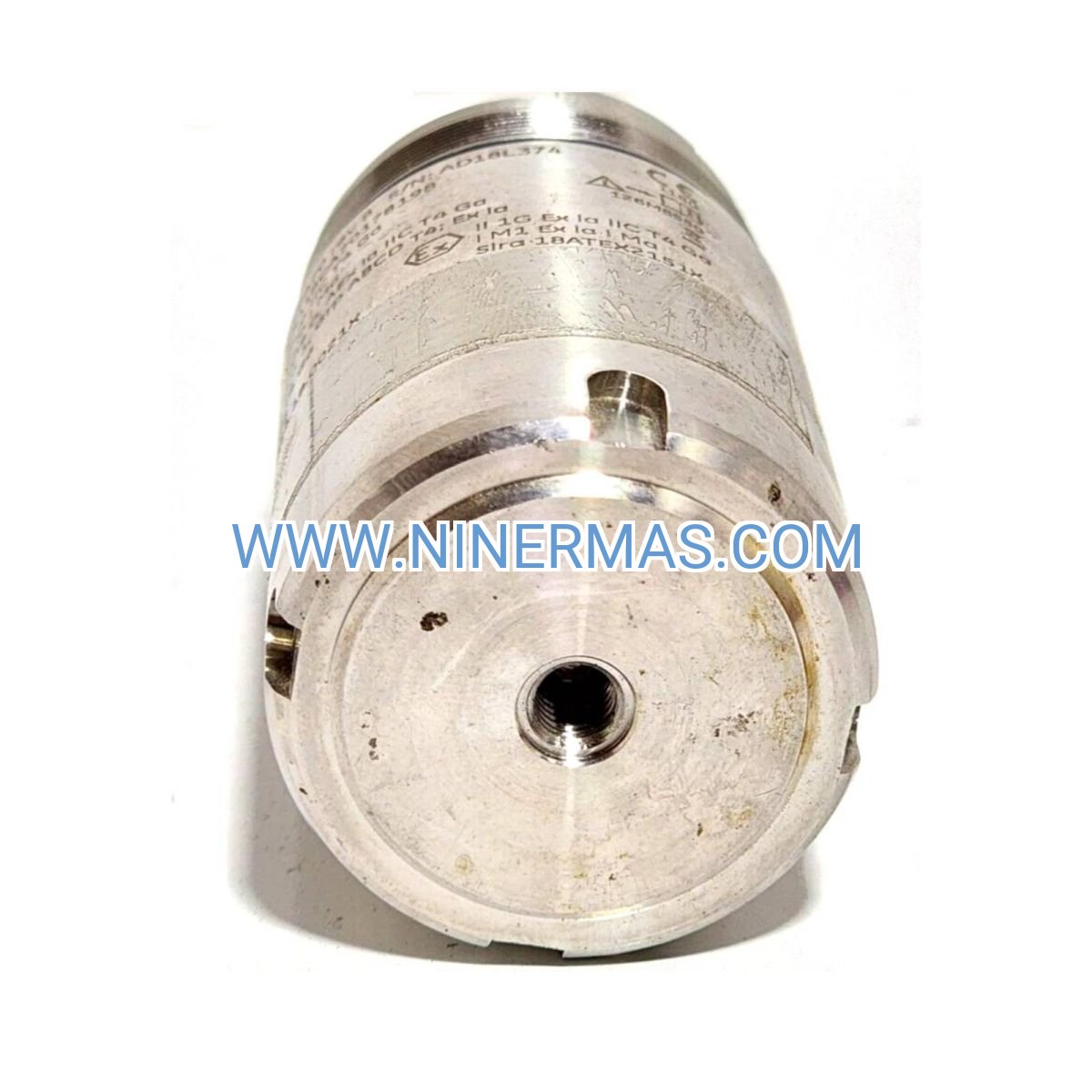
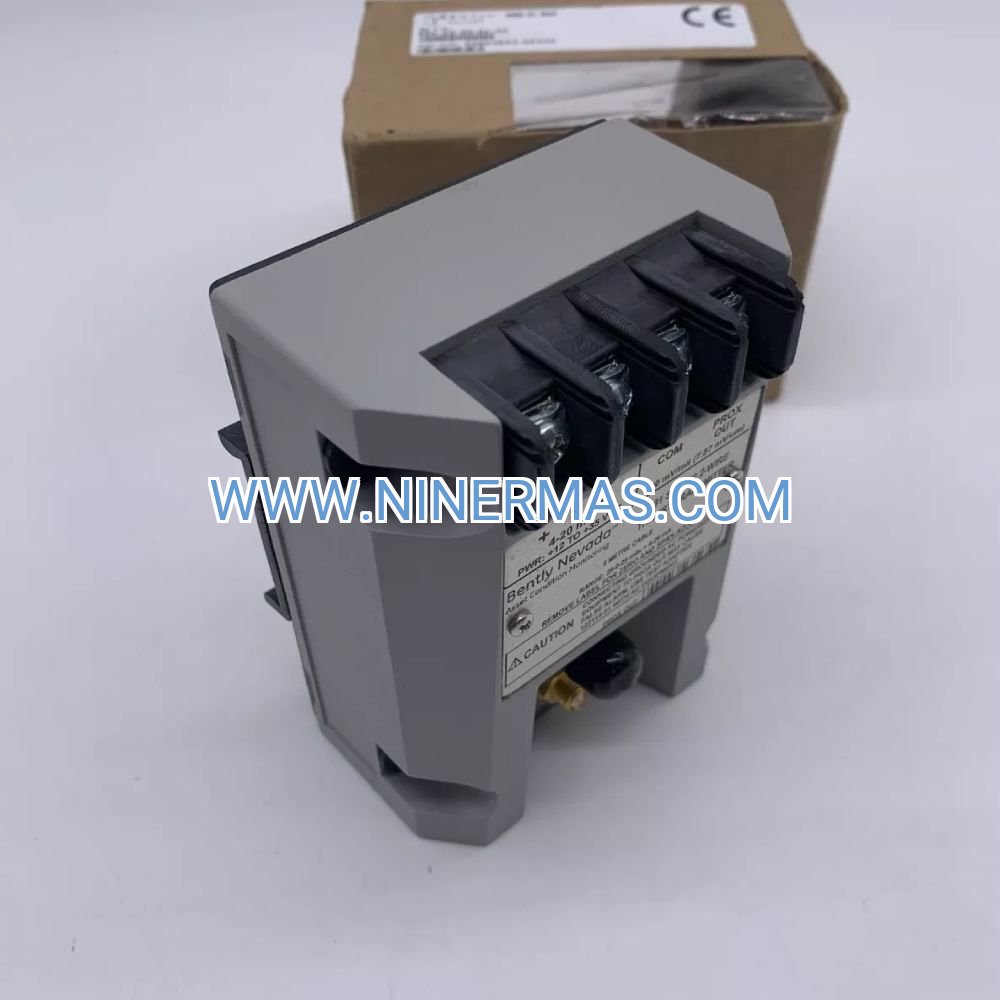
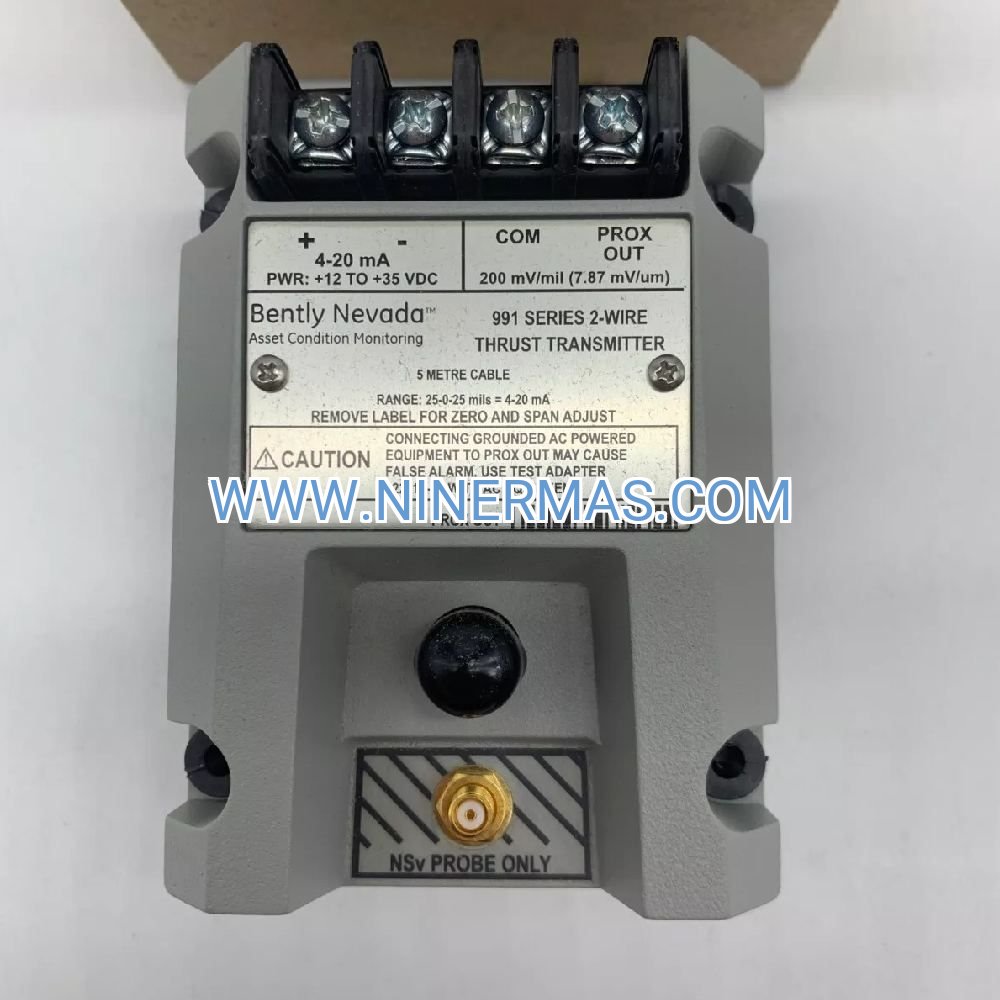
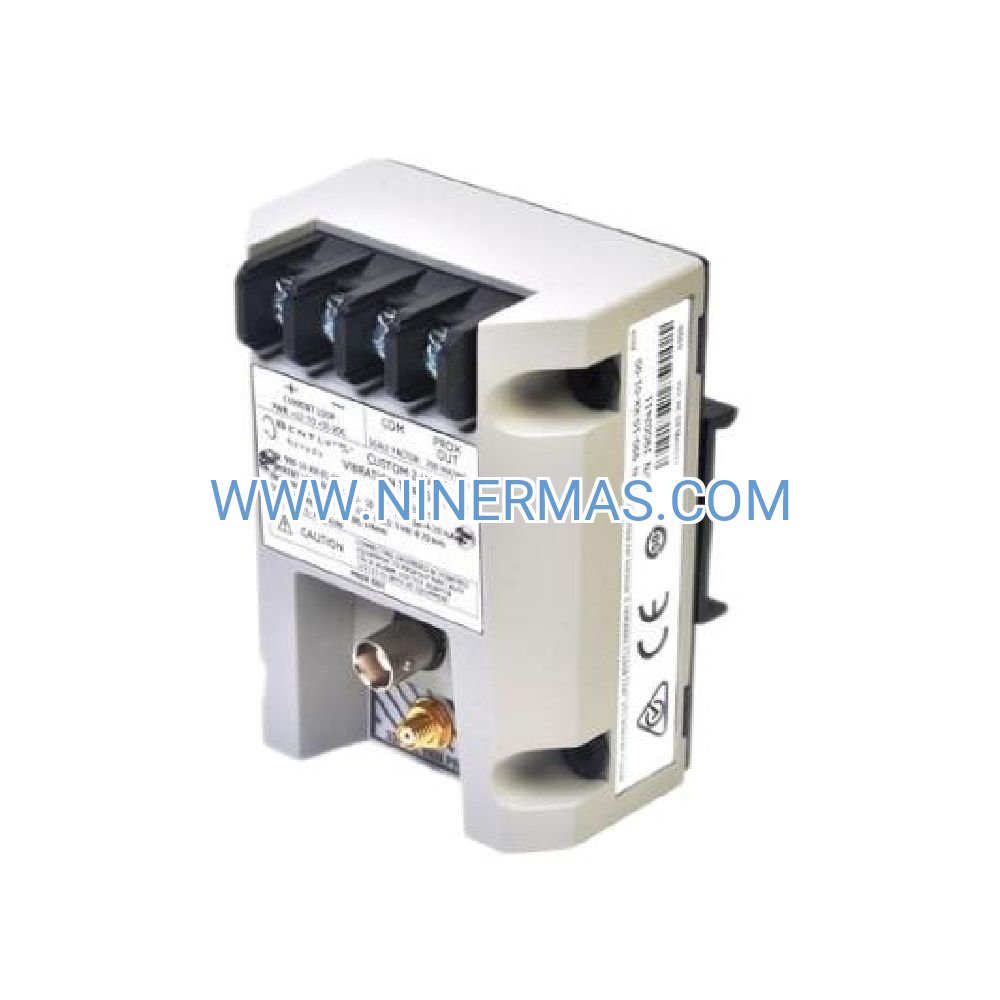
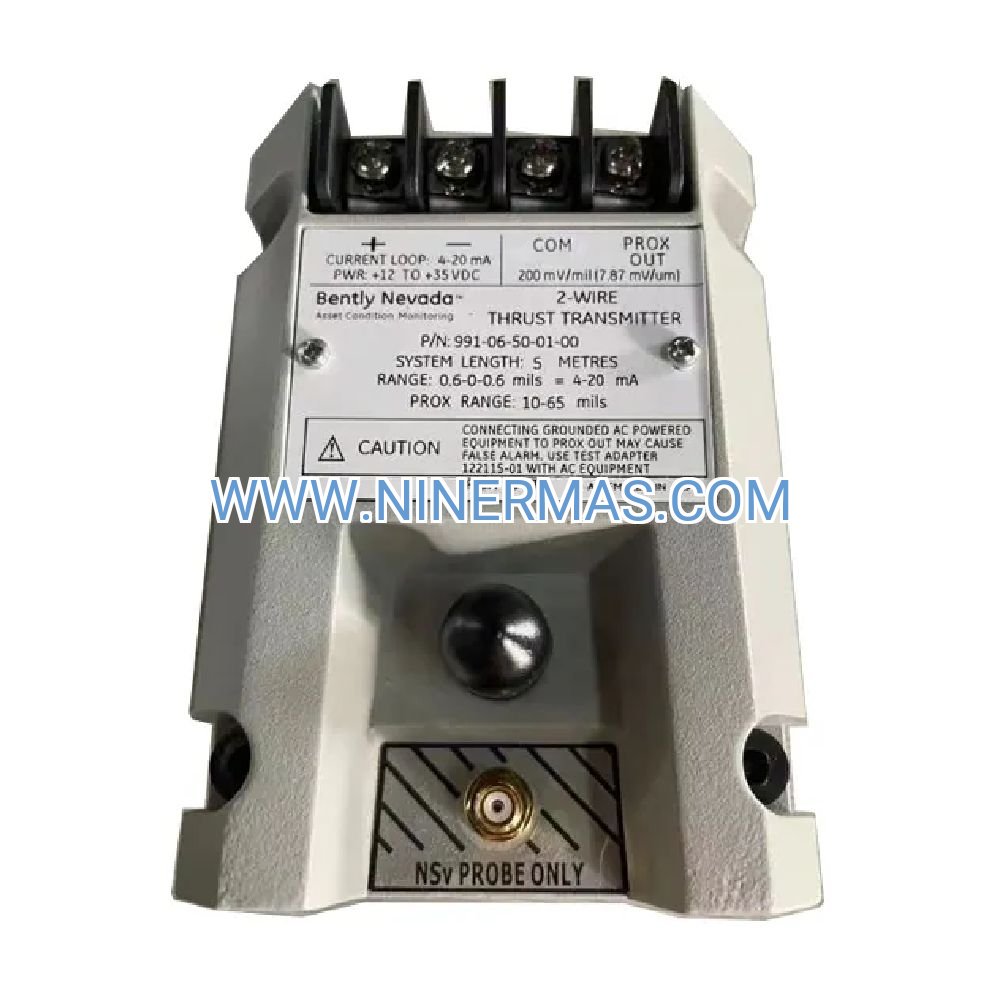
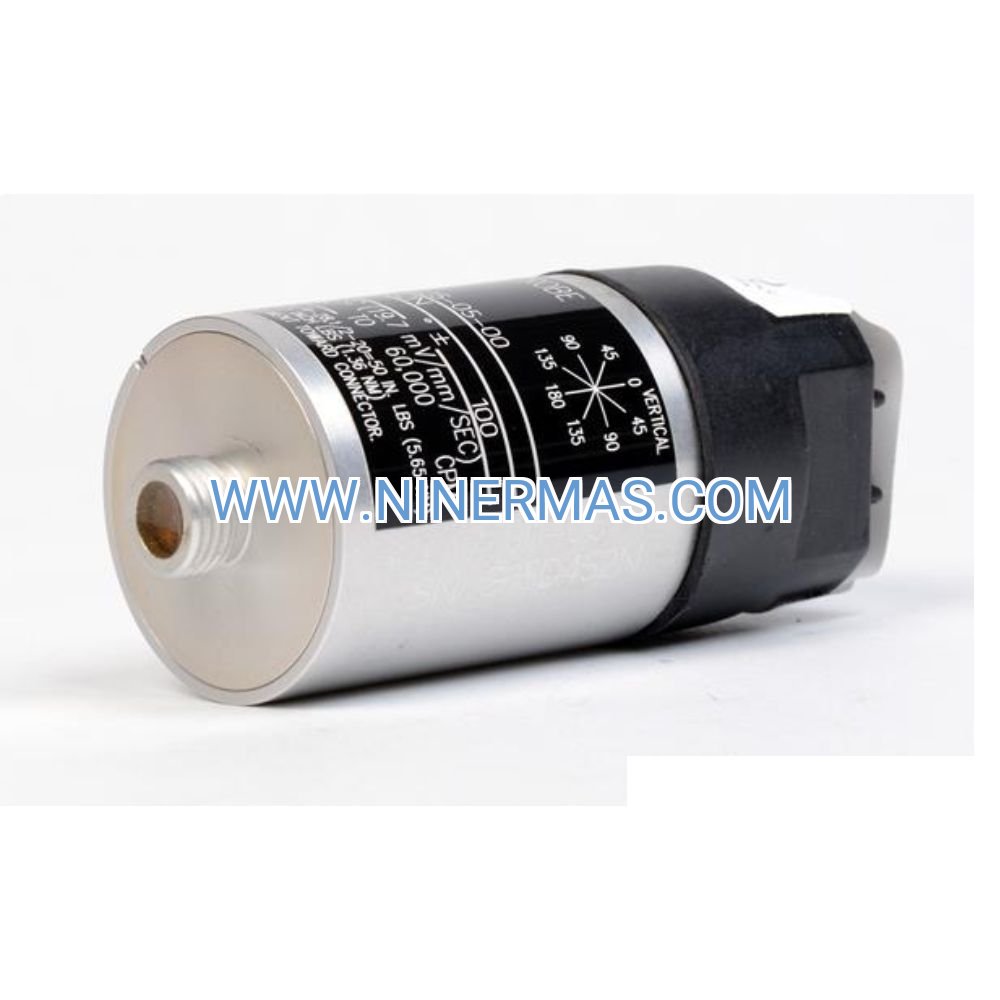
Bently Nevada 121M6466 Wireless Triaxial Vibration & Temperature Sensor – Industrial-Grade Condition Monitoring Solution
The Bently Nevada 121M6466 is an industrial-grade wireless triaxial vibration and temperature sensor designed for continuous condition monitoring of rotating machinery. Leveraging WirelessHART (IEC 62591) mesh network technology, this sensor captures real-time vibration signatures across three orthogonal axes (X, Y, Z) while simultaneously tracking bearing and ambient temperatures. By enabling early fault detection and predictive maintenance strategies, the 121M6466 helps industrial facilities reduce unplanned downtime, optimize maintenance schedules, and extend critical asset lifespan.
Ideal for deployment in oil & gas, power generation, chemical processing, mining, and heavy manufacturing environments, this sensor addresses common challenges including high installation costs, limited accessibility to remote equipment, and the need for comprehensive vibration analysis. With factory NIST-traceable calibration, IP67 environmental protection, and up to 5 years of battery-powered operation, the 121M6466 delivers reliable performance in the harshest industrial conditions.
Designed for design engineers, maintenance managers, reliability engineers, and system integrators, this wireless sensor integrates seamlessly with existing DCS/SCADA infrastructure through Bently Nevada wireless gateways. Whether you're monitoring centrifugal pumps, electric motors, reciprocating compressors, or turbomachinery, the 121M6466 provides the actionable intelligence needed to transition from reactive to predictive maintenance. Contact our application engineers for customized deployment planning, gateway configuration assistance, and ROI analysis.
Core Features & Technical Advantages
Wireless Infrastructure Simplification
Eliminates costly conduit runs, cable trays, and junction boxes associated with traditional wired monitoring systems. Deployment costs are reduced by 60-75% compared to hardwired installations, with installation time cut from days to hours. The self-organizing WirelessHART mesh network automatically establishes redundant communication paths, ensuring >99% data reliability even in electromagnetically noisy industrial environments.
Comprehensive Triaxial Vibration Analysis
Simultaneous measurement across X, Y, and Z axes captures the complete vibration signature of rotating equipment. This three-dimensional data enables detection of complex fault patterns including misalignment, unbalance, bearing defects, looseness, and resonance conditions that single-axis sensors might miss. Frequency range of 10 Hz to 10 kHz covers both low-speed machinery (fans, cooling towers) and high-speed equipment (turbines, spindles).
Integrated Temperature Monitoring
Built-in RTD-class temperature sensor (-40°C to +85°C) correlates thermal trends with vibration patterns for enhanced diagnostic accuracy. Rising bearing temperatures combined with increasing vibration amplitudes provide early warning of lubrication failures, overloading, or impending seizure. Temperature data also supports energy efficiency analysis and thermal profiling of process equipment.
Extended Battery Life & Low Maintenance
Lithium primary battery pack delivers up to 5 years of continuous operation at standard sampling intervals (hourly measurements), eliminating the need for external power infrastructure. User-replaceable battery design minimizes lifecycle costs. Adaptive power management automatically adjusts transmission power based on network conditions to maximize battery longevity.
Rugged Industrial Construction
IP67-rated stainless steel enclosure provides complete protection against dust ingress and temporary water immersion (1 meter for 30 minutes). Operating temperature range of -40°C to +85°C supports installations in arctic climates, desert environments, and high-temperature process areas. Magnetic mounting base enables tool-free installation on ferrous surfaces, while threaded stud mount option accommodates permanent installations.
Enterprise System Integration
When paired with Bently Nevada 1900/65A or 1900/66A wireless gateways, sensor data integrates directly into plant-wide monitoring systems via Modbus TCP/IP, OPC UA, or proprietary protocols. Supports integration with OSIsoft PI, GE Predix, Emerson AMS, and other asset performance management (APM) platforms. RESTful API access enables custom analytics and machine learning applications.
Typical Application Scenarios
The Bently Nevada 121M6466 wireless sensor is engineered for industrial environments where continuous vibration monitoring is critical to operational reliability and safety:
Rotating Machinery in Oil & Gas Facilities
Monitor offshore platform pumps, compressor trains, and turbine-driven equipment where cabling infrastructure is prohibitively expensive or physically impractical. The sensor's hazardous area certifications (Class I Division 2) and corrosion-resistant construction make it ideal for upstream production, midstream pipeline stations, and downstream refinery applications.
Power Generation & Utilities
Continuous surveillance of steam turbines, gas turbines, boiler feed pumps, circulating water pumps, and induced draft fans in coal, natural gas, nuclear, and renewable energy plants. Early detection of blade fouling, bearing wear, and rotor imbalance prevents forced outages and extends major overhaul intervals. Supports compliance with NERC reliability standards.
Chemical & Petrochemical Processing
Monitor process pumps, agitators, centrifuges, and reactor cooling systems handling corrosive, toxic, or flammable materials. Wireless architecture eliminates ignition sources associated with wired sensors in classified areas. Temperature monitoring detects exothermic reactions and cooling system failures before catastrophic equipment damage occurs.
Mining & Mineral Processing
Track health of crushers, grinding mills, conveyors, slurry pumps, and ventilation fans in underground and surface mining operations. Harsh environmental conditions (dust, moisture, temperature extremes) are mitigated by IP67 protection. Wireless deployment overcomes challenges of monitoring equipment in remote pit locations or mobile crushing plants.
Manufacturing & Heavy Industry
Condition-based maintenance of production line motors, gearboxes, hydraulic power units, and material handling systems in automotive, steel, pulp & paper, and food processing facilities. Reduces spare parts inventory by transitioning from time-based to condition-based component replacement. Minimizes production losses from unexpected equipment failures.
Technical Specifications & Selection Guide
To facilitate accurate system design and sensor selection, the following specifications define the operational envelope and performance characteristics of the 121M6466:
| Parameter | Specification |
|---|---|
| Model Number | 121M6466 |
| Measurement Type | Triaxial vibration (X, Y, Z) + Temperature |
| Vibration Measurement Range | ±16 g peak (157 m/s²) |
| Frequency Response | 10 Hz to 10 kHz (±3 dB) |
| Velocity Range | 0 to 50 mm/s RMS (calculated) |
| Temperature Sensor | RTD-class, ±2°C accuracy |
| Temperature Range | -40°C to +85°C (-40°F to +185°F) |
| Communication Protocol | WirelessHART (IEC 62591) |
| Wireless Range | 200-250 m line-of-sight; mesh extends coverage |
| Update Rate | User-configurable: 1 min to 24 hours |
| Battery Type | Lithium primary (user-replaceable) |
| Battery Life | Up to 5 years (hourly sampling) |
| Enclosure Rating | IP67 (NEMA 6) |
| Operating Temperature | -40°C to +85°C |
| Storage Temperature | -50°C to +90°C |
| Mounting Options | Magnetic base or M8 stud mount |
| Housing Material | 316 stainless steel |
| Dimensions | 76 mm (H) × 38 mm (Ø) |
| Weight | Approximately 200 grams |
| Hazardous Area Rating | Class I Division 2 (with approved gateway) |
| Compliance Standards | API 670, ISO 20816, IEC 61508 |
Selection Guidance for System Designers
When specifying the 121M6466 for your application, consider the following factors to ensure optimal performance:
- Equipment Speed Range: Verify that critical fault frequencies fall within the 10 Hz to 10 kHz sensor bandwidth. For very low-speed equipment (<60 RPM), consult with application engineers regarding alternative sensor options.
- Vibration Severity: The ±16 g measurement range accommodates most industrial rotating equipment. For high-shock applications (impact crushers, reciprocating compressors), extended-range models may be required.
- Environmental Conditions: Confirm that ambient temperature, humidity, and chemical exposure fall within sensor specifications. For temperatures exceeding +85°C, remote mounting with extension cables may be necessary.
- Network Infrastructure: Plan wireless gateway placement to ensure adequate RF coverage. Typical deployments require one gateway per 20-40 sensors, depending on facility layout and RF propagation characteristics.
- Data Update Requirements: Balance diagnostic needs against battery life. More frequent sampling (every 5-15 minutes) provides better trending but reduces battery longevity to 2-3 years.
- Integration Requirements: Specify required communication protocols (Modbus, OPC, proprietary) and confirm compatibility with existing monitoring platforms during system design phase.
For application-specific guidance, provide our engineering team with equipment type, operating speed (RPM), mounting surface material, ambient temperature range, required update interval, and existing monitoring system details. We will recommend optimal sensor configuration and gateway architecture.
Advanced Capabilities & System Architecture
Self-Organizing Mesh Network Topology
WirelessHART protocol creates a self-healing mesh where each sensor acts as a router, forwarding data from neighboring devices. If a direct path to the gateway is blocked, the network automatically reroutes through alternative paths. This redundancy ensures >99.9% data delivery reliability even in facilities with moving equipment, structural steel, and electromagnetic interference.
Time-Synchronized Measurements
All sensors in the network are time-synchronized to within ±10 milliseconds, enabling phase-based analysis across multiple measurement points. This capability supports advanced diagnostics including cross-channel correlation, operating deflection shape (ODS) analysis, and modal analysis for structural vibration studies.
Onboard Signal Processing
Integrated DSP performs FFT analysis, RMS calculation, peak detection, and crest factor computation at the sensor level. This edge processing reduces wireless bandwidth requirements and enables local alarming even if gateway communication is temporarily interrupted. Configurable alarm thresholds trigger immediate notifications when vibration or temperature exceeds user-defined limits.
Secure Encrypted Communication
AES-128 encryption and network authentication prevent unauthorized access and data tampering. Each sensor is uniquely identified with a 64-bit network address and requires cryptographic join keys for network admission. Supports compliance with IEC 62443 industrial cybersecurity standards.
Remote Configuration & Diagnostics
Sensor parameters (sampling rate, alarm thresholds, measurement units) can be modified remotely through the gateway interface without physical access to the device. Battery status, signal strength, and communication statistics are continuously monitored to support proactive maintenance of the monitoring system itself.
Delivery, Service & Quality Assurance
Lead Time & Availability
Standard 121M6466 sensors ship from stock within 3-5 business days for orders placed before 2:00 PM EST. Custom configurations (special mounting adapters, extended temperature calibration, or hazardous area certifications) typically require 2-3 weeks for factory preparation. Expedited processing is available for critical outage situations.
Warranty Coverage
Each sensor includes a comprehensive 12-month manufacturer warranty covering defects in materials and workmanship under normal operating conditions. Warranty includes free replacement of defective units and return shipping. Extended warranty programs (24 or 36 months) are available for large deployments or critical applications.
Calibration & Certification
All sensors ship with NIST-traceable calibration certificates documenting sensitivity, frequency response, and temperature accuracy. Calibration is performed on automated test systems meeting ISO/IEC 17025 requirements. Recalibration services are available on 12, 24, or 36-month intervals to maintain measurement traceability.
Technical Support & Training
Complimentary application engineering support includes sensor selection assistance, network design review, and integration troubleshooting. On-site commissioning services and operator training programs are available for large-scale deployments. Remote support is provided via phone, email, and web conferencing during business hours (8:00 AM - 6:00 PM EST, Monday-Friday).
Documentation Package
Each sensor ships with a complete technical documentation package including installation manual, quick-start guide, dimensional drawings, mounting torque specifications, and electrical interface diagrams. Digital versions are available for download from the product support portal. Gateway configuration guides and sample Modbus register maps are provided to simplify system integration.
Frequently Asked Questions (FAQ)
Q: How does the 121M6466 wireless vibration sensor compare to traditional wired accelerometers?
A: The primary advantages are elimination of installation labor (no conduit or cable pulling), reduced material costs (no junction boxes or cable trays), and flexibility to relocate sensors as monitoring needs evolve. Wired systems offer higher sampling rates (20-50 kHz) for advanced diagnostics like bearing envelope analysis, while wireless sensors excel at trending and alarm applications. For comprehensive programs, many facilities deploy wireless sensors for broad coverage and supplement with wired sensors on the most critical machines.
Q: What is the maximum number of sensors that can be supported on a single wireless network?
A: A single Bently Nevada 1900/65A gateway supports up to 100 wireless devices (sensors and repeaters). For larger installations, multiple gateways can be deployed with overlapping coverage areas. The WirelessHART mesh architecture automatically load-balances traffic across available gateways. Typical industrial deployments range from 20-60 sensors per gateway depending on update rates and facility RF environment.
Q: Can the 121M6466 be used in hazardous classified areas?
A: Yes, when installed with Bently Nevada wireless gateways carrying appropriate hazardous area certifications (ATEX, IECEx, CSA), the 121M6466 is approved for Class I Division 2 (Zone 2) locations. For Class I Division 1 (Zone 1) applications, intrinsically safe barrier modules are required. Consult factory application engineers for specific certification documentation and installation requirements for your jurisdiction.
Q: How much energy savings can be achieved through vibration-based predictive maintenance?
A: Industry studies indicate that condition-based maintenance programs reduce maintenance costs by 25-30%, eliminate 70-75% of breakdowns, and decrease downtime by 35-45% compared to reactive maintenance strategies. Energy savings result from early detection of efficiency-robbing faults like misalignment (3-5% energy penalty), imbalance (2-4%), and bearing wear (5-10%). Actual savings depend on equipment population, baseline maintenance practices, and program maturity.
Q: What is the wireless communication range and how is coverage extended in large facilities?
A: Line-of-sight range between sensor and gateway is typically 200-250 meters in open industrial environments. Structural steel, concrete walls, and equipment reduce effective range to 50-100 meters. Coverage is extended through mesh networking where sensors relay data for each other, and through deployment of wireless repeaters in areas with poor gateway visibility. Site surveys using spectrum analyzers and temporary sensor placement validate coverage before permanent installation.
Q: How is the sensor mounted and what surface preparation is required?
A: The magnetic mounting base adheres to any ferrous (steel, iron) surface without tools or drilling. Surface should be clean, flat, and free of paint, rust, or scale for optimal magnetic coupling. For non-ferrous surfaces (aluminum, stainless steel, concrete) or permanent installations, the sensor can be stud-mounted using an M8 threaded adapter. Mounting surface should be rigid and representative of the vibration being measured—avoid flexible covers, thin sheet metal, or isolated components.
Q: Is the sensor compatible with existing condition monitoring software platforms?
A: Yes, when connected through Bently Nevada wireless gateways, sensor data integrates with most industrial monitoring platforms including OSIsoft PI System, Emerson AMS Suite, GE Digital APM, SKF @ptitude, Fluke Accelix, and AVEVA Predictive Analytics. Integration is typically accomplished via Modbus TCP/IP or OPC UA protocols. Custom integrations using RESTful APIs are supported for proprietary or cloud-based analytics platforms.
Request Technical Consultation & Quotation
To receive a customized sensor deployment plan, network architecture design, and project quotation, please provide the following information to our application engineering team:
- Facility Overview: Industry type, plant layout (square footage), number of buildings
- Equipment Inventory: Types of rotating machinery to be monitored (pumps, motors, fans, compressors, etc.), quantity of each type, typical operating speeds (RPM)
- Monitoring Objectives: Predictive maintenance, energy optimization, regulatory compliance, or specific failure modes of concern
- Environmental Conditions: Ambient temperature range, presence of moisture/dust/chemicals, hazardous area classifications if applicable
- Existing Infrastructure: Current monitoring systems (if any), available network connectivity (Ethernet, fiber, cellular), control system platforms (DCS, SCADA, PLC brands)
- Data Requirements: Desired measurement frequency, alarm/notification preferences, reporting needs
- Timeline: Project schedule, installation windows, budget approval process
Our engineering team will respond within 24 business hours with a preliminary system architecture, sensor quantity recommendations, gateway placement strategy, and budget pricing. For complex deployments, we offer complimentary site surveys to validate RF coverage and optimize network design.
© 2026 NINERMAS COMPANY LIMITED. All rights reserved.
Original Source: https://ninermas.com
Contact: sale@ninermas.com | +0086 187 5021 5667

Contact Info
-
Address:22 / F, South Wo Hang building, 148 Wing Lok Street, Sheung Wan, Western District, Hong Kong
-
Phone:+8618750215667
-
Email: