Original Industrial Spare Part
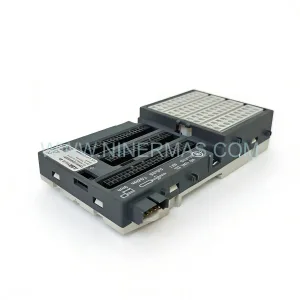
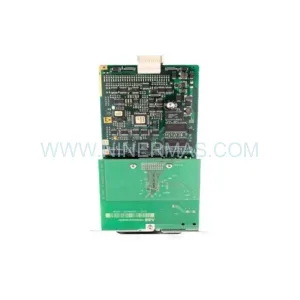
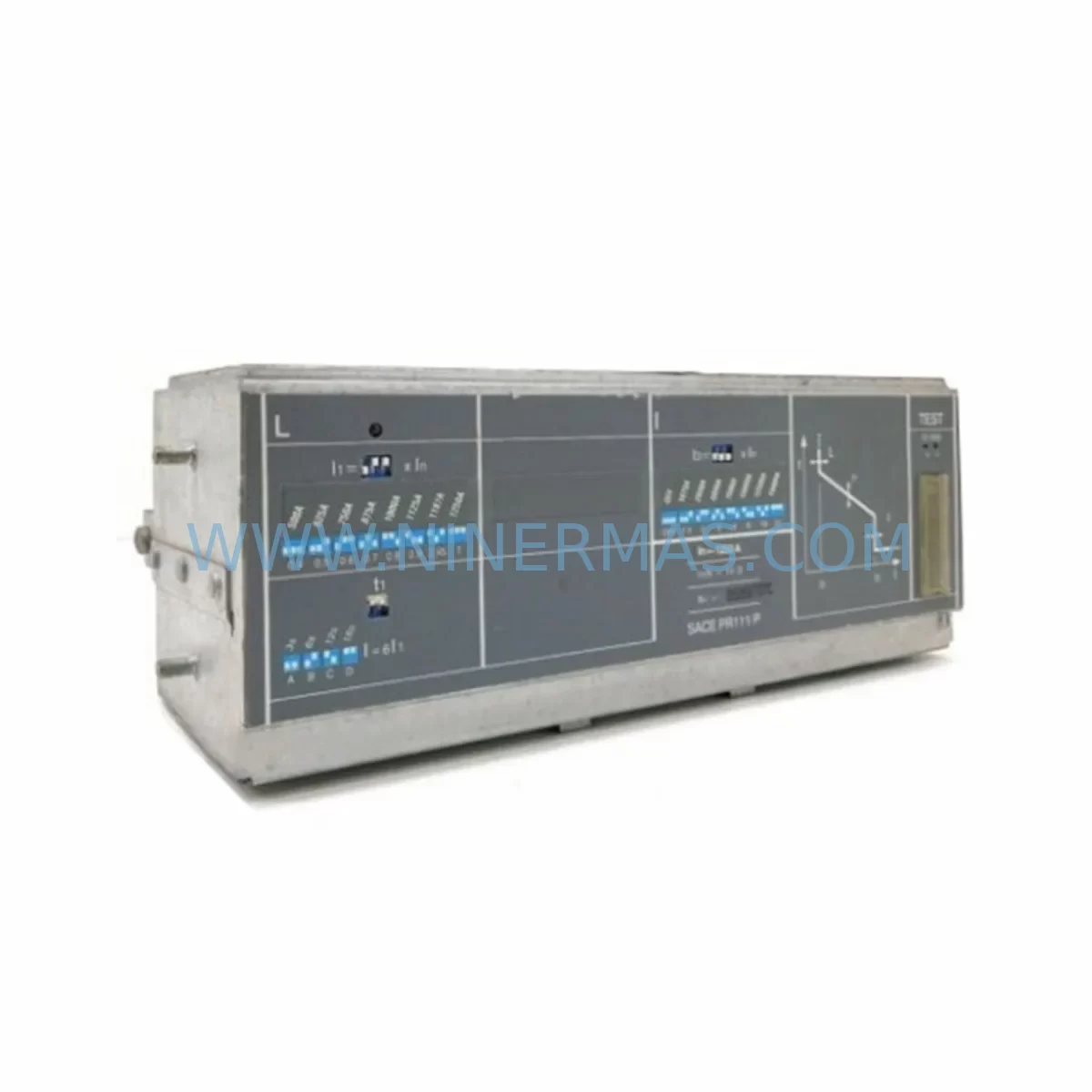
ABB SACE-PR111/P Retrofit-Compatible Trip Unit for Legacy Systems
Verify the part, confirm the platform family, and move straight into quotation with the right commercial details.
RFQ Ready
- SKUSACE-PR111/P SACEPR111P
- CategoryPLC & Industrial Automation Modules
- BrandABB
- SupportAvailability, lead time, condition, and shipping coordination
How Buyers Usually Use This Page
- Confirm the exact part number and platform family before sending the quote request.
- Use direct email when quantity, condition, and destination are already defined internally.
- Switch to the broader brand or category archive when you need alternates nearby.
Series Navigation
Move through the most common platform families behind this part.
Product RFQ
Send this part directly for quotation.
Include quantity, required condition, destination country, and target delivery timing. Current reference: ABB SACE-PR111/P Retrofit-Compatible Trip Unit for Legacy Systems with SKU SACE-PR111/P SACEPR111P.
ABB SACE-PR111/P Retrofit-Compatible Trip Unit for Legacy Systems
The ABB SACE-PR111/P (also referenced as SACEPR111P) is an electronic trip unit designed for seamless integration into existing ABB SACE series air circuit breakers. For facilities running aging low-voltage switchgear panels, this unit provides a direct retrofit path that eliminates the need for full breaker replacement, significantly reducing both capital expenditure and planned downtime. Whether you are managing a brownfield industrial plant, upgrading a legacy motor control center (MCC), or restoring a discontinued protection relay configuration, the SACE-PR111/P delivers the protection functions and mechanical compatibility required for a smooth transition.
Before committing to a retrofit, engineers and maintenance teams should verify several critical parameters. First, confirm the power supply capacity of the existing control cabinet — the SACE-PR111/P draws auxiliary power from the breaker’s internal current transformers, so no external supply is typically required, but the host breaker frame (such as the SACE Emax E1, E2, E3, or E4 series) must be confirmed as compatible. Second, review the terminal wiring layout: existing secondary wiring for protection signals, zone selective interlocking (ZSI) links, and remote trip/close coil connections must be mapped against the PR111/P’s connector pinout before removal of the legacy trip unit. Third, check the backplane interface — the PR111/P uses a standardized plug-in connector on the SACE breaker chassis, but earlier-generation frames may require an adapter kit or mechanical spacer to achieve proper seating and contact alignment.
Module addressing is another consideration when the SACE-PR111/P is installed in a system using ABB’s COM15 or COM16 communication modules for Modbus RTU or PROFIBUS DP connectivity. If the legacy trip unit had a fixed device address configured via DIP switches or rotary encoders, the replacement unit must be programmed to match the original address to avoid disrupting the SCADA or DCS polling sequence. Similarly, if the plant uses an ABB System pro M compact or a third-party PLC (such as a Siemens S7-300 or Allen-Bradley ControlLogix) for breaker status monitoring, the I/O mapping in the PLC program should be reviewed to confirm that the new trip unit’s alarm and status outputs align with the existing ladder logic or function block diagram.
HMI screen updates are often overlooked during trip unit replacements. If the facility uses an ABB CP600 panel PC or a Weintek/Maple Systems HMI displaying breaker protection settings, the screen objects linked to protection thresholds (overload pickup, short-circuit delay, ground fault settings) may need to be reconfigured to reflect the PR111/P’s parameter structure. This is especially relevant when migrating from an older PR111 (non-/P variant) or a PR112/P unit, where the protection function naming conventions differ slightly.
Upgrade Compatibility Table
| Parameter | Legacy Unit (PR111 / PR112) | SACE-PR111/P Replacement | Notes |
|---|---|---|---|
| Host Breaker Frame | SACE Emax E1–E4 (1st Gen) | SACE Emax E1–E4 (compatible) | Verify frame generation; adapter may be needed for pre-2005 frames |
| Connector Interface | Plug-in backplane connector | Identical plug-in interface | Check for corrosion or pin damage before insertion |
| Communication Protocol | Modbus RTU / PROFIBUS DP (via COM15/COM16) | Compatible with COM15 / COM16 | Re-confirm device address after replacement |
| Protection Functions | L, S, I (basic) | L, S, I + optional G (ground fault) | Ground fault requires external CT or neutral sensor |
| Auxiliary Power | CT-powered (self-powered) | CT-powered (self-powered) | No external 24 VDC supply required |
| Installation Space | Standard SACE trip unit bay | Same form factor | No panel cutout modification required |
| Commissioning Tool | PR010/T test unit or laptop + PR030/B | PR010/T or PR030/B (USB) | Confirm firmware version compatibility |
| Warranty | N/A (discontinued) | 12 Months | Covers manufacturing defects; includes pre-shipment functional test |
Retrofit Planning for Existing Automation Systems
A successful SACE-PR111/P retrofit begins well before the maintenance window opens. The planning phase should include a full audit of the switchgear lineup, identifying every breaker frame that houses a legacy PR111 or PR112 trip unit. In many industrial facilities, these breakers are installed in main distribution boards (MDBs), sub-distribution panels, and feeder circuits serving critical loads such as compressors, chillers, and conveyor drives.
During the audit, document the existing protection settings — overload (L) pickup current, short-circuit (S) delay time and current threshold, and instantaneous (I) pickup — so they can be replicated exactly on the PR111/P after installation. These settings are typically recorded in the original commissioning report or can be read directly from the legacy unit using the ABB PR030/B Bluetooth communication unit connected to a laptop running the ABB DOC (Device Configuration) software.
The retrofit kit should be assembled in advance and staged near the switchgear. A typical kit for a SACE-PR111/P replacement includes the trip unit itself, a PR010/T portable test unit for functional verification, a set of insulated screwdrivers and extraction tools for the trip unit bay, and a copy of the breaker’s wiring diagram. If the installation involves a SACE Emax E2 or E3 frame with a motorized operating mechanism (MOE), the motor operator’s control wiring — including the spring-charged status contact and the anti-pumping relay — should be tested independently before the breaker is returned to service.
For plants that have already migrated their control architecture to an ABB AC500 PLC or are in the process of transitioning from a legacy Modicon Quantum or GE Fanuc Series 90 controller, the SACE-PR111/P’s communication module compatibility ensures that the breaker can be integrated into the new control network without requiring a protocol converter. The COM15 module supports Modbus RTU at baud rates up to 19,200 bps, which is sufficient for most legacy SCADA polling cycles. If the new control system uses PROFIBUS DP, the COM16 module can be fitted to the PR111/P to maintain network continuity.
I/O expansion considerations are also relevant when the retrofit is part of a broader panel upgrade. If the control cabinet is being refitted with new ABB S800 I/O modules or Phoenix Contact AXIOLINE F remote I/O, the breaker’s auxiliary contacts (52a/52b) and alarm outputs should be wired to the new I/O terminals using the same signal naming convention as the original design to simplify PLC program validation. Signal isolators — such as the Phoenix Contact MCR-SL series or the ABB RISH series — may be required if the new I/O modules operate at a different signal level than the legacy wiring.
Downtime Control During System Migration
Minimizing unplanned downtime is the primary concern for any maintenance team undertaking a trip unit replacement on a live production line. The SACE-PR111/P’s plug-in design allows the physical swap to be completed in under 15 minutes by a trained technician, provided the breaker has been properly isolated, locked out, and tagged out (LOTO) in accordance with the facility’s electrical safety procedures.
To protect the original program logic during the migration, it is strongly recommended to export a full backup of the PLC program — including all data blocks, function blocks, and HMI tag databases — before any wiring changes are made. This backup serves as the recovery baseline if the commissioning process reveals unexpected discrepancies between the new trip unit’s output signals and the PLC’s input expectations.
Where continuous process control is required and a planned outage cannot be scheduled immediately, a temporary bypass arrangement using a portable generator or a tie-breaker from an adjacent feeder can maintain power to critical loads while the affected breaker is taken out of service. This approach is common in water treatment plants, pharmaceutical manufacturing facilities, and data center power distribution systems where even a brief interruption to the control bus can trigger a cascade of alarms and process upsets.
After the SACE-PR111/P is installed and the protection settings have been programmed, a functional test using the PR010/T portable test unit should be performed before the breaker is re-energized. The test sequence should include a simulated overload trip, a short-circuit trip, and — if the ground fault function is enabled — a ground fault trip. The test results should be recorded and compared against the original commissioning data to confirm that the replacement unit is performing within specification. Only after a successful functional test should the breaker be returned to service and the LOTO removed.
Retrofit Support FAQ
Q1: Is the SACE-PR111/P a direct drop-in replacement for the original PR111 trip unit in my SACE Emax breaker?
In most cases, yes. The PR111/P uses the same plug-in backplane connector as the original PR111 and is mechanically compatible with SACE Emax E1, E2, E3, and E4 frames. However, if your breaker was manufactured before 2003, we recommend confirming the frame generation with the breaker’s nameplate data before ordering, as early-production frames may require a mechanical adapter.
Q2: Will my existing Modbus RTU communication setup continue to work after replacing the trip unit?
Yes, provided the COM15 communication module is retained or replaced with a new unit. The PR111/P is fully compatible with the COM15 (Modbus RTU) and COM16 (PROFIBUS DP) modules. After installation, re-enter the original device address and baud rate settings using the PR030/B configuration tool to restore communication with your SCADA or DCS system.
Q3: What pre-shipment testing is performed on the SACE-PR111/P before delivery?
Each unit undergoes a functional test covering protection trip functions (L, S, I), communication interface verification, and mechanical insertion/extraction cycle testing. A test report is available upon request. All units are supplied with a 12-month warranty covering manufacturing defects from the date of shipment.
Q4: How quickly can the SACE-PR111/P be shipped, and is stock available?
We maintain ready stock of the SACE-PR111/P to support urgent retrofit and breakdown replacement requirements. Standard lead time for in-stock units is 3–5 business days for international shipments. Express delivery options are available for critical plant breakdowns. Contact our team at sale@ninermas.com or +0086 187 5021 5667 to confirm current stock availability and arrange expedited dispatch.
| Product Series | SACE |
|---|---|
| Country of Origin | SE |
Catalog Continuation
More ABB modules in the catalog.
Use the brand lane to compare nearby part numbers, platform-adjacent modules, and other inquiry-ready listings before sending your final RFQ.
SKU: DSQC664 3HAC030923-001
ABB DSQC664 3HAC030923-001 Service-Ready Spare Part
SKU: CI532V02 3BSE003827R1
ABB CI532V02 3BSE003827R1 Safety-Reliable MODBUS Module
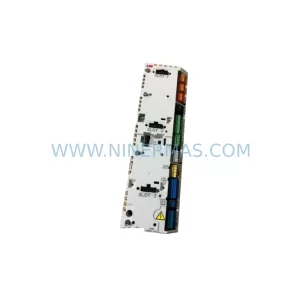
SKU: ZCU-14 3AXD50000005164
ABB ZCU-14 3AXD50000005164 Safety-Reliable Drive Control Unit
Catalog Continuation
Alternative parts within PLC & Industrial Automation Modules.
Stay inside the same system family when you need substitutes, adjacent modules, or a broader shortlist for procurement review.
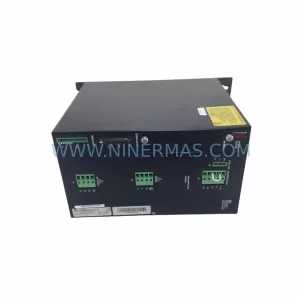
SKU: SCE906A2-002-01 SCE906A200201
Pacific Scientific SCE906A2-002-01 Retrofit Servo Amplifier
SKU: EPC500 3183062451
Alfa Laval EPC500 3183062451 Service-Ready Spare Part