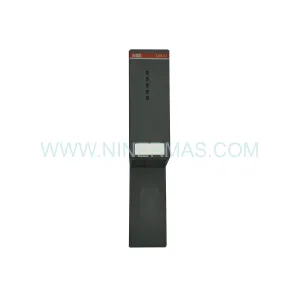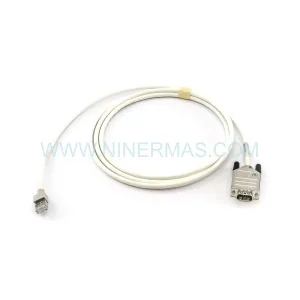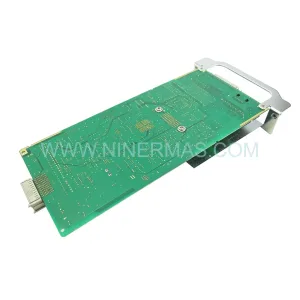
Original Industrial Spare Part
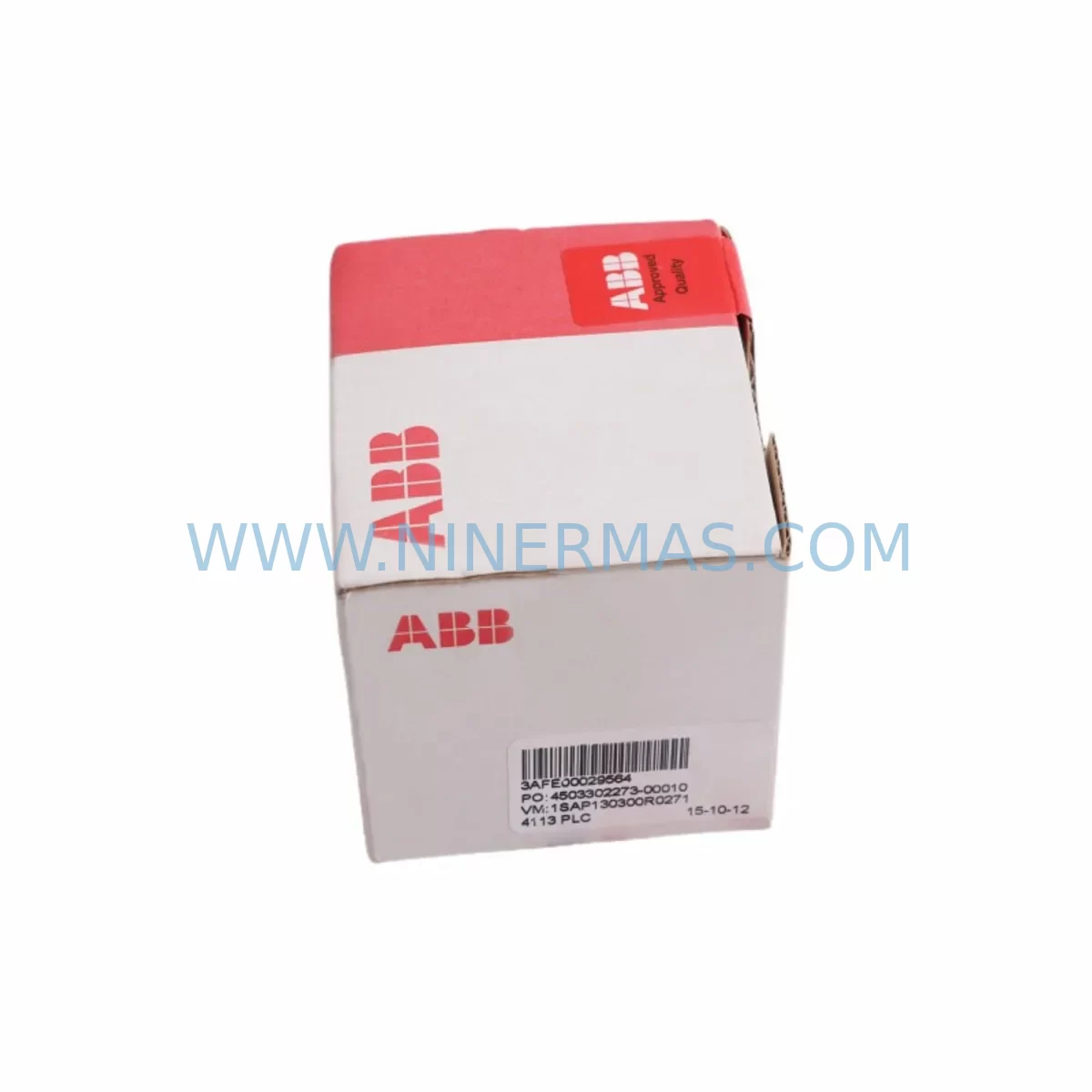
ABB PM573-ETH Retrofit-Compatible CPU for Legacy Systems
Verify the part, confirm the platform family, and move straight into quotation with the right commercial details.
RFQ Ready
- SKUPM573-ETH
- CategoryPLC & Industrial Automation Modules
- BrandABB
- SupportAvailability, lead time, condition, and shipping coordination
How Buyers Usually Use This Page
- Confirm the exact part number and platform family before sending the quote request.
- Use direct email when quantity, condition, and destination are already defined internally.
- Switch to the broader brand or category archive when you need alternates nearby.
Series Navigation
Move through the most common platform families behind this part.
Product RFQ
Send this part directly for quotation.
Include quantity, required condition, destination country, and target delivery timing. Current reference: ABB PM573-ETH Retrofit-Compatible CPU for Legacy Systems with SKU PM573-ETH.
ABB PM573-ETH Retrofit-Compatible CPU for Legacy Systems: Seamless AC500 Modernization
The ABB PM573-ETH is a high-performance CPU module designed for the AC500 programmable logic controller platform, and it stands as one of the most practical solutions available for engineers tasked with modernizing aging industrial control systems. Whether you are replacing a discontinued PM571, PM572, or PM564 module in an existing control cabinet, or migrating an entire production line from a legacy PROFIBUS-based architecture to Ethernet-based communications, the PM573-ETH delivers the processing power, connectivity, and compatibility required to execute a smooth, low-risk retrofit.
At NINERMAS, we specialize in sourcing, testing, and supplying retrofit-grade industrial automation components with verified compatibility and a 12-month warranty on every unit. Our inventory of the ABB PM573-ETH is maintained to support urgent replacement scenarios, planned system upgrades, and long-term spare parts lifecycle management for facilities that depend on AC500 infrastructure.
Upgrade Compatibility Table
| Parameter | Details |
|---|---|
| SKU / Part Number | PM573-ETH |
| Platform | ABB AC500 |
| Common Replaced Models | PM571, PM572, PM564, PM554 |
| Communication Interface | Ethernet (10/100 Mbps), onboard RJ45 |
| Backplane / Rack Compatibility | AC500 TB521, TB541, TB561 terminal bases |
| Programming Environment | Automation Builder (IEC 61131-3: LD, FBD, ST, IL, SFC) |
| Installation Footprint | Standard AC500 DIN rail mount; verify cabinet depth ≥ 120 mm |
| Power Supply Requirement | 24 VDC via terminal base; confirm PS501 or PS502 capacity |
| Protocol Migration Support | PROFIBUS DP (via CM572-DP coupler), Modbus TCP, EtherNet/IP |
| Retrofit Commissioning Focus | Module address reassignment, I/O mapping verification, HMI tag rebinding |
| Warranty | 12 Months — NINERMAS Quality Guarantee |
Retrofit Planning for Existing Automation Systems
A successful PM573-ETH retrofit begins well before the module arrives on site. Engineers should start by auditing the existing control cabinet to confirm that the installed terminal base — typically a TB521-ETH or TB541-ETH — is compatible with the PM573-ETH’s connector pinout. In many legacy installations, the terminal base was originally paired with a PM571 or PM572 CPU, and while the physical form factor is identical, it is essential to verify that the backplane firmware version supports the PM573-ETH’s extended memory and Ethernet stack.
Power supply capacity is a critical checkpoint. The PM573-ETH draws slightly more current than older PM5xx variants due to its onboard Ethernet controller. If the existing PS501 or PS502 power supply module is already operating near its rated output — particularly in cabinets with dense I/O expansion using SD502 digital I/O modules or AI523 analog input modules — a load calculation must be performed before installation. Undersized power supplies are a leading cause of intermittent faults during post-retrofit commissioning.
For facilities running PROFIBUS DP networks, the PM573-ETH does not include a native PROFIBUS interface. The migration path typically involves retaining the CM572-DP communication module in the existing rack alongside the new CPU, allowing the PROFIBUS segment to remain operational while Ethernet-based supervisory communications are established in parallel. This dual-protocol transitional architecture is particularly valuable in phased upgrade projects where not all field devices can be migrated simultaneously.
I/O expansion planning should account for the PM573-ETH’s increased addressable I/O capacity. Legacy programs written for PM571 or PM564 controllers may use compact I/O addressing schemes that require remapping when the new CPU’s extended address space is activated. Digital output modules such as the DO531 and analog output modules such as the AO523 should be re-verified in the Automation Builder hardware configuration to ensure that channel assignments match the physical wiring in the terminal blocks.
HMI integration is another area that demands careful attention during retrofit planning. Operator panels connected via Modbus RTU or older proprietary protocols may need tag database updates to reflect the PM573-ETH’s new memory register layout. In installations using ABB CP600 or CP620 operator panels, the communication driver configuration should be updated to use Modbus TCP over Ethernet, eliminating the serial communication bottleneck that often limits data refresh rates in legacy HMI architectures.
Programming cable and software compatibility should be confirmed before the retrofit window opens. The PM573-ETH is programmed exclusively through ABB Automation Builder using a standard Ethernet connection — the older serial programming cables used with early AC500 variants are not compatible. Ensure that the engineering workstation has Automation Builder 2.x or later installed and that the project file from the legacy CPU has been exported and validated in the new software environment prior to the scheduled downtime.
Downtime Control During System Migration
Minimizing production downtime during a PM573-ETH retrofit requires a structured pre-commissioning strategy. The most effective approach is to complete all software preparation — including program compilation, I/O mapping verification, and HMI tag updates — in a simulated environment before the physical swap takes place. ABB Automation Builder supports offline simulation, allowing engineers to validate the modified program logic against the new CPU’s memory model without interrupting live production.
On the day of the retrofit, the recommended sequence is to power down the control cabinet, remove the legacy CPU module from the terminal base, seat the PM573-ETH, restore power, and perform an immediate online download of the pre-validated program. In straightforward replacements where the terminal base and I/O modules remain unchanged, this process can typically be completed within 30 to 90 minutes, depending on the complexity of the communication network and the number of I/O points requiring verification.
To protect the original program logic, always create a full project backup from the legacy CPU using Automation Builder before beginning any physical work. Store the backup on both the engineering workstation and an offline medium. If the retrofit encounters an unexpected compatibility issue, this backup allows the original CPU to be reinstalled and the system restored to its pre-retrofit state without data loss.
For critical processes where even brief interruptions carry significant cost, consider a parallel commissioning approach: install the PM573-ETH in a test rack alongside the live system, validate all I/O responses and communication links in shadow mode, and then execute the final cutover during a scheduled maintenance window. This strategy is particularly effective in continuous process industries where the control system governs safety-critical functions.
Field commissioning should include a structured verification checklist covering power-on diagnostics, Ethernet link status, I/O channel scan confirmation, HMI communication handshake, and a full cycle test of all program function blocks. NINERMAS recommends documenting the commissioning results and retaining them alongside the 12-month warranty certificate for future reference.
Retrofit Support FAQ
Q: Is the ABB PM573-ETH a direct drop-in replacement for the PM571 or PM572?
A: The PM573-ETH uses the same AC500 terminal base form factor as the PM571 and PM572, making it physically compatible with existing TB521 and TB541 terminal bases. However, it is not a firmware-identical replacement — the program must be recompiled in Automation Builder targeting the PM573-ETH hardware profile, and I/O addressing should be verified before going live. In most cases, the logic migration is straightforward and does not require rewriting the control program from scratch.
Q: Does NINERMAS test the PM573-ETH before shipment?
A: Yes. Every PM573-ETH unit supplied by NINERMAS undergoes a pre-shipment functional test covering power-on self-diagnostics, Ethernet port connectivity, and memory integrity verification. Units are shipped with a test report and are covered by a 12-month warranty from the date of delivery.
Q: What should I check regarding wiring and terminal compatibility before installing the PM573-ETH?
A: Confirm that the existing terminal base model is listed as compatible with the PM573-ETH in ABB’s AC500 system catalog. Inspect the terminal block wiring for any signs of corrosion or loose connections that could cause intermittent faults after the new CPU is installed. Verify that the 24 VDC supply voltage at the terminal base is within the specified tolerance range (20.4–28.8 VDC) under full I/O load conditions.
Q: Can the PM573-ETH support both Modbus TCP and PROFIBUS DP simultaneously?
A: The PM573-ETH provides native Modbus TCP and EtherNet/IP support via its onboard Ethernet port. PROFIBUS DP connectivity requires the addition of a CM572-DP communication module installed in the same AC500 rack. This configuration allows the PM573-ETH to serve as the central controller for a mixed-protocol network, which is a common requirement in phased migration projects where legacy PROFIBUS field devices coexist with newer Ethernet-connected instruments.
| Product Series | AC500 |
|---|---|
| Country of Origin | SE |
Catalog Continuation
More ABB modules in the catalog.
Use the brand lane to compare nearby part numbers, platform-adjacent modules, and other inquiry-ready listings before sending your final RFQ.
SKU: HESG330061R1 ED1411C
ABB HESG330061R1 ED1411C Service-Ready Spare Part
SKU: PU410 3BSE056478R1
ABB 3BSE056478R1 PU410 Retrofit-Compatible Communication Module
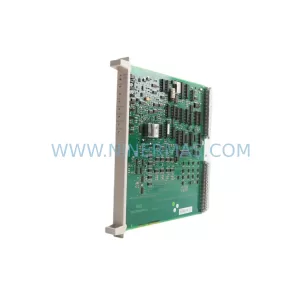
SKU: DSBC176 3BSE019216R1
ABB DSBC176 3BSE019216R1 Safety-Reliable Bus Carrier for S800 I/O
Catalog Continuation
Alternative parts within PLC & Industrial Automation Modules.
Stay inside the same system family when you need substitutes, adjacent modules, or a broader shortlist for procurement review.
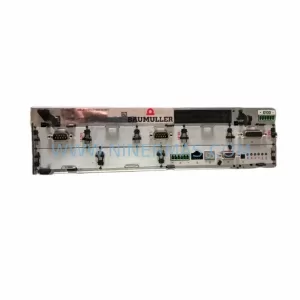
SKU: BM4413-ST0-01600-03-SET
Baumuller BM4413-ST0-01600-03-SET Service-Ready Spare Part
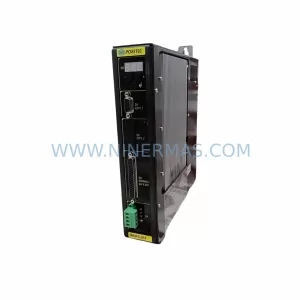
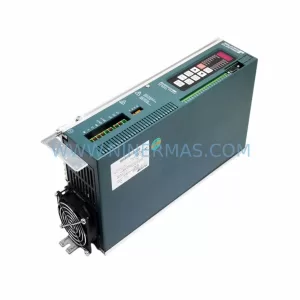
SKU: GV3000/SE GV3000E-AC005-AA-DBU-RFI
Reliance GV3000E-AC005-AA-DBU-RFI Retrofit AC Drive DBU/RFI Filter