Original Industrial Spare Part
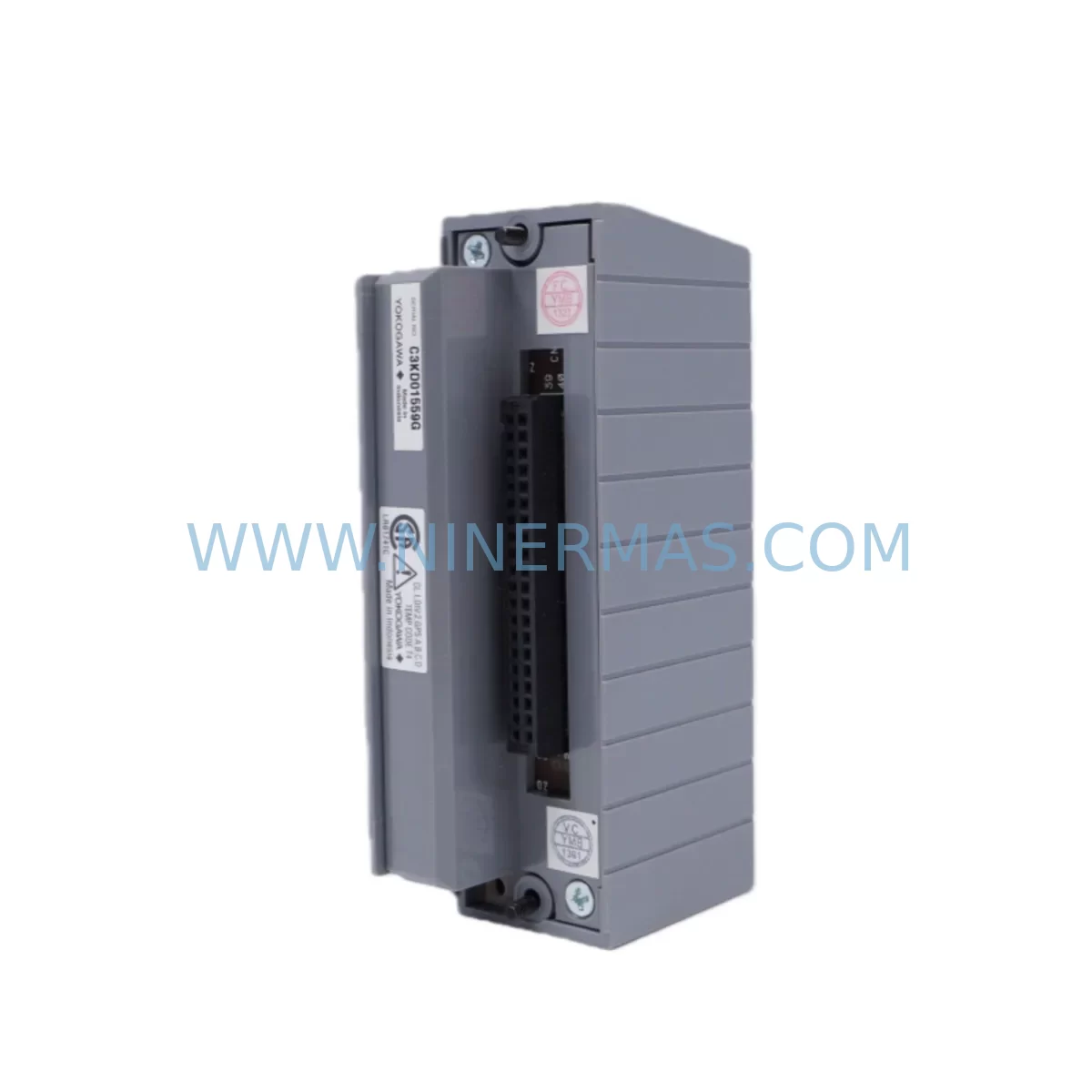
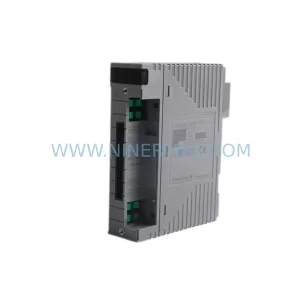
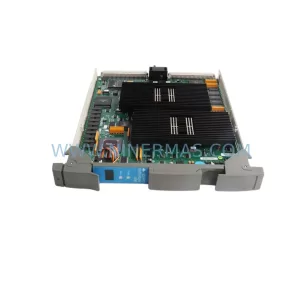
Yokogawa ATA4S-10 S2 Retrofit-Compatible Analog I/O for Legacy
Verify the part, confirm the platform family, and move straight into quotation with the right commercial details.
RFQ Ready
- SKUATA4S-10 S2
- CategoryDCS Distributed Control Systems
- BrandYokogawa
- SupportAvailability, lead time, condition, and shipping coordination
How Buyers Usually Use This Page
- Confirm the exact part number and platform family before sending the quote request.
- Use direct email when quantity, condition, and destination are already defined internally.
- Switch to the broader brand or category archive when you need alternates nearby.
Series Navigation
Move through the most common platform families behind this part.
Product RFQ
Send this part directly for quotation.
Include quantity, required condition, destination country, and target delivery timing. Current reference: Yokogawa ATA4S-10 S2 Retrofit-Compatible Analog I/O for Legacy with SKU ATA4S-10 S2.
Yokogawa ATA4S-10 S2 Retrofit-Compatible Analog I/O for Legacy Systems
The Yokogawa ATA4S-10 S2 is a high-reliability analog input/output module designed for the CENTUM VP distributed control system platform. As aging CENTUM CS 3000 and earlier CENTUM VP installations reach end-of-support milestones, the ATA4S-10 S2 has become a critical component in brownfield retrofit projects, spare-parts lifecycle extension programs, and control cabinet modernization initiatives across the oil & gas, petrochemical, power generation, and pulp & paper industries.
When engineering teams plan a migration from a legacy CENTUM CS 3000 node to a current CENTUM VP R6 architecture, the ATA4S-10 S2 frequently appears on the bill of materials as either a direct replacement for discontinued analog cards or as an expansion module within an existing field control station (FCS). Its compatibility with the Yokogawa Vnet/IP communication backbone means that existing fiber-optic ring topologies and ESB bus wiring can often be retained without modification, dramatically reducing the scope of civil and cabling work during a turnaround window.
Upgrade Compatibility Table
| Parameter | Detail |
|---|---|
| SKU / Part Number | ATA4S-10 S2 |
| Series | CENTUM VP / CS 3000 Compatible |
| Module Type | Analog I/O (Input/Output) |
| Communication Interface | Vnet/IP (ESB Bus compatible) |
| Backplane / Rack Interface | Standard Yokogawa FCS node card slot |
| Installation Footprint | Single-slot, standard CENTUM VP card cage |
| Common Replacement Targets | Discontinued CENTUM CS 3000 analog I/O cards |
| Retrofit Recommendation | Verify slot address and I/O builder tag mapping before hot-swap |
| Commissioning Focus | Signal range calibration, loop check, HMI faceplate binding |
| Warranty | 12 Months from date of shipment |
| Outgoing Test | Function-tested prior to dispatch |
| Stock Status | Available — contact for lead time confirmation |
Retrofit Planning for Existing Automation Systems
A successful ATA4S-10 S2 retrofit begins well before the module arrives on site. The first step is an audit of the existing field control station to confirm available card slots, current power supply loading, and the revision level of the FCS firmware. Yokogawa’s CENTUM VP FCS power supply units — such as the PWR48D — have defined current budgets per card cage, and adding or replacing analog I/O cards requires verifying that the aggregate draw of all installed modules remains within the rated capacity. If the existing PWR48D is already near its ceiling, a supplementary power supply or a load-balancing review may be required before the ATA4S-10 S2 can be safely installed.
Terminal wiring is the next critical checkpoint. The ATA4S-10 S2 connects to field instruments through Yokogawa’s standard terminal board assemblies. When replacing an older analog card, engineers must confirm that the existing terminal board model is electrically and mechanically compatible with the ATA4S-10 S2’s connector pinout. In many CS 3000-era installations, the terminal boards — such as the TB series used with AAI141 or AAI543 type cards — can be reused directly, eliminating the need to re-terminate field cables and significantly reducing the risk of wiring errors during the changeover.
Once the physical installation is confirmed, attention shifts to the software layer. The ATA4S-10 S2 must be registered in the CENTUM VP engineering environment using the System View and I/O Builder tools. Each channel requires a function block assignment, and the tag names, engineering unit ranges, and alarm setpoints from the legacy configuration must be migrated accurately. If the plant is running an older revision of CENTUM VP or transitioning from CS 3000, the project database may need to be converted using Yokogawa’s migration utility before the new module can be recognized correctly by the FCS. During this phase, it is also advisable to review the communication module configuration — for example, the ACM12 or VL net communication cards installed in the same node — to ensure that the Vnet/IP segment addressing and redundancy settings are not disrupted by the card replacement.
HMI integration is another area that demands careful attention. Operator stations running CENTUM VP’s HIS (Human Interface Station) display process graphics that are bound to specific tag names and I/O addresses. After the ATA4S-10 S2 is commissioned and its channels are live, each affected faceplate and trend display should be verified to confirm that the signal source is correctly mapped and that alarm annunciation is functioning as expected. In plants where the HMI layer has been upgraded to Yokogawa’s FAST/TOOLS SCADA or an OPC-DA/UA gateway, the tag binding at the data server level must also be validated.
For installations that include remote I/O nodes connected via the ER bus or that use Yokogawa’s STARDOM FCN/FCJ controllers as satellite units feeding data into the CENTUM VP supervisory layer, the ATA4S-10 S2 retrofit should be coordinated with a review of the inter-controller communication links to ensure that no address conflicts are introduced. Similarly, if the control cabinet houses a Yokogawa YS1700 or YS1500 series single-loop controller operating in a hybrid configuration alongside the DCS, the analog signal routing between the ATA4S-10 S2 channels and those standalone controllers should be re-verified after the module swap.
Downtime Control During System Migration
Minimizing unplanned downtime is the primary concern for any brownfield retrofit involving a live production environment. For the ATA4S-10 S2 replacement, the recommended approach is to complete all pre-work — firmware verification, tag mapping review, terminal board compatibility check, and power budget calculation — during normal operation, so that the physical swap can be executed within a planned maintenance window of the shortest possible duration.
Where the process permits, a cold-standby strategy is preferred: the replacement ATA4S-10 S2 is pre-configured and function-tested in a staging environment or on a bench FCS node before being brought to site. This allows the engineering team to validate the I/O builder configuration, confirm channel scaling, and simulate alarm responses without touching the live system. When the maintenance window opens, the swap sequence is reduced to: power down the affected card slot (or perform a hot-swap if the FCS node supports it), extract the legacy module, insert the ATA4S-10 S2, restore power, and execute a loop check against the pre-verified tag list.
To protect the original program logic, a full backup of the FCS project database — including all function block parameters, sequence tables, and communication settings — should be archived before any hardware change is made. Yokogawa’s CENTUM VP engineering tools support project export to a versioned archive, which serves as the recovery baseline if an unexpected issue arises during commissioning. Field operators should be briefed on the expected behavior of affected control loops during the transition, and manual override procedures should be confirmed at the DCS operator station before the card is removed.
Post-installation, a structured commissioning checklist covering signal integrity, loop direction, alarm activation, and HMI display accuracy should be completed and signed off before the loop is returned to automatic control. All test records should be retained as part of the plant’s maintenance history for future reference and regulatory compliance.
Retrofit Support FAQ
Q1: Is the ATA4S-10 S2 a direct drop-in replacement for discontinued CENTUM CS 3000 analog I/O cards?
In most cases, yes — the ATA4S-10 S2 is designed to occupy the same card slot and interface with the same terminal board assemblies used in CS 3000 FCS nodes that have been upgraded to CENTUM VP. However, the specific legacy card model being replaced should be confirmed against Yokogawa’s compatibility matrix, as some older card types may require a terminal board adapter or a minor I/O builder reconfiguration before the replacement is fully transparent to the control system.
Q2: What commissioning steps are required after installing the ATA4S-10 S2?
After physical installation, the module must be recognized by the FCS through the CENTUM VP I/O Builder, channel function blocks must be assigned and downloaded, and a full loop check must be performed for each active channel. Signal range calibration, alarm setpoint verification, and HMI faceplate confirmation are also required before the loop is returned to automatic. If the installation involves a Vnet/IP segment change or a new node address, the communication configuration must be updated and validated as well.
Q3: Can the existing field wiring and terminal boards be reused when installing the ATA4S-10 S2?
In the majority of CENTUM VP and CS 3000 retrofit scenarios, the existing terminal boards and field cable terminations can be retained without modification, provided the terminal board model is compatible with the ATA4S-10 S2 connector interface. This is one of the key advantages of staying within the Yokogawa CENTUM platform during a modernization project, as it eliminates the need for re-termination and significantly reduces the risk of wiring errors and associated downtime.
Q4: What warranty and pre-shipment testing does NINERMAS provide for the ATA4S-10 S2?
Every ATA4S-10 S2 unit supplied by NINERMAS is function-tested prior to dispatch to verify basic I/O operation and communication interface integrity. All units are covered by a 12-month warranty from the date of shipment. NINERMAS maintains stock of the ATA4S-10 S2 and related CENTUM VP spare parts to support urgent retrofit and breakdown replacement requirements. For lead time confirmation, availability, and technical pre-sales support, contact sale@ninermas.com or call +0086 187 5021 5667.
| Product Series | CENTUM VP |
|---|---|
| Country of Origin | JP |
Catalog Continuation
More Yokogawa modules in the catalog.
Use the brand lane to compare nearby part numbers, platform-adjacent modules, and other inquiry-ready listings before sending your final RFQ.
Catalog Continuation
Alternative parts within DCS Distributed Control Systems.
Stay inside the same system family when you need substitutes, adjacent modules, or a broader shortlist for procurement review.
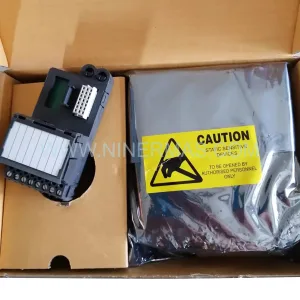
SKU: PM632 3BSE005831R1
ABB PM632 3BSE005831R1 Retrofit-Compatible Processor for Legacy Systems
SKU: High Performance Communication Controller
Honeywell 51401635-150 Service-Ready Spare for C300