Original Industrial Spare Part
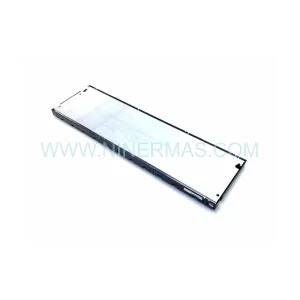
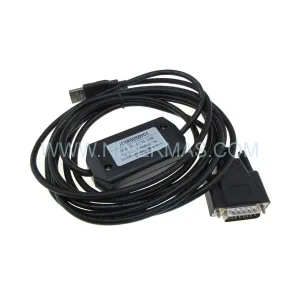
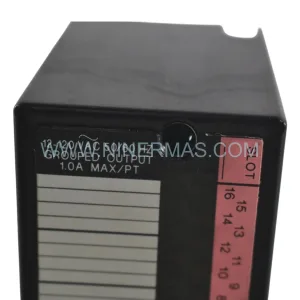
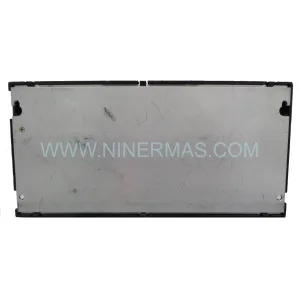
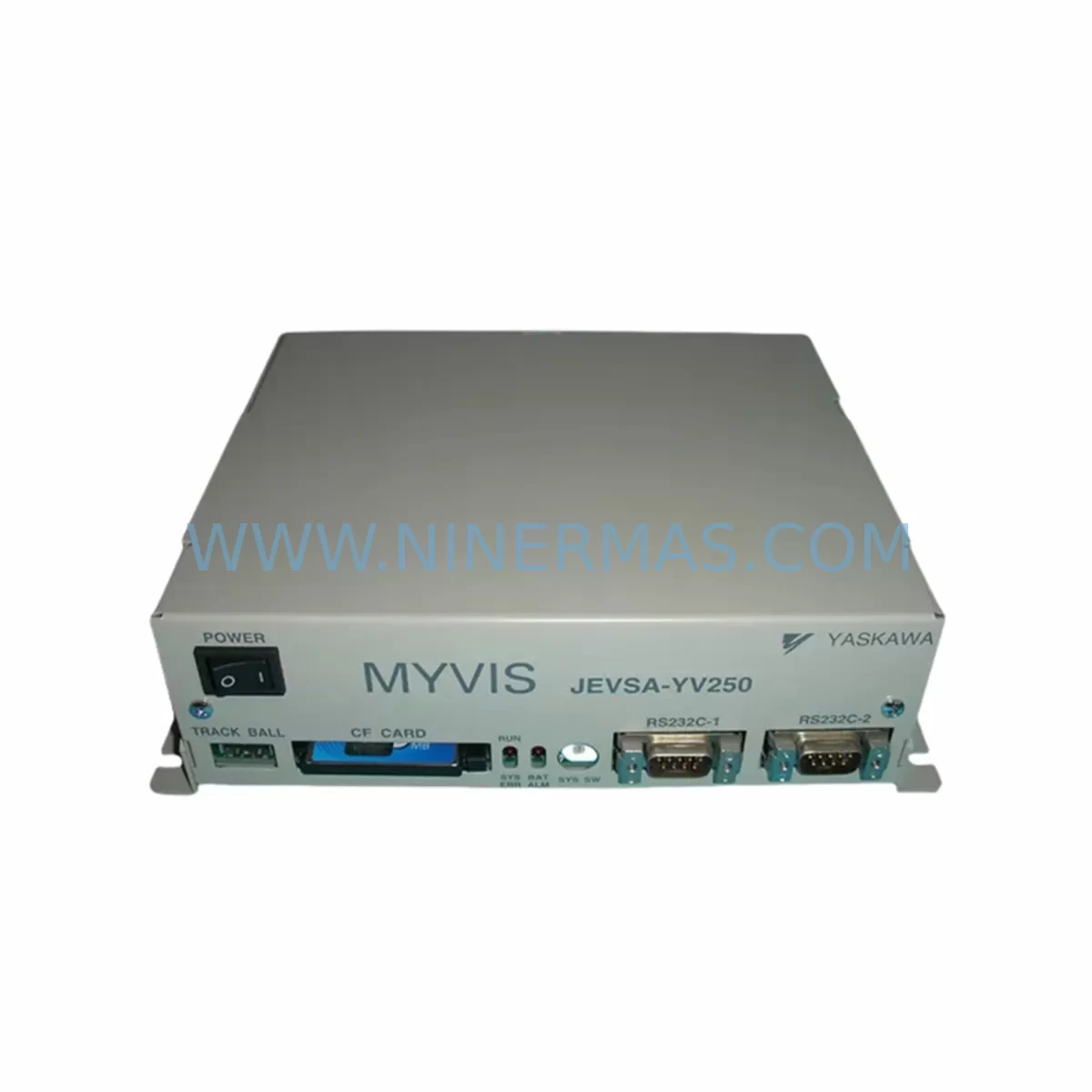
YASKAWA JEVSA-YV250-E Retrofit Vision Module for Legacy Systems
Verify the part, confirm the platform family, and move straight into quotation with the right commercial details.
RFQ Ready
- SKUJEVSA-YV250-E
- CategoryPLC & Industrial Automation Modules
- BrandYASKAWA
- SupportAvailability, lead time, condition, and shipping coordination
How Buyers Usually Use This Page
- Confirm the exact part number and platform family before sending the quote request.
- Use direct email when quantity, condition, and destination are already defined internally.
- Switch to the broader brand or category archive when you need alternates nearby.
Series Navigation
Move through the most common platform families behind this part.
Product RFQ
Send this part directly for quotation.
Include quantity, required condition, destination country, and target delivery timing. Current reference: YASKAWA JEVSA-YV250-E Retrofit Vision Module for Legacy Systems with SKU JEVSA-YV250-E.
YASKAWA JEVSA-YV250-E Retrofit Vision Module for Legacy Systems: Seamless Compatibility and Smooth Upgrade
The YASKAWA JEVSA-YV250-E is a ruggedized machine vision module engineered for demanding industrial environments where legacy automation systems remain in active service. As production lines age and original vision components reach end-of-life, the JEVSA-YV250-E provides a direct retrofit path that preserves existing control architecture while delivering modern image processing capability. Whether you are replacing a discontinued YASKAWA vision sensor, upgrading a YV-series inspection station, or migrating an entire quality-control loop to a newer control platform, the JEVSA-YV250-E is designed to minimize engineering rework and reduce commissioning time on the factory floor.
Industrial facilities running YASKAWA MP3000 or MP2000-series machine controllers frequently encounter the challenge of sourcing compatible vision components as the original hardware reaches obsolescence. The JEVSA-YV250-E addresses this directly: its ruggedized housing tolerates vibration, dust ingress, and wide temperature swings typical of press shops, foundries, and automotive body-in-white lines. The module interfaces with standard YASKAWA MECHATROLINK-III communication backbones, allowing it to coexist with existing servo drives, I/O modules, and HMI panels without requiring a full system replacement.
When planning a retrofit around the JEVSA-YV250-E, engineers must verify several critical parameters before committing to installation. Power supply capacity is the first checkpoint: the module draws from the 24 VDC rail shared with other field devices, and the existing YASKAWA JZRCR-NPP01B or equivalent power supply unit must have sufficient headroom after accounting for all connected I/O expansion modules and communication cards. Terminal wiring follows the standard YASKAWA 40-pin connector pinout; any deviation from the original JEVSA-series wiring harness must be corrected before power-on to avoid damaging the image processor board.
Backplane interface compatibility is equally important. The JEVSA-YV250-E occupies a single slot in the YASKAWA JEPMC-BU series rack. If the existing rack is a legacy JEPMC-BU2110 or JEPMC-BU2210, slot addressing must be re-confirmed in the MP-series controller’s I/O map before the replacement module is seated. Module address conflicts with adjacent JEPMC-IO350 digital I/O modules or JEPMC-AN2900 analog input cards can cause the controller to fault on startup, so a full I/O map audit is recommended as part of the pre-installation checklist.
Program compatibility deserves careful attention. Vision inspection routines stored in the MP-series ladder or motion program reference specific register addresses tied to the original vision module’s output data structure. Before swapping in the JEVSA-YV250-E, the commissioning engineer should export the current program from the YASKAWA MPE720 programming software, document all vision-related register assignments, and verify that the new module’s output map aligns with the existing logic. In most cases, only minor register remapping is required, but this step prevents unexpected faults during the first production run after the retrofit.
HMI screen updates are often overlooked during vision module replacements. Operator panels running YASKAWA JTOPC-NET32 or third-party SCADA systems connected via Ethernet/IP may display vision status tags that reference the old module’s data addresses. Updating these tag bindings in parallel with the PLC program changes ensures that operators retain full visibility into inspection pass/fail status, reject counts, and camera trigger signals without requiring a separate HMI commissioning visit.
Communication link integrity must be validated after installation. The JEVSA-YV250-E participates in the MECHATROLINK-III ring alongside servo amplifiers such as the YASKAWA SGDV-series and communication interface modules like the JEPMC-CM200. A network scan using the YASKAWA DriveWizard or MotionWorks IEC engineering tool will confirm that the new vision module is recognized at its assigned station address and that cycle time margins remain within the controller’s scan period budget.
Physical installation space must be confirmed before ordering. The JEVSA-YV250-E shares the same DIN-rail and rack-mount footprint as earlier JEVSA-series modules, but the cable routing for the vision camera head — typically a YASKAWA JZSP-CVS series cable assembly — must be re-routed if the control cabinet layout has been modified since the original installation. Adequate bend radius for the camera cable and clearance for the module’s ventilation slots are mandatory to maintain the IP54 environmental rating in service.
Field commissioning follows a structured sequence: power-on self-test, network enumeration, camera calibration using the stored reference image set, and a dry-run inspection cycle with known-good and known-bad sample parts. This sequence, combined with pre-shipment functional testing performed on every JEVSA-YV250-E unit before dispatch, ensures that the module arrives ready for integration rather than requiring bench-level debugging on site.
Upgrade Compatibility Table
| Parameter | Legacy / Replaced Module | YASKAWA JEVSA-YV250-E | Retrofit Note |
|---|---|---|---|
| Communication Protocol | MECHATROLINK-II / Proprietary | MECHATROLINK-III | Verify controller firmware supports MLIII; upgrade JEPMC-CM200 if required |
| Rack / Backplane | JEPMC-BU2110 / BU2210 | JEPMC-BU series (single slot) | Re-confirm slot address in MPE720 I/O map before seating module |
| Power Supply | 24 VDC shared rail | 24 VDC, ≤2.5 A | Audit JZRCR-NPP01B capacity; add rail if headroom <20% |
| Connector / Wiring | 40-pin JEVSA-series harness | 40-pin JEVSA-series harness | Direct pin-compatible; inspect harness condition before reuse |
| Camera Cable | JZSP-CVS series | JZSP-CVS series | Confirm bend radius and cable length; replace if jacket is degraded |
| Environmental Rating | IP40 (typical legacy) | IP54 ruggedized | Improved ingress protection; no additional sealing required in standard cabinets |
| Programming Tool | MPE720 / MotionWorks IEC | MPE720 / MotionWorks IEC | Export existing program; remap vision registers before download |
| HMI Compatibility | JTOPC-NET32 / SCADA tags | JTOPC-NET32 / SCADA tags | Update vision status tag addresses in HMI project after register remap |
| Warranty | Original OEM (expired) | 12-Month Warranty | Covers manufacturing defects; pre-shipment functional test included |
| Availability | Discontinued / EOL | In Stock | Ready for immediate dispatch; contact for lead-time confirmation on bulk orders |
Retrofit Planning for Existing Automation Systems
A successful retrofit around the YASKAWA JEVSA-YV250-E begins with a thorough audit of the existing control cabinet. Most legacy YASKAWA installations that benefit from this module are built around the MP2000 or MP3000 controller family, where the main CPU module — such as the JEPMC-CP200 or JEPMC-CP300 — manages motion, I/O, and vision tasks within a single MECHATROLINK network. The JEVSA-YV250-E slots into this architecture without displacing the controller or requiring a new rack, which is a significant advantage when cabinet real estate is limited.
I/O expansion is a common companion task during vision module retrofits. If the original installation used JEPMC-IO350 digital I/O modules to route inspection trigger signals and reject actuator outputs, these modules can remain in place. The JEVSA-YV250-E’s trigger input and pass/fail output signals are mapped through the same MECHATROLINK-III data frame, so no additional wiring between the vision module and the I/O rack is required beyond the standard backplane connection.
Analog signal conditioning is occasionally needed when the retrofit involves integrating the JEVSA-YV250-E into a line that also uses JEPMC-AN2900 analog input cards for dimensional measurement or force feedback. In these cases, a signal isolator — such as a DIN-rail-mounted 4–20 mA isolator — should be inserted between the analog sensor and the analog card to prevent ground loops that could introduce noise into the vision module’s image capture cycle.
Communication protocol migration is straightforward when the existing network is already MECHATROLINK-III. If the legacy system runs MECHATROLINK-II, the JEPMC-CM200 communication interface module must be replaced with a MLIII-compatible variant, and the controller firmware must be updated to the corresponding version before the JEVSA-YV250-E is commissioned. This firmware update can typically be performed without replacing the CPU module, preserving the existing motion program and parameter set.
For installations where a YASKAWA GP8 or GP12 robot arm is integrated into the inspection cell, the vision module’s coordinate output must be re-calibrated to the robot’s base frame after installation. The calibration routine is executed from the YASKAWA YRC1000 robot controller’s teach pendant, using a calibration target placed at a known position within the camera’s field of view. This step is mandatory whenever the camera head is repositioned or the vision module is replaced, and it should be scheduled as part of the planned maintenance window to avoid unplanned downtime.
Spare parts lifecycle planning should accompany any vision module retrofit. Facilities that standardize on the JEVSA-YV250-E as their replacement module can simplify their spare parts inventory by stocking a single vision module SKU alongside the JZSP-CVS camera cable assembly and the 40-pin wiring harness. This approach reduces the risk of extended downtime caused by sourcing delays for obsolete components and aligns with best practices for industrial spare parts management.
Downtime Control During System Migration
Minimizing production downtime during a vision module replacement requires preparation that begins well before the maintenance window opens. The most effective approach is to pre-configure the JEVSA-YV250-E on a bench using a laptop running MPE720 or MotionWorks IEC, loading the exported vision program and verifying that all register assignments match the production system’s I/O map. When the module arrives on site, it is already programmed and tested, reducing the in-cabinet commissioning time to physical installation, network enumeration, and a final calibration check.
Protecting the original program logic is non-negotiable. Before any hardware is disturbed, the full MP-series program — including motion profiles, vision routines, and HMI tag definitions — must be backed up to a secure location. The MPE720 software supports project export to a compressed archive that can be stored on a USB drive or network share. This backup serves as the recovery baseline if the retrofit encounters an unexpected compatibility issue and the original module must be temporarily reinstalled to restore production.
Maintaining field control continuity during the swap requires coordination with the production scheduler. The vision module replacement should be timed to coincide with a planned shift change or scheduled preventive maintenance stop, not forced into an unplanned outage. If the inspection station feeds a downstream assembly process, a buffer of pre-inspected parts should be staged before the maintenance window begins, allowing the downstream line to continue operating while the vision system is offline.
Risk reduction during commissioning is achieved through a structured test sequence: power-on self-test confirmation, MECHATROLINK-III network scan, camera trigger verification using a manual input signal, inspection cycle dry-run with reference parts, and final sign-off by the process engineer. Each step is documented on a commissioning checklist, and the completed checklist is retained as part of the equipment maintenance record. This structured approach, combined with the pre-shipment functional test performed on every JEVSA-YV250-E unit, ensures that the module is production-ready within the planned maintenance window.
Retrofit Support FAQ
Q1: Is the YASKAWA JEVSA-YV250-E a direct replacement for earlier JEVSA-series vision modules?
The JEVSA-YV250-E is designed as a retrofit-compatible replacement for earlier JEVSA-series modules used in YASKAWA MP2000 and MP3000 controller environments. The 40-pin connector pinout and rack slot footprint are compatible with the JEPMC-BU series backplane. However, engineers should verify the MECHATROLINK protocol version supported by the existing controller firmware and confirm register address assignments in the vision program before finalizing the replacement order.
Q2: What wiring changes are required when installing the JEVSA-YV250-E in an existing cabinet?
In most cases, the existing 40-pin JEVSA-series wiring harness can be reused directly. The installer should inspect the harness for insulation damage, connector pin corrosion, and correct strain relief before reconnecting. The JZSP-CVS camera cable should also be inspected and replaced if the outer jacket shows cracking or abrasion. No additional power wiring is required if the 24 VDC rail has sufficient capacity.
Q3: Does every JEVSA-YV250-E unit undergo pre-shipment testing?
Yes. Every JEVSA-YV250-E unit supplied by NINERMAS undergoes a pre-shipment functional test that verifies power-on self-test completion, communication interface operation, and image capture functionality. Units that do not pass the full test sequence are not dispatched. A 12-month warranty covering manufacturing defects is included with every unit, and the warranty period begins from the date of shipment.
Q4: What is the typical lead time, and is stock available for immediate dispatch?
Stock is maintained for immediate dispatch on standard orders. Lead time for bulk or project quantities should be confirmed at the time of inquiry. Contact the NINERMAS sales team at sale@ninermas.com or +0086 187 5021 5667 to confirm current stock levels and arrange expedited shipping if required for urgent retrofit projects.
| Product Series | Legacy |
|---|---|
| Country of Origin | JP |
Catalog Continuation
More YASKAWA modules in the catalog.
Use the brand lane to compare nearby part numbers, platform-adjacent modules, and other inquiry-ready listings before sending your final RFQ.
SKU: 023PLX0100 23 SGM-02U3B4L 10.004.22 RKH/W 500L 0040-99736
Yaskawa SGM-02U3B4L Retrofit AC Servo Motor for Legacy Systems
SKU: PX7DS-40V6-R(125v 1A) SGDR-SDA71A01B SGDR-SDA71A01BY32 JZMQZ-TB40D-E
Yaskawa SGDR-SDA71A01B Retrofit Servo Drive for Legacy Systems
SKU: YRC100 CSRB-CBB01AA JANCD-NCP02 JANCD-NSL01 DX100 JZRCR-YPP01 DX200、NX100
Yaskawa JZRCR-YPP01-1 Retrofit Teach Pendant for Legacy Systems
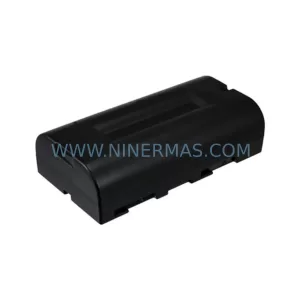
SKU: DX200 CPS-520F2 JZNC-YPS21-E MP300、MP350 50999-2922R08
Yaskawa CPS-520F2 Retrofit-Compatible Battery for Legacy Systems
Catalog Continuation
Alternative parts within PLC & Industrial Automation Modules.
Stay inside the same system family when you need substitutes, adjacent modules, or a broader shortlist for procurement review.
SKU: NA-1E221 1E-221.2
KONGSBERG NA-1E221 Service-Ready Spare Part for Maintenance
SKU: 6ES7341-1AH02-0AE0
Siemens 6ES7341-1AH02-0AE0 Retrofit-Compatible CP for Legacy S7-300