Original Industrial Spare Part
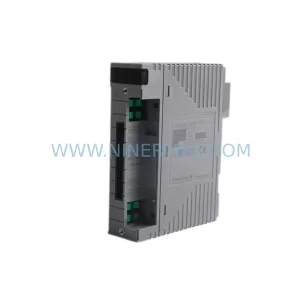
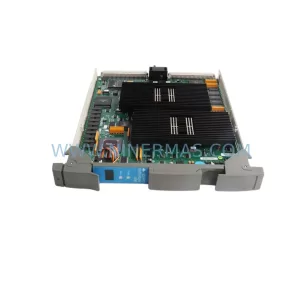
YOKOGAWA ADV161-P00 S2 Retrofit-Compatible I/O for Legacy Systems
Verify the part, confirm the platform family, and move straight into quotation with the right commercial details.
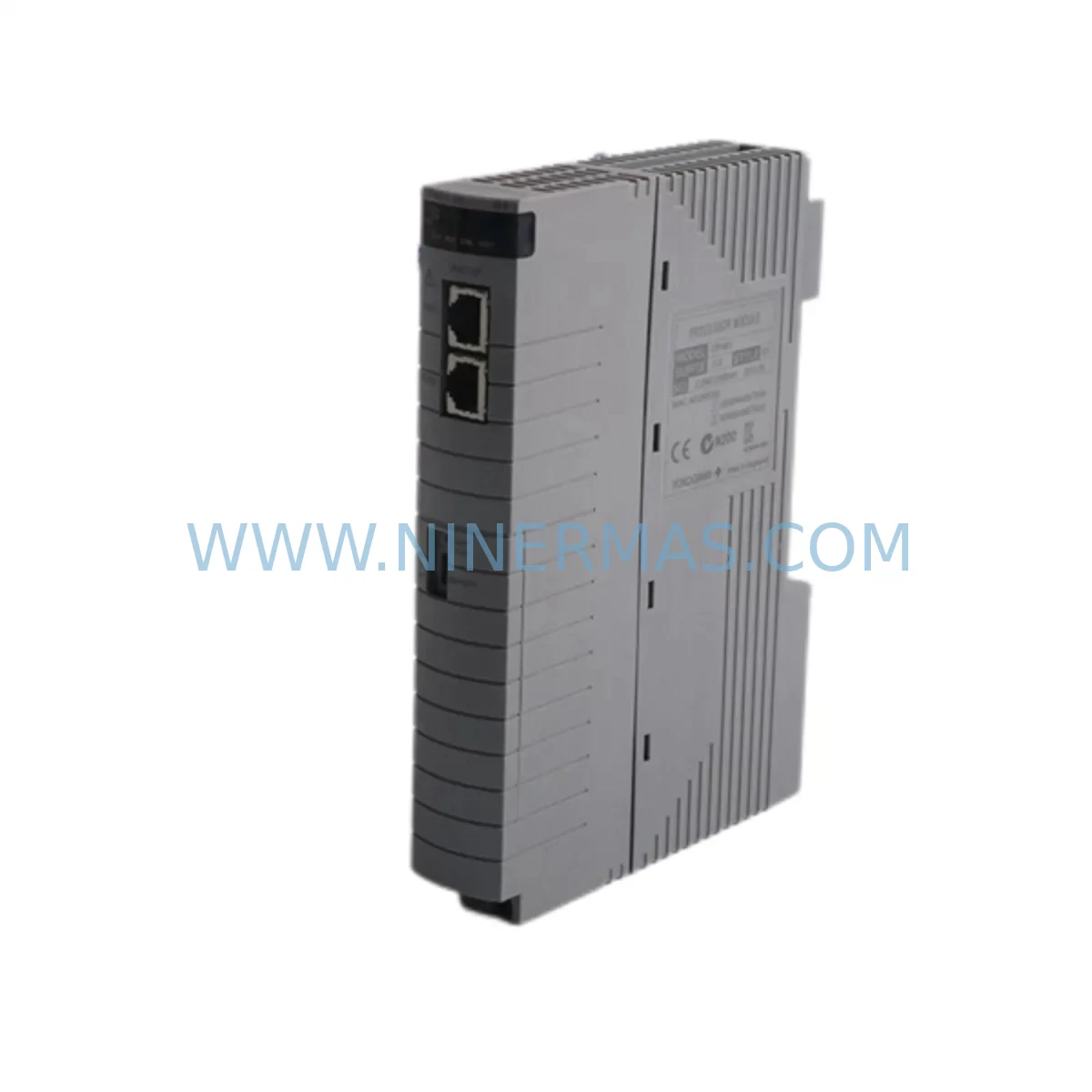
RFQ Ready
- SKUADV161-P00 S2
- CategoryDCS Distributed Control Systems
- BrandYokogawa
- SupportAvailability, lead time, condition, and shipping coordination
How Buyers Usually Use This Page
- Confirm the exact part number and platform family before sending the quote request.
- Use direct email when quantity, condition, and destination are already defined internally.
- Switch to the broader brand or category archive when you need alternates nearby.
Series Navigation
Move through the most common platform families behind this part.
Product RFQ
Send this part directly for quotation.
Include quantity, required condition, destination country, and target delivery timing. Current reference: YOKOGAWA ADV161-P00 S2 Retrofit-Compatible I/O for Legacy Systems with SKU ADV161-P00 S2.
YOKOGAWA ADV161-P00 S2 Retrofit-Compatible I/O for Legacy Systems
The YOKOGAWA ADV161-P00 S2 is a high-reliability analog input module designed for seamless integration into STARDOM FCN and FCJ series control platforms. As legacy automation systems face end-of-life pressures, the ADV161-P00 S2 has become a critical component in retrofit projects across process industries — including oil & gas, chemical, water treatment, and power generation. Whether you are replacing a failed unit, extending the operational life of an existing control cabinet, or executing a phased migration away from discontinued hardware, the ADV161-P00 S2 delivers the signal accuracy, backplane compatibility, and firmware alignment required for a smooth transition.
NINERMAS maintains verified inventory of the ADV161-P00 S2, sourced from authorized channels and subjected to full functional testing prior to shipment. Each unit ships with a 12-month warranty and is accompanied by documentation to support your engineering team during installation and commissioning.
Upgrade Compatibility Table
| Parameter | ADV161-P00 S2 Specification | Retrofit Notes |
|---|---|---|
| Compatible Platform | STARDOM FCN / FCJ Series | Confirm rack slot assignment before installation |
| Module Type | Analog Input (AI) | Verify channel count matches legacy wiring schedule |
| Backplane Interface | FCN/FCJ proprietary backplane bus | No adapter required for same-generation racks |
| Communication Protocol | Internal FCN/FCJ bus; FOUNDATION Fieldbus / HART optional | Confirm protocol variant matches existing configuration |
| Power Supply Requirement | Supplied via backplane (24 VDC nominal) | Verify PSU capacity before adding modules to existing rack |
| Terminal Wiring | Screw-terminal field wiring connector | Retain original terminal block; re-use existing field cable |
| Module Address / Slot ID | Software-assigned via STARDOM Resource Configurator | Re-assign address to match legacy program tag mapping |
| Installation Space | Standard FCN/FCJ single-slot form factor | No cabinet modification required for like-for-like swap |
| Commissioning Tool | STARDOM Resource Configurator / FCN Engineering Tool | Backup existing project before any hardware change |
| Warranty | 12 Months (NINERMAS) | Covers functional failure under normal operating conditions |
Retrofit Planning for Existing Automation Systems
Successful integration of the ADV161-P00 S2 into an operating plant begins well before the module arrives on site. Engineers should start by auditing the existing FCN or FCJ rack configuration — identifying which slots are occupied by analog input modules, which are running I/O expansion cards, and whether the current power supply module (such as the FCN-PSU series) has sufficient headroom to support the replacement unit without triggering an overload condition. In many retrofit scenarios, the original PSU was sized for a specific load profile; adding or swapping modules without recalculating the power budget is a common source of commissioning delays.
Terminal wiring is the next critical checkpoint. The ADV161-P00 S2 uses a field wiring connector that is physically compatible with the standard FCN/FCJ terminal block arrangement. In most like-for-like replacements, the existing field cable can be disconnected from the failed module’s connector and transferred directly to the new unit — provided the wiring schedule is verified against the as-built drawings. Where drawings are unavailable or outdated, a point-to-point continuity check is strongly recommended before energizing the new module.
Module address assignment is handled through the STARDOM Resource Configurator. When replacing a failed ADV161-P00 S2, the new module must be assigned the same slot address and tag mapping as the original to ensure that the FCN controller’s application program — including all PID loop references, alarm limits, and HMI screen bindings — continues to function without modification. If the HMI system (for example, a FAST/TOOLS or Exaquantum historian node) is configured to poll specific I/O tags, any mismatch in tag naming or address will result in data gaps or alarm floods during startup.
For projects involving communication protocol migration — for instance, transitioning field instruments from 4–20 mA conventional wiring to HART-enabled loops — the ADV161-P00 S2’s HART-capable variant allows the engineering team to begin collecting HART diagnostic data without replacing field devices. This is particularly valuable in aging plants where the instrument database is incomplete and HART pass-through can be used to auto-populate device information. Where FOUNDATION Fieldbus segments are involved, the FCN fieldbus communication module (such as the ALF111) should be verified for firmware compatibility before the analog input module is commissioned.
I/O expansion scenarios — where additional analog input capacity is being added to an existing FCN rack rather than replacing a failed module — require careful attention to backplane slot sequencing. The FCN rack (for example, the FCN-100 or FCN-500 chassis) assigns I/O addresses based on physical slot position. Inserting the ADV161-P00 S2 into a previously empty slot will create a new I/O address that must be declared in the Resource Configurator and mapped to a new tag in the application program. Coordination with the control system programmer is essential to avoid address conflicts with existing modules such as digital output cards or communication interface modules.
Signal isolation is another consideration in older control cabinets where ground loops or common-mode noise have historically caused measurement errors. In these installations, a DIN-rail-mounted signal isolator or signal conditioner placed between the field instrument and the ADV161-P00 S2 input terminal can eliminate interference without requiring changes to the FCN program logic. This approach is frequently used in retrofit projects where the field wiring infrastructure is too costly to replace but signal quality must be improved to meet current process control requirements.
Downtime Control During System Migration
Minimizing unplanned downtime is the primary concern for any plant engineer executing a control system retrofit. When replacing the ADV161-P00 S2 in a live production environment, the recommended approach is a hot-standby or pre-staged swap: the replacement module is configured, addressed, and verified offline using the STARDOM Resource Configurator before the production system is touched. This means the engineering team can complete all software-side preparation — tag mapping, alarm limit transfer, HMI screen verification — during normal production hours, compressing the actual hardware swap to a planned maintenance window of 30 minutes or less.
Before removing the failed module, the control program should be placed in manual mode for all loops associated with the affected I/O channels. This prevents the FCN controller from generating spurious output commands during the hardware transition. Field operators should be briefed to monitor the process manually during the swap window, and the DCS or SCADA historian should be configured to flag the data gap with a quality code rather than interpolating false values.
Once the ADV161-P00 S2 is physically installed and the field wiring connector is re-attached, the FCN controller will typically recognize the new module automatically if the slot address matches the configuration. A forced I/O scan or module reset may be required depending on the firmware version of the FCN CPU module. After the module comes online, each analog input channel should be verified against a known reference — either a calibrated process signal or a loop calibrator — before the control loops are returned to automatic mode. This channel-by-channel verification step is the most reliable way to confirm that the retrofit has been completed successfully and that the 12-month warranty period begins from a known-good baseline.
For multi-rack or multi-cabinet retrofit projects, a phased migration strategy — replacing one rack at a time while keeping adjacent racks in service — is strongly recommended. This approach limits the blast radius of any commissioning issue and allows the engineering team to refine the swap procedure between phases.
Retrofit Support FAQ
Q1: Is the ADV161-P00 S2 a direct drop-in replacement for an earlier ADV161-P00 revision?
In most cases, yes. The S2 suffix denotes a hardware revision that maintains backward compatibility with the FCN/FCJ backplane and the same field wiring connector. However, firmware version alignment between the new module and the FCN CPU module should be confirmed using the STARDOM compatibility matrix before installation. If a firmware update is required, it should be performed during the same maintenance window as the hardware swap.
Q2: What commissioning steps are required after installing the ADV161-P00 S2?
After physical installation, the module must be recognized by the STARDOM Resource Configurator, its slot address confirmed, and all associated I/O tags verified against the application program. Each analog input channel should be loop-tested using a calibrated signal source. HMI screens and historian tags should be checked for correct data display before the loops are returned to automatic control.
Q3: Can the ADV161-P00 S2 be used in a rack that also contains digital I/O and communication modules?
Yes. The FCN/FCJ rack architecture supports mixed module types within the same chassis. The ADV161-P00 S2 can coexist with digital input/output modules, HART communication modules, and fieldbus interface cards in the same rack, provided the total power draw does not exceed the PSU rating and the slot address assignments do not conflict.
Q4: What does the 12-month warranty from NINERMAS cover, and what is the lead time for in-stock units?
The 12-month warranty covers functional failure of the ADV161-P00 S2 under normal operating conditions, including defects in hardware components and workmanship identified during the warranty period. Units are functionally tested prior to shipment. For current stock availability and lead time, contact NINERMAS directly — in-stock units are typically dispatched within 1–3 business days of order confirmation.
| Product Series | STARDOM |
|---|---|
| Country of Origin | JP |
Catalog Continuation
More Yokogawa modules in the catalog.
Use the brand lane to compare nearby part numbers, platform-adjacent modules, and other inquiry-ready listings before sending your final RFQ.
Catalog Continuation
Alternative parts within DCS Distributed Control Systems.
Stay inside the same system family when you need substitutes, adjacent modules, or a broader shortlist for procurement review.
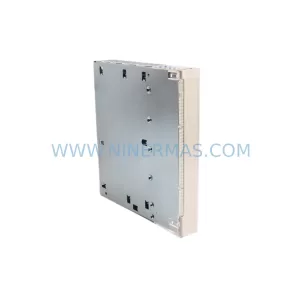
SKU: PM632 3BSE005831R1
ABB PM632 3BSE005831R1 Retrofit-Compatible Processor for Legacy Systems
SKU: High Performance Communication Controller
Honeywell 51401635-150 Service-Ready Spare for C300