Original Industrial Spare Part
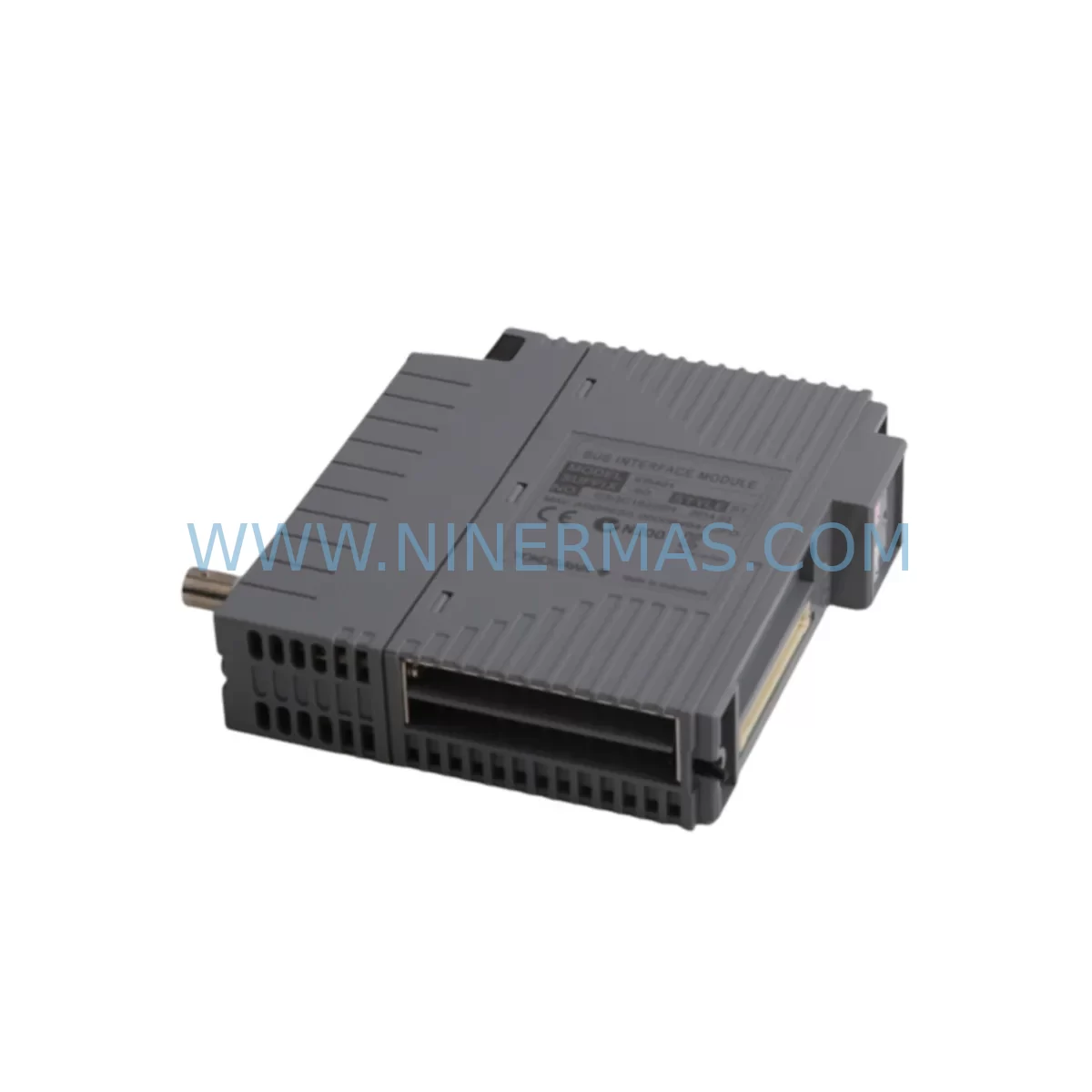
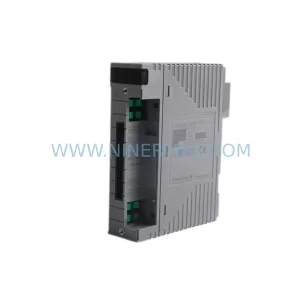
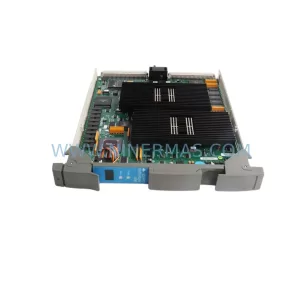
YOKOGAWA EB401-50 S1 Retrofit-Compatible Interface Master Module
Verify the part, confirm the platform family, and move straight into quotation with the right commercial details.
RFQ Ready
- SKUEB401-50 S1
- CategoryDCS Distributed Control Systems
- BrandYokogawa
- SupportAvailability, lead time, condition, and shipping coordination
How Buyers Usually Use This Page
- Confirm the exact part number and platform family before sending the quote request.
- Use direct email when quantity, condition, and destination are already defined internally.
- Switch to the broader brand or category archive when you need alternates nearby.
Series Navigation
Move through the most common platform families behind this part.
Product RFQ
Send this part directly for quotation.
Include quantity, required condition, destination country, and target delivery timing. Current reference: YOKOGAWA EB401-50 S1 Retrofit-Compatible Interface Master Module with SKU EB401-50 S1.
YOKOGAWA EB401-50 S1 Retrofit-Compatible Interface Master Module for Legacy Systems
The YOKOGAWA EB401-50 S1 is a remote I/O interface master module designed for integration within YOKOGAWA’s CENTUM VP distributed control system and STARDOM network-based control platforms. As legacy automation infrastructure ages and original spare parts reach end-of-life, the EB401-50 S1 serves as a critical retrofit-compatible replacement for facilities operating aging control cabinets, remote I/O racks, and fieldbus communication networks. This module manages master-level communication between the controller and remote I/O stations, making it a foundational component in any system modernization or unplanned failure recovery scenario.
Each unit supplied by NINERMAS undergoes pre-shipment functional testing to verify communication integrity, backplane interface continuity, and module addressing before dispatch. A 12-month warranty is included with every shipment, covering manufacturing defects and functional failures under normal operating conditions.
Upgrade Compatibility Table
| Parameter | Detail |
|---|---|
| SKU | EB401-50 S1 |
| Brand / Manufacturer | YOKOGAWA Electric Corporation |
| Series | EB401 |
| Module Function | Remote I/O Interface Master Communication Module |
| Compatible Platform | YOKOGAWA CENTUM VP, CENTUM CS 3000, STARDOM FCN/FCJ |
| Backplane / Rack Interface | EB series remote I/O rack (EB401 rack slot compatible) |
| Communication Protocol | YOKOGAWA proprietary Vnet/IP or ER Bus (platform-dependent) |
| I/O Point Capacity | 50-point configuration (S1 standard specification) |
| Power Supply Requirement | Verify existing rack PSU capacity before installation; confirm 24 VDC rail loading |
| Module Address Setting | Hardware rotary switch or DIP — confirm node address matches original configuration |
| Replacement Recommendation | Direct drop-in for failed or end-of-life EB401-50 S1 units; verify firmware revision compatibility with host controller |
| Installation Space | Standard EB series rack slot; confirm slot position and adjacent module clearance |
| Commissioning Note | Re-download I/O assignment map from engineering station after module swap; verify HMI tag binding |
| Warranty | 12 Months — covers manufacturing defects and functional failures under normal use |
Retrofit Planning for Existing Automation Systems
When planning a retrofit around the EB401-50 S1, engineers must account for the full communication chain from the host controller down to field devices. In a typical CENTUM VP architecture, the EB401-50 S1 sits between the field control station (FCS) and the remote I/O nodes. Before replacement, the engineering team should export the current I/O assignment database from the CENTUM VP builder environment and confirm that the replacement module’s firmware version is compatible with the host FCS revision.
Power budget verification is a mandatory first step. The existing EB series rack power supply module — commonly an EB401-10 or equivalent PSU card — must have sufficient headroom to support the replacement EB401-50 S1 alongside co-installed I/O modules such as AAI141-S00 analog input cards, AAI543-S00 analog output cards, and ADV151-P00 digital input modules. Overloading the rack PSU is a common cause of intermittent communication faults after module replacement and must be ruled out before energizing the new unit.
Terminal wiring on the remote I/O side should be documented before any module removal. Field signal cables connected to terminal blocks on adjacent I/O modules must be labeled and photographed. If the control cabinet uses marshalling panels or junction boxes upstream of the I/O rack, verify that signal routing has not been modified since the original commissioning. Any undocumented field wiring changes can cause signal mapping errors after the EB401-50 S1 is reinstalled and the I/O scan resumes.
For facilities migrating from CENTUM CS 3000 to CENTUM VP, the EB401-50 S1 may be part of a broader I/O migration that also involves replacing legacy ACM12 communication modules, updating the Vnet/IP network switch configuration, and re-mapping HMI faceplates in the CENTUM VP HIS (Human Interface Station). In these scenarios, the EB401-50 S1 is typically installed in the new VP-compatible remote I/O rack while the CS 3000 rack is decommissioned in parallel — a staged approach that minimizes process interruption.
Where STARDOM FCN or FCJ controllers are involved, the interface master module plays a similar role in managing ER Bus communication to remote I/O nodes. Engineers should confirm that the FCN controller’s I/O builder project file reflects the correct module type and slot assignment for the EB401-50 S1 before downloading the updated configuration. Mismatched slot definitions are a frequent source of communication timeout alarms during initial commissioning after a module swap.
Signal isolators and safety barriers installed between field instruments and I/O module terminals should be inspected during the retrofit window. Aging MTL or P+F isolator units may introduce loop resistance changes that affect 4–20 mA signal accuracy after the new I/O master module resumes scanning. This is particularly relevant for temperature transmitters and pressure sensors connected through HART-enabled analog input cards co-installed in the same EB series rack.
Programming cable access to the engineering workstation should be confirmed before the maintenance window begins. YOKOGAWA’s CENTUM VP builder requires a live Vnet/IP connection to the FCS for online module replacement procedures. If the engineering station uses a dedicated EWS with a separate Vnet/IP port, verify that the network path to the target FCS is unobstructed and that no firewall rules block the builder’s communication port during the download sequence.
Downtime Control During System Migration
Minimizing unplanned downtime during an EB401-50 S1 replacement requires a structured pre-outage preparation protocol. The most effective approach is to perform a full backup of the FCS database — including I/O assignment tables, loop tuning parameters, and interlock logic — before the maintenance window opens. YOKOGAWA’s CENTUM VP builder supports offline simulation mode, which allows engineers to verify the updated I/O configuration against the backup database without connecting to the live system.
Where process conditions permit, a hot-standby or redundant I/O path should be activated before the primary EB401-50 S1 is removed. In redundant FCS configurations, the standby controller can maintain field control continuity while the primary I/O master module is swapped. For non-redundant systems, the process team must coordinate a controlled hold on affected loops — placing regulatory controllers in manual mode and confirming that safety instrumented system (SIS) inputs are not routed through the module being replaced.
After physical installation of the replacement EB401-50 S1, the module address switches must be set to match the original node configuration before power is applied. Applying power with an incorrect node address will cause the FCS to generate a module mismatch alarm and may trigger an I/O scan fault that affects adjacent modules in the same rack. Once the address is confirmed, the FCS can be commanded to perform an online module recognition sequence from the CENTUM VP builder, after which I/O tags will resume normal scanning without requiring a full controller restart.
HMI faceplate verification is the final step before returning loops to automatic control. Operators should confirm that all process variable displays, alarm setpoints, and trend historian tags associated with the replaced module’s I/O channels are updating correctly in the CENTUM VP HIS. Any tag binding errors introduced during the configuration download will appear as stale or frozen values on the HMI and must be resolved before the maintenance window closes.
Retrofit Support FAQ
Q1: Is the EB401-50 S1 a direct replacement for the original YOKOGAWA module of the same part number?
Yes. The EB401-50 S1 supplied by NINERMAS is functionally equivalent to the original YOKOGAWA factory unit. Each module is tested for communication interface integrity and backplane compatibility before shipment. Customers should verify the firmware revision of the replacement unit against the host FCS version to confirm compatibility, particularly in CENTUM VP systems running older software releases.
Q2: What wiring changes are required when replacing the EB401-50 S1?
In most cases, no field wiring changes are required. The EB401-50 S1 interfaces with the remote I/O rack backplane rather than directly with field terminals. However, engineers should inspect the rack backplane connector for pin damage or corrosion before inserting the replacement module, and confirm that the rack’s internal bus termination resistors are correctly positioned if the module occupies an end slot.
Q3: Can the EB401-50 S1 be used in a CENTUM CS 3000 system that has not yet been migrated to CENTUM VP?
The EB401-50 S1 is designed for use within the EB series remote I/O architecture, which spans both CENTUM CS 3000 and CENTUM VP platforms. Compatibility depends on the specific rack generation and FCS firmware version in use. NINERMAS recommends providing the host FCS model number and software revision when placing an order so that compatibility can be confirmed before shipment.
Q4: What does the 12-month warranty cover, and what is the lead time for in-stock units?
The 12-month warranty covers manufacturing defects and functional failures under normal operating conditions from the date of shipment. It does not cover damage resulting from incorrect installation, overvoltage, or unauthorized modification. In-stock units are typically dispatched within 3–5 business days. Pre-shipment testing documentation is available upon request for quality assurance purposes.
| Product Series | CENTUM VP |
|---|---|
| Country of Origin | JP |
Catalog Continuation
More Yokogawa modules in the catalog.
Use the brand lane to compare nearby part numbers, platform-adjacent modules, and other inquiry-ready listings before sending your final RFQ.
Catalog Continuation
Alternative parts within DCS Distributed Control Systems.
Stay inside the same system family when you need substitutes, adjacent modules, or a broader shortlist for procurement review.
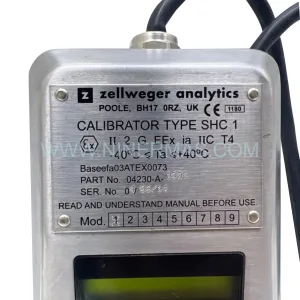
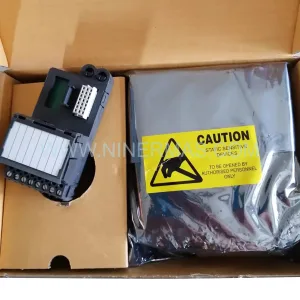
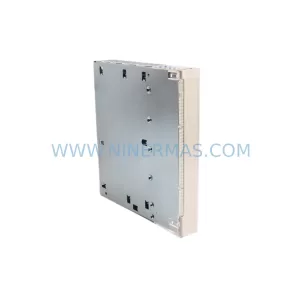
SKU: PM632 3BSE005831R1
ABB PM632 3BSE005831R1 Retrofit-Compatible Processor for Legacy Systems
SKU: High Performance Communication Controller
Honeywell 51401635-150 Service-Ready Spare for C300