Original Industrial Spare Part
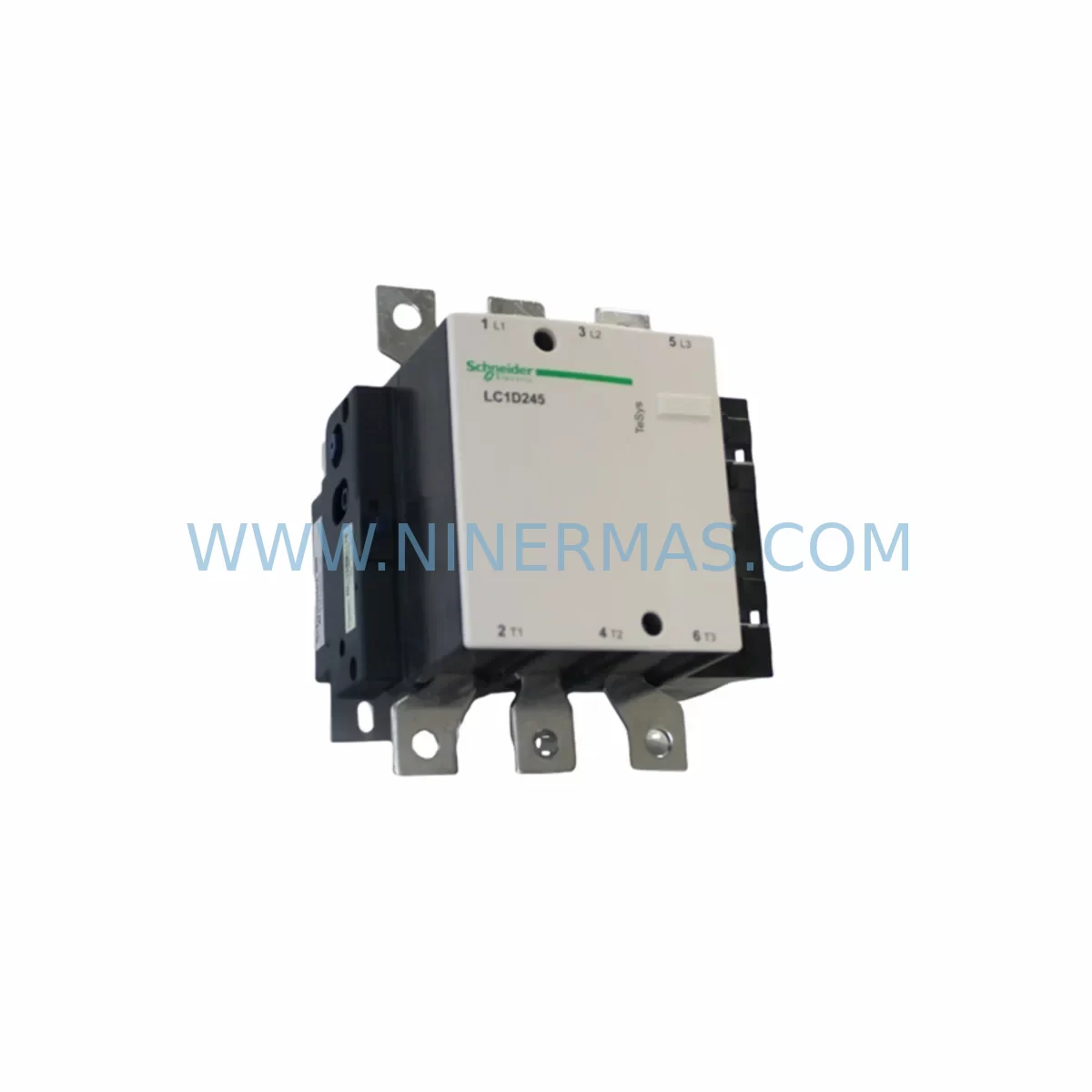
Schneider LC1D410M7C Service-Ready Spare Part for Industrial Maintenance
Verify the part, confirm the platform family, and move straight into quotation with the right commercial details.
RFQ Ready
- SKULC1D410M7C
- CategoryPLC & Industrial Automation Modules
- BrandSchneider Electric
- SupportAvailability, lead time, condition, and shipping coordination
How Buyers Usually Use This Page
- Confirm the exact part number and platform family before sending the quote request.
- Use direct email when quantity, condition, and destination are already defined internally.
- Switch to the broader brand or category archive when you need alternates nearby.
Series Navigation
Move through the most common platform families behind this part.
Product RFQ
Send this part directly for quotation.
Include quantity, required condition, destination country, and target delivery timing. Current reference: Schneider LC1D410M7C Service-Ready Spare Part for Industrial Maintenance with SKU LC1D410M7C.
Schneider LC1D410M7C Service-Ready Spare Part for Industrial Maintenance
The Schneider Electric LC1D410M7C is a heavy-duty contactor from the TeSys D series, engineered for demanding industrial motor control applications. Rated at 410A with a 220V AC coil (M7 coil code), this contactor is widely deployed in motor starters, reversing circuits, and power distribution panels across manufacturing, oil & gas, water treatment, and process automation facilities. When a contactor fails on the production floor, every minute of downtime translates directly into lost output and recovery costs. Sourcing a verified, service-ready LC1D410M7C replacement from a reliable spare parts supplier is the fastest path to restoring normal operation.
At NINERMAS, each LC1D410M7C unit is inspected and functionally tested prior to shipment. We supply original Schneider Electric components backed by a 12-month warranty, ensuring that maintenance engineers and procurement teams can stock this contactor with confidence. Whether you are responding to an emergency breakdown, building a preventive maintenance kit, or replenishing your MRO inventory after an annual shutdown, the LC1D410M7C is available for immediate dispatch.
Spare Maintenance Table
| Parameter | Specification |
|---|---|
| Part Number / SKU | LC1D410M7C |
| Brand | Schneider Electric |
| Series | TeSys D |
| Product Type | 3-Pole AC Contactor |
| Rated Current (Ie) | 410 A at AC-3 |
| Coil Voltage | 220 V AC (50/60 Hz) — M7 coil |
| Auxiliary Contacts | 1 NO + 1 NC (integrated) |
| Motor Power (400 V) | 200 kW |
| Mounting | DIN rail / panel mount |
| Enclosure Rating | IP20 (open type) |
| Operating Temperature | -5 °C to +60 °C |
| Standards | IEC 60947-4-1, EN 60947-4-1 |
| Origin | France / EU |
| Compatibility | TeSys D frame, replaces LC1D410, LC1D410B7, LC1D410F7, LC1D410G7, LC1D410Q7, LC1D410V7 |
| Warranty | 12 Months — tested before shipment |
Maintenance Planning for Continuous Operation
A contactor replacement is rarely an isolated event. When a maintenance engineer identifies a failed or degraded LC1D410M7C in a motor control center (MCC) or control cabinet, a structured inspection of the surrounding circuit is essential to prevent repeat failures and ensure safe recommissioning. Begin by verifying the incoming supply voltage at the LC1D410M7C power terminals — voltage imbalance or transient spikes are a leading cause of premature coil burnout. Check the associated LRD (TeSys D overload relay), such as the LRD4369 or LRD4367, which is typically mounted directly below the contactor; a tripped or damaged overload relay will prevent the motor from restarting even after the contactor is replaced.
Inspect the 24 VDC or 220 VAC control power supply feeding the coil circuit — units such as the Schneider ABL8REM24030 or Phaseo ABL7 series are common in TeSys-based panels and should be load-tested before energizing the new contactor. Review the auxiliary contact wiring and any LAD auxiliary contact blocks (e.g., LADN11, LADN22) fitted to the LC1D frame; corroded or loose auxiliary terminals are a frequent source of intermittent control faults. If the contactor is part of a star-delta or reversing starter, also inspect the companion contactors — typically another LC1D410 or LC1D09 — for contact wear and coil resistance.
For panels integrated with a PLC or DCS, verify the digital output (DO) module driving the contactor coil. Schneider TM5 or Modicon M340 DO cards can develop latent faults after a contactor coil short-circuit event. Check the fuse or circuit breaker protecting the control circuit — GV2 or GV3 motor circuit breakers in the same cabinet should be inspected for thermal trip history. Where signal isolators or relay output modules (such as the Schneider REXL or Zelio RSB series) are used to interface PLC outputs with the contactor coil, test their switching function under load. Finally, inspect the terminal blocks (e.g., Schneider NSYTRV or Linergy series) on the power and control rails for signs of overheating, discoloration, or loose torque — these are early indicators of a developing fault that may have contributed to the original contactor failure.
For facilities running legacy TeSys systems, maintaining a minimum stock of one LC1D410M7C per critical motor circuit — alongside matched overload relays, auxiliary contact blocks, and coil suppression modules — is a proven strategy for reducing mean time to repair (MTTR) and avoiding emergency procurement delays.
Site Replacement Workflow
Step 1 — Isolation & Lockout/Tagout: De-energize the motor circuit and apply LOTO procedures per IEC 60204-1. Confirm absence of voltage at all three power poles of the existing LC1D410M7C using a calibrated voltage tester.
Step 2 — Documentation: Photograph the existing wiring layout, coil terminal connections (A1/A2), and auxiliary contact wiring before disconnection. Note the coil voltage marking on the old unit to confirm M7 (220 V AC) compatibility with the replacement.
Step 3 — Removal: Disconnect power cables from L1/L2/L3 and T1/T2/T3 terminals. Remove auxiliary wiring. Unclip the contactor from the DIN rail or unscrew panel-mount fixings. If an LRD overload relay is directly coupled, separate it carefully — it can typically be reused if undamaged.
Step 4 — Installation: Mount the new LC1D410M7C. Reconnect power cables to the correct terminals, torquing to the manufacturer specification (typically 14–20 N·m for 410A terminals). Reconnect auxiliary and coil wiring. If reusing the LRD overload relay, verify the current setting dial matches the motor FLA.
Step 5 — Verification & Commissioning: Before energizing, perform an insulation resistance test on the power circuit. Energize the control circuit first and confirm the contactor pulls in correctly on command from the PLC or control relay. Check for abnormal noise or vibration. Run the motor under load and monitor current on all three phases for balance.
This workflow is compatible with direct-on-line (DOL), star-delta, and reversing starter configurations using the TeSys D frame. The LC1D410M7C is a direct form-fit-function replacement for earlier LC1D410 variants with M7 coil designation, requiring no panel modifications.
Spare Parts Support FAQ
Q1: Is the LC1D410M7C compatible with my existing TeSys D overload relay and auxiliary contact blocks?
Yes. The LC1D410M7C uses the standard TeSys D mechanical interface, making it fully compatible with LRD-series overload relays (direct coupling) and LAD-series auxiliary contact blocks (LADN11, LADN22, LADN31, etc.) without any adapter or modification.
Q2: How do you verify the unit before shipment?
Every LC1D410M7C supplied by NINERMAS undergoes a functional coil energization test and contact resistance check prior to packaging. Units are shipped with original manufacturer labeling and traceable batch documentation. A 12-month warranty is provided from the date of shipment.
Q3: Can you support long-term or blanket purchase orders for this part?
Yes. NINERMAS supports scheduled delivery agreements and blanket POs for MRO and spare parts programs. We maintain stock of LC1D410M7C and related TeSys D components to support planned shutdowns, annual maintenance contracts, and emergency call-off requirements. Contact our team to discuss lead times and volume pricing.
Q4: What if my exact coil voltage variant is different — can you source other LC1D410 coil options?
Absolutely. The LC1D410 frame is available in multiple coil voltage variants including B7 (24 V AC), F7 (110 V AC), G7 (120 V AC), Q7 (380 V AC), and V7 (400 V AC), among others. If your application requires a different coil voltage, contact us with your full part number and we will confirm availability and lead time.
| Product Series | TeSys |
|---|---|
| Country of Origin | FR |
Catalog Continuation
More Schneider Electric modules in the catalog.
Use the brand lane to compare nearby part numbers, platform-adjacent modules, and other inquiry-ready listings before sending your final RFQ.
Catalog Continuation
Alternative parts within PLC & Industrial Automation Modules.
Stay inside the same system family when you need substitutes, adjacent modules, or a broader shortlist for procurement review.
SKU: 6FC5357-0BB12-0AE0
Siemens 6FC5357-0BB12-0AE0 Service-Ready Industrial Spare Part
SKU: 3BSE011790R1(PXHK401)
ABB 3BSE011790R1 PXHK401 Retrofit-Ready Communication Module