Original Industrial Spare Part
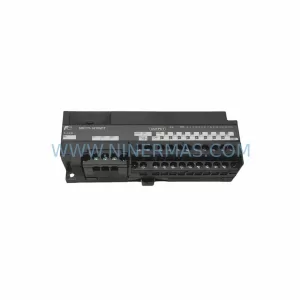
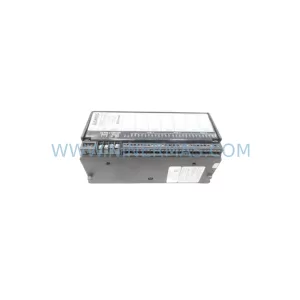
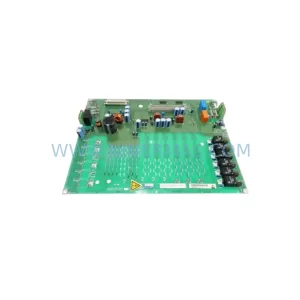
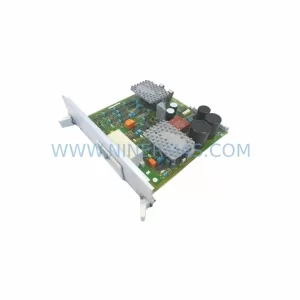
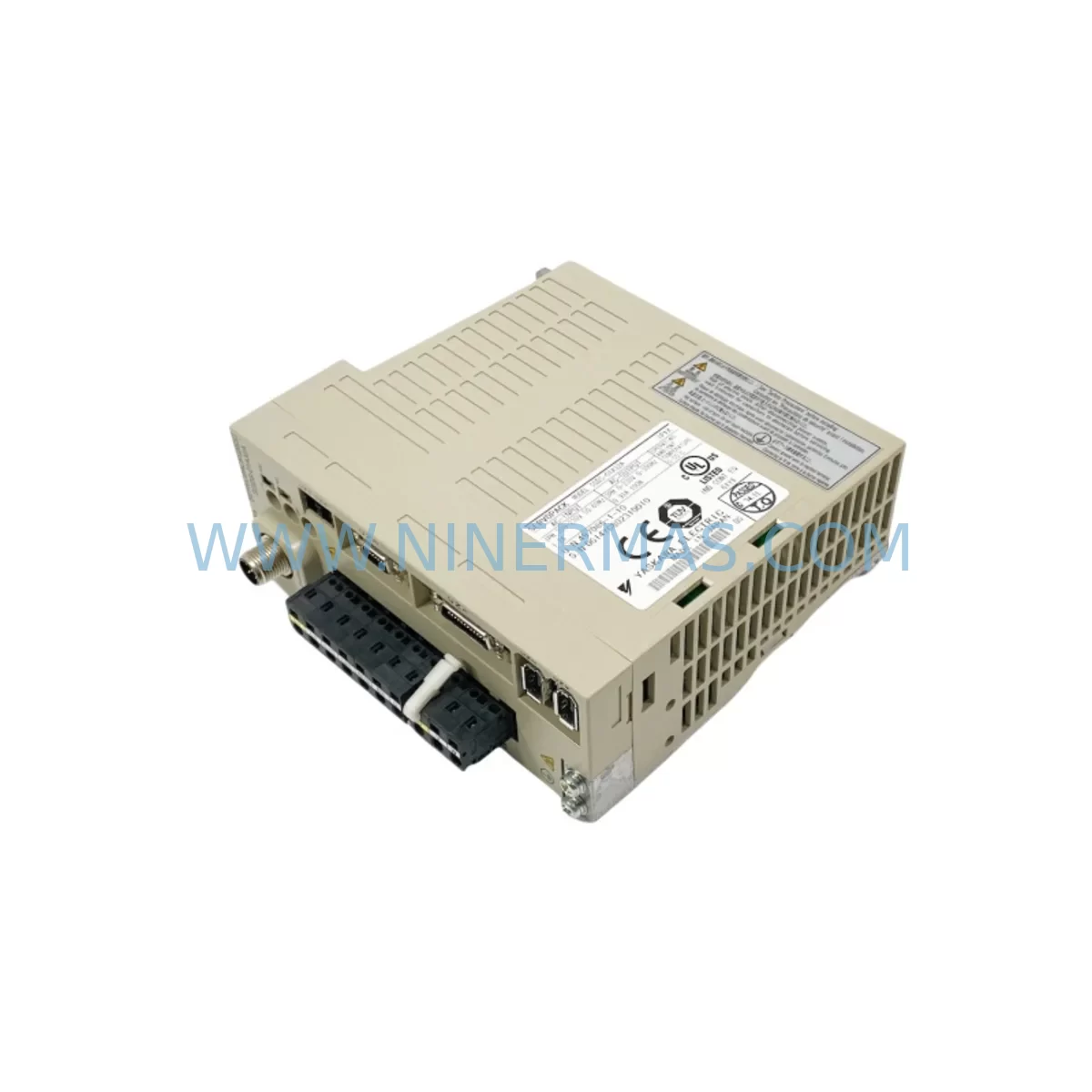
Yaskawa SGDS-01A32A Retrofit Servo Drive for Legacy Systems
Verify the part, confirm the platform family, and move straight into quotation with the right commercial details.
RFQ Ready
- SKUSGDS-01A32A LS2TR30-300Q8 6SL3120-1TE15-0AA4
- CategoryPLC & Industrial Automation Modules
- BrandYASKAWA
- SupportAvailability, lead time, condition, and shipping coordination
How Buyers Usually Use This Page
- Confirm the exact part number and platform family before sending the quote request.
- Use direct email when quantity, condition, and destination are already defined internally.
- Switch to the broader brand or category archive when you need alternates nearby.
Series Navigation
Move through the most common platform families behind this part.
Product RFQ
Send this part directly for quotation.
Include quantity, required condition, destination country, and target delivery timing. Current reference: Yaskawa SGDS-01A32A Retrofit Servo Drive for Legacy Systems with SKU SGDS-01A32A LS2TR30-300Q8 6SL3120-1TE15-0AA4.
Yaskawa SGDS-01A32A Retrofit Servo Drive for Legacy Systems
The Yaskawa SGDS-01A32A is a Sigma II series Servopack (servo amplifier) rated at 30W, single-phase 200–230 VAC input, designed for precision motion control in industrial automation environments. As legacy Sigma II installations approach end-of-life, the SGDS-01A32A remains one of the most sought-after retrofit-compatible servo drives for engineers tasked with maintaining, upgrading, or replacing aging servo systems without a full platform migration. NINERMAS maintains verified in-stock inventory of the SGDS-01A32A, pre-shipment tested and backed by a 12-month warranty, enabling maintenance teams to execute controlled replacements with minimal disruption to production continuity.
Whether you are replacing a failed unit on a Sigma II-based CNC axis, retrofitting a legacy packaging line, or extending the operational life of a multi-axis servo cabinet, the SGDS-01A32A provides a direct drop-in path that preserves existing wiring, encoder feedback loops, and motion program logic. Its compact form factor and standard CN1/CN2/CN3 connector layout make it compatible with the original servo cabinet footprint, eliminating the need for panel re-engineering in most retrofit scenarios.
Upgrade Compatibility Table
| Parameter | SGDS-01A32A (This Unit) | Retrofit Notes |
|---|---|---|
| Series | Sigma II (SGDS) | Direct replacement within Sigma II family |
| Power Rating | 30W | Confirm motor nameplate matches 30W rating |
| Input Voltage | Single-phase 200–230 VAC | Verify cabinet power supply capacity before swap |
| Control Interface | CN1 (I/O), CN2 (Encoder), CN3 (Serial) | Retain original cable harness; verify pin-out against wiring diagram |
| Communication | RS-232C / RS-422 (SigmaWin+) | Use JZSP-CMS02 programming cable for parameter backup and restore |
| Encoder Feedback | Incremental / Absolute (17-bit) | Confirm encoder type on paired SGMAH or SGMPH motor |
| Mounting | DIN rail / panel mount | Verify backplane clearance and ventilation spacing |
| Parameter Compatibility | SigmaWin+ compatible | Back up Pn parameters before removal; restore after installation |
| Replacement Path | SGDS-01A32A → SGDV-R70A (Sigma V upgrade) | Sigma V requires new motor and cable set if upgrading platform |
| Warranty | 12-Month Warranty — All units pre-shipment tested by NINERMAS | |
Retrofit Planning for Existing Automation Systems
Successful replacement of the SGDS-01A32A in a live production environment requires systematic pre-work across several engineering disciplines. Before removing the failed unit, maintenance engineers should use the JZSP-CMS02 programming cable and SigmaWin+ software to export all Pn parameter settings from the existing drive. This parameter file becomes the baseline for the replacement unit and eliminates the risk of re-tuning servo gains from scratch — a process that can extend commissioning time significantly on high-inertia or multi-axis systems.
Power supply verification is a critical first step. The SGDS-01A32A draws from a single-phase 200–230 VAC bus, and the control cabinet’s power distribution block must be confirmed to supply adequate capacity, particularly when the servo drive shares a rail with other loads such as a JUSP-NS100 noise filter, 24 VDC control power supply, or adjacent SGDS-02A32A or SGDS-04A32A drives in a multi-axis configuration. Undersized wiring or a marginal circuit breaker rating is a common root cause of repeat drive failures that is often overlooked during emergency replacements.
Terminal wiring and connector integrity should be inspected during the swap. The CN1 I/O connector carries enable signals, alarm outputs, and position command inputs from the host controller — often a CP-9200SH motion controller or a third-party PLC. Verify that the connector shell is not cracked and that individual signal wires are not intermittently shorted due to insulation fatigue, which is common in high-cycle applications. The CN2 encoder connector should be inspected for bent pins, and the encoder cable shield continuity should be confirmed to prevent noise-induced position errors after restart.
For systems where the SGDS-01A32A is paired with a SGMAH-A3A or SGMPH-01A motor, confirm that the motor’s encoder battery (JZSP-BA01 battery unit for absolute encoder variants) is within its service life. A depleted battery will trigger an absolute encoder alarm on first power-up after the drive replacement, which can be misdiagnosed as a drive fault. Replacing the battery as part of the planned maintenance window avoids an unplanned second shutdown.
In multi-axis servo cabinets, the SGDS-01A32A may be installed alongside NS115 DeviceNet communication modules or JUSP-NS115 option cards that handle network-level axis coordination. Confirm that the replacement drive’s option card slot is populated with the correct module and that the node address DIP switch settings match the original configuration before reconnecting the DeviceNet trunk cable. A node address conflict will prevent the axis from being recognized by the host controller and will appear as a communication fault rather than a hardware fault, complicating diagnosis.
HMI screen validation is often overlooked in servo retrofit projects. If the production line uses a GOT series or third-party HMI panel to display servo status, alarm codes, or torque feedback, verify that the screen’s tag addresses still map correctly to the replacement drive’s register layout. Sigma II drives share a consistent register map within the series, so this is typically a non-issue for like-for-like replacements, but it should be confirmed before returning the line to automatic mode.
Finally, document the installation with photographs of the terminal wiring, parameter printout, and test run data. This documentation supports future maintenance cycles, warranty claims, and audit requirements — particularly in regulated manufacturing environments where change control records are mandatory.
Downtime Control During System Migration
Minimizing unplanned downtime during a servo drive replacement is the primary operational concern for maintenance engineers working on the SGDS-01A32A. The most effective strategy is to treat the replacement as a planned maintenance event rather than an emergency repair, even when the failure is sudden. NINERMAS maintains ready-to-ship inventory of the SGDS-01A32A, enabling next-business-day dispatch to most global destinations, which supports a planned replacement window rather than an extended production halt.
Before the replacement window begins, prepare a pre-checked kit: the replacement SGDS-01A32A (pre-tested), the JZSP-CMS02 programming cable, a laptop with SigmaWin+ installed, a torque screwdriver set to the correct terminal torque specification, and a copy of the original parameter file. With this kit ready, the physical swap — including parameter restore and initial jog test — can typically be completed within 60 to 90 minutes for a single-axis replacement on a well-documented system.
Protect the original program logic by ensuring that the host controller (whether a CP-9200SH, a Siemens S7-series PLC, or a Beckhoff TwinCAT system) is placed in a safe stop state before power is removed from the servo drive. Do not rely solely on the drive’s enable signal being de-asserted; confirm at the controller level that the axis is in a controlled stop condition and that any holding brakes on the motor are engaged before disconnecting the CN1 connector.
After the replacement drive is installed and parameters are restored, perform a no-load jog test at reduced speed before reconnecting the mechanical load. Verify that the encoder feedback direction, alarm status, and torque limit settings are correct. Only after a clean no-load test should the mechanical coupling be re-engaged and the axis returned to automatic mode. This staged commissioning approach prevents damage to the mechanical system from an incorrectly configured replacement drive and keeps the total downtime window predictable and controlled.
Retrofit Support FAQ
Q1: Is the SGDS-01A32A a direct replacement for other SGDS-series drives?
Yes, within the Sigma II SGDS family, drives of the same power rating and voltage class are generally direct replacements. The SGDS-01A32A (30W, single-phase 200V) can replace a failed unit of the same model number without mechanical or wiring modifications. Cross-series replacements (e.g., from SGDM to SGDS) require verification of connector pinout and parameter compatibility before installation.
Q2: What commissioning steps are required after installing the replacement drive?
Restore the Pn parameter file using SigmaWin+ via the JZSP-CMS02 cable. Verify encoder type and absolute encoder battery status. Perform a no-load jog test at 10% rated speed. Confirm alarm-free operation before reconnecting the mechanical load. Check I/O signal mapping at the CN1 connector against the original wiring diagram.
Q3: Does NINERMAS test the SGDS-01A32A before shipment?
Yes. All SGDS-01A32A units supplied by NINERMAS undergo pre-shipment functional testing, including power-on verification, encoder interface check, and parameter read/write confirmation. Each unit ships with a test record and is covered by a 12-month warranty from the date of shipment.
Q4: What is the lead time and availability for the SGDS-01A32A?
NINERMAS maintains in-stock inventory of the SGDS-01A32A for immediate dispatch. Standard lead time is 1–3 business days for international shipments, subject to destination customs clearance. For urgent requirements, contact our team directly to confirm same-day dispatch availability.
| Product Series | Legacy |
|---|---|
| Country of Origin | JP |
Catalog Continuation
More YASKAWA modules in the catalog.
Use the brand lane to compare nearby part numbers, platform-adjacent modules, and other inquiry-ready listings before sending your final RFQ.
SKU: HW0380219-A HP-25A-11-F0-SP
YASKAWA HW0380219-A Retrofit Servo Board for Legacy Systems
SKU: CSRA-CV10D03A Yrc1000
Yaskawa CSRA-CV10D03A Retrofit Converter for Legacy Systems
SKU: HW0388706-A HW0388708-A HW0388710-A
Yaskawa HW0388706-A Retrofit Servo Board for Legacy Systems
SKU: DX100 SRDA-EAXA01A
Yaskawa SRDA-EAXA01A Retrofit Servo Drive for Legacy Systems
Catalog Continuation
Alternative parts within PLC & Industrial Automation Modules.
Stay inside the same system family when you need substitutes, adjacent modules, or a broader shortlist for procurement review.