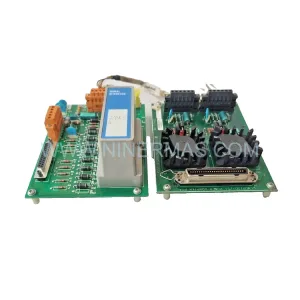
Original Industrial Spare Part
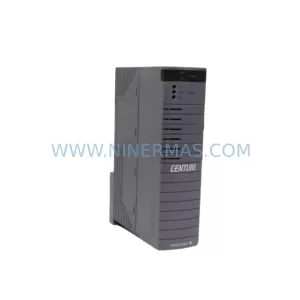
YOKOGAWA SPW484-13 Service-Ready Spare Part for Industrial Maintenance
Verify the part, confirm the platform family, and move straight into quotation with the right commercial details.
RFQ Ready
- SKUSPW484-13
- CategoryDCS Distributed Control Systems
- BrandYokogawa
- SupportAvailability, lead time, condition, and shipping coordination
How Buyers Usually Use This Page
- Confirm the exact part number and platform family before sending the quote request.
- Use direct email when quantity, condition, and destination are already defined internally.
- Switch to the broader brand or category archive when you need alternates nearby.
Series Navigation
Move through the most common platform families behind this part.
Product RFQ
Send this part directly for quotation.
Include quantity, required condition, destination country, and target delivery timing. Current reference: YOKOGAWA SPW484-13 Service-Ready Spare Part for Industrial Maintenance with SKU SPW484-13.
YOKOGAWA SPW484-13 Service-Ready Spare Part for Industrial Maintenance
The YOKOGAWA SPW484-13 is a critical power supply module designed for use within the CENTUM VP and CS 3000 Distributed Control System (DCS) platforms — two of the most widely deployed process automation architectures in refining, petrochemical, power generation, and pharmaceutical manufacturing. When this module fails or degrades, the consequences extend beyond a single cabinet: the entire field control station (FCS) may lose regulated power, triggering cascading I/O faults, communication dropouts, and unplanned process shutdowns. Maintaining a verified, service-ready SPW484-13 spare in your critical spares inventory is not optional — it is a fundamental element of any responsible maintenance strategy for CENTUM VP or CS 3000 installations.
At NINERMAS, every SPW484-13 unit is sourced from authorized supply channels, individually inspected, and electrically tested prior to shipment. Each unit ships with a 12-month warranty covering manufacturing defects and functional failures under normal operating conditions. Our logistics team supports urgent dispatch for emergency breakdown scenarios, with documentation packages available for regulated industries requiring traceability records.
Spare Maintenance Table
| Parameter | Specification / Detail |
|---|---|
| Part Number / SKU | SPW484-13 |
| Brand | YOKOGAWA Electric Corporation |
| Compatible Platform | CENTUM VP, CENTUM CS 3000 |
| Module Type | Power Supply Module (DCS Cabinet) |
| Nominal Input Voltage | 100–240 V AC, 50/60 Hz (universal input) |
| Output Voltage | 24 V DC regulated (typical for FCS power bus) |
| Mounting | DIN rail / cabinet backplane slot (CENTUM VP/CS 3000 standard) |
| Operating Temperature | 0°C to +55°C (storage: -20°C to +70°C) |
| Ingress Protection | IP20 (panel-mounted, enclosed cabinet use) |
| Certifications | CE, UL (per YOKOGAWA platform compliance) |
| Country of Origin | Japan |
| Warranty | 12 Months — functional warranty, tested before shipment |
| Maintenance Recommendation | Inspect every 12 months; replace proactively at 8–10 years of service or upon output voltage deviation >±2% |
| Spare Classification | Critical Spare — recommend minimum 1 unit on-site stock |
Maintenance Planning for Continuous Operation
A power supply module failure in a CENTUM VP or CS 3000 field control station rarely occurs in isolation. Maintenance engineers responding to an SPW484-13 fault should treat the event as a trigger for a broader cabinet health audit. The power supply is the foundation of the entire FCS power architecture — when it degrades, downstream components are often stressed beyond their rated tolerances before the fault becomes visible.
During an SPW484-13 replacement, it is standard practice to simultaneously inspect the PWR48x-series redundant power supply partner module (if a redundant configuration is installed), as both units share the same load and thermal environment. The ESB401 / ESB141 expansion bus cables connecting the FCS node units should be checked for connector oxidation and insulation integrity — a degraded power supply can cause micro-arcing events that damage bus connectors over time.
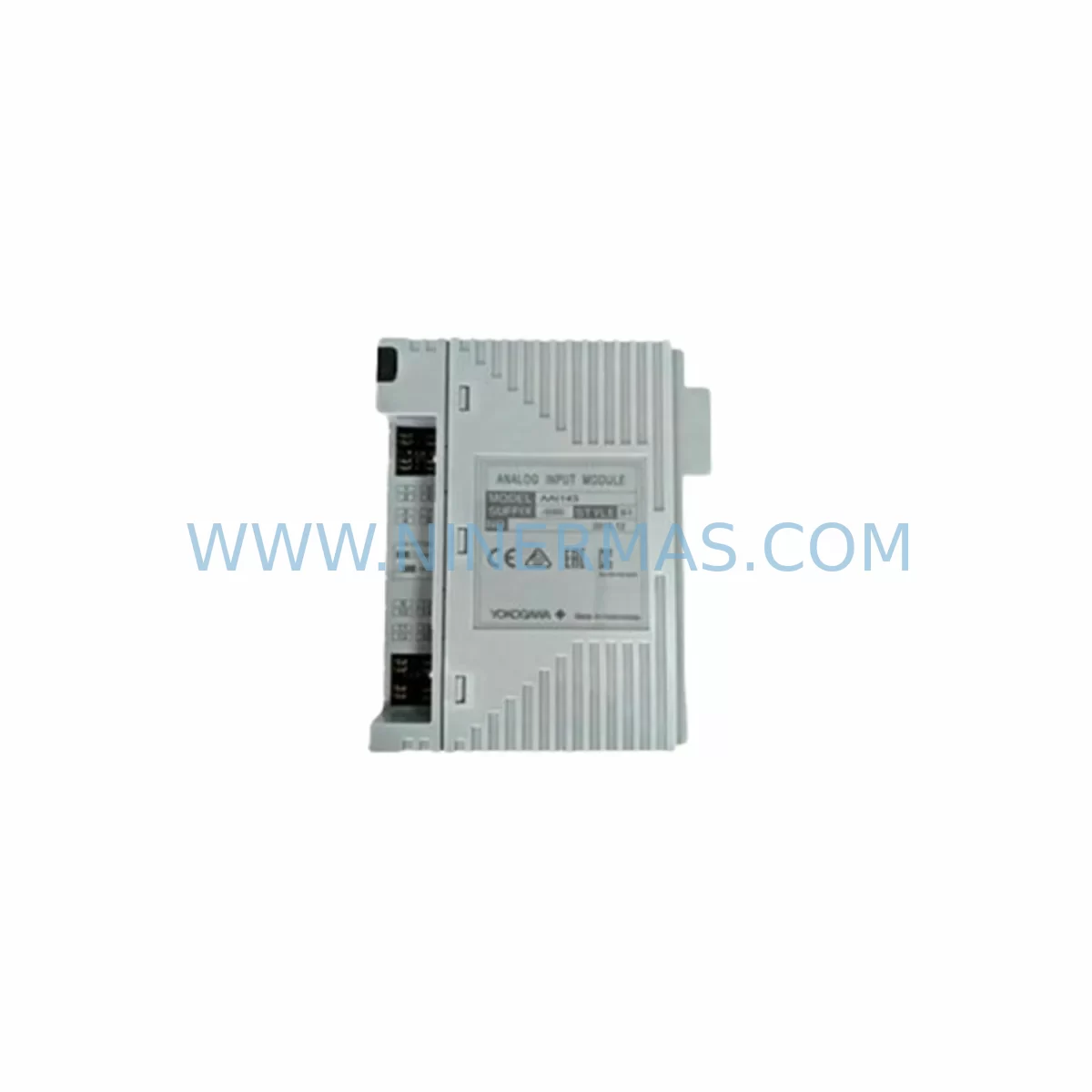
The ACM12 / ACM22 communication modules within the same FCS cabinet should be verified for stable Vnet/IP or ESB communication after power restoration, as communication modules are sensitive to power transients during switchover. Similarly, the ALR111 / ALR121 alarm output relay modules and AAI141 / AAI143 analog I/O modules should be functionally tested post-replacement to confirm signal integrity has not been compromised.
For sites running legacy CS 3000 hardware, the CP345 / CP451 field control processors should be checked for firmware integrity and memory battery status during the same maintenance window — power interruptions, even brief ones, can trigger processor self-diagnostics that reveal latent issues. The EB401 / EB501 node unit backplanes should be visually inspected for burn marks, capacitor bulging, or connector wear, as backplane degradation is a common secondary failure mode following power supply events.
Procurement engineers building a critical spares list around the SPW484-13 should also consider stocking the PW484 / PW481 series power supply variants used in adjacent cabinet types, as well as terminal block assemblies (TB series) and 24 V DC distribution fuse modules that protect downstream I/O loops. A single SPW484-13 failure that is not caught early can result in fuse blow events across multiple I/O channels, requiring additional component replacement beyond the power supply itself.
For sites with Vnet/IP network infrastructure, the BCV0x Vnet/IP communication bus couplers and associated fiber optic patch cables should be included in the annual inspection checklist alongside power supply modules, as network communication faults are frequently misdiagnosed as power issues and vice versa.
Site Replacement Workflow
Step 1 — Pre-Replacement Verification: Confirm the SPW484-13 part number against the cabinet nameplate and YOKOGAWA system documentation. Verify that the replacement unit’s firmware revision (if applicable) is compatible with the installed FCS processor version. Cross-reference with YOKOGAWA’s hardware compatibility matrix for CENTUM VP R5.x / R6.x or CS 3000 R3.x environments.
Step 2 — Safe Isolation: If a redundant power supply is installed, confirm the redundant unit is healthy and carrying load before isolating the faulty SPW484-13. For non-redundant configurations, coordinate with the control room for a controlled process hold or safe state before de-energizing the FCS cabinet. Follow LOTO (Lockout/Tagout) procedures per site safety standards.
Step 3 — Module Swap: Remove the faulty SPW484-13 by releasing the front-panel locking lever and sliding the module from its slot. Insert the replacement unit, ensuring the backplane connector is fully seated. Restore power and observe the module’s status LEDs — a solid green RUN indicator confirms normal operation. Allow a 2–3 minute stabilization period before releasing the FCS back to automatic control.
Step 4 — Post-Replacement Functional Test: Verify output voltage at the cabinet bus bar using a calibrated multimeter. Confirm all I/O modules, communication modules, and the field control processor have resumed normal operation via the CENTUM VP HIS (Human Interface Station) or CS 3000 engineering workstation. Log the replacement in the site maintenance management system (CMMS) with the new unit’s serial number and installation date.
Step 5 — Spare Replenishment: Immediately initiate a purchase order for a replacement SPW484-13 to restore your on-site critical spare inventory. Extended lead times for legacy DCS components make same-day or next-day replenishment ordering essential to avoid a second exposure window.
Spare Parts Support FAQ
Q1: Is the SPW484-13 compatible with both CENTUM VP and CS 3000 systems?
Yes. The SPW484-13 is designed for use across YOKOGAWA’s CENTUM VP and CS 3000 DCS platforms, which share a common hardware architecture for power supply modules. Always verify the specific FCS cabinet type and slot configuration against YOKOGAWA’s hardware documentation before installation. NINERMAS can provide compatibility guidance based on your system revision if required.
Q2: What testing is performed before shipment?
Every SPW484-13 unit supplied by NINERMAS undergoes electrical function testing prior to dispatch, including output voltage verification and load regulation checks. Units that do not meet YOKOGAWA’s published specifications are quarantined and not shipped. A 12-month warranty is provided on all units, covering functional failures under normal operating conditions.
Q3: How should we manage long-term spare parts inventory for legacy CENTUM CS 3000 systems?
For CS 3000 systems approaching or past their official end-of-life support date, we recommend a proactive lifecycle spare parts audit. Identify all critical single-point-of-failure modules — power supplies, field control processors, communication modules, and I/O cards — and establish a minimum stock level of one unit per critical type. NINERMAS supports long-term supply agreements for customers requiring guaranteed availability over multi-year maintenance horizons.
Q4: What is the lead time for SPW484-13, and do you support emergency orders?
Standard lead time varies by stock availability. For in-stock units, same-day or next-business-day dispatch is available for urgent breakdown orders. For planned procurement, we recommend ordering with a minimum 2–4 week lead time buffer to account for logistics and customs clearance for international shipments. Contact our team directly for emergency breakdown support.
| Product Series | CENTUM VP |
|---|---|
| Country of Origin | JP |
Catalog Continuation
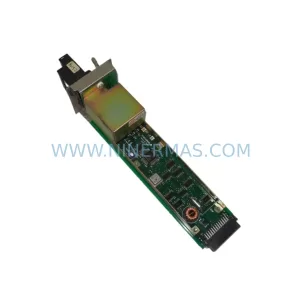
More Yokogawa modules in the catalog.
Use the brand lane to compare nearby part numbers, platform-adjacent modules, and other inquiry-ready listings before sending your final RFQ.
Catalog Continuation
Alternative parts within DCS Distributed Control Systems.
Stay inside the same system family when you need substitutes, adjacent modules, or a broader shortlist for procurement review.
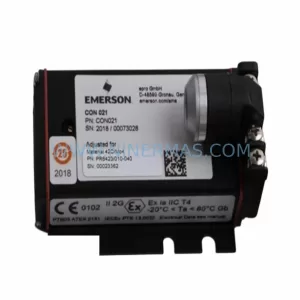
SKU: 1X00024H01 WH1-2FF
Westinghouse 1X00024H01 WH1-2FF Retrofit I/O for Legacy Systems
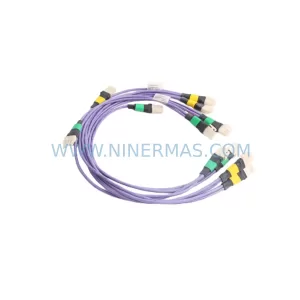
SKU: KJ3201X1-BA1 12P2535X042
Emerson KJ3201X1-BA1 12P2535X042 Service-Ready Spare Part