Original Industrial Spare Part
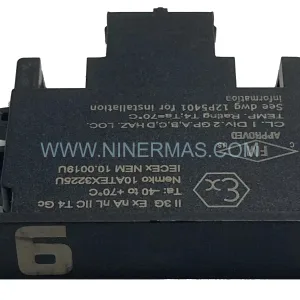
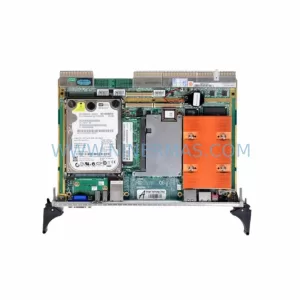
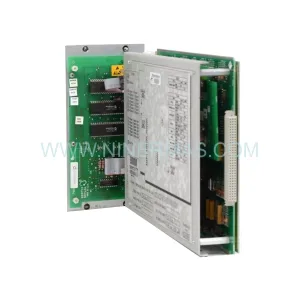
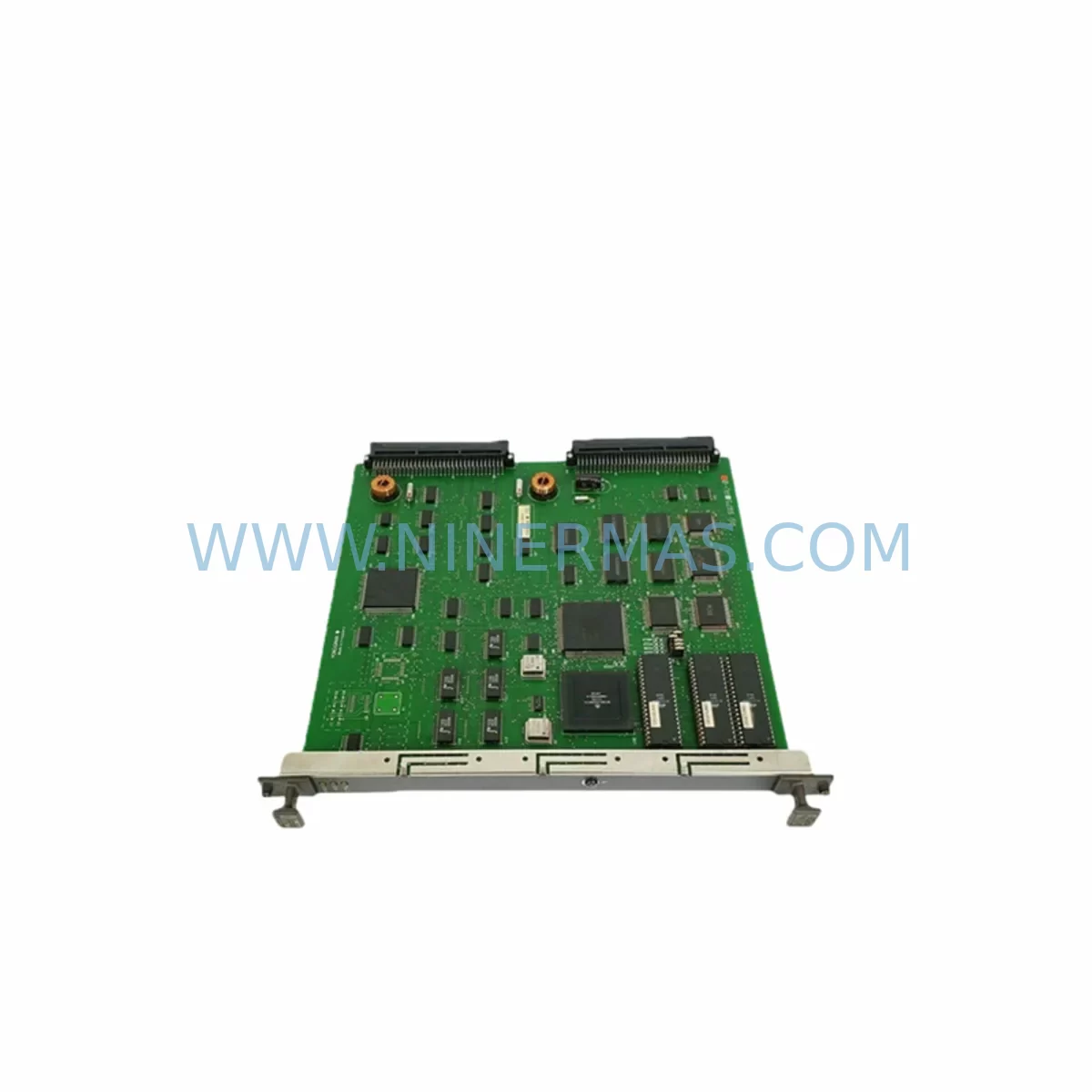
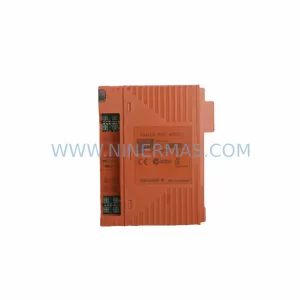
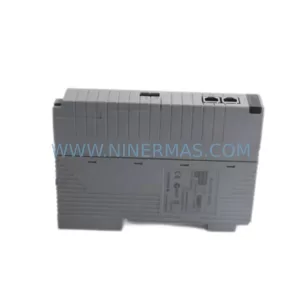
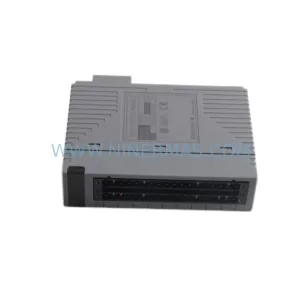
YOKOGAWA RB301 S2 Retrofit-Compatible RIO Bus Interface Module
Verify the part, confirm the platform family, and move straight into quotation with the right commercial details.
RFQ Ready
- SKURB301 S2
- CategoryDCS Distributed Control Systems
- BrandYokogawa
- SupportAvailability, lead time, condition, and shipping coordination
How Buyers Usually Use This Page
- Confirm the exact part number and platform family before sending the quote request.
- Use direct email when quantity, condition, and destination are already defined internally.
- Switch to the broader brand or category archive when you need alternates nearby.
Series Navigation
Move through the most common platform families behind this part.
Product RFQ
Send this part directly for quotation.
Include quantity, required condition, destination country, and target delivery timing. Current reference: YOKOGAWA RB301 S2 Retrofit-Compatible RIO Bus Interface Module with SKU RB301 S2.
YOKOGAWA RB301 S2 Retrofit-Compatible RIO Bus Interface Module for Legacy Systems
The YOKOGAWA RB301 S2 is a ruggedized Remote I/O (RIO) Bus Interface Module engineered for demanding industrial environments. As a critical communication bridge between the field I/O subsystem and the central controller in YOKOGAWA’s CENTUM series distributed control systems, the RB301 S2 plays an indispensable role in maintaining process continuity across aging automation platforms. With many plants still operating legacy CENTUM CS 1000, CENTUM CS 3000, and early CENTUM VP architectures, the RB301 S2 remains one of the most sought-after spare parts for brownfield retrofit projects, emergency replacements, and planned system life extension programs.
NINERMAS maintains verified stock of the RB301 S2 with full functional testing prior to shipment and a 12-month warranty on every unit. Whether you are executing a scheduled turnaround, responding to an unplanned module failure, or building a long-term spare parts inventory for a multi-year maintenance contract, our team can support your procurement timeline with competitive lead times and export documentation.
Upgrade Compatibility Table
| Parameter | RB301 S2 Specification | Retrofit / Replacement Notes |
|---|---|---|
| Compatible Platform | CENTUM CS 1000, CS 3000, CENTUM VP | Verify DCS generation before ordering; CS 3000 and VP share backplane pinout |
| Bus Interface Type | RIO (Remote I/O) Bus | Confirm RIO bus topology vs. ESB (Enhanced Serial Bus) on newer VP nodes |
| Backplane Connector | Standard YOKOGAWA RIO node backplane | Direct slot-in replacement; no backplane modification required for same-generation nodes |
| Communication Protocol | Proprietary YOKOGAWA RIO protocol | Not interchangeable with Vnet/IP or OPC-UA nodes; protocol migration requires gateway module |
| Power Supply Requirement | 24 VDC from node power supply | Verify PW301 or PW302 power supply capacity before hot-swap; check total node load |
| Installation Format | Single-slot RIO node card | Confirm slot address assignment in SCS/FCS engineering tool before insertion |
| Redundancy Support | Dual-redundant bus configuration supported | Replace both primary and secondary modules simultaneously if redundancy pair is degraded |
| Firmware / Configuration | Loaded via CENTUM engineering workstation | Back up existing module configuration from CENTUM Builder before removal |
| Commissioning Tool | CENTUM VP Engineering Environment / CS 3000 Builder | Module address and I/O map must be re-confirmed after replacement |
| Warranty | 12-Month Warranty — All units functionally tested before shipment by NINERMAS | |
Retrofit Planning for Existing Automation Systems
Replacing the RB301 S2 in a live or recently shutdown process plant requires a structured approach that accounts for the full scope of the RIO node architecture. The module sits at the heart of the remote I/O communication chain, and its replacement touches multiple interdependent components that must be evaluated before work begins on-site.
Start with a thorough audit of the existing RIO node cabinet. The PW301 or PW302 power supply module feeding the node must be verified for available headroom — adding a replacement RB301 S2 to a node already running near its rated load can cause voltage sag and intermittent communication faults. If the power supply is aging or shows signs of output ripple, it is best practice to replace it concurrently with the bus interface module to avoid a secondary failure shortly after the retrofit.
Next, inspect the RIO node backplane and node termination unit (NTU). Corrosion on backplane contacts, particularly in humid or chemically aggressive environments, is a common root cause of bus communication errors that are often misdiagnosed as RB301 S2 failures. Clean or replace the NTU if contact resistance is elevated. Confirm that the EB401 or EB501 field bus coupler connecting the RIO node to the field junction boxes is functioning correctly, as a degraded coupler will cause the same symptom pattern as a failed bus interface module.
For plants that have already migrated part of their control system to CENTUM VP with Vnet/IP architecture, the RB301 S2 retrofit must be carefully scoped to avoid creating a mixed-protocol segment that the engineering workstation cannot manage uniformly. In these hybrid environments, the BCV (Bus Converter) module and associated RIO-to-Vnet gateway components must be included in the retrofit bill of materials. Failure to account for protocol boundaries is one of the most common causes of extended commissioning time during partial system upgrades.
I/O module compatibility is another critical checkpoint. The AAI141, AAI143, and AAI841 analog input modules and ADV151 and ADV161 digital I/O modules mounted in the same RIO node must be confirmed as compatible with the replacement RB301 S2 firmware revision. In rare cases, older I/O modules require a firmware patch on the bus interface module to maintain correct channel mapping. Retrieve the existing module’s firmware version from the CENTUM Builder database before ordering the replacement to ensure version alignment.
HMI screen validation is often overlooked during RIO bus interface replacements. After the RB301 S2 is reseated and the node is brought back online, all associated CENTUM VP HIS (Human Interface Station) faceplates should be checked for correct tag binding and alarm status. A module address mismatch — even by a single digit — will cause tags to go into error state without triggering a hard fault alarm, leading to silent data loss that may not be detected until the next operator round.
Finally, if the plant uses Exaopc OPC server or a third-party SCADA system connected via the CENTUM VP OPC-DA/UA interface, verify that the data subscription for all tags associated with the replaced node is re-established after commissioning. OPC subscriptions tied to RIO node addresses sometimes require a manual refresh in the server configuration after a bus interface module swap.
Downtime Control During System Migration
Minimizing process downtime during an RB301 S2 replacement is achievable with disciplined pre-work. The single most effective measure is to complete all engineering preparation — configuration backup, slot address verification, firmware version confirmation, and spare parts staging — before the maintenance window opens. A replacement that requires on-the-fly troubleshooting of address conflicts or firmware mismatches can easily extend a planned two-hour outage into an eight-hour recovery event.
Where the RIO node is configured in dual-redundant mode, the replacement can often be performed with reduced risk by first confirming that the redundant bus path is healthy, then removing the degraded RB301 S2 while the secondary path maintains I/O communication. This approach does not eliminate the maintenance window but significantly reduces the consequence of an unexpected complication during module swap. Always confirm with the control system engineer that the redundancy switchover has been tested within the past maintenance cycle before relying on this method.
For single-bus RIO nodes with no redundancy, the replacement window must be coordinated with the process team to ensure that all field devices on the affected node are in a safe, stable state before the bus interface module is removed. Use the CENTUM VP SCS (Safety Control Station) interlock bypass log to document any temporary bypasses applied during the outage, and ensure all bypasses are reinstated and verified before returning the node to service.
Pre-shipment functional testing by NINERMAS ensures that the replacement RB301 S2 arrives on-site ready for installation, eliminating the risk of receiving a non-functional module during a critical maintenance window. Each unit is tested for bus communication integrity, power consumption within specification, and correct response to engineering workstation polling before dispatch. Combined with our 12-month warranty and in-stock availability, this testing protocol is designed to support zero-delay maintenance execution for plant engineers working under tight turnaround schedules.
Retrofit Support FAQ
Q1: Is the RB301 S2 a direct drop-in replacement for the original RB301 installed in my CENTUM CS 3000 system?
The RB301 S2 is the revised variant of the RB301 series and is generally backward-compatible with CENTUM CS 3000 RIO node backplanes. However, you should verify the node generation and backplane revision with your CENTUM Builder project file before installation. In most CS 3000 and CENTUM VP RIO node configurations, the S2 variant installs without hardware modification. Contact our technical team with your node model number and we will confirm compatibility before shipment.
Q2: What commissioning steps are required after installing the replacement RB301 S2?
After physical installation, power up the node and connect the CENTUM VP Engineering Environment or CS 3000 Builder workstation. Confirm that the module is recognized at the correct node address. Download the existing I/O configuration to the module and verify that all channel assignments match the pre-replacement backup. Check all associated HMI faceplates for correct tag status and confirm that any OPC server subscriptions for the node have re-established correctly. A full I/O loop check on at least a sample of channels is recommended before returning the node to automatic control.
Q3: Can NINERMAS supply the RB301 S2 with export documentation for international shipment?
Yes. NINERMAS provides full export documentation including commercial invoice, packing list, certificate of origin, and where required, an inspection certificate. We ship to industrial customers across Asia, Europe, the Middle East, and the Americas. Lead times for in-stock units are typically 3–7 business days depending on destination. Contact sale@ninermas.com with your delivery address and required documentation for a formal quotation.
Q4: What does the 12-month warranty cover for the RB301 S2?
The 12-month warranty covers manufacturing defects and functional failures under normal operating conditions as specified in the YOKOGAWA RB301 S2 datasheet. Units that fail during the warranty period will be replaced or repaired at no charge, subject to inspection confirming the failure is not due to incorrect installation, overvoltage, physical damage, or operation outside rated environmental parameters. All warranty claims are handled directly by NINERMAS. Contact sale@ninermas.com to initiate a warranty claim.
| Product Series | CENTUM VP |
|---|---|
| Country of Origin | JP |
Catalog Continuation
More Yokogawa modules in the catalog.
Use the brand lane to compare nearby part numbers, platform-adjacent modules, and other inquiry-ready listings before sending your final RFQ.
Catalog Continuation
Alternative parts within DCS Distributed Control Systems.
Stay inside the same system family when you need substitutes, adjacent modules, or a broader shortlist for procurement review.
SKU: 8C-TAIDB1 8C-TAID61
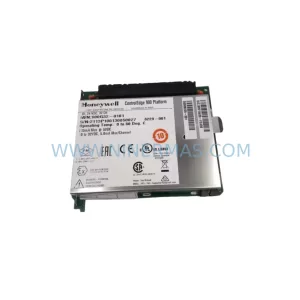
Honeywell 8C-TAIDB1 Retrofit Analog Input for Legacy DCS
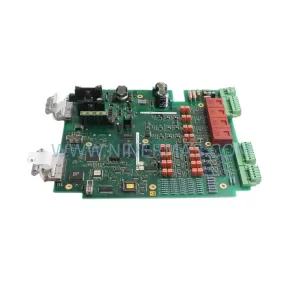
SKU: UNS2881B-P 3BHE009319R0001
ABB UNS2881B-P 3BHE009319R0001 Service-Ready Spare Part for Industrial Maintenance