Original Industrial Spare Part
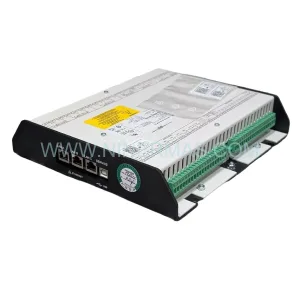
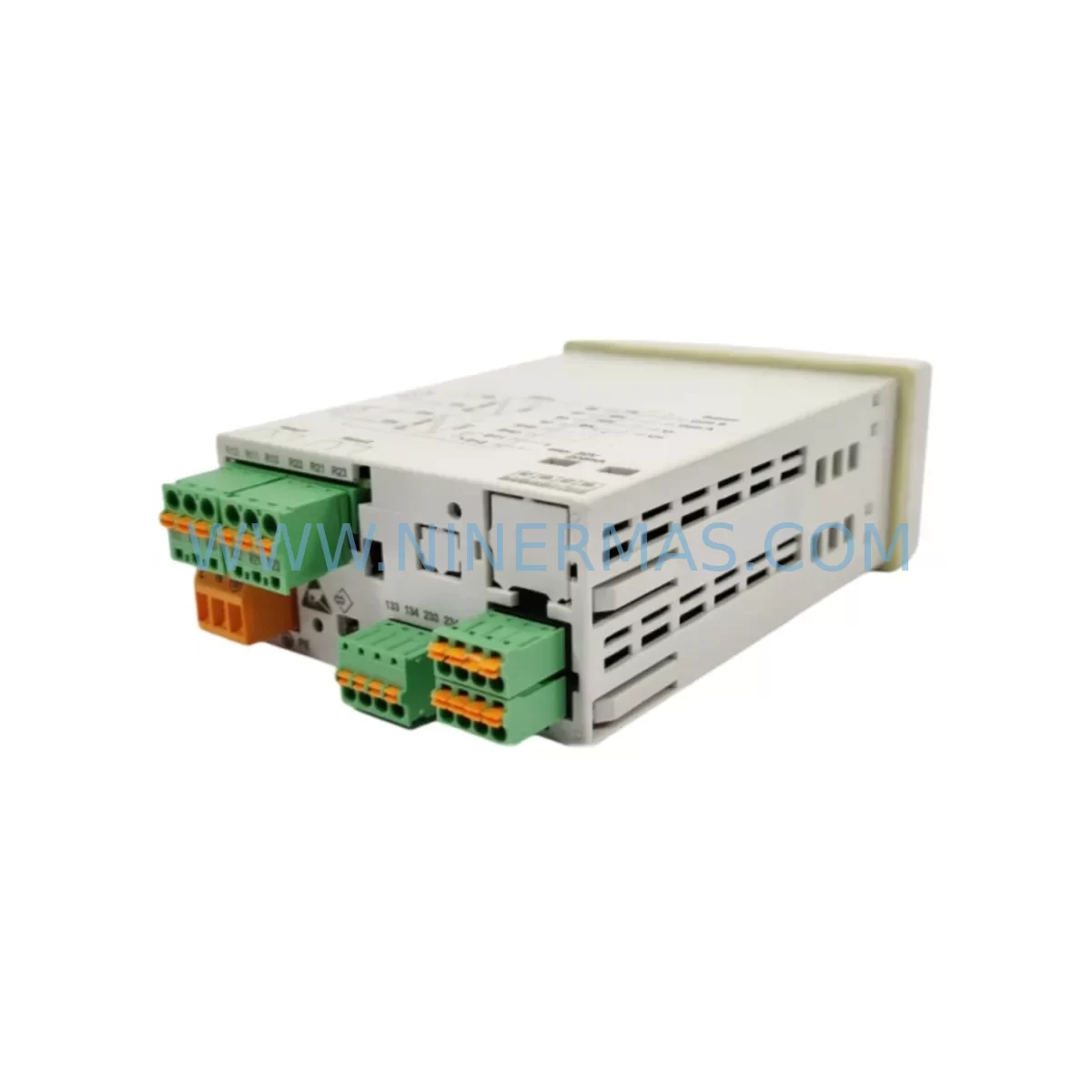
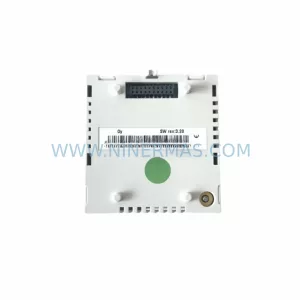
Endress+Hauser CM14-AAM Retrofit Transmitter for Legacy Systems
Verify the part, confirm the platform family, and move straight into quotation with the right commercial details.
RFQ Ready
- SKUCM14-AAM
- CategoryPLC & Industrial Automation Modules
- BrandEndress+Hauser
- SupportAvailability, lead time, condition, and shipping coordination
How Buyers Usually Use This Page
- Confirm the exact part number and platform family before sending the quote request.
- Use direct email when quantity, condition, and destination are already defined internally.
- Switch to the broader brand or category archive when you need alternates nearby.
Series Navigation
Move through the most common platform families behind this part.
Product RFQ
Send this part directly for quotation.
Include quantity, required condition, destination country, and target delivery timing. Current reference: Endress+Hauser CM14-AAM Retrofit Transmitter for Legacy Systems with SKU CM14-AAM.
Endress+Hauser CM14-AAM Retrofit Transmitter for Legacy Systems
The Endress+Hauser CM14-AAM is a ruggedized transmitter module engineered for demanding industrial environments and purpose-built to support seamless integration into aging automation infrastructures. As legacy process control systems approach end-of-life and original spare parts become increasingly scarce, the CM14-AAM provides a reliable, retrofit-compatible solution that preserves existing wiring topologies, signal ranges, and control logic without requiring a full system overhaul.
For facilities operating older Endress+Hauser Liquisys, Mycom, or CM42 platform installations, the CM14-AAM serves as a direct functional replacement within the CM14 transmitter family. Its ruggedized housing is rated for harsh environments including high humidity, chemical exposure, and wide ambient temperature swings — conditions common in water treatment plants, chemical processing facilities, pharmaceutical production lines, and pulp and paper mills. Engineers responsible for maintaining aging DCS or PLC-based control architectures will find the CM14-AAM a practical bridge between legacy field instrumentation and modern SCADA or distributed I/O systems.
Upgrade Compatibility Table
| Parameter | Details |
|---|---|
| SKU / Model | CM14-AAM |
| Brand / Series | Endress+Hauser / CM14 |
| Retrofit Compatibility | Compatible with CM14 series housings and terminal layouts; verify against CM42, CM44, and CM444 upgrade paths |
| Signal Interface | Analog 4–20 mA output; confirm HART protocol availability with site DCS input card specifications |
| Power Supply Requirement | Confirm 24 VDC loop power or local supply against existing panel wiring before installation |
| Terminal Wiring | Review original CM14 terminal diagram; adapter terminals may be required for CM42/CM44 housing swap |
| Communication Protocol | 4–20 mA / HART; Profibus PA or FOUNDATION Fieldbus variants require separate model confirmation |
| Mounting / Installation Space | Field-mount or panel-mount; verify DIN rail or pipe-mount bracket compatibility with existing enclosure |
| Replacement Recommendation | Direct replacement for discontinued CM14 variants; cross-reference with CM42 or CM444 for full platform migration |
| Commissioning Notes | Reconfigure measurement parameters, calibration offsets, and alarm setpoints after module swap |
| Warranty | 12-Month Warranty | Tested before shipment |
Retrofit Planning for Existing Automation Systems
Successful integration of the CM14-AAM into an existing control system begins well before the module arrives on site. Retrofit planning must account for the full signal chain — from the sensor or electrode assembly in the field, through the transmitter, across the 4–20 mA loop or HART communication link, and into the analog input card of the host PLC or DCS. For sites running Siemens S7-300 or S7-400 series controllers with legacy SM331 analog input modules, confirming the input impedance and loop power configuration is essential before swapping the transmitter. Similarly, facilities using Rockwell Automation ControlLogix or CompactLogix platforms should verify that the 1756-IF16 or 1769-IF4 analog input modules are configured for the correct signal range and HART pass-through mode.
Terminal wiring is one of the most common sources of commissioning delay during a transmitter retrofit. The CM14-AAM uses a standard two-wire or four-wire connection depending on the measurement type. Engineers should photograph and document the existing terminal block layout before disconnecting any wiring. Where the original CM14 installation used a dedicated power supply module — such as a Phoenix Contact MINI-PS or a Weidmüller PRO series DIN rail PSU — the same supply can typically be retained, provided its output voltage and current capacity are within specification for the CM14-AAM.
For sites where the CM14-AAM is being installed as part of a broader control cabinet upgrade, attention should be given to the backplane and rack architecture. If the existing installation includes a Endress+Hauser RMA42 or RMA422 signal converter or a CSF48 flow safety transmitter in the same panel, the CM14-AAM can often share the same DIN rail section without requiring additional mounting hardware. Where I/O expansion is needed — for example, to add a second measurement channel or a relay output for limit switching — the CM14-AAM’s auxiliary output terminals should be mapped to the corresponding input on the PLC’s digital input card before the new configuration is downloaded.
HMI screen updates are frequently overlooked during transmitter replacements. If the site uses a Siemens SIMATIC HMI panel, a Schneider Electric Magelis terminal, or a Rockwell PanelView display, the tag names, engineering unit scaling, and alarm threshold values associated with the replaced transmitter must be updated in the HMI project file. Failure to do so can result in incorrect process values being displayed to operators even when the underlying measurement is accurate. Where the original CM14 was connected via a Profibus PA segment, migration to the CM14-AAM may require a Profibus DP/PA coupler or segment coupler to maintain communication with the host controller.
Finally, installation space confirmation is critical in congested control rooms and field junction boxes. The CM14-AAM’s housing dimensions should be compared against the available cutout or mounting footprint before the old module is removed. Where space is constrained, a signal isolator — such as a Pepperl+Fuchs KFD2-STC4 or a MTL5541 — may be used to relocate the transmitter signal conditioning to a more accessible location within the panel.
Downtime Control During System Migration
Minimizing unplanned downtime is the primary concern for any maintenance team undertaking a transmitter replacement on a live production line. The CM14-AAM retrofit process is designed to be completed within a planned maintenance window, typically two to four hours for a single-loop replacement when all preparatory steps have been completed in advance.
Before the maintenance window begins, the replacement CM14-AAM should be bench-tested and pre-configured with the measurement parameters, damping values, and output scaling that match the original installation. This pre-commissioning step eliminates the need for on-site parameter entry under time pressure and reduces the risk of configuration errors that could trigger process alarms or safety interlocks.
During the swap, the PLC or DCS input associated with the transmitter loop should be placed in manual mode or forced to a safe fallback value to prevent the control system from responding to the open-loop signal during disconnection. Where the process cannot be interrupted — for example, in continuous chemical dosing or water treatment applications — a portable loop calibrator can be used to inject a substitute 4–20 mA signal into the input card while the transmitter is being replaced, maintaining the appearance of a live measurement to the control system.
After the CM14-AAM is installed and wired, a loop check should be performed before the input is returned to automatic mode. This involves verifying the zero and span output at the transmitter terminals, confirming the correct value is displayed at the DCS operator station, and checking that all HART diagnostic parameters are accessible from the host system or a handheld HART communicator. Once the loop check is complete and the process value is stable, the input can be returned to automatic control and the maintenance record updated.
Retrofit Support FAQ
Q: Is the CM14-AAM a direct drop-in replacement for all CM14 series variants?
The CM14-AAM is compatible with the CM14 housing and terminal layout used in the majority of standard installations. However, some CM14 variants with specialized sensor inputs or non-standard output configurations may require additional verification. Please provide your original model number and application details when placing your order so our technical team can confirm compatibility before shipment.
Q: What commissioning steps are required after installing the CM14-AAM?
After installation, you will need to reconfigure the measurement type, sensor input range, output scaling (4–20 mA zero and span), damping time, and alarm setpoints. If the original unit was connected via HART, the device address and HART revision should also be confirmed. A full loop check — including verification at the DCS or PLC input card — is recommended before returning the loop to automatic control.
Q: Does the CM14-AAM ship tested and ready for installation?
Yes. Every CM14-AAM unit is functionally tested before shipment to verify output signal integrity and basic measurement response. Units are supplied with a 12-month warranty covering manufacturing defects and functional failures under normal operating conditions. Expedited shipping options are available for urgent breakdown situations.
Q: What is the stock availability and lead time for the CM14-AAM?
We maintain inventory of the CM14-AAM to support urgent replacement and planned maintenance requirements. Standard orders are processed and dispatched within 1–3 business days. For large-quantity orders or long-term supply agreements, please contact our sales team to discuss dedicated stock allocation and extended warranty options.
—
| Product Series | Legacy |
|---|---|
| Country of Origin | CH |
Catalog Continuation
More Endress+Hauser modules in the catalog.
Use the brand lane to compare nearby part numbers, platform-adjacent modules, and other inquiry-ready listings before sending your final RFQ.
SKU: FMU30-AAHEAAGGF
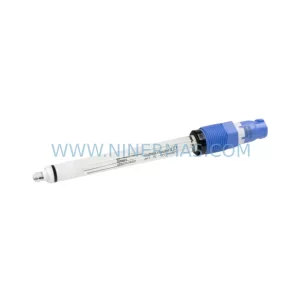
Endress+Hauser FMU30-AAHEAAGGF Retrofit Radar Level Transmitter
SKU: AG319100-0200C AG319100-0200D
Endress+Hauser AG319100-0200C/D Retrofit PCB for Legacy Systems
Catalog Continuation
Alternative parts within PLC & Industrial Automation Modules.
Stay inside the same system family when you need substitutes, adjacent modules, or a broader shortlist for procurement review.
SKU: TRY/PRG/4-20MA/10-30DC
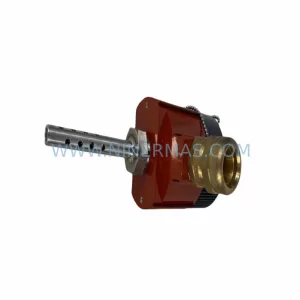
MOORE TRY/PRG/4-20MA/10-30DC Service-Ready Spare Part
SKU: 5085-404901-11 12INCH 2910-202413-12 404200XRMPD2H14 7-249717
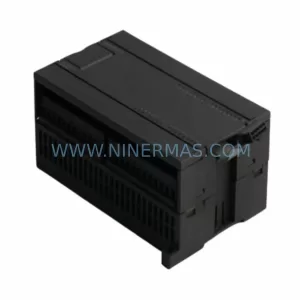
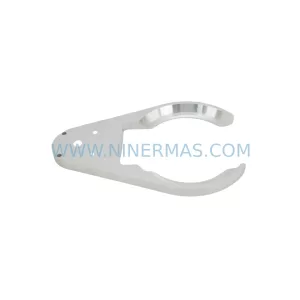
TEL 5085-404901-11 Service-Ready Spare Part for Industrial Maintenance
SKU: DIP011 05-058-011
SIGMATEK DIP011 05-058-011 Service-Ready Spare Part