Original Industrial Spare Part
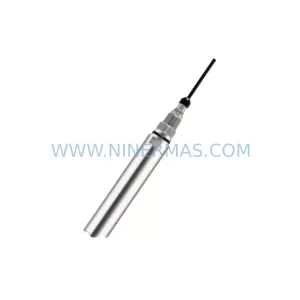
Endress+Hauser CPS11D-7BA2G Retrofit pH/ORP Sensor
Verify the part, confirm the platform family, and move straight into quotation with the right commercial details.
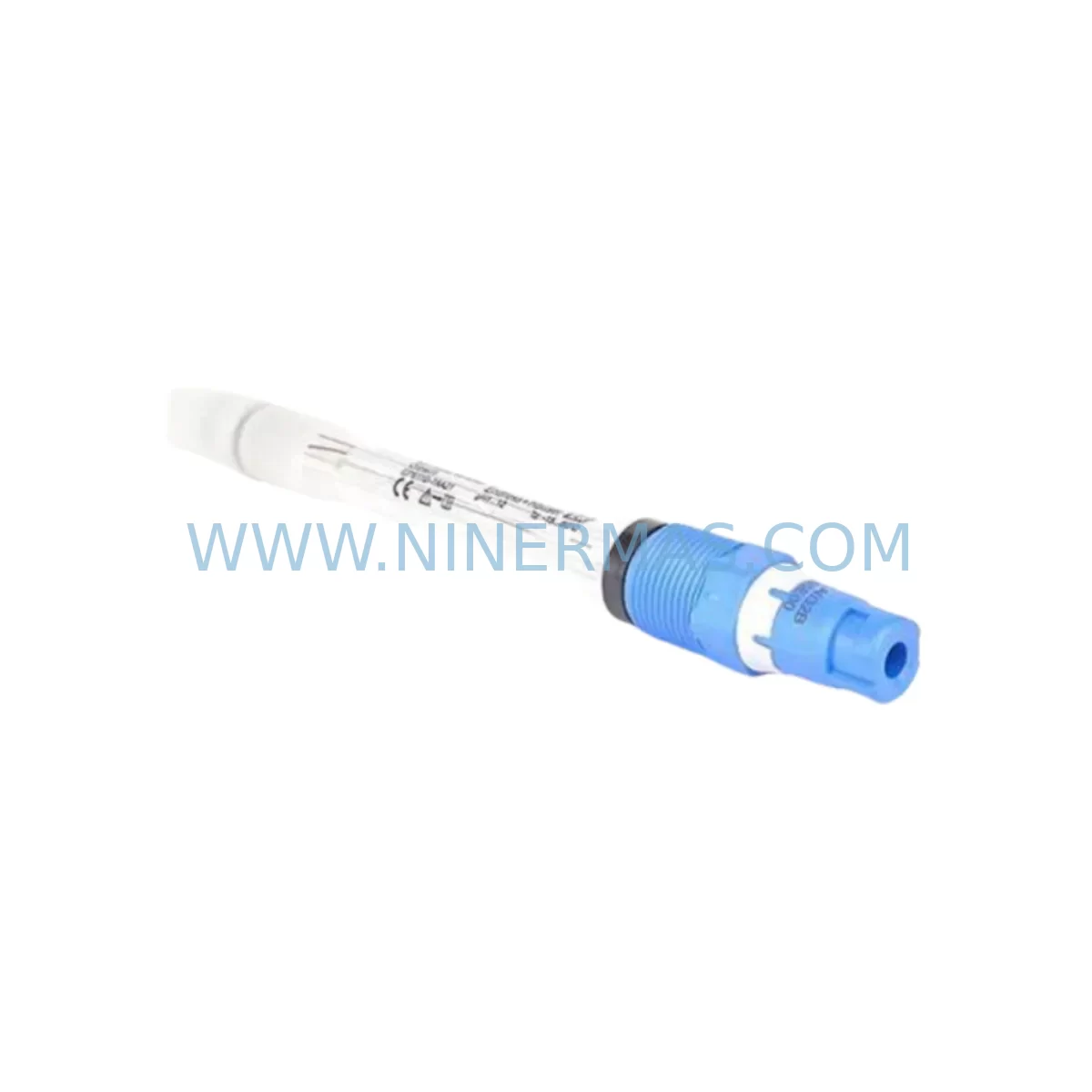
RFQ Ready
- SKUCPS11D-7BA2G
- CategoryPLC & Industrial Automation Modules
- BrandEndress+Hauser
- SupportAvailability, lead time, condition, and shipping coordination
How Buyers Usually Use This Page
- Confirm the exact part number and platform family before sending the quote request.
- Use direct email when quantity, condition, and destination are already defined internally.
- Switch to the broader brand or category archive when you need alternates nearby.
Series Navigation
Move through the most common platform families behind this part.
Product RFQ
Send this part directly for quotation.
Include quantity, required condition, destination country, and target delivery timing. Current reference: Endress+Hauser CPS11D-7BA2G Retrofit pH/ORP Sensor with SKU CPS11D-7BA2G.
Endress+Hauser CPS11D-7BA2G Retrofit pH/ORP Sensor: Legacy System Compatibility & Smooth Upgrade
The Endress+Hauser CPS11D-7BA2G is a high-performance pH and ORP combination sensor engineered for demanding industrial process environments. Designed around the Memosens digital communication protocol, this sensor is a proven retrofit solution for aging water treatment, chemical dosing, and process control installations where legacy analog pH transmitters are being phased out or have reached end-of-life. Whether you are replacing a discontinued CPS11 or CPS41 series sensor, upgrading a Liquisys M CPM223 or CPM253 transmitter loop, or migrating an entire measurement point to the Liquiline CM442 or CM444 platform, the CPS11D-7BA2G provides a reliable, calibration-data-retaining drop-in upgrade path that minimizes engineering rework and field downtime.
Upgrade Compatibility Table
| Parameter | Details |
|---|---|
| SKU / Model | CPS11D-7BA2G |
| Brand / Series | Endress+Hauser / Memosens CPS11D |
| Measurement Function | pH (0–14) and ORP/Redox |
| Communication Protocol | Memosens (digital, inductive, plug-and-play) |
| Replaces / Compatible With | CPS11, CPS41, CPS71, CPS91 (analog); Orbisint CPS11D variants |
| Compatible Transmitters | Liquisys M CPM223/253, Liquiline CM442/CM444/CM448, Mycom CPM152 |
| Cable / Connector | Memosens inductive plug — no rewiring of field cable required |
| Installation Space | Standard 12 mm / Pg 13.5 immersion or flow fitting; confirm retractable assembly type |
| Process Temperature | 0 to 135 °C (sterilizable) |
| Pressure Rating | Up to 10 bar |
| Calibration Data Storage | On-sensor EEPROM — history transfers automatically to new transmitter |
| Retrofit Recommendation | Direct replacement; verify fitting thread and immersion length before ordering |
| Commissioning Focus | Buffer calibration (pH 4/7/10), slope verification, Memosens pairing confirmation |
| Warranty | 12 Months — NINERMAS COMPANY LIMITED |
Retrofit Planning for Existing Automation Systems
Successful integration of the CPS11D-7BA2G into an existing control loop begins well before the sensor arrives on site. Engineers undertaking a legacy system retrofit should first audit the existing transmitter to confirm Memosens compatibility. Older Liquisys M CPM223 units fitted with the original analog input card must be upgraded with the Memosens input module (order designation CPM-Z1) before the digital sensor can communicate. If the site is running a Mycom CPM152 transmitter, a full transmitter replacement with a Liquiline CM442 is typically the more cost-effective path, as the CM442 supports up to two Memosens inputs and integrates directly with HART or PROFIBUS PA fieldbus segments already present in the control cabinet.
On the field wiring side, the Memosens protocol’s inductive coupling means the existing two-wire shielded cable between the junction box and the transmitter can almost always be reused without modification — a significant advantage over analog sensor replacements that require careful impedance matching and cable length verification. Confirm that the Memosens cable assembly (CYK10 or CYK71 series) is in good condition and that the inductive connector at the sensor head is clean and undamaged. If the retractable assembly — such as a Cleanfit CPA450 or CPA875 — is also being replaced as part of the upgrade, verify the process connection thread (typically G 1 or NPT 1) and the immersion length against the existing nozzle before placing the order.
For installations where the CPS11D-7BA2G is being added to expand an existing Liquiline CM444 or CM448 multi-channel controller, confirm the available input card slots and the current firmware version. Liquiline platforms running firmware below version 01.05.00 may require an update via the SD card slot before the new sensor is recognized correctly. The CM444’s modular I/O architecture — supporting up to eight Memosens inputs alongside 4–20 mA analog outputs, relay contacts, and digital fieldbus cards — makes it the preferred hub for multi-point pH and ORP monitoring upgrades across a single control cabinet.
Signal isolation should also be reviewed when the CPS11D-7BA2G is installed in environments with high electrical noise. A Memosens signal conditioner or a dedicated RIA15 loop indicator with Memosens input can serve as an intermediate buffer, protecting the transmitter from ground loops and EMI interference common in electrochemical or heavy industrial plant environments. Ensure the 24 V DC power supply feeding the transmitter rail is adequately sized — a Liquiline CM442 with two active Memosens sensors and a HART output card draws approximately 3.5 W, and the supply should be derated for ambient temperature if installed in a sealed enclosure.
Downtime Control During System Migration
Minimizing process interruption during a pH sensor changeover requires a structured hot-swap procedure. Because the CPS11D-7BA2G stores its full calibration history — including slope, zero point, and glass impedance trend — on the sensor’s internal EEPROM, the replacement sensor can be pre-calibrated in the laboratory using a Liquiline CM442 or a portable Handylab pH 12 calibrator before it reaches the plant floor. This pre-calibration approach eliminates the need for a live buffer calibration at the process connection, reducing the actual sensor swap window to under ten minutes in most retractable assembly installations.
Before breaking the process connection, confirm with the control room that the affected measurement loop is in manual mode or that the downstream PID controller — typically a Simatic S7-300 or S7-1500 PLC receiving the 4–20 mA pH signal — has been placed in manual output hold. This prevents the controller from responding to the open-circuit signal that briefly appears during sensor removal. If the site uses a Liquiline CM444 with PROFIBUS PA, the transmitter can be configured to hold the last valid process value during sensor disconnection, further protecting the control loop from spurious outputs.
After installing the CPS11D-7BA2G and confirming the Memosens pairing on the transmitter display, perform a single-point verification against a fresh pH 7 buffer before returning the loop to automatic. Log the as-found and as-left calibration values in the site’s instrument maintenance record. The entire procedure — from isolation to return-to-service — can typically be completed within a planned 30-minute maintenance window when the pre-calibration and spare parts are staged in advance, keeping production impact to an absolute minimum.
Retrofit Support FAQ
Q1: Is the CPS11D-7BA2G a direct drop-in replacement for the older analog CPS11 sensor?
A: The CPS11D-7BA2G uses the Memosens digital protocol and is not electrically interchangeable with the original analog CPS11. However, the physical dimensions, process fitting, and immersion length are compatible. The transmitter must support Memosens input — either natively (Liquiline CM442/CM444) or via an upgrade module (CPM-Z1 for Liquisys M CPM223). No field cable replacement is required.
Q2: What commissioning steps are required after installation?
A: Connect the sensor to the Memosens transmitter and confirm automatic sensor recognition on the display. If the sensor was pre-calibrated, verify the slope and zero-point values are within specification. Perform a single-point buffer check (pH 7.00 at 25 °C) and adjust if the deviation exceeds ±0.05 pH. Confirm the 4–20 mA output scaling and any relay setpoints before returning the loop to automatic control.
Q3: Does NINERMAS test sensors before shipment?
A: Yes. Every CPS11D-7BA2G unit undergoes functional verification and Memosens communication testing prior to dispatch. A test report is available on request. Units are shipped in anti-static protective packaging with the glass electrode hydrated and protected by a storage cap filled with KCl solution to preserve sensor conditioning.
Q4: What warranty and supply lead time should I expect?
A: All CPS11D-7BA2G sensors supplied by NINERMAS COMPANY LIMITED carry a 12-month warranty covering manufacturing defects and Memosens communication faults. Stock is maintained for immediate dispatch. For project quantities or scheduled maintenance contracts requiring multiple units, contact our team to confirm availability and lead time.
| Product Series | Other series |
|---|---|
| Country of Origin | CH |
Catalog Continuation
More Endress+Hauser modules in the catalog.
Use the brand lane to compare nearby part numbers, platform-adjacent modules, and other inquiry-ready listings before sending your final RFQ.
Catalog Continuation
Alternative parts within PLC & Industrial Automation Modules.
Stay inside the same system family when you need substitutes, adjacent modules, or a broader shortlist for procurement review.
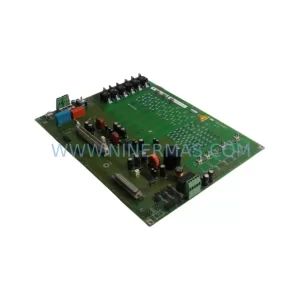
SKU: 6SE7041-3FK85-1JA0
Siemens 6SE7041-3FK85-1JA0 Retrofit-Compatible AC Drive
SKU: 3AUA0000058712/ZDPI-01
ABB 3AUA0000058712/ZDPI-01 Retrofit-Compatible Adapter Board