Original Industrial Spare Part
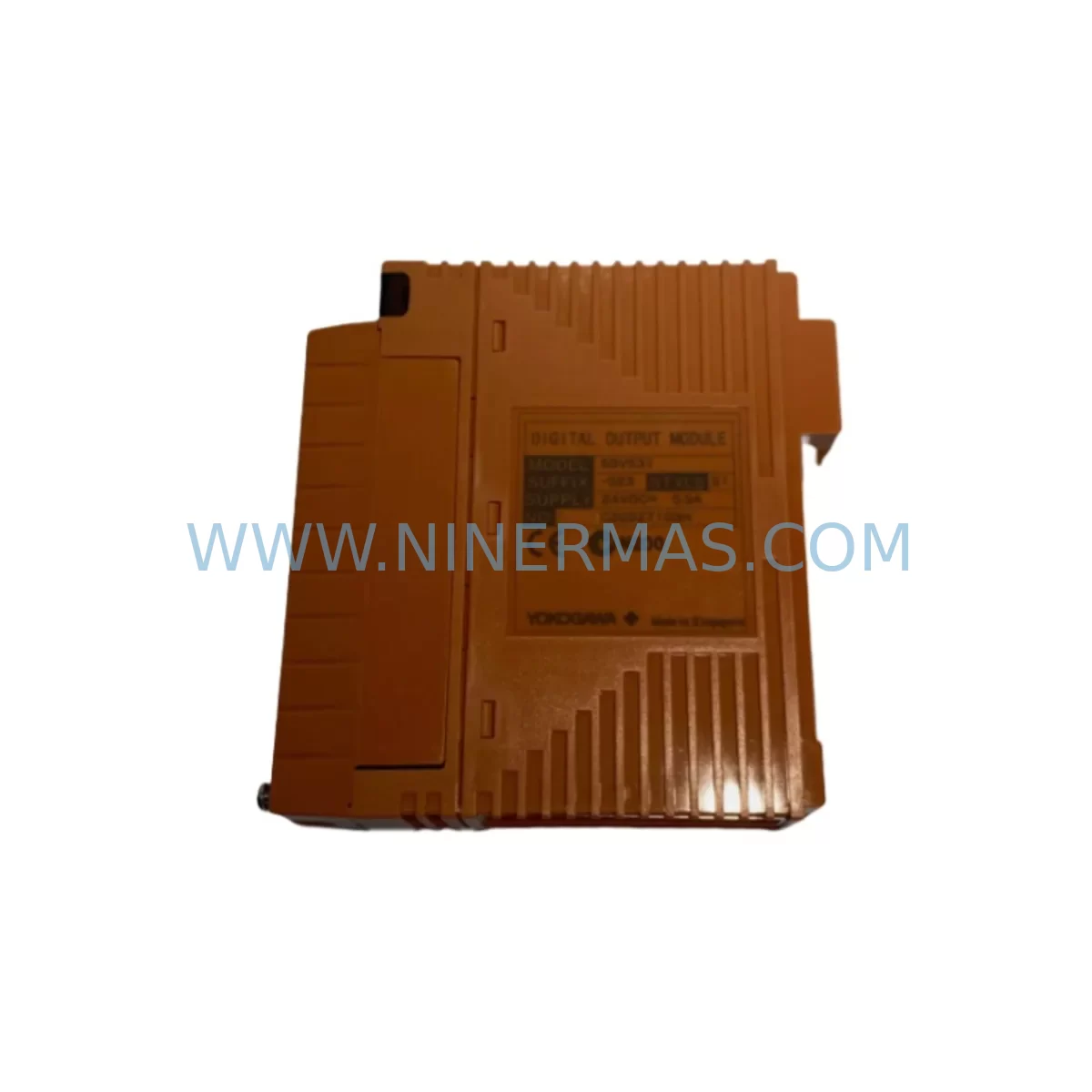
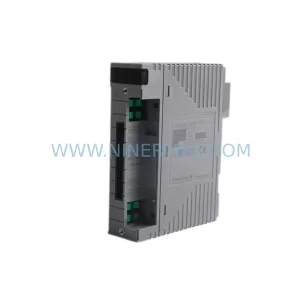
Yokogawa SDV531-L53 S4 Retrofit-Compatible I/O for Legacy Systems
Verify the part, confirm the platform family, and move straight into quotation with the right commercial details.
RFQ Ready
- SKUSDV531-L53 S4
- CategoryDCS Distributed Control Systems
- BrandYokogawa
- SupportAvailability, lead time, condition, and shipping coordination
How Buyers Usually Use This Page
- Confirm the exact part number and platform family before sending the quote request.
- Use direct email when quantity, condition, and destination are already defined internally.
- Switch to the broader brand or category archive when you need alternates nearby.
Series Navigation
Move through the most common platform families behind this part.
Product RFQ
Send this part directly for quotation.
Include quantity, required condition, destination country, and target delivery timing. Current reference: Yokogawa SDV531-L53 S4 Retrofit-Compatible I/O for Legacy Systems with SKU SDV531-L53 S4.
Yokogawa SDV531-L53 S4 Retrofit-Compatible I/O Module: Seamless Legacy System Upgrade
The Yokogawa SDV531-L53 S4 is a high-reliability digital input module engineered for the CENTUM VP and CS 3000 distributed control system (DCS) platforms. As legacy automation infrastructure ages and original spare parts reach end-of-life, the SDV531-L53 S4 has become a critical component in plant-wide retrofit programs, control cabinet upgrades, and I/O expansion projects across the oil & gas, petrochemical, power generation, and process manufacturing industries.
Whether you are replacing a failed module in an aging CS 3000 field control station, migrating I/O assignments during a CENTUM VP system expansion, or consolidating control architecture across multiple field panels, the SDV531-L53 S4 delivers the signal integrity, backplane compatibility, and firmware alignment required for a smooth, low-risk transition. NINERMAS maintains verified stock of this module with full pre-shipment functional testing and a 12-month warranty on every unit.
Upgrade Compatibility Table
| Parameter | SDV531-L53 S4 Specification | Retrofit / Replacement Notes |
|---|---|---|
| Compatible Platform | CENTUM VP, CS 3000 | Direct replacement for same-series I/O slots; verify FCS firmware revision |
| Module Type | Digital Input (DI) | Confirm channel count and signal voltage match existing wiring schedule |
| Backplane Interface | Yokogawa V-net / ER Bus | Slot-compatible with standard CS 3000 and CENTUM VP I/O nest; no adapter required |
| Installation Requirement | Standard DIN-rail / rack mount | Verify rack slot clearance; check adjacent module spacing for heat dissipation |
| Communication Compatibility | Internal V-net bus | No protocol conversion needed within same-generation FCS; confirm node address assignment |
| Terminal Wiring | Screw-terminal field wiring unit | Reuse existing FU (field wiring unit) if terminal block model matches; inspect for corrosion |
| Replacement Recommendation | 1:1 drop-in for SDV531 series | Cross-reference suffix codes (L53, S4) against original BOM before ordering |
| Commissioning Focus | Module address, I/O tag mapping, alarm limits | Re-download FCS builder configuration after module swap; verify signal status in HMI |
| Warranty | 12-Month Warranty — all units ship after full functional test | |
Retrofit Planning for Existing Automation Systems
A successful SDV531-L53 S4 retrofit begins well before the module arrives on site. Engineers responsible for the migration must audit the existing field control station (FCS) configuration, confirm the installed revision of the CENTUM VP or CS 3000 system builder software, and identify every I/O module, power supply, and communication card that shares the same control cabinet or I/O nest.
In a typical CS 3000 retrofit scenario, the SDV531-L53 S4 occupies a slot within a standard I/O nest alongside other modules such as the AAI141-S analog input module and the ADV151-P digital output module. The nest is powered by a dedicated PW481 or PW482 power supply module — engineers must verify that the total current draw of all installed I/O modules, including the replacement SDV531-L53 S4, does not exceed the rated output of the installed power supply. Overloading the power rail is a common and avoidable cause of post-retrofit instability.
Backplane slot addressing must be confirmed in the FCS builder before the new module is inserted. In CENTUM VP environments, the AFV10D field control unit manages slot-level I/O assignments, and any change to module position or type requires a corresponding update to the control drawing and a re-download of the FCS configuration. Failure to update the node address table will result in the replacement module being unrecognized by the controller, triggering I/O fault alarms across the HMI.
For plants running legacy Vnet/IP or older V-net communication backbones, the SDV531-L53 S4 integrates without protocol conversion. However, if the retrofit is part of a broader migration from CS 3000 to CENTUM VP R6, engineers should simultaneously review the communication card configuration — particularly the ACM12 or ACF11 Vnet/IP communication modules — to ensure that the upgraded I/O nest is correctly registered in the new domain controller topology.
HMI screen updates are frequently overlooked during I/O module replacements. After the SDV531-L53 S4 is installed and the FCS configuration is re-downloaded, operators should verify that all associated faceplates, trend displays, and alarm group assignments in the CENTUM VP HIS (Human Interface Station) correctly reflect the restored signal status. Any tag renaming or address remapping performed during the retrofit must be propagated to the HIS database to prevent display mismatches during normal operation.
Where the retrofit involves I/O expansion rather than direct replacement, engineers may need to add a new I/O nest using a EB401 or EB501 expansion bus coupler to extend the backplane. In such cases, the SDV531-L53 S4 can be installed in the expanded nest, and the FCS builder must be updated to recognize the additional node. Signal isolation requirements should also be reviewed — for high-noise environments or long cable runs, inline signal isolators or Zener barriers may be required between the field device and the module terminal block.
Programming cable access is another practical consideration. During commissioning, technicians will require a CENTUM VP engineering workstation connected via Ethernet to the FCS domain to perform online monitoring, force I/O points for loop checks, and confirm that all digital input channels on the SDV531-L53 S4 are reading correctly against field device status. Offline simulation using the FCS builder’s test function is recommended before live commissioning to reduce on-site debugging time.
Downtime Control During System Migration
Minimizing production downtime is the primary concern for any plant engineer authorizing an I/O module replacement on a live DCS. The SDV531-L53 S4 supports a structured hot-swap procedure within compatible CENTUM VP configurations, but the feasibility of online replacement must be confirmed against the specific FCS revision and I/O nest type installed at the site. In systems where online replacement is not supported, a planned maintenance window must be scheduled.
To protect the original control logic during the swap, engineers should export a full FCS backup — including the control drawing, I/O assignment table, and alarm parameter file — before removing the failed module. This backup serves as the recovery baseline if the re-download process encounters errors. The backup should be stored on both the engineering workstation and an offline archive to prevent data loss.
Field wiring continuity is preserved by reusing the existing field wiring unit (FU) terminal block wherever the connector model is compatible with the replacement SDV531-L53 S4. This eliminates the need to disconnect and re-terminate individual field cables, which is the most time-consuming and error-prone step in any I/O module replacement. Where the FU must be replaced, a pre-wired spare FU prepared in advance can reduce reconnection time to under 30 minutes per nest.
After the module is installed and the FCS configuration is re-downloaded, a structured loop check sequence should be executed for every channel on the SDV531-L53 S4 before returning the control loop to automatic mode. This includes verifying input signal status from the field device, confirming alarm setpoint activation, and checking that the HMI faceplate reflects the correct engineering unit value. A signed loop check record should be completed for each channel as part of the site commissioning documentation.
NINERMAS ships all SDV531-L53 S4 units with a pre-shipment functional test report, reducing the risk of receiving a defective module and eliminating the need for incoming inspection testing at the plant. Combined with our 12-month warranty and in-stock availability, this allows maintenance teams to plan replacements with confidence and avoid extended lead times that would otherwise force extended production shutdowns.
Retrofit Support FAQ
Q1: Is the SDV531-L53 S4 a direct replacement for the original SDV531 installed in my CS 3000 system?
A: In most cases, yes — the SDV531-L53 S4 is slot-compatible with the CS 3000 I/O nest and uses the same backplane interface. However, you must verify the suffix codes (L53 and S4) against your original bill of materials, as different suffix combinations indicate variations in channel count, input voltage range, or isolation specification. Contact our technical team with your original module label information for confirmation before ordering.
Q2: What commissioning steps are required after installing the SDV531-L53 S4?
A: After physical installation, you must re-download the FCS configuration from the CENTUM VP or CS 3000 engineering workstation to register the new module at its assigned slot address. Following the download, perform a channel-by-channel loop check to verify that all digital input signals are reading correctly. Update the HMI faceplate and alarm group assignments if any tag mapping was modified during the replacement process. A full commissioning checklist is available from our technical support team upon request.
Q3: Can I reuse the existing field wiring unit (FU) terminal block with the replacement SDV531-L53 S4?
A: Yes, provided the FU model number is compatible with the SDV531-L53 S4. Reusing the existing FU eliminates the need to disconnect field cables and significantly reduces installation time. Inspect the terminal block for corrosion, loose screws, or damaged insulation before reuse. If the FU shows signs of wear, we recommend replacing it simultaneously with the I/O module to avoid a secondary failure shortly after commissioning.
Q4: What warranty and testing does NINERMAS provide with the SDV531-L53 S4?
A: Every SDV531-L53 S4 unit shipped by NINERMAS undergoes a full pre-shipment functional test covering power-on self-test, channel input verification, and backplane communication check. All units are covered by a 12-month warranty from the date of shipment. In the event of a warranty claim, NINERMAS provides advance replacement to minimize plant downtime. Stock availability is confirmed at time of order, and units are typically dispatched within 2 business days of payment confirmation.
| Product Series | CENTUM VP |
|---|---|
| Country of Origin | JP |
Catalog Continuation
More Yokogawa modules in the catalog.
Use the brand lane to compare nearby part numbers, platform-adjacent modules, and other inquiry-ready listings before sending your final RFQ.
Catalog Continuation
Alternative parts within DCS Distributed Control Systems.
Stay inside the same system family when you need substitutes, adjacent modules, or a broader shortlist for procurement review.
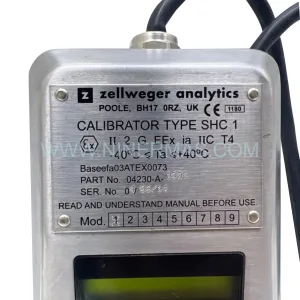
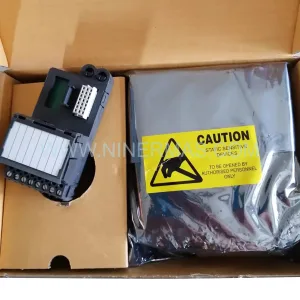
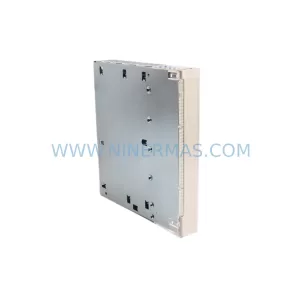
SKU: PM632 3BSE005831R1
ABB PM632 3BSE005831R1 Retrofit-Compatible Processor for Legacy Systems
SKU: High Performance Communication Controller
Honeywell 51401635-150 Service-Ready Spare for C300