Original Industrial Spare Part
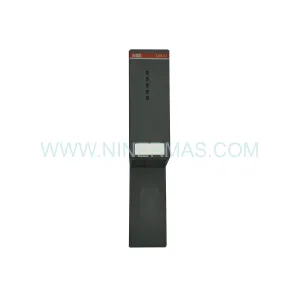
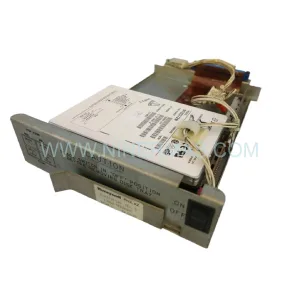
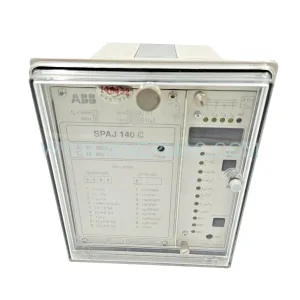
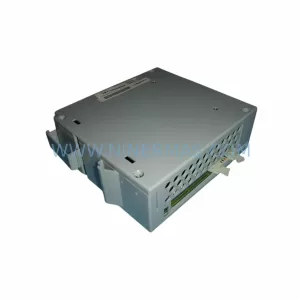
YOKOGAWA SNT501-13 Bus Interface Module for STARDOM/CENTUM
Verify the part, confirm the platform family, and move straight into quotation with the right commercial details.
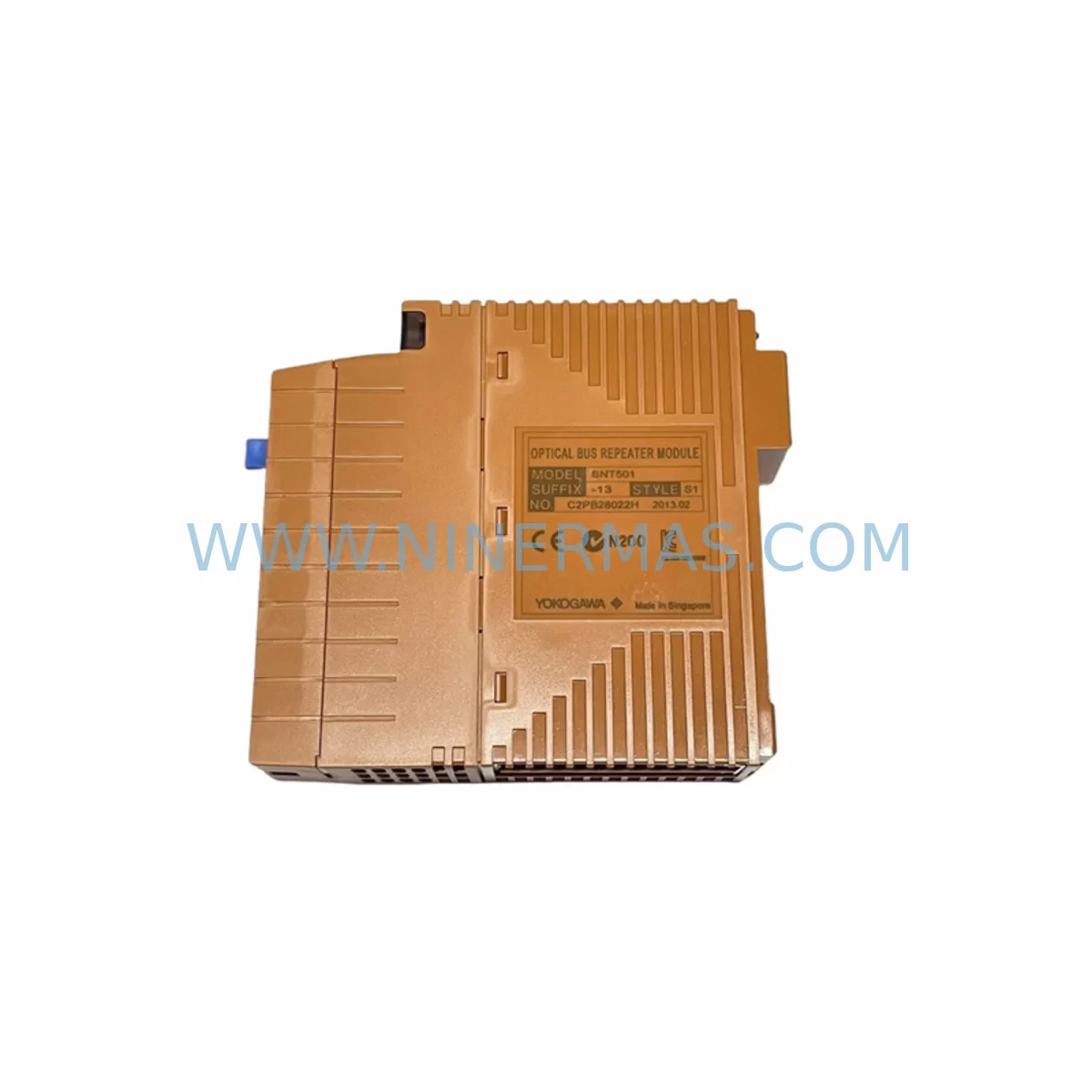
RFQ Ready
- SKUSNT501-13
- CategoryDCS Distributed Control Systems
- BrandYokogawa
- SupportAvailability, lead time, condition, and shipping coordination
How Buyers Usually Use This Page
- Confirm the exact part number and platform family before sending the quote request.
- Use direct email when quantity, condition, and destination are already defined internally.
- Switch to the broader brand or category archive when you need alternates nearby.
Series Navigation
Move through the most common platform families behind this part.
Product RFQ
Send this part directly for quotation.
Include quantity, required condition, destination country, and target delivery timing. Current reference: YOKOGAWA SNT501-13 Bus Interface Module for STARDOM/CENTUM with SKU SNT501-13.
YOKOGAWA SNT501-13 Bus Interface Module for STARDOM/CENTUM Legacy System Retrofit
The YOKOGAWA SNT501-13 is a bus interface communication module designed for integration within YOKOGAWA’s STARDOM FCN/FCJ autonomous controllers and CENTUM VP/CS3000 distributed control systems. As legacy automation infrastructure ages and OEM support windows close, the SNT501-13 remains a critical retrofit-compatible component for plants seeking to extend operational life, stabilize bus communications, and defer full system replacement. This module supports field bus signal routing between controller backplanes and I/O subsystems, making it a key element in any phased modernization strategy for process control environments.
For facilities operating aging CENTUM CS3000 or early CENTUM VP configurations, the SNT501-13 provides a verified drop-in replacement path that avoids the cost and risk of full DCS migration. Each unit supplied by NINERMAS undergoes pre-shipment functional testing to confirm bus signal integrity, module addressing, and communication link stability before dispatch. A 12-month warranty is included as standard.
Upgrade Compatibility Table
| Parameter | Detail |
|---|---|
| SKU / Part Number | SNT501-13 |
| Brand | YOKOGAWA |
| Series Compatibility | STARDOM FCN / FCJ, CENTUM VP, CENTUM CS3000 |
| Module Function | Bus Interface / Communication Module |
| Backplane Interface | Compatible with YOKOGAWA standard FCN/FCJ backplane slots |
| Communication Protocol | YOKOGAWA proprietary V-net/IP and Vnet bus |
| Installation Format | Rack-mount, slot-insertion into FCN/FCJ controller chassis |
| Replacement Scope | Direct replacement for failed or end-of-life SNT501-13 units |
| Retrofit Suitability | Compatible with existing wiring, terminal blocks, and backplane addressing |
| Pre-Shipment Testing | Yes — bus signal, module address, and communication link verified |
| Warranty | 12 Months |
| Origin | Japan |
| Condition | New / Refurbished (specify at inquiry) |
Retrofit Planning for Existing Automation Systems
Replacing the SNT501-13 in an active STARDOM or CENTUM installation requires careful pre-work to avoid unplanned downtime. Before removing the existing module, engineers should document the current module address assignment within the FCN/FCJ chassis, verify the backplane slot configuration, and confirm that the replacement unit carries the same firmware revision or a compatible successor version. In CENTUM VP environments, the associated CENTUM VP Engineering Environment (CAMS for HIS) should be used to export the current I/O map and tag assignments prior to any hardware swap.
Power supply capacity is a frequent oversight in bus module replacements. The SNT501-13 draws its operating power from the FCN/FCJ chassis power supply — typically an YOKOGAWA PW301 or PW302 power module — and the total chassis load must be recalculated if additional modules such as the ALR111 analog input module or the ADV151 analog output module are being added during the same retrofit window. Terminal block wiring on associated I/O modules including the AAI141 and AAI143 analog input cards should be photographed and labeled before any physical work begins.
For plants migrating from CENTUM CS3000 to CENTUM VP, the SNT501-13 bus interface module often remains compatible across the transition, but the associated FCS (Field Control Station) node address and domain configuration within the Vnet/IP network must be re-verified. Communication links to the HIS (Human Interface Station) running CENTUM VP’s operator graphics should be tested after module reinsertion to confirm that all process variable displays, alarm setpoints, and trend data feeds are restored correctly. If the plant uses FOUNDATION Fieldbus or HART pass-through via an ALF111 fieldbus communication module, those secondary communication paths must also be validated independently.
In control cabinet upgrades where the SNT501-13 is being replaced alongside other aging components, it is common to simultaneously address the FCN-RTU autonomous controller unit, the NF90 or NF10 network interface modules, and any SCP451 or SCP461 sequence control processors sharing the same backplane. Installation space within the control cabinet should be confirmed before ordering, as some older cabinet configurations may require DIN rail adapter brackets or modified cable routing to accommodate current-generation replacement modules. Signal isolators between field wiring and the backplane I/O should also be inspected for drift or degradation during the same maintenance window.
Downtime Control During System Migration
Minimizing production interruption during an SNT501-13 replacement begins with a structured hot-swap assessment. In STARDOM FCN configurations that support redundant controller pairs, the bus interface module replacement can often be staged during a planned controller switchover, allowing the standby FCN unit to maintain field I/O continuity while the primary chassis is serviced. This approach preserves the original control logic loaded in the FCN’s non-volatile memory and avoids the need for a full program reload from the STARDOM FAST/TOOLS engineering station.
Where redundancy is not available, a cold-swap procedure should be planned during a scheduled maintenance window. The recommended sequence is: export the current FCS configuration from the CENTUM VP engineering environment, power down the affected FCN/FCJ chassis in a controlled sequence, replace the SNT501-13, restore power, confirm module recognition in the system status display, and then perform a communication link test to all downstream I/O nodes before returning the loop to automatic control. HMI operator screens should be monitored throughout the restart sequence to confirm that all analog and digital I/O tags return to their expected states without spurious alarms.
For multi-node CENTUM VP installations, it is advisable to notify the DCS system administrator before beginning any bus module replacement, as the Vnet/IP domain controller may log node-offline events that could trigger supervisory alarms at the central control room. Pre-coordinating with the operations team and placing affected loops in manual mode before the swap reduces the risk of process upsets. Post-replacement, a full I/O checkout against the loop diagram and P&ID should be completed and signed off before the system is returned to automatic operation.
Retrofit Support FAQ
Q1: Is the SNT501-13 a direct replacement for the original module without program changes?
In most STARDOM FCN and CENTUM VP installations, the SNT501-13 is a slot-compatible replacement that does not require changes to the existing control program. However, if the replacement unit carries a different firmware revision, a compatibility check against the FCN/FCJ system software version is recommended before installation. NINERMAS can provide firmware version documentation upon request.
Q2: What pre-shipment testing is performed on each SNT501-13 unit?
Each SNT501-13 supplied by NINERMAS is bench-tested for bus signal continuity, module address recognition, and communication link establishment prior to dispatch. A test report is available upon request. All units are covered by a 12-month warranty from the date of shipment.
Q3: Can the SNT501-13 be used in both STARDOM FCN and CENTUM CS3000 environments?
The SNT501-13 is designed for YOKOGAWA’s FCN/FCJ controller platform and is compatible with CENTUM VP and CENTUM CS3000 system architectures that use the same backplane and Vnet/IP communication infrastructure. Customers should confirm the exact chassis model and slot assignment with their system documentation before ordering. NINERMAS technical support can assist with compatibility verification.
Q4: What is the typical lead time and stock availability?
NINERMAS maintains inventory of the SNT501-13 to support urgent retrofit and breakdown replacement requirements. Standard lead time for in-stock units is 3–7 business days for international shipment. For large-quantity orders or long-term supply agreements, please contact our sales team directly to discuss scheduling and pricing.
—
| Product Series | STARDOM |
|---|---|
| Country of Origin | JP |
Catalog Continuation
More Yokogawa modules in the catalog.
Use the brand lane to compare nearby part numbers, platform-adjacent modules, and other inquiry-ready listings before sending your final RFQ.
Catalog Continuation
Alternative parts within DCS Distributed Control Systems.
Stay inside the same system family when you need substitutes, adjacent modules, or a broader shortlist for procurement review.
SKU: High Performance Communication Controller
Honeywell 51401635-150 Service-Ready Spare for C300
SKU: 6DD2920-0AR2 6DD2920-OAR2
Siemens 6DD2920-0AR2 Service-Ready Spare Part for Industrial Maintenance