Original Industrial Spare Part
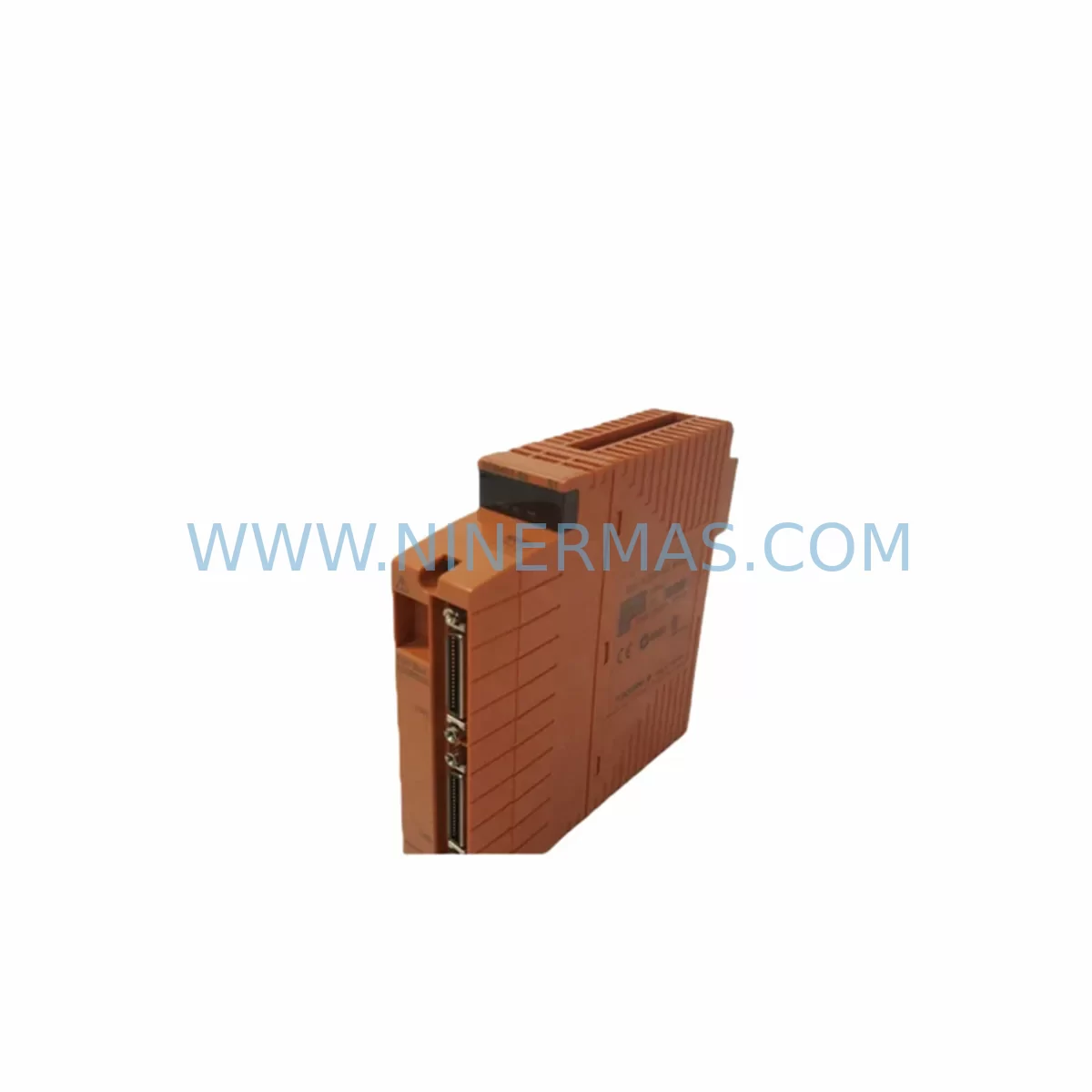
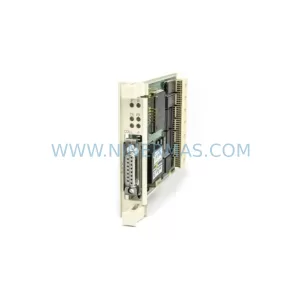
YOKOGAWA SNT401-E3 Service-Ready Spare Part for Industrial Maintenance
Verify the part, confirm the platform family, and move straight into quotation with the right commercial details.
RFQ Ready
- SKUSNT401-E3
- CategoryDCS Distributed Control Systems
- BrandYokogawa
- SupportAvailability, lead time, condition, and shipping coordination
How Buyers Usually Use This Page
- Confirm the exact part number and platform family before sending the quote request.
- Use direct email when quantity, condition, and destination are already defined internally.
- Switch to the broader brand or category archive when you need alternates nearby.
Series Navigation
Move through the most common platform families behind this part.
Product RFQ
Send this part directly for quotation.
Include quantity, required condition, destination country, and target delivery timing. Current reference: YOKOGAWA SNT401-E3 Service-Ready Spare Part for Industrial Maintenance with SKU SNT401-E3.
YOKOGAWA SNT401-E3 Service-Ready Spare Part for Industrial Maintenance
The YOKOGAWA SNT401-E3 is an original bus repeater slave module engineered for CENTUM VP distributed control systems. Designed to extend and isolate field bus segments within large-scale process automation architectures, the SNT401-E3 plays a critical role in maintaining signal integrity across multi-drop communication networks in refineries, chemical plants, power generation facilities, and continuous manufacturing environments. When this module fails or degrades, the downstream I/O nodes it supports become unreachable, triggering process alarms and forcing unplanned shutdowns. Maintaining a service-ready SNT401-E3 in your spare parts inventory is a fundamental risk-control measure for any site running CENTUM VP.
At NINERMAS, every SNT401-E3 unit is sourced as an original YOKOGAWA component, inspected prior to dispatch, and covered by a 12-month warranty. We support procurement engineers and maintenance teams with long-term supply commitments, ensuring this critical module remains available throughout the extended lifecycle of your CENTUM VP installation.
Spare Maintenance Table
| Parameter | Specification / Detail |
|---|---|
| Part Number | SNT401-E3 |
| Brand | YOKOGAWA |
| Series | CENTUM VP |
| Module Type | Bus Repeater Slave Module |
| Function | Field bus segment extension and signal isolation for CENTUM VP DCS |
| Communication Bus | YOKOGAWA V-net / ER Bus (CENTUM VP architecture) |
| Installation | DIN rail or backplane slot mount within CENTUM VP field control station |
| Operating Temperature | 0°C to 55°C (standard industrial control cabinet environment) |
| Power Supply | Supplied via CENTUM VP backplane; compatible with standard FCS power modules |
| Origin | Japan |
| Compatibility | CENTUM VP R4.x / R5.x / R6.x field control stations |
| Condition | Original, tested before shipment |
| Warranty | 12 Months |
| Maintenance Recommendation | Inspect bus termination resistors and cable connectors at each annual shutdown; replace proactively at 8–10 years of service |
Maintenance Planning for Continuous Operation
When a maintenance or reliability engineer schedules replacement of the SNT401-E3 bus repeater slave module, the scope of inspection should extend well beyond the module itself. The SNT401-E3 operates within a tightly coupled communication chain, and adjacent components are subject to the same aging stresses.
Begin with the CENTUM VP FCS power supply modules (such as the PW481 or PW482 series) that feed the backplane. A degraded power rail will cause intermittent bus errors that are frequently misdiagnosed as repeater faults. Verify output voltage stability under load before condemning the SNT401-E3. Similarly, inspect the backplane bus connectors and the SNT401 master-side module (SNT401-E or equivalent) for oxidation or mechanical wear, as the master-slave pair must be evaluated together.
Field wiring connected to the downstream bus segment should be checked for insulation resistance and shield continuity. Corroded or loose terminations at field terminal assemblies and marshalling cabinet terminal blocks are a common source of bus noise that accelerates repeater wear. If the site uses YOKOGAWA FOUNDATION Fieldbus or HART multiplexers on the same field control station, confirm that their segment loads remain within specification after the repeater is replaced.
For I/O integrity, review the YOKOGAWA AAI143 or AAI841 analog input modules and any ADV151 or ADV161 digital input modules connected to the affected bus segment. A bus interruption event can leave latched fault states in these modules that require a controlled power cycle to clear. Document the module slot addresses before removal to accelerate recommissioning.
Communication health should also be verified at the CENTUM VP HIS (Human Interface Station) and at any ACG10S or ACG50S gateway modules bridging to Modbus or OPC networks. Bus repeater replacement is an ideal opportunity to audit ESB10S or ESB10D Ethernet switch modules within the FCS cabinet for firmware currency and port error counters.
Finally, confirm that cabinet cooling fans, air filters, and surge protection devices on the incoming power feed are serviceable. Thermal stress is the leading cause of premature failure in bus communication modules, and a clean, well-ventilated cabinet significantly extends the service life of the replacement SNT401-E3.
Site Replacement Workflow
Step 1 — Pre-work verification: Confirm the SNT401-E3 is the correct slave module for the target FCS slot by cross-referencing the CENTUM VP engineering database. Note the bus segment address and the number of I/O nodes downstream.
Step 2 — Process isolation: Place affected control loops in manual or cascade-hold at the HIS. Notify the operations team of the planned bus interruption window. For critical loops, arrange temporary hardwired bypass if site procedures require it.
Step 3 — Safe removal: De-energize the FCS slot following YOKOGAWA lockout/tagout procedures. Remove the SNT401-E3 by releasing the module latch and sliding it clear of the backplane connector. Inspect the backplane socket for bent pins or contamination before inserting the replacement unit.
Step 4 — Installation and commissioning: Insert the new SNT401-E3 firmly until the latch engages. Re-energize the slot and observe the module status LEDs. Use the CENTUM VP System View or Field Communicator to confirm bus segment recovery and verify that all downstream I/O modules return to normal scan status.
Step 5 — Loop verification and handover: Return control loops to automatic mode one at a time, confirming process variable readings match pre-maintenance baselines. Record the replacement in the site maintenance management system with the new module serial number and the 12-month warranty start date.
This workflow is compatible with CENTUM VP R4, R5, and R6 architectures and supports hot-standby FCS configurations where a redundant controller can maintain process control during the replacement window, minimizing or eliminating production impact.
Spare Parts Support FAQ
Q1: How long is the warranty on the SNT401-E3, and what does it cover?
Every SNT401-E3 supplied by NINERMAS carries a 12-month warranty from the date of shipment. Coverage includes manufacturing defects and functional failures under normal operating conditions. Each unit is tested before dispatch to confirm basic electrical integrity.
Q2: Can the SNT401-E3 replace older CENTUM CS or CENTUM-V bus repeater modules?
The SNT401-E3 is designed for CENTUM VP field control stations. Direct substitution for CENTUM CS 3000 or legacy CENTUM-V repeater modules is not supported without engineering review, as backplane pinouts and bus protocols differ. Contact our technical team with your FCS model and revision to confirm compatibility before ordering.
Q3: What is your lead time, and can you support long-term supply agreements?
Standard in-stock units ship within 3–5 business days. For sites requiring guaranteed availability over a 12–36 month horizon, NINERMAS offers long-term supply agreements with reserved stock allocation. This is particularly valuable for CENTUM VP installations in remote or offshore locations where emergency procurement is logistically difficult.
Q4: How should we manage SNT401-E3 inventory for a multi-unit CENTUM VP site?
Industry best practice for critical bus communication modules is to hold one spare per four to six installed units, with a minimum of one spare per site regardless of installed base. For sites with more than ten FCS cabinets, a two-unit buffer is recommended. NINERMAS can assist procurement engineers in developing a site-specific critical spare parts list aligned to YOKOGAWA’s recommended maintenance intervals.
| Product Series | CENTUM VP |
|---|---|
| Country of Origin | JP |
Catalog Continuation
More Yokogawa modules in the catalog.
Use the brand lane to compare nearby part numbers, platform-adjacent modules, and other inquiry-ready listings before sending your final RFQ.
Catalog Continuation
Alternative parts within DCS Distributed Control Systems.
Stay inside the same system family when you need substitutes, adjacent modules, or a broader shortlist for procurement review.
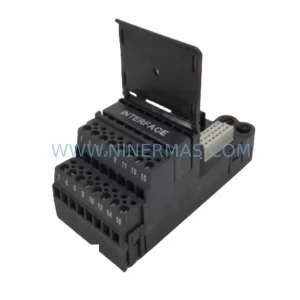
SKU: KJ3003X1-EA1 12P0921X032
Emerson KJ3003X1-EA1 12P0921X032 Service-Ready Spare Part
SKU: DO610 3BHT300006R1
ABB DO610 3BHT300006R1 Service-Ready Spare Part for Industrial Maintenance
SKU: CI546 3BSE012545R1
ABB CI546 3BSE012545R1 Retrofit Interface for Legacy DCS