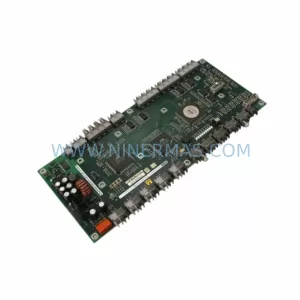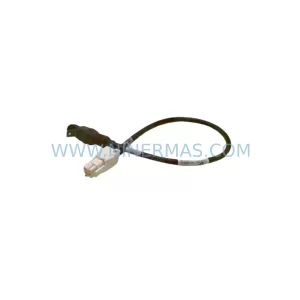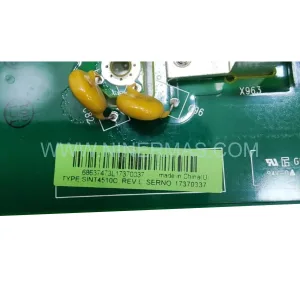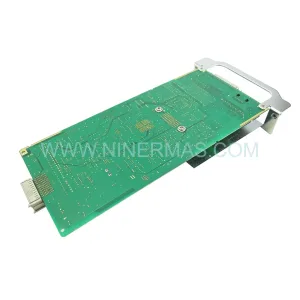
Original Industrial Spare Part
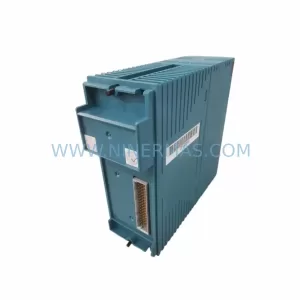
Yokogawa SDV144-S13 S1 Retrofit-Compatible I/O for Legacy Systems
Verify the part, confirm the platform family, and move straight into quotation with the right commercial details.
RFQ Ready
- SKUSDV144-S13 S1
- CategoryDCS Distributed Control Systems
- BrandYokogawa
- SupportAvailability, lead time, condition, and shipping coordination
How Buyers Usually Use This Page
- Confirm the exact part number and platform family before sending the quote request.
- Use direct email when quantity, condition, and destination are already defined internally.
- Switch to the broader brand or category archive when you need alternates nearby.
Series Navigation
Move through the most common platform families behind this part.
Product RFQ
Send this part directly for quotation.
Include quantity, required condition, destination country, and target delivery timing. Current reference: Yokogawa SDV144-S13 S1 Retrofit-Compatible I/O for Legacy Systems with SKU SDV144-S13 S1.
Yokogawa SDV144-S13 S1 Retrofit-Compatible I/O for Legacy Systems
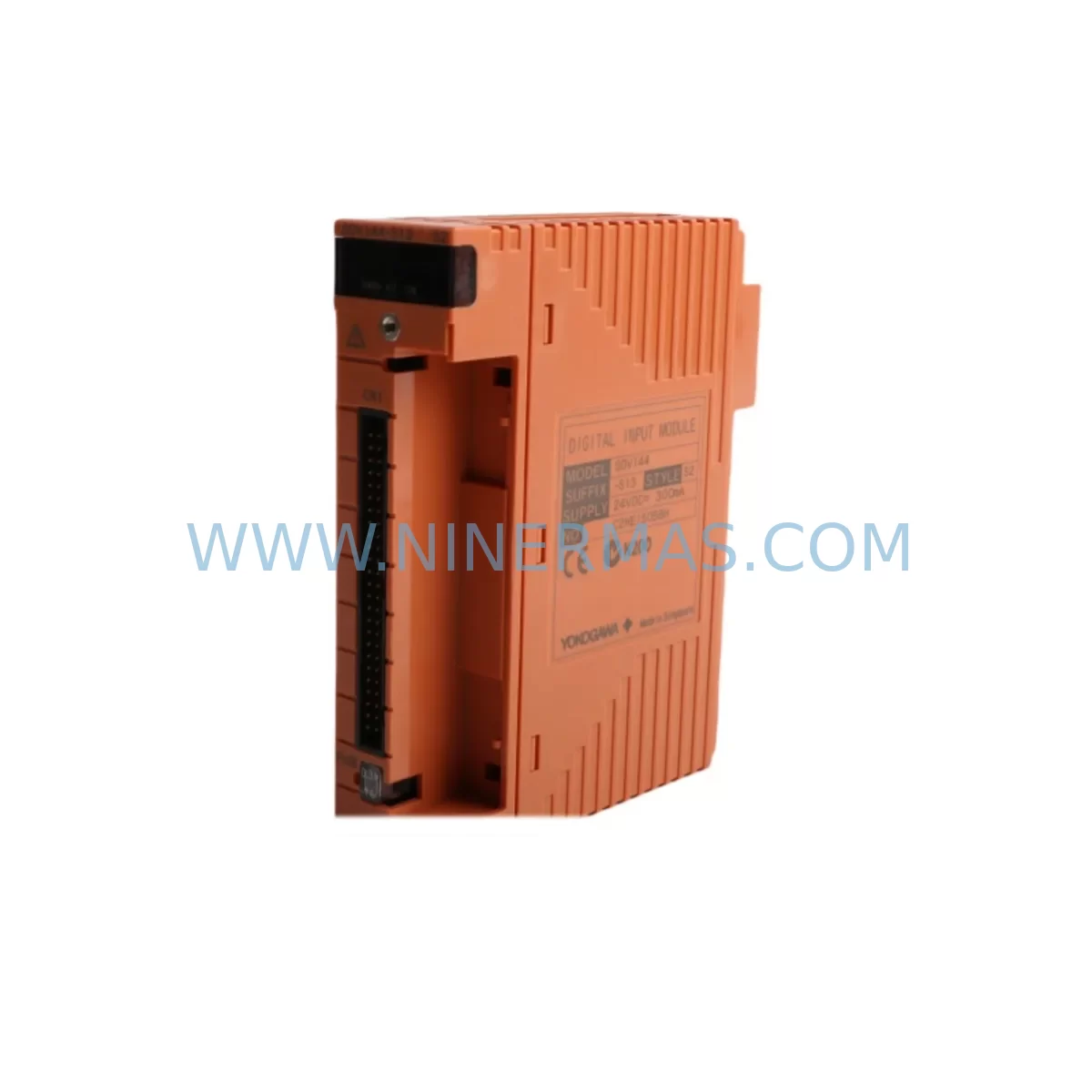
The Yokogawa SDV144-S13 S1 is a digital input module engineered for the CENTUM VP and CS 3000 distributed control system platforms. As aging automation infrastructure reaches end-of-life, facilities running legacy Yokogawa DCS architectures increasingly require verified retrofit-compatible replacements that preserve existing wiring, backplane addressing, and control logic without forcing a full system overhaul. The SDV144-S13 S1 answers this need directly — offering a proven drop-in upgrade path for plants that cannot afford extended downtime or wholesale platform migration.
At NINERMAS, we maintain ready inventory of the SDV144-S13 S1 alongside a broad range of compatible Yokogawa CENTUM VP and CS 3000 components, each inspected, function-tested, and backed by a 12-month warranty. Whether you are replacing a failed module on an active production line or building a retrofit spare parts buffer ahead of a planned shutdown, our team supports your procurement and technical planning from first inquiry through post-installation verification.
Upgrade Compatibility Table
| Parameter | SDV144-S13 S1 (This Unit) | Retrofit Notes |
|---|---|---|
| Platform Compatibility | CENTUM VP / CS 3000 | Verify FCS node assignment before installation |
| Module Type | Digital Input (DI) | Confirm channel count matches legacy wiring schedule |
| Backplane Interface | Standard CENTUM VP/CS 3000 I/O bus | Slot position and node address must match original configuration |
| Terminal Wiring | Compatible with existing field terminal assemblies | Inspect terminal block condition; replace FTA if corroded |
| Power Supply Requirement | Supplied via backplane (no external DC required) | Verify nest/rack power budget before adding modules |
| Communication Protocol | Yokogawa proprietary V-net / Vnet/IP | No protocol conversion required for same-platform replacement |
| Installation Space | Standard CENTUM VP/CS 3000 I/O nest slot | Confirm slot availability in existing nest or plan nest expansion |
| Program Compatibility | Fully compatible with existing FCS logic | No function block rewiring required for direct replacement |
| HMI Screen Impact | Tag addresses preserved on direct replacement | Validate alarm and faceplate displays post-swap |
| Warranty | 12 Months | Covered from date of shipment; includes functional test certificate |
Retrofit Planning for Existing Automation Systems
Successful integration of the SDV144-S13 S1 into an existing control architecture requires systematic pre-work across several engineering disciplines. The following planning framework reflects the real-world steps that instrumentation and control engineers follow when executing a module-level retrofit within a live or recently shut-down CENTUM VP or CS 3000 system.
Power Budget and Nest Capacity: Before ordering a replacement module, engineers should audit the power consumption of the target I/O nest. The CENTUM VP and CS 3000 platforms distribute DC power through dedicated power supply units — such as the Yokogawa PW481 or equivalent nest power supply — and each nest has a defined maximum load. Adding or replacing modules without verifying available headroom can cause intermittent faults or nest resets. Confirm that the existing power supply unit can support the SDV144-S13 S1 alongside all co-installed modules in the same nest.
Terminal and Field Wiring Verification: The SDV144-S13 S1 connects to field instruments through a field terminal assembly (FTA). In many aging CS 3000 installations, the FTA — often a Yokogawa TB series terminal block assembly — may show signs of corrosion, loose terminations, or insulation degradation. Before inserting the new module, inspect and if necessary replace the FTA to ensure signal integrity. Document all field wiring against the original loop drawings before disconnecting any terminals.
Backplane Slot and Module Address: The CENTUM VP and CS 3000 I/O architecture assigns each module a node and slot address that is referenced in the FCS (Field Control Station) configuration. When replacing the SDV144-S13 S1, the new module must occupy the identical slot position in the same I/O nest — typically a Yokogawa ANB10D or ANB11D nest unit — to inherit the original address without requiring FCS database changes. If the original slot is physically damaged, a nest replacement may be necessary, which will require FCS re-engineering.
FCS Program and Function Block Compatibility: One of the primary advantages of a same-model replacement like the SDV144-S13 S1 is that the existing FCS control logic, function blocks, and I/O assignments remain valid without modification. Engineers using Yokogawa CENTUM VP Engineering Environment (ENG) or the legacy CS 3000 Builder software should perform a pre-replacement backup of the FCS database and confirm that no pending downloads are queued before the swap. Post-installation, a partial download or module re-initialization may be required depending on the FCS firmware version.
Communication Link Integrity: In CENTUM VP systems, the FCS communicates with the I/O modules over the internal V-net or Vnet/IP bus. If the retrofit involves replacing multiple modules or upgrading a nest, verify that the Yokogawa ACM12 or ACM22 communication module in the FCS is functioning correctly and that the Vnet/IP network switch — often a managed industrial Ethernet switch integrated into the control cabinet — shows no fault indicators. Communication faults at the network layer can mask module-level issues and complicate post-retrofit diagnostics.
HMI and Operator Interface Validation: After the SDV144-S13 S1 is installed and the FCS is online, validate all HMI faceplates, alarm displays, and trend tags associated with the replaced module’s I/O channels. In systems using Yokogawa CENTUM VP HIS (Human Interface Station), tag bindings are typically preserved through a direct module replacement, but alarm setpoints, engineering unit scaling, and interlock logic should be confirmed against the original configuration documentation. Any discrepancies should be resolved before returning the loop to automatic control.
I/O Expansion and Future-Proofing: For facilities planning broader control system modernization beyond a single module replacement, the SDV144-S13 S1 retrofit can serve as a starting point for a phased I/O expansion strategy. Compatible analog input modules such as the Yokogawa AAI141 or analog output modules like the AAV141 can be added to available nest slots to extend the system’s measurement and control capability without replacing the FCS or HIS infrastructure. This approach allows plants to incrementally modernize their I/O layer while deferring the cost and risk of a full DCS migration.
Downtime Control During System Migration
Minimizing production interruption is the central concern for any plant engineer executing a module-level retrofit on a live DCS. The SDV144-S13 S1 supports a controlled, low-risk replacement process when the following practices are observed.
Pre-Shutdown Preparation: Complete all engineering preparation — FCS backup, wiring documentation, spare parts staging, and tool kit assembly — before the maintenance window begins. Every minute spent searching for documentation or waiting for parts during a shutdown extends exposure. Confirm that the replacement SDV144-S13 S1 has been visually inspected and that its function test certificate is on hand.
Hot-Swap Considerations: The CENTUM VP platform supports online module replacement under specific conditions. Consult the FCS configuration to determine whether the target slot is configured for online replacement or requires an FCS stop. If an FCS stop is required, coordinate with the operations team to place all affected loops in manual mode and confirm that field devices are in a safe state before proceeding.
Program Logic Preservation: Because the SDV144-S13 S1 is a direct same-model replacement, no function block rewiring or I/O reassignment is required. The existing FCS logic — including interlock sequences, cascade control structures, and alarm logic — remains intact. This is a critical advantage over cross-model or cross-platform migrations, where logic translation and re-verification can consume the majority of retrofit engineering hours.
Post-Installation Verification Sequence: After module insertion, follow a structured verification sequence: confirm module status LED, check FCS diagnostic display for module recognition, verify channel-by-channel signal readback against field instrument outputs, and confirm HMI display normalization. Document the completion of each step before returning loops to automatic. This sequence typically requires 30–90 minutes per nest depending on channel count and loop complexity.
Inventory Buffer Strategy: For facilities with multiple SDV144-S13 S1 modules installed across several FCS nodes, maintaining a minimum on-site spare inventory of one to two units per critical node significantly reduces the risk of extended downtime from unexpected module failure. NINERMAS supports blanket order arrangements and consignment stock programs for customers managing large Yokogawa CENTUM VP or CS 3000 installed bases.
Retrofit Support FAQ
Q: Is the SDV144-S13 S1 a direct replacement for the original module in my CS 3000 system?
A: Yes. The SDV144-S13 S1 is designed for direct slot-for-slot replacement within compatible CENTUM VP and CS 3000 I/O nests. No FCS logic changes are required for a same-slot, same-model swap. Confirm the slot address and nest type before installation.
Q: Has the unit been tested before shipment?
A: All SDV144-S13 S1 units supplied by NINERMAS are function-tested prior to shipment. A test certificate is included with each unit. The module is covered by a 12-month warranty from the date of shipment.
Q: What should I check regarding terminal wiring before installing the replacement module?
A: Inspect the field terminal assembly (FTA) connected to the module slot for corrosion, loose terminations, and insulation condition. Verify all field wiring against original loop drawings before disconnecting. If the FTA shows significant wear, replace it concurrently with the module to avoid signal integrity issues after installation.
Q: Can NINERMAS supply other Yokogawa CENTUM VP or CS 3000 components needed for my retrofit project?
A: Yes. NINERMAS maintains inventory of a wide range of Yokogawa DCS components including I/O modules, power supply units, communication modules, nest assemblies, and FCS controllers. Contact our team with your full bill of materials and we will confirm availability, lead times, and pricing.
| Product Series | CENTUM VP |
|---|---|
| Country of Origin | JP |
Catalog Continuation
More Yokogawa modules in the catalog.
Use the brand lane to compare nearby part numbers, platform-adjacent modules, and other inquiry-ready listings before sending your final RFQ.
Catalog Continuation
Alternative parts within DCS Distributed Control Systems.
Stay inside the same system family when you need substitutes, adjacent modules, or a broader shortlist for procurement review.
SKU: PM632 3BSE005831R1
ABB PM632 3BSE005831R1 Retrofit-Compatible Processor for Legacy Systems
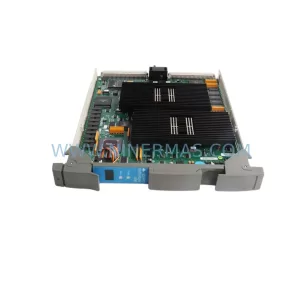
SKU: High Performance Communication Controller
Honeywell 51401635-150 Service-Ready Spare for C300