Original Industrial Spare Part
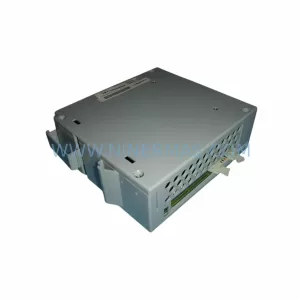
Yokogawa SAI533-H63/PRP S1 Retrofit Analog Output Module
Verify the part, confirm the platform family, and move straight into quotation with the right commercial details.
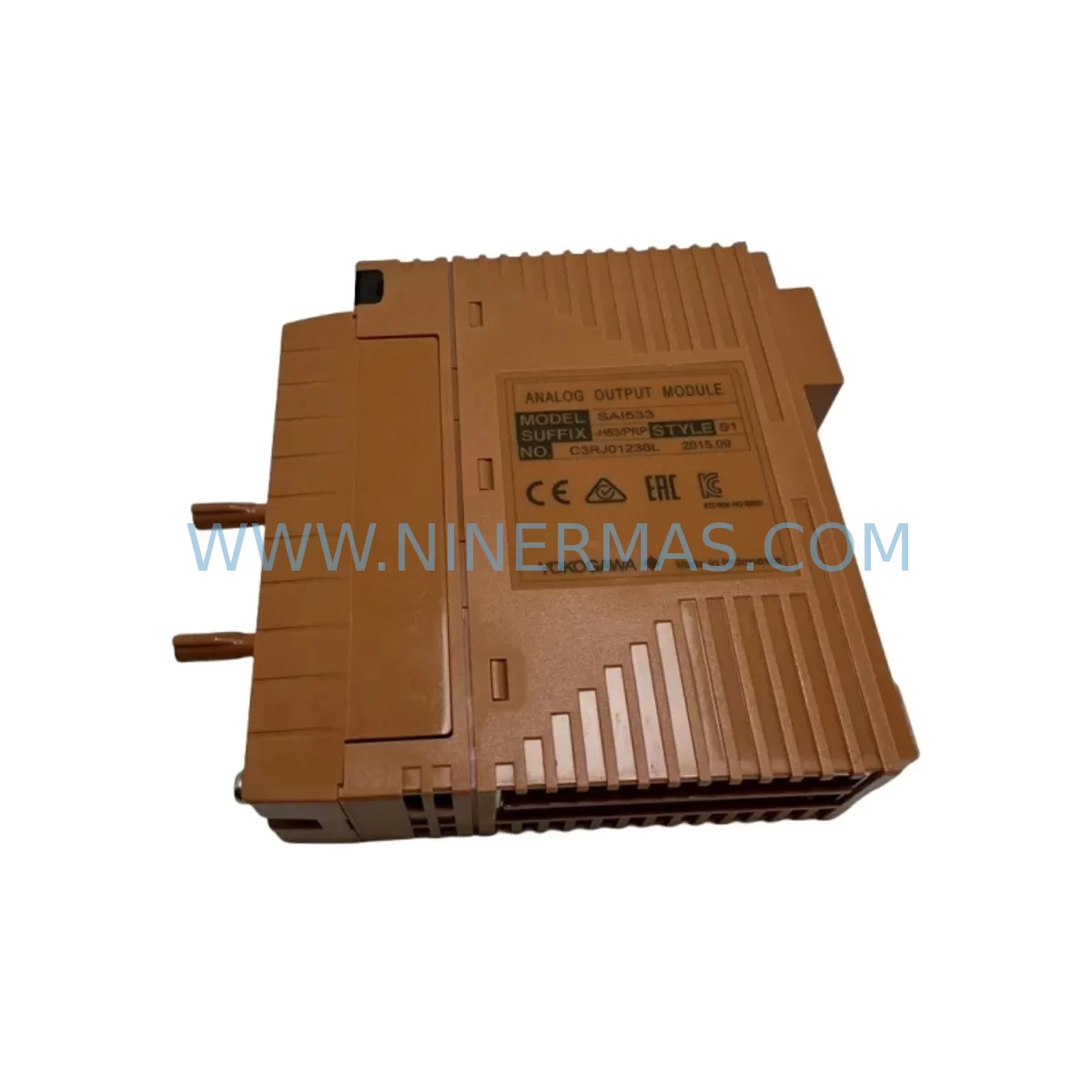
RFQ Ready
- SKUSAI533-H63/PRP S1
- CategoryDCS Distributed Control Systems
- BrandYokogawa
- SupportAvailability, lead time, condition, and shipping coordination
How Buyers Usually Use This Page
- Confirm the exact part number and platform family before sending the quote request.
- Use direct email when quantity, condition, and destination are already defined internally.
- Switch to the broader brand or category archive when you need alternates nearby.
Series Navigation
Move through the most common platform families behind this part.
Product RFQ
Send this part directly for quotation.
Include quantity, required condition, destination country, and target delivery timing. Current reference: Yokogawa SAI533-H63/PRP S1 Retrofit Analog Output Module with SKU SAI533-H63/PRP S1.
Yokogawa SAI533-H63/PRP S1 Retrofit Analog Output Module: Legacy System Compatibility & Smooth Upgrade
The Yokogawa SAI533-H63/PRP S1 is a ruggedized analog output module engineered for demanding process control environments. Designed for integration within the Yokogawa CENTUM VP distributed control system platform, this module delivers reliable 4–20 mA analog signal output across multiple channels, making it a critical component in both greenfield installations and brownfield retrofit projects where legacy I/O infrastructure must be preserved or upgraded without full system replacement.
As industrial facilities face increasing pressure to extend the operational life of aging DCS platforms, the SAI533-H63/PRP S1 has become a preferred solution for engineers managing CENTUM CS 3000 to CENTUM VP migration paths. Its hardware architecture maintains backward compatibility with existing field wiring, terminal block layouts, and marshalling cabinet configurations, significantly reducing the scope of mechanical rework during a control system upgrade. For plants operating on tight turnaround schedules, this compatibility directly translates to reduced engineering hours and minimized process downtime.
The H63 suffix designates the module’s suitability for harsh environment operation, including elevated ambient temperatures, high humidity, and environments with elevated levels of airborne contaminants common in petrochemical, refinery, pulp and paper, and heavy manufacturing facilities. The PRP S1 designation indicates PROFIBUS DP communication readiness and single-slot rack installation, confirming compatibility with standard CENTUM VP field control station (FCS) node configurations.
Upgrade Compatibility Table
| Parameter | SAI533-H63/PRP S1 | Retrofit Notes |
|---|---|---|
| Signal Type | 4–20 mA Analog Output | Compatible with existing field wiring; no re-ranging required |
| Rack / Backplane Interface | CENTUM VP FCS Node Slot | Verify slot address assignment in FCS builder before installation |
| Communication Protocol | PROFIBUS DP (PRP) | Confirm DP master configuration on ESB Bus or ER Bus coupler |
| Terminal Block Wiring | Standard CENTUM VP terminal block | Reuse existing marshalling wiring; verify loop power supply polarity |
| Power Supply Requirement | Supplied via FCS backplane | Confirm node power budget; check PW481 or PW482 power supply capacity |
| Installation Space | Single slot (1-slot width) | Confirm available slot in existing FCS node; no additional rail space needed |
| Legacy Replacement Path | Replaces SAI533 variants in CS 3000 / CENTUM VP | Cross-reference I/O module address map before swapping |
| HMI / Graphics Impact | No HMI screen change required | Verify tag assignments in CENTUM VP HIS builder post-swap |
| Pre-Shipment Testing | Yes — loop-tested before dispatch | Test certificate available on request |
| Warranty | 12 Months | Covers manufacturing defects; DOA replacement within 30 days |
Retrofit Planning for Existing Automation Systems
Successful integration of the SAI533-H63/PRP S1 into an existing control architecture requires a structured pre-installation review. Engineers should begin by auditing the current FCS node backplane to confirm available slot positions and verify that the node’s power supply — typically a Yokogawa PW481 or PW482 power supply module — has sufficient headroom to support the additional module load. Overloaded power supplies are a common source of intermittent faults during post-retrofit commissioning and should be addressed before the module is installed.
Terminal block wiring from the existing marshalling cabinet should be documented and photographed prior to removal. The SAI533-H63/PRP S1 uses the standard CENTUM VP terminal block interface, meaning field cables can typically be reconnected without modification. However, loop power supply polarity and cable shielding continuity should be verified with a loop calibrator before the system is returned to service.
For facilities migrating from CENTUM CS 3000 to CENTUM VP, the I/O module address map must be re-validated in the FCS builder software. The Yokogawa CENTUM VP Engineering Environment allows engineers to import legacy CS 3000 project files, but I/O module slot assignments may shift depending on the node configuration. This is particularly relevant when replacing older SAI143 or SAI533 series modules that occupied different slot positions in the original CS 3000 FCS node.
Communication link integrity should be confirmed at the PROFIBUS DP segment level. The SAI533-H63/PRP S1 connects through the FCS node’s internal ESB Bus or ER Bus coupler — components such as the Yokogawa EB401 ESB Bus coupler or ER Bus interface module should be inspected for firmware compatibility and termination resistor status before the new module is brought online. In multi-drop PROFIBUS segments, adding or replacing a node can affect bus timing and should be validated with a PROFIBUS diagnostic tool.
HMI impact is typically minimal for like-for-like module replacements. The Yokogawa HIS (Human Interface Station) graphics and faceplates reference tag names rather than physical slot addresses, so existing operator displays will continue to function correctly provided the tag database is not modified. A post-installation loop check from the HIS trend display is recommended to confirm signal fidelity before handover.
For larger retrofit scopes involving simultaneous replacement of multiple I/O modules — such as combining the SAI533-H63/PRP S1 with SDV541 digital output modules, AAI141 analog input modules, or SAI533 current output modules — a phased replacement strategy is strongly recommended. Replacing modules one node at a time, with a full loop check after each phase, allows the plant to maintain partial production continuity and reduces the risk of a single wiring error causing a broader process upset.
Where communication protocol migration is also in scope — for example, transitioning from legacy RS-232 or RS-485 serial links to PROFIBUS DP or FOUNDATION Fieldbus — additional components such as a Yokogawa ALF111 FOUNDATION Fieldbus H1 interface module or a PRM (Plant Resource Manager) license update may be required. These should be scoped and procured in parallel with the I/O module replacement to avoid delays during the commissioning phase.
Downtime Control During System Migration
Minimizing process downtime during a DCS I/O module replacement requires careful pre-planning and a disciplined execution sequence. For the SAI533-H63/PRP S1, the recommended approach is to complete all pre-installation checks — slot verification, power budget confirmation, wiring documentation, and PROFIBUS segment audit — during normal production, so that the physical swap can be completed within a single planned maintenance window.
Before removing the existing module, the current FCS project should be backed up to a secure engineering workstation. The CENTUM VP FCS download procedure should be reviewed to confirm whether a partial download (affecting only the modified node) or a full FCS reload is required after the module swap. In most like-for-like replacement scenarios, a partial download is sufficient and can be completed in under 15 minutes, significantly reducing the window during which the affected control loops are in manual mode.
Field operators should be briefed to place all affected control loops in manual mode and confirm valve positions before the module is removed. For critical process loops — such as those controlling reactor feed rates, column reflux ratios, or furnace fuel gas flows — a pre-agreed safe manual setpoint should be established and communicated to the control room before work begins.
After the SAI533-H63/PRP S1 is installed and the FCS download is complete, each output channel should be verified by commanding a known output value from the HIS and confirming the corresponding field instrument response with a loop calibrator or HART communicator. This step should be completed for every active channel before the loops are returned to automatic mode. A signed loop check record should be retained as part of the as-built documentation package.
For facilities with redundant FCS node configurations, the module swap can often be performed with the redundant node active, further reducing the impact on process control continuity. Consult the CENTUM VP hardware manual for the specific switchover procedure applicable to your node type before proceeding.
Retrofit Support FAQ
Q1: Is the SAI533-H63/PRP S1 a direct drop-in replacement for the standard SAI533 module?
In most CENTUM VP installations, yes. The H63 variant shares the same backplane connector, slot width, and terminal block interface as the standard SAI533. The primary difference is the extended environmental rating. Confirm the slot address and I/O module type code in your FCS builder project before installation to ensure the software configuration matches the hardware.
Q2: What pre-shipment testing is performed on the SAI533-H63/PRP S1?
Each unit undergoes a full functional loop test prior to dispatch, verifying analog output accuracy across the 4–20 mA range on all channels. A test record is available on request. Units are shipped in anti-static packaging with protective slot covers installed. All modules supplied by NINERMAS carry a 12-month warranty covering manufacturing defects, with DOA replacement processed within 30 days of receipt.
Q3: Can the SAI533-H63/PRP S1 be used to replace modules in a CENTUM CS 3000 system?
The SAI533-H63/PRP S1 is designed for CENTUM VP FCS nodes. Direct installation into a CS 3000 FCS node is not supported due to differences in the backplane bus architecture. However, if your facility is migrating from CS 3000 to CENTUM VP as part of a broader upgrade, this module is fully compatible with the new CENTUM VP node infrastructure. NINERMAS can advise on the full bill of materials for a CS 3000 to CENTUM VP node migration.
Q4: What is the lead time and stock availability?
NINERMAS maintains ready stock of the SAI533-H63/PRP S1 to support urgent retrofit and breakdown replacement requirements. Standard lead time for in-stock units is 3–5 business days for international shipment. For long-term spare parts programs or blanket order arrangements covering multiple modules across an extended maintenance schedule, please contact our sales team to discuss volume pricing and reserved stock agreements.
| Product Series | CENTUM VP |
|---|---|
| Country of Origin | JP |
Catalog Continuation
More Yokogawa modules in the catalog.
Use the brand lane to compare nearby part numbers, platform-adjacent modules, and other inquiry-ready listings before sending your final RFQ.
Catalog Continuation
Alternative parts within DCS Distributed Control Systems.
Stay inside the same system family when you need substitutes, adjacent modules, or a broader shortlist for procurement review.
SKU: High Performance Communication Controller
Honeywell 51401635-150 Service-Ready Spare for C300
SKU: 6DD2920-0AR2 6DD2920-OAR2
Siemens 6DD2920-0AR2 Service-Ready Spare Part for Industrial Maintenance