Original Industrial Spare Part
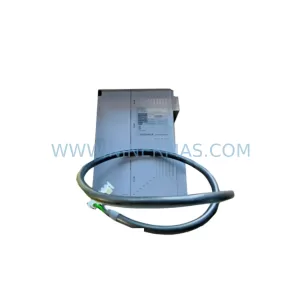
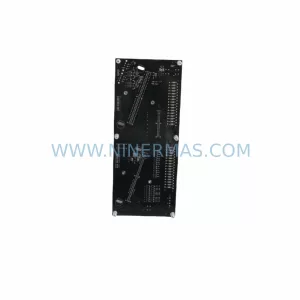
Yokogawa SAI143-S03 S2 Retrofit-Compatible Signal Input Module
Verify the part, confirm the platform family, and move straight into quotation with the right commercial details.
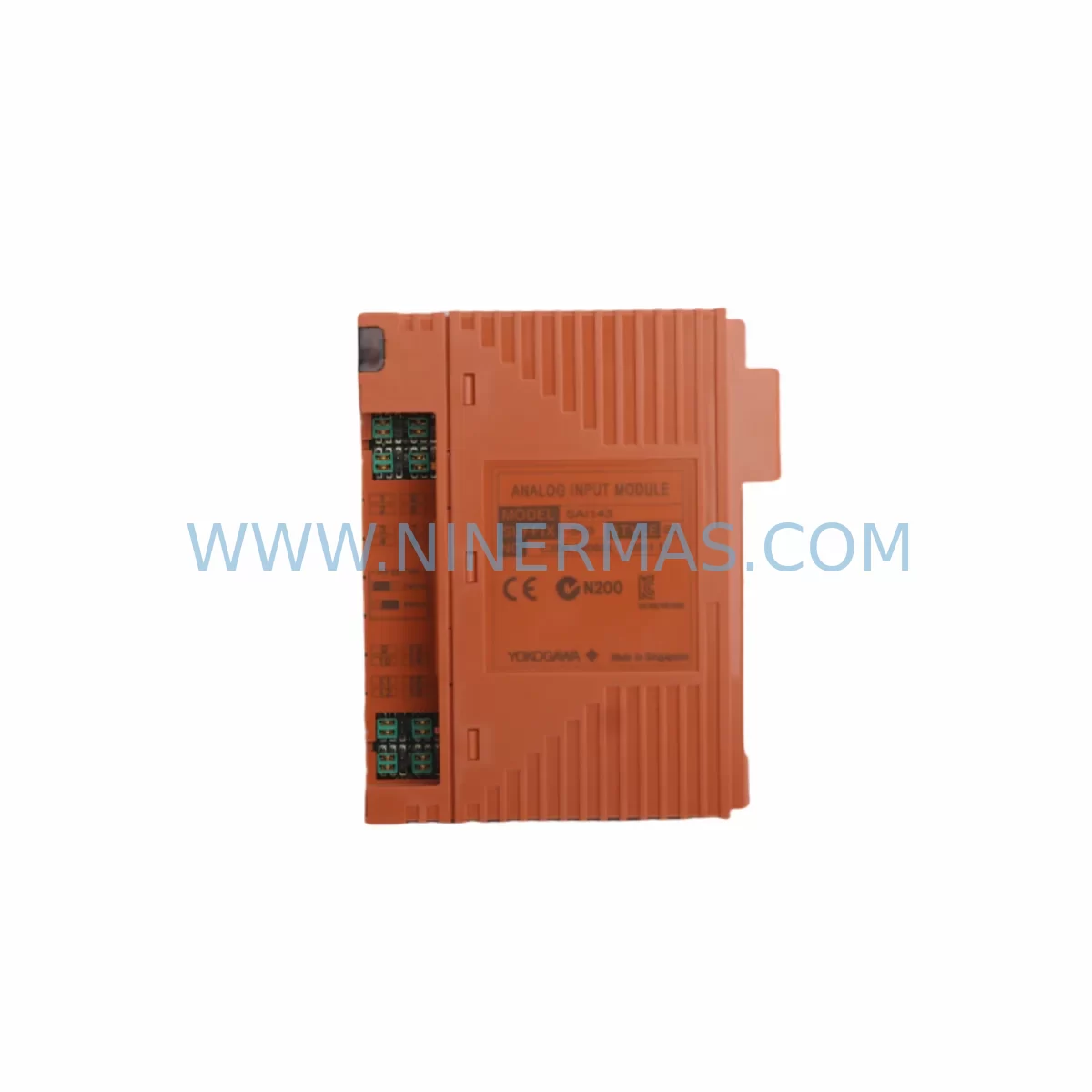
RFQ Ready
- SKUSAI143-S03 S2
- CategoryDCS Distributed Control Systems
- BrandYokogawa
- SupportAvailability, lead time, condition, and shipping coordination
How Buyers Usually Use This Page
- Confirm the exact part number and platform family before sending the quote request.
- Use direct email when quantity, condition, and destination are already defined internally.
- Switch to the broader brand or category archive when you need alternates nearby.
Series Navigation
Move through the most common platform families behind this part.
Product RFQ
Send this part directly for quotation.
Include quantity, required condition, destination country, and target delivery timing. Current reference: Yokogawa SAI143-S03 S2 Retrofit-Compatible Signal Input Module with SKU SAI143-S03 S2.
Yokogawa SAI143-S03 S2 Retrofit-Compatible Signal Input Module for Legacy DCS Systems
The Yokogawa SAI143-S03 S2 is a multi-channel analog signal input module designed for integration within the CENTUM VP and CENTUM CS 3000 distributed control system platforms. As legacy DCS installations approach end-of-life and original spare parts become increasingly scarce, the SAI143-S03 S2 serves as a critical retrofit-compatible replacement module that enables plant engineers to extend operational continuity without committing to a full system overhaul.
This module supports 4–20 mA analog input signals and is engineered to slot directly into existing field control station (FCS) racks and I/O nest assemblies. Its backward-compatible architecture makes it a preferred choice for facilities managing aging CENTUM CS 3000 installations that are transitioning toward CENTUM VP or planning phased migration to newer control architectures. The SAI143-S03 S2 eliminates the need for rewiring field terminals in most retrofit scenarios, significantly reducing both engineering hours and plant downtime during changeover.
Upgrade Compatibility Table
| Parameter | SAI143-S03 S2 Specification | Retrofit Notes |
|---|---|---|
| Platform Compatibility | CENTUM VP, CENTUM CS 3000 | Direct slot-in replacement for same-series I/O nests |
| Signal Type | Analog Input (4–20 mA) | Verify field wiring polarity before installation |
| Channel Count | 16 channels (per module) | Confirm channel address mapping in FCS builder |
| Backplane Interface | CENTUM standard I/O bus | Compatible with ANB10D, ANB11D nest assemblies |
| Power Consumption | Per CENTUM VP I/O spec | Verify nest power budget before adding modules |
| Communication Protocol | Internal CENTUM I/O bus (non-fieldbus) | No protocol migration required for direct replacement |
| Installation Space | Standard CENTUM I/O module form factor | Fits existing control cabinet cutouts without modification |
| Replacement Candidates | SAI143-S03 S1, SAI143-H03, AAI141-S03 | Confirm firmware revision compatibility with FCS |
| Commissioning Requirement | FCS download or partial download | Hot-swap capable in redundant FCS configurations |
| Warranty | 12 Months | Covers manufacturing defects; pre-shipment tested |
Retrofit Planning for Existing Automation Systems
Successful integration of the SAI143-S03 S2 into an existing CENTUM CS 3000 or CENTUM VP installation requires a structured pre-retrofit assessment. Engineers should begin by auditing the current I/O nest configuration, confirming that the target nest — typically an ANB10D or ANB11D I/O nest assembly — has an available slot and sufficient power headroom to accommodate the replacement module. The nest power supply unit, such as the PW481 or PW482 power module, should be verified against the total module load to prevent voltage sag during peak scan cycles.
Terminal wiring compatibility is the next critical checkpoint. The SAI143-S03 S2 uses the standard CENTUM terminal block interface, and in most cases the existing field wiring connected to the original module can be transferred directly to the replacement unit without re-termination. However, engineers should inspect terminal block condition, confirm signal polarity for each 4–20 mA loop, and verify that loop-powered transmitters are correctly isolated. Where HART-enabled field instruments are present, confirm whether the replacement module’s HART pass-through capability meets the current application requirement.
Module address configuration is handled within the CENTUM VP engineering environment. After physical installation, the FCS builder must be used to confirm that the new module is recognized at the correct slot address within the I/O nest. In systems running CENTUM VP R6 or later, the module self-identification feature simplifies this step. For older CS 3000 installations, a manual address verification and partial FCS download is typically required. Engineers should prepare a backup of the current FCS project before initiating any download to protect existing control logic.
HMI screen updates are generally not required for a like-for-like module replacement, as the tag database and signal assignments remain unchanged. However, if the retrofit involves expanding I/O capacity — for example, adding a second SAI143-S03 S2 alongside an existing SAI143-H03 high-density input module — new tag definitions must be created in the CENTUM VP system builder and corresponding faceplate elements added to the HIS (Human Interface Station) displays.
For facilities also managing communication infrastructure upgrades, the SAI143-S03 S2 retrofit is often coordinated with the replacement of ESB10D or ESB11D enhanced signal bus cards, which handle the internal communication backbone between the FCS processor and I/O nests. Ensuring that the ESB cards are at a compatible firmware revision prevents intermittent communication faults after module replacement. Similarly, if the plant is migrating from a legacy CENTUM XL or CENTUM μXL architecture to CENTUM VP, the SAI143-S03 S2 is part of a broader I/O migration that may also involve replacing ACM12 communication modules and updating the SENG (System Engineering PC) software to the current revision.
Where the retrofit scope includes signal isolation requirements — particularly in hazardous area applications or where ground loop interference has been identified — the addition of signal isolators or barriers between the field terminals and the SAI143-S03 S2 input channels is recommended. This is especially relevant when replacing older modules that had built-in galvanic isolation at a different specification level.
Downtime Control During System Migration
Minimizing unplanned downtime is the primary operational concern during any DCS module replacement. The SAI143-S03 S2 supports hot-swap replacement in CENTUM VP systems configured with redundant FCS processors, allowing the module to be physically exchanged while the control system remains in operation. In non-redundant FCS configurations, a controlled shutdown of the affected I/O nest is required, and the replacement procedure should be scheduled during a planned maintenance window.
Prior to any physical intervention, the engineering team should place all affected control loops in manual mode at the HIS operator station, ensuring that field actuators — including control valves, variable speed drives, and interlock-linked outputs — are held at safe operating positions. The existing FCS project file should be exported and archived, and a full system backup performed using the CENTUM VP system administration tools.
During module swap, the replacement SAI143-S03 S2 should be inspected for shipping damage, firmware label, and hardware revision marking before installation. Once seated in the I/O nest, the FCS will perform an automatic module recognition sequence in VP R6 and later. A partial download — limited to the affected I/O nest — is sufficient to restore full signal acquisition without interrupting unaffected control loops running on other nests or FCS units within the same domain.
Post-installation verification should include a channel-by-channel signal check against the process historian or a portable calibrator, confirmation that all HART device descriptors are correctly loaded, and a review of the FCS alarm log for any module fault or communication error messages. Once signal integrity is confirmed, control loops can be returned to automatic mode in a staged sequence, starting with non-critical utility loops before restoring primary process control loops.
All replacement units supplied by NINERMAS are pre-shipment tested under simulated load conditions to verify channel accuracy, power consumption, and bus communication integrity before dispatch. This pre-testing protocol reduces the risk of DOA (dead-on-arrival) failures and supports faster commissioning on site.
Retrofit Support FAQ
Q1: Is the SAI143-S03 S2 a direct drop-in replacement for the SAI143-S03 S1?
In most CENTUM VP and CS 3000 installations, the S2 hardware revision is backward compatible with S1 slot positions and wiring configurations. However, engineers should verify the FCS firmware revision and confirm that the system builder recognizes the S2 module revision code. A partial FCS download is typically required after replacement to update the module configuration record.
Q2: What commissioning steps are required after installing the SAI143-S03 S2?
After physical installation, perform a partial FCS download scoped to the affected I/O nest. Verify module recognition in the FCS status display, conduct a channel-by-channel signal check using a loop calibrator or process historian trend review, and confirm that no module fault alarms are active. For HART-enabled channels, verify that device descriptors are correctly loaded and that HART communication is active on all configured channels.
Q3: Can the SAI143-S03 S2 be used in a CENTUM XL migration project?
The SAI143-S03 S2 is designed for CENTUM VP and CS 3000 I/O nest architectures and is not directly compatible with CENTUM XL hardware racks. Migration from CENTUM XL to CENTUM VP requires new I/O nest assemblies, FCS processor units, and ESB communication cards. The SAI143-S03 S2 is the correct module choice for the target CENTUM VP architecture in such migration projects.
Q4: What warranty and supply terms apply to this module?
All SAI143-S03 S2 units supplied by NINERMAS carry a 12-month warranty covering manufacturing defects and functional failures under normal operating conditions. Each unit undergoes pre-shipment functional testing. For projects requiring long-term spare parts availability, NINERMAS offers stock-commitment programs with fixed lead times to support lifecycle extension planning for CENTUM VP and CS 3000 installations. Contact our team for volume pricing and supply agreement terms.
| Product Series | CENTUM VP |
|---|---|
| Country of Origin | JP |
Catalog Continuation
More Yokogawa modules in the catalog.
Use the brand lane to compare nearby part numbers, platform-adjacent modules, and other inquiry-ready listings before sending your final RFQ.
Catalog Continuation
Alternative parts within DCS Distributed Control Systems.
Stay inside the same system family when you need substitutes, adjacent modules, or a broader shortlist for procurement review.
SKU: KJ3002X1-BG2 12P1731X062
Emerson KJ3002X1-BG2 12P1731X062 Retrofit-Compatible I/O for Legacy Systems
SKU: 8C-PAON01 51454357-175
Honeywell 8C-PAON01 51454357-175 Service-Ready Spare Part
SKU: 8C-TDODB1 51307151-175
Honeywell 8C-TDODB1 51307151-175 Service-Ready Spare Part