Original Industrial Spare Part
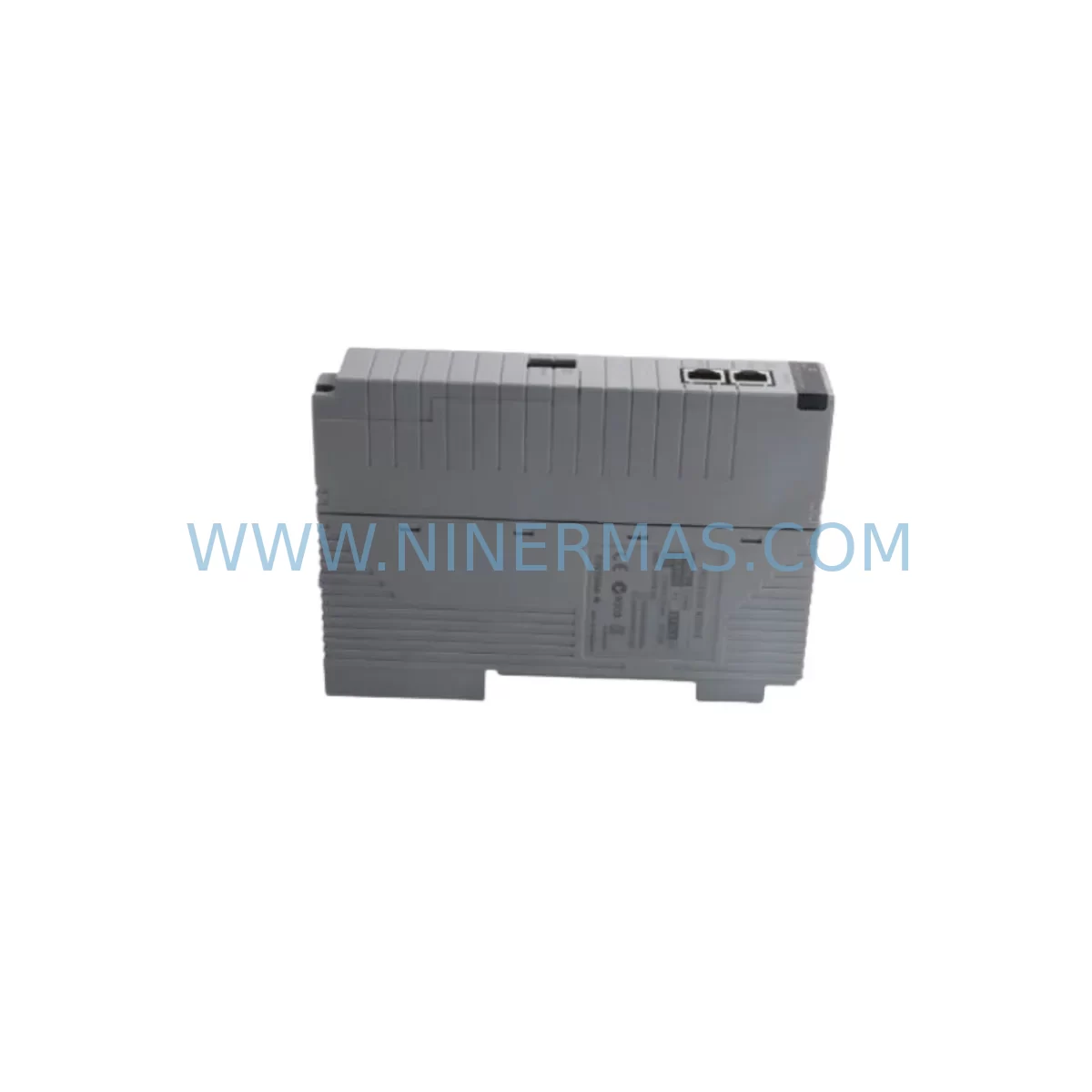
Yokogawa CP451-11 S2 Service-Ready Spare Part for Industrial Maintenance
Verify the part, confirm the platform family, and move straight into quotation with the right commercial details.
RFQ Ready
- SKUCP451-11 S2
- CategoryDCS Distributed Control Systems
- BrandYokogawa
- SupportAvailability, lead time, condition, and shipping coordination
How Buyers Usually Use This Page
- Confirm the exact part number and platform family before sending the quote request.
- Use direct email when quantity, condition, and destination are already defined internally.
- Switch to the broader brand or category archive when you need alternates nearby.
Series Navigation
Move through the most common platform families behind this part.
Product RFQ
Send this part directly for quotation.
Include quantity, required condition, destination country, and target delivery timing. Current reference: Yokogawa CP451-11 S2 Service-Ready Spare Part for Industrial Maintenance with SKU CP451-11 S2.
Yokogawa CP451-11 S2 Service-Ready Spare Part for Industrial Maintenance
The Yokogawa CP451-11 S2 is a critical CPU module designed for the CENTUM CS3000 Distributed Control System (DCS), widely deployed across petrochemical, power generation, pharmaceutical, and heavy industrial facilities. As a service-ready spare part, the CP451-11 S2 enables maintenance engineers to execute rapid field replacements, minimize unplanned downtime, and sustain continuous process control without compromising system integrity. NINERMAS maintains verified stock of the CP451-11 S2 to support emergency callouts, scheduled turnarounds, and long-term spare parts programs for aging CENTUM CS3000 installations.
The CP451-11 S2 functions as the central processing unit within the CENTUM CS3000 Field Control Station (FCS), executing real-time control logic, managing I/O communication, and coordinating data exchange across the DCS network. In legacy automation environments where the CENTUM CS3000 platform remains the backbone of process control, maintaining a qualified spare of the CP451-11 S2 is not optional — it is a fundamental risk mitigation strategy. A failed CPU module without an available replacement can result in extended production shutdowns, emergency procurement delays, and significant revenue loss. Procurement engineers responsible for MRO inventory planning should treat the CP451-11 S2 as a Tier-1 critical spare with a recommended minimum stock level of one unit per active FCS node.
Each CP451-11 S2 unit supplied by NINERMAS is sourced from verified supply channels, inspected prior to dispatch, and shipped with full traceability documentation. Our 12-month warranty covers functional performance under normal operating conditions, providing procurement teams with the confidence required for long-term spare parts commitments. We support both single-unit emergency orders and bulk procurement agreements for multi-site operators managing large CENTUM CS3000 fleets.
Spare Maintenance Table
| Parameter | Specification / Detail |
|---|---|
| Part Number | CP451-11 S2 |
| Brand | Yokogawa Electric Corporation |
| Series | CENTUM CS3000 |
| Module Type | DCS CPU / Field Control Station Processor |
| Compatible Platform | CENTUM CS3000 Field Control Station (FCS) |
| Communication Interface | V-net / Ethernet (platform-dependent) |
| Operating Temperature | 0°C to 55°C (standard industrial enclosure) |
| Power Supply Requirement | 24 VDC (via FCS backplane power module) |
| Mounting | DIN rail / FCS backplane slot installation |
| Origin | Japan |
| Application Environment | Petrochemical, Power, Pharmaceutical, Heavy Industry |
| Maintenance Recommendation | Replace on failure or at scheduled 5-year overhaul interval |
| Warranty | 12 Months — Functional performance under normal operating conditions |
| Supply Condition | New / Refurbished-Tested (specify at order) |
| Lead Time | In-stock: same-day dispatch available; Ex-stock: 3–7 business days |
Maintenance Planning for Continuous Operation
Replacing the CP451-11 S2 in a live CENTUM CS3000 environment requires a structured approach that goes beyond swapping the CPU module in isolation. Maintenance engineers conducting a planned or emergency replacement should simultaneously inspect and verify the condition of all interdependent components within the Field Control Station to prevent secondary failures and ensure a clean system restart.
Begin with the FCS power supply module — the CP451-11 S2 depends on stable 24 VDC backplane power, and a degraded power supply unit (PSU) such as the PW481 or PW482 series can cause intermittent CPU resets that mimic CPU failure. Verify output voltage and ripple before installing the replacement CPU. Next, inspect the FCS backplane and node bus connectors for oxidation, mechanical damage, or loose seating — a compromised backplane can corrupt communication between the CP451-11 S2 and downstream I/O modules.
I/O module integrity is equally critical. After restoring the CPU, validate all connected I/O cards — including analog input modules (AAI141, AAI143), analog output modules (AAO141), and digital I/O modules (ADV151, ADV161) — by reviewing their diagnostic LEDs and confirming signal continuity against the loop test records. Any I/O module showing fault indicators during the post-replacement startup sequence should be flagged for immediate replacement or bench testing.
Communication continuity must also be confirmed. The CP451-11 S2 interfaces with the V-net control network; inspect V-net coaxial cable terminations, BNC connectors, and any V-net repeater units in the segment. If the FCS communicates via Ethernet-based ESB (Enhanced Signal Bus), verify switch port configuration and cable integrity. For sites using the CENTUM CS3000 with Fieldbus Foundation (FF) or HART-enabled I/O, confirm that the fieldbus interface modules (e.g., ALF111) are correctly recognized by the restored CPU before returning the loop to automatic control.
Relay output modules and safety interlock circuits connected through the FCS should be tested for correct energization state following CPU restoration. Terminal blocks and wiring within the control cabinet should be inspected for loose connections, particularly on high-vibration sites. Signal isolators used to condition 4–20 mA loops between field instruments and I/O cards should be verified for correct output, as a failed isolator can produce erroneous readings that trigger false alarms immediately after system restart. Finally, if the site uses a Yokogawa HIS (Human Interface Station) or third-party HMI connected to the CENTUM CS3000, confirm that the operator station re-establishes communication with the FCS and that all faceplates and trend displays are updating correctly before releasing the system to operations.
Site Replacement Workflow
Step 1 — Pre-Replacement Preparation: Obtain the current FCS configuration backup from the CENTUM CS3000 engineering workstation (EWS). Confirm the replacement CP451-11 S2 firmware revision matches or is compatible with the installed system version. Notify the control room and obtain a permit-to-work (PTW) for the affected FCS node.
Step 2 — Safe Isolation: Place the FCS in manual control mode from the HIS. Isolate the FCS node from the V-net segment if a hot-swap procedure is not supported for the installed revision. Power down the FCS cabinet following the site-specific lockout/tagout (LOTO) procedure.
Step 3 — Module Removal: Remove the failed CP451-11 S2 by releasing the front-panel locking lever and sliding the module from the backplane slot. Handle with ESD precautions. Label and retain the failed unit for failure analysis if required by site maintenance records.
Step 4 — Installation: Insert the replacement CP451-11 S2 into the correct backplane slot, ensuring full connector engagement. Restore FCS power and observe the module’s status LEDs during the boot sequence. A solid RUN indicator confirms successful initialization.
Step 5 — Configuration Restore & Verification: If the replacement module requires configuration download, connect the EWS and load the saved FCS configuration. Perform a full I/O check, confirm all control loops are in the correct mode, and verify V-net communication status from the system overview display.
Step 6 — Return to Service: Transfer control loops from manual to automatic sequentially, monitor process variables for stability, and document the replacement in the site maintenance management system (CMMS). Update the spare parts inventory record to reflect the consumed unit and initiate a replenishment order to restore minimum stock levels.
Spare Parts Support FAQ
Q1: What is the recommended spare parts lifecycle strategy for the CP451-11 S2 in a CENTUM CS3000 installation?
For sites with active CENTUM CS3000 FCS nodes, we recommend maintaining a minimum of one CP451-11 S2 per FCS cluster as a cold standby spare. For critical process units with no redundant FCS, consider holding two units. Given that Yokogawa has transitioned its primary DCS platform to CENTUM VP, the CP451-11 S2 is increasingly difficult to source through standard distribution channels, making proactive stock commitment essential for long-term operational continuity.
Q2: How is compatibility verified before shipment?
NINERMAS performs a pre-shipment functional check on each CP451-11 S2 unit, including power-on self-test verification and visual inspection of connector integrity. For units supplied as refurbished-tested, a full bench test report is available upon request. Customers are advised to confirm the hardware revision and firmware version requirements with their site engineering team prior to ordering to ensure compatibility with their specific FCS configuration.
Q3: Can the CP451-11 S2 be used as a direct replacement for earlier CP451 revisions?
The S2 designation indicates a specific hardware revision of the CP451-11 module. Compatibility with earlier revisions (e.g., S1) depends on the FCS backplane version and the installed CENTUM CS3000 software release. NINERMAS recommends consulting the Yokogawa CP451-11 hardware compatibility matrix or contacting our technical team with your FCS serial number and software version to confirm cross-revision interchangeability before installation.
Q4: What does the 12-month warranty cover, and what are the terms for long-term supply agreements?
The 12-month warranty covers functional failure under normal operating conditions, excluding damage caused by incorrect installation, overvoltage events, environmental contamination beyond the module’s rated IP class, or unauthorized modification. NINERMAS offers long-term supply agreements (LTSAs) for customers requiring guaranteed stock availability over 12–36 month horizons, with fixed pricing and priority dispatch. Contact sale@ninermas.com to discuss LTSA terms tailored to your site’s spare parts program.
| Product Series | CENTUM CS3000 |
|---|---|
| Country of Origin | JP |
Catalog Continuation
More Yokogawa modules in the catalog.
Use the brand lane to compare nearby part numbers, platform-adjacent modules, and other inquiry-ready listings before sending your final RFQ.
Catalog Continuation
Alternative parts within DCS Distributed Control Systems.
Stay inside the same system family when you need substitutes, adjacent modules, or a broader shortlist for procurement review.
SKU: High Performance Communication Controller
Honeywell 51401635-150 Service-Ready Spare for C300
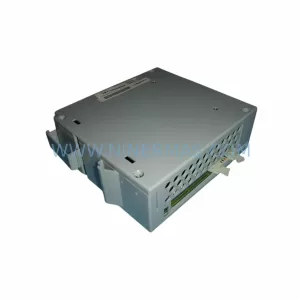
SKU: 6DD2920-0AR2 6DD2920-OAR2
Siemens 6DD2920-0AR2 Service-Ready Spare Part for Industrial Maintenance