Original Industrial Spare Part
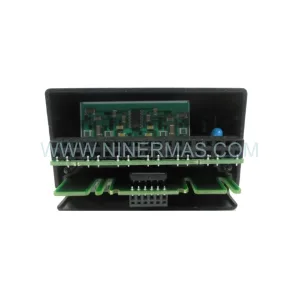
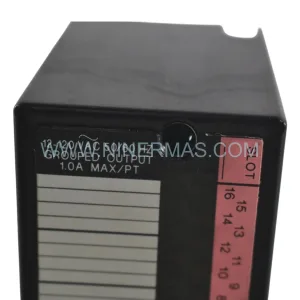
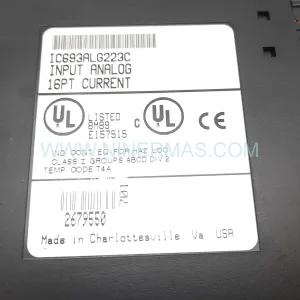
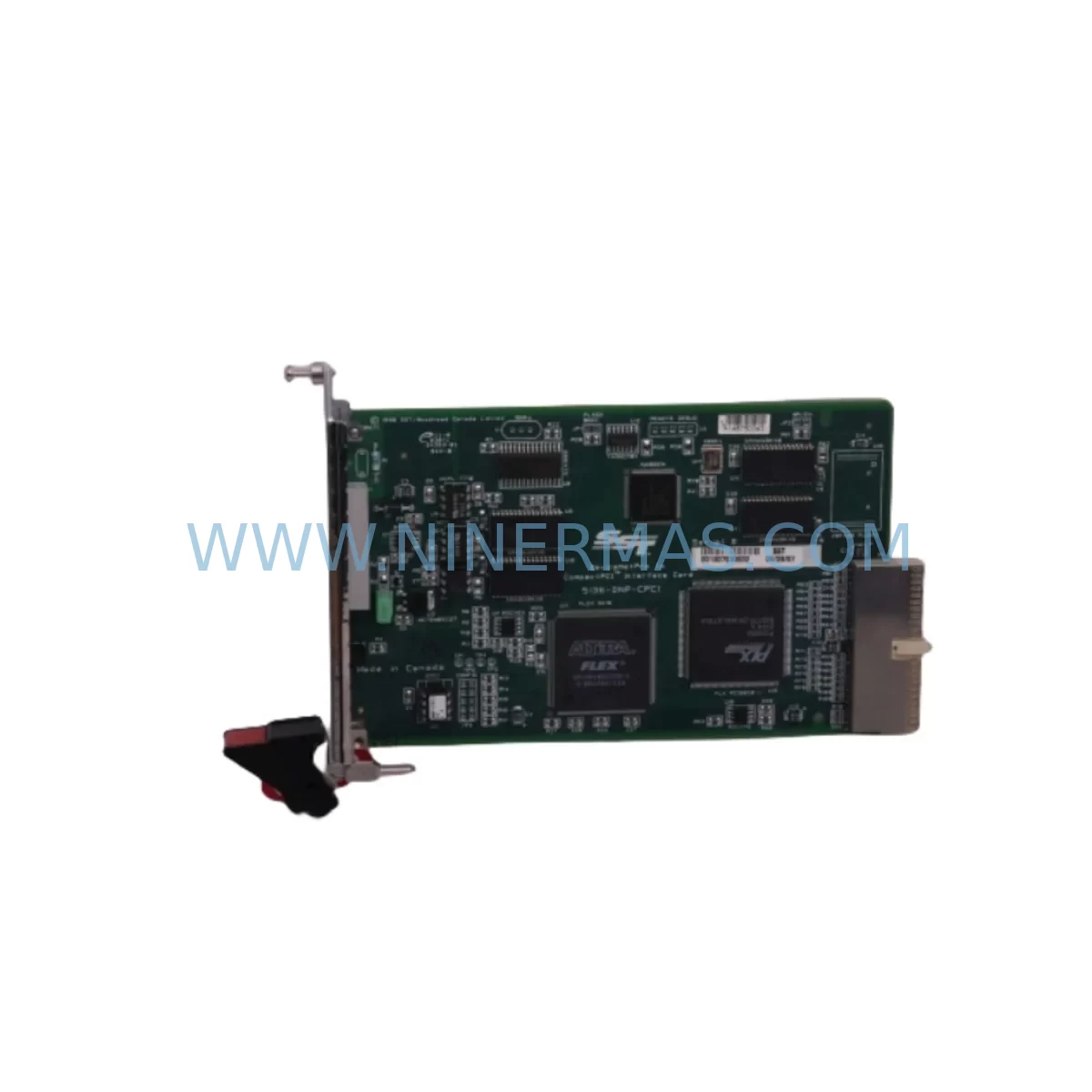
SST SST-DNP-PCI-4 Retrofit-Compatible DeviceNet PCI Card
Verify the part, confirm the platform family, and move straight into quotation with the right commercial details.
RFQ Ready
- SKUSST-DNP-PCI-4
- CategoryPLC & Industrial Automation Modules
- BrandSST
- SupportAvailability, lead time, condition, and shipping coordination
How Buyers Usually Use This Page
- Confirm the exact part number and platform family before sending the quote request.
- Use direct email when quantity, condition, and destination are already defined internally.
- Switch to the broader brand or category archive when you need alternates nearby.
Series Navigation
Move through the most common platform families behind this part.
Product RFQ
Send this part directly for quotation.
Include quantity, required condition, destination country, and target delivery timing. Current reference: SST SST-DNP-PCI-4 Retrofit-Compatible DeviceNet PCI Card with SKU SST-DNP-PCI-4.
SST SST-DNP-PCI-4 Retrofit-Compatible DeviceNet PCI Card: Legacy System Compatibility and Smooth Upgrade
The SST SST-DNP-PCI-4 is a high-performance DeviceNet PCI communication interface card designed to serve as a direct retrofit replacement for aging or discontinued DeviceNet master/slave communication modules in legacy industrial control systems. As automation engineers and maintenance teams face increasing pressure to extend the operational life of existing control platforms while managing the risk of obsolete spare parts, the SST-DNP-PCI-4 provides a proven, field-tested solution that bridges the gap between legacy DeviceNet networks and modern PC-based control architectures.
Originally engineered by SST (a Woodhead/Molex brand), the SST-DNP-PCI-4 supports both master and slave operation on DeviceNet networks, offering full compliance with the DeviceNet specification and compatibility with a wide range of PLCs, drives, I/O blocks, and field devices. For facilities running legacy Allen-Bradley, Rockwell Automation, or third-party DeviceNet-based control systems, this card represents one of the most reliable retrofit paths available today.
Upgrade Compatibility Table
| Parameter | SST-DNP-PCI-4 Specification | Retrofit / Replacement Notes |
|---|---|---|
| Interface Type | PCI Bus (32-bit, 5V/3.3V universal) | Requires available PCI slot in industrial PC or server chassis |
| Network Protocol | DeviceNet (CAN-based, ISO 11898) | Compatible with existing DeviceNet trunk/drop wiring; no rewiring required |
| Node Support | Up to 64 nodes per network | Supports existing node address assignments; no re-addressing needed |
| Operating Mode | Master and Slave | Replaces legacy SST-DN3-PCI-2, SST-DN3-104-2, and similar discontinued cards |
| Driver Support | Windows 10/11, Windows Server 2016/2019 | Verify OS compatibility before installation; legacy XP drivers not supported |
| Baud Rate | 125K / 250K / 500K bps | Match existing network baud rate during commissioning |
| Installation Space | Standard PCI full-length card | Confirm available slot depth in control cabinet PC enclosure |
| Termination | External 121Ω termination resistor required at network ends | Verify existing termination resistors are in place before power-up |
| Commissioning Tool | SST Configuration Utility / RSNetWorx for DeviceNet | EDS files available; compatible with existing RSNetWorx project files |
| Warranty | 12-Month Warranty | Covers manufacturing defects; pre-shipment functional testing included |
Retrofit Planning for Existing Automation Systems
Replacing a failed or end-of-life DeviceNet communication card in an operational plant environment requires careful pre-planning to avoid extended downtime and configuration errors. The SST-DNP-PCI-4 is engineered to slot into existing PCI-based industrial PCs and SCADA workstations, making it a preferred choice for engineers managing legacy control cabinet upgrades without full system replacement.
Before beginning the retrofit, engineers should audit the existing control cabinet for available PCI slot space, confirm the host PC power supply can support the additional card load, and verify that the DeviceNet trunk cable termination resistors are correctly installed at both ends of the network. The SST-DNP-PCI-4 connects directly to the DeviceNet network via its onboard 5-pin open-style connector, which is compatible with standard DeviceNet cabling using the V+, V−, CAN_H, CAN_L, and Shield conductors.
In systems where the original communication card was an older SST-DN3-PCI-2 or a competing DeviceNet PCI adapter, the node address configuration and baud rate settings stored in the original RSNetWorx for DeviceNet project file can typically be reused without modification. Engineers should export and back up the existing network configuration before removing the old card. After installing the SST-DNP-PCI-4 and loading the appropriate Windows driver, the RSNetWorx project can be re-uploaded to restore the full network topology, including all connected I/O blocks, variable frequency drives, and remote I/O adapters.
For facilities running Allen-Bradley 1756-DNB DeviceNet Bridge modules in a ControlLogix rack alongside a PC-based supervisory layer, the SST-DNP-PCI-4 can serve as the PC-side DeviceNet master, maintaining communication with the same field devices — including PowerFlex 40 and PowerFlex 700 drives, 1734 POINT I/O DeviceNet adapters, and 1769 CompactLogix remote I/O nodes — without requiring changes to the PLC program or I/O mapping.
In more complex retrofit scenarios involving protocol migration from DeviceNet to EtherNet/IP, the SST-DNP-PCI-4 can be retained as a bridging interface during the transition period, allowing the plant to migrate field devices incrementally while maintaining production continuity. During this phase, engineers often work alongside EtherNet/IP-capable modules such as the 1756-ENBT or 1756-EN2T in the ControlLogix chassis, gradually shifting I/O traffic from the DeviceNet segment to the Ethernet backbone.
Signal isolation requirements should also be evaluated during retrofit planning. In environments with high electrical noise from variable speed drives or welding equipment, the addition of a DIN-rail mounted signal isolator or surge protector on the DeviceNet trunk line is recommended to protect the SST-DNP-PCI-4 from transient damage. Similarly, if the control cabinet houses a 24VDC power supply feeding the DeviceNet network, engineers should verify that the supply capacity is sufficient to support all connected nodes plus the communication card’s own power draw.
For HMI integration, existing FactoryTalk View SE or FactoryTalk View ME screens that reference DeviceNet tag data through RSLinx Classic or RSLinx Enterprise will continue to function normally after the card replacement, provided the RSLinx communication driver is reconfigured to reference the new SST-DNP-PCI-4 device path. No HMI screen modifications are required in most standard retrofit scenarios.
Downtime Control During System Migration
Minimizing unplanned downtime is the primary concern for any maintenance team undertaking a DeviceNet communication card replacement. The SST-DNP-PCI-4 retrofit process is designed to be completed within a planned maintenance window, typically ranging from two to four hours depending on system complexity and the availability of pre-staged configuration files.
The recommended approach is to perform all software preparation — driver download, EDS file import, and RSNetWorx project backup — before the physical card swap. This allows the actual hardware replacement and network recommissioning to proceed as quickly as possible once the system is taken offline. Engineers should document the existing node address assignments, baud rate settings, and I/O connection parameters for all DeviceNet devices on the network before beginning the swap.
During the card replacement, the original PLC program logic stored in the ControlLogix or SLC 500 processor is not affected, as the DeviceNet communication card operates independently of the PLC CPU. The PLC program will resume normal execution as soon as the DeviceNet network is restored and all I/O connections are re-established. In systems using produced/consumed tags or explicit messaging over DeviceNet, engineers should verify that all message paths are re-established after the card is installed and the network is scanned.
For critical production lines where even a brief interruption is unacceptable, a hot-standby approach can be considered: installing the SST-DNP-PCI-4 in a secondary PC alongside the existing card, pre-configuring the network, and switching over during a scheduled micro-shutdown. This approach is particularly effective in food and beverage, pharmaceutical, and continuous process manufacturing environments where production continuity is paramount.
All SST-DNP-PCI-4 units supplied by NINERMAS COMPANY LIMITED undergo pre-shipment functional testing to verify DeviceNet communication performance, driver compatibility, and hardware integrity before dispatch. This testing protocol reduces the risk of receiving a non-functional card and helps ensure that the planned maintenance window is not extended due to hardware issues discovered on-site.
Retrofit Support FAQ
Q1: Is the SST-DNP-PCI-4 a direct replacement for the SST-DN3-PCI-2?
The SST-DNP-PCI-4 is the recommended upgrade path for systems previously using the SST-DN3-PCI-2 or similar legacy SST DeviceNet PCI cards. While the physical form factor and PCI interface are compatible, engineers should verify driver compatibility with the host PC operating system and confirm that the RSNetWorx project file is backed up before the swap. EDS files for the SST-DNP-PCI-4 are available from the SST/Molex support portal.
Q2: What commissioning steps are required after installing the SST-DNP-PCI-4?
After physical installation, install the Windows driver, launch the SST Configuration Utility or RSNetWorx for DeviceNet, and scan the network to verify all nodes are detected. Confirm baud rate settings match the existing network (125K, 250K, or 500K bps), verify node address assignments, and test I/O data exchange with all connected field devices before returning the system to production.
Q3: Does NINERMAS provide pre-shipment testing for the SST-DNP-PCI-4?
Yes. All SST-DNP-PCI-4 units are functionally tested before shipment to verify DeviceNet communication capability and hardware integrity. A test report is available upon request. Units are supplied with a 12-month warranty covering manufacturing defects from the date of shipment.
Q4: What is the lead time and stock availability for the SST-DNP-PCI-4?
NINERMAS COMPANY LIMITED maintains stock of the SST-DNP-PCI-4 to support urgent retrofit and breakdown replacement requirements. Standard lead time for in-stock units is 3–7 business days for international shipment. For large-quantity orders or long-term supply agreements, please contact our sales team to discuss inventory commitment programs and fixed pricing arrangements.
| Product Series | Other series |
|---|
Catalog Continuation
More SST modules in the catalog.
Use the brand lane to compare nearby part numbers, platform-adjacent modules, and other inquiry-ready listings before sending your final RFQ.
SKU: PB3-PCI-e PB3-PCU
SST PB3-PCI-e PB3-PCU Safety-Reliable PROFIBUS Interface
SKU: SST-ESR2-CPX-P
SST SST-ESR2-CPX-P Spare Part for Industrial Maintenance
Catalog Continuation
Alternative parts within PLC & Industrial Automation Modules.
Stay inside the same system family when you need substitutes, adjacent modules, or a broader shortlist for procurement review.
SKU: 80E 208-501035-6 281-501035-7 RPCON-56P RGW-DV C2000 GOT1000 , GT1575-VTBA GT15-75QBUSL
TEL 80E-208-501035-6 Service-Ready Industrial Spare Part
SKU: ES7151-1AA05-0AB0
SIEMENS 6ES7151-1AA05-0AB0 Retrofit-Compatible IM for Legacy ET200S