Original Industrial Spare Part
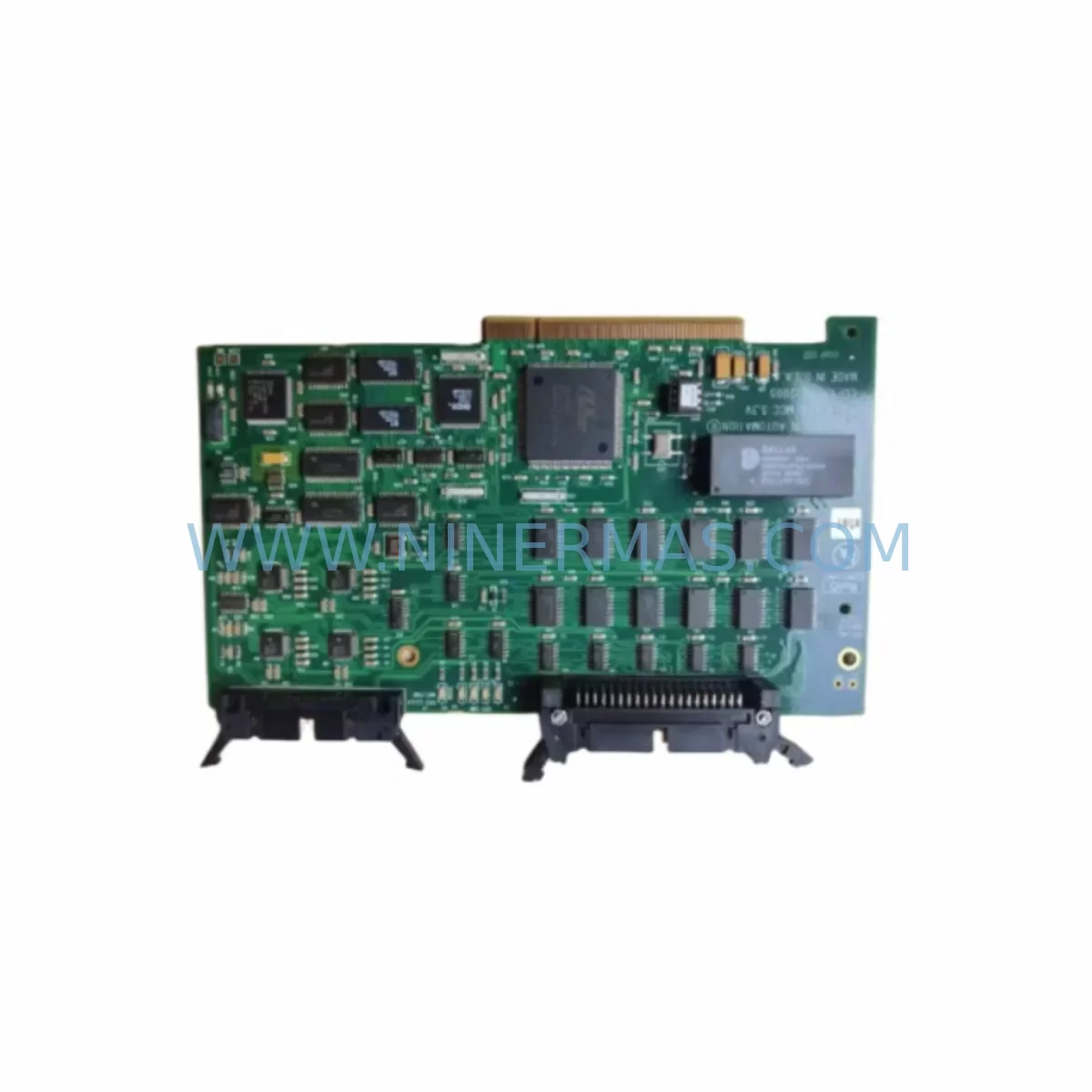
Hypertherm PCI-4 AXIS MCC 3.3V Retrofit-Compatible Motion Controller
Verify the part, confirm the platform family, and move straight into quotation with the right commercial details.
RFQ Ready
- SKUPCI-4 AXIS MCC 3.3V
- CategoryPLC & Industrial Automation Modules
- BrandHypertherm
- SupportAvailability, lead time, condition, and shipping coordination
How Buyers Usually Use This Page
- Confirm the exact part number and platform family before sending the quote request.
- Use direct email when quantity, condition, and destination are already defined internally.
- Switch to the broader brand or category archive when you need alternates nearby.
Series Navigation
Move through the most common platform families behind this part.
Product RFQ
Send this part directly for quotation.
Include quantity, required condition, destination country, and target delivery timing. Current reference: Hypertherm PCI-4 AXIS MCC 3.3V Retrofit-Compatible Motion Controller with SKU PCI-4 AXIS MCC 3.3V.
Hypertherm PCI-4 AXIS MCC 3.3V Retrofit-Compatible Motion Controller for Legacy Systems
The Hypertherm PCI-4 AXIS MCC 3.3V is a four-axis motion control card designed for integration into legacy CNC plasma cutting and industrial motion control platforms. As original Hypertherm motion control hardware reaches end-of-life, procurement teams and maintenance engineers increasingly face the challenge of sourcing verified replacement units that maintain full compatibility with existing machine architectures. NINERMAS maintains ready stock of the PCI-4 AXIS MCC 3.3V to support planned retrofits, emergency breakdowns, and long-term spare parts programs — backed by a 12-month warranty on every unit shipped.
This card operates on a 3.3V PCI bus interface and is engineered to coordinate four independent motion axes simultaneously, making it well-suited for gantry-style plasma tables, oxy-fuel cutting machines, and multi-axis routing systems that were originally commissioned with Hypertherm’s proprietary motion architecture. When the original card fails or becomes unavailable through standard distribution channels, the PCI-4 AXIS MCC 3.3V sourced through NINERMAS provides a verified, tested alternative that restores machine operation without requiring a full controller replacement.
Upgrade Compatibility Table
| Parameter | Details |
|---|---|
| SKU / Part Number | PCI-4 AXIS MCC 3.3V |
| Brand / Manufacturer | Hypertherm |
| Card Type | 4-Axis Motion Control Card (MCC) |
| Bus Interface | PCI (3.3V signaling) |
| Axis Count | 4 independent axes |
| Typical Application | CNC plasma cutting tables, oxy-fuel systems, multi-axis routing |
| Replacement Compatibility | Direct replacement for legacy Hypertherm MCC-based motion platforms |
| Installation Interface | Standard PCI slot in industrial PC or motion controller chassis |
| Communication Compatibility | Compatible with Hypertherm CNC software and motion command protocols |
| Commissioning Requirement | Axis parameter re-entry, drive tuning verification, I/O mapping confirmation |
| Pre-Shipment Testing | Full functional test performed before dispatch |
| Warranty | 12 months from date of shipment |
| Lead Time | In stock — ships within 1–3 business days |
| Origin | United States |
Retrofit Planning for Existing Automation Systems
A successful retrofit involving the PCI-4 AXIS MCC 3.3V requires careful pre-planning across several interdependent system layers. Before removing the failed or obsolete card, engineers should document the existing axis configuration parameters stored in the Hypertherm CNC software — including acceleration profiles, velocity limits, encoder resolution settings, and home position offsets. These values are typically stored in the machine’s configuration database and must be re-entered or verified after the new card is seated and recognized by the system.
The physical installation begins with confirming that the host industrial PC or controller chassis provides a compatible 3.3V PCI slot with adequate clearance for the card’s edge connector and any attached ribbon cables. In older control cabinets, the PCI backplane may share power rails with other peripherals; it is advisable to verify that the system power supply — often a dedicated 24VDC industrial power supply module or an embedded PC power unit — can sustain the additional load introduced by the replacement card without voltage droop on the 3.3V rail.
Axis drive connections are typically routed from the MCC card through a breakout terminal board or a dedicated motion I/O interface module that distributes step/direction or analog ±10V signals to individual servo drives or stepper drivers. During the retrofit, each drive connection should be verified against the original wiring diagram to ensure correct axis assignment. Swapped axis wiring is one of the most common commissioning errors and can result in unexpected machine motion during the first power-on sequence.
For systems that also incorporate a Hypertherm THC (Torch Height Controller) — such as the Hypertherm ArcGlide THC or Sensor THC — the communication link between the THC and the motion controller must be re-validated after card replacement. The THC communicates torch height correction commands to the Z-axis motion channel, and any interruption in this link will result in incorrect cut height and potential torch collision. Similarly, if the machine uses a Hypertherm plasma power supply such as the MAXPRO200, HPR130XD, or XPR300, the interface signals between the power supply and the CNC must be confirmed operational before resuming production cuts.
Machines that use a Hypertherm Phoenix CNC software platform or a third-party CNC front-end will require the motion card to be re-recognized by the software layer. In some configurations, the card’s PCI device ID must match the expected hardware signature in the software’s hardware configuration file. If the replacement card is from a different firmware revision, a software patch or configuration update may be required — NINERMAS technical support can advise on known firmware compatibility considerations for the PCI-4 AXIS MCC 3.3V.
For machines that have been expanded with additional I/O expansion modules or fieldbus communication cards sharing the same PCI chassis, the slot assignment of the replacement MCC card should be confirmed to avoid address conflicts. In systems using a CANopen or EtherCAT motion network, the node address of the motion card may need to be re-assigned via DIP switch or software configuration. Machines with a Hypertherm HMI panel or operator interface should also have their screen layouts and axis label assignments verified after commissioning, as some HMI configurations reference axis identifiers that are mapped at the motion card level.
Where the retrofit involves replacing not just the MCC card but also aging servo drive modules, encoder feedback cables, or signal isolation relays in the control cabinet, NINERMAS recommends completing a full I/O loop check before the first test cut. This includes verifying all limit switch inputs, home sensor signals, and emergency stop chain continuity through the motion controller’s I/O interface. A structured commissioning checklist reduces the risk of overlooked wiring errors that could cause machine damage or personal injury during initial motion testing.
Downtime Control During System Migration
Unplanned downtime caused by a failed motion control card can halt an entire production line within minutes. The most effective strategy for minimizing recovery time is to maintain a verified spare PCI-4 AXIS MCC 3.3V on-site, pre-configured with the machine’s axis parameters and stored in an ESD-safe enclosure in the control room. When a failure occurs, a pre-staged spare reduces the replacement procedure to a physical card swap, parameter verification, and a short test cut sequence — typically achievable within two to four hours by a qualified technician.
For facilities that cannot justify on-site spares inventory, NINERMAS offers rapid dispatch from stock, with most orders shipped within one to three business days. To further compress recovery time, customers are encouraged to prepare a machine-specific commissioning checklist in advance — documenting axis parameter values, drive gain settings, I/O address maps, and the software version of the Hypertherm CNC platform — so that the replacement procedure can begin immediately upon card arrival without requiring additional diagnostic time.
During the card replacement process, the original machine program logic stored in the CNC software is not affected by the hardware swap, provided the software configuration files are intact on the host PC. Engineers should confirm that the CNC software’s hardware configuration file correctly references the replacement card before initiating the first motion command. A dry-run test — executing the motion program with the plasma torch disabled and the cutting head raised to a safe height — is strongly recommended as the final validation step before returning the machine to production.
For facilities undergoing a broader control system migration — for example, transitioning from a legacy Hypertherm MCC-based platform to a newer Hypertherm EDGE Connect CNC or a third-party motion controller — the PCI-4 AXIS MCC 3.3V can serve as a bridge solution that keeps the existing machine operational while the migration project is planned and resourced. This approach avoids the pressure of performing a full controller replacement under emergency conditions and allows the engineering team to execute the migration during a scheduled maintenance window with adequate preparation time.
Retrofit Support FAQ
Q1: Is the PCI-4 AXIS MCC 3.3V a direct drop-in replacement for the original Hypertherm motion control card in my machine?
In most cases, yes. The PCI-4 AXIS MCC 3.3V is designed as a form-fit-function replacement for the original Hypertherm MCC card used in compatible plasma cutting and motion control platforms. However, customers should confirm the PCI slot voltage (3.3V), the axis count requirement, and the CNC software version before ordering. NINERMAS technical support can assist with compatibility verification based on your machine model and serial number.
Q2: What commissioning steps are required after installing the replacement card?
After physical installation, the technician should verify that the CNC software recognizes the new card, re-enter or confirm all axis motion parameters (acceleration, velocity, encoder resolution, home offsets), validate all I/O signals including limit switches and E-stop, re-establish the THC communication link if applicable, and perform a dry-run motion test before resuming cutting operations. NINERMAS can provide a general commissioning checklist upon request.
Q3: Does NINERMAS test the PCI-4 AXIS MCC 3.3V before shipment, and what warranty is provided?
Yes. Every unit undergoes a full functional test prior to dispatch. All PCI-4 AXIS MCC 3.3V cards shipped by NINERMAS are covered by a 12-month warranty from the date of shipment, covering manufacturing defects and functional failures under normal operating conditions. Warranty claims are supported directly by NINERMAS.
Q4: What is the typical lead time, and do you maintain stock?
NINERMAS maintains inventory of the PCI-4 AXIS MCC 3.3V and can typically ship within one to three business days of order confirmation. For customers with planned maintenance schedules or ongoing spare parts programs, NINERMAS can discuss reserved stock arrangements to ensure availability when needed. Contact our sales team at sale@ninermas.com or +0086 187 5021 5667 to confirm current stock levels.
| Product Series | Other series |
|---|
Catalog Continuation
More Hypertherm modules in the catalog.
Use the brand lane to compare nearby part numbers, platform-adjacent modules, and other inquiry-ready listings before sending your final RFQ.
Catalog Continuation
Alternative parts within PLC & Industrial Automation Modules.
Stay inside the same system family when you need substitutes, adjacent modules, or a broader shortlist for procurement review.