Original Industrial Spare Part
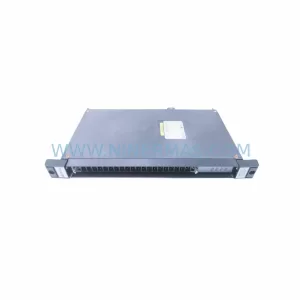
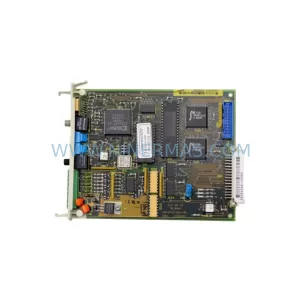
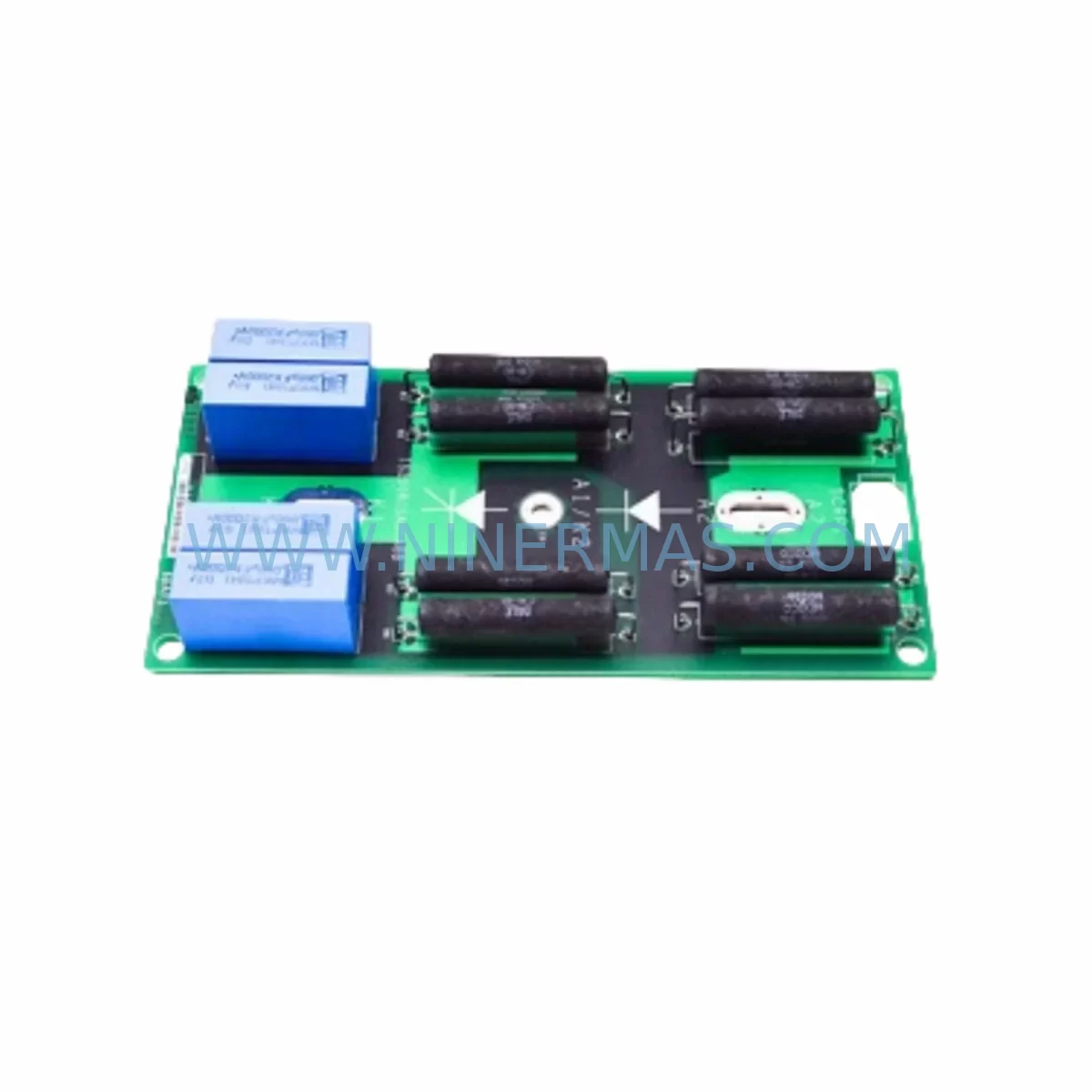
GE IS200RCSAG1ABB Retrofit-Compatible Signal Conditioner for Legacy Systems
Verify the part, confirm the platform family, and move straight into quotation with the right commercial details.
RFQ Ready
- SKUIS200RCSAG1ABB
- CategoryPLC & Industrial Automation Modules
- BrandGE
- SupportAvailability, lead time, condition, and shipping coordination
How Buyers Usually Use This Page
- Confirm the exact part number and platform family before sending the quote request.
- Use direct email when quantity, condition, and destination are already defined internally.
- Switch to the broader brand or category archive when you need alternates nearby.
Series Navigation
Move through the most common platform families behind this part.
Product RFQ
Send this part directly for quotation.
Include quantity, required condition, destination country, and target delivery timing. Current reference: GE IS200RCSAG1ABB Retrofit-Compatible Signal Conditioner for Legacy Systems with SKU IS200RCSAG1ABB.
GE IS200RCSAG1ABB Retrofit-Compatible Signal Conditioner for Legacy Systems
The GE IS200RCSAG1ABB is a signal conditioning module originally designed for the GE Mark VI turbine control platform — one of the most widely deployed distributed control architectures in power generation, oil & gas, and heavy industrial environments. As the Mark VI series approaches end-of-life support from the OEM, plant engineers and maintenance teams are increasingly sourcing retrofit-compatible replacements to extend the operational life of existing control cabinets without committing to a full DCS migration. NINERMAS supplies the IS200RCSAG1ABB as a verified retrofit-grade spare, tested prior to shipment and backed by a 12-month warranty.
Whether you are replacing a failed module in an active turbine control loop, restocking critical spares ahead of a planned outage, or executing a phased upgrade from a legacy Mark V or Mark VI architecture toward a Mark VIe or third-party SCADA platform, the IS200RCSAG1ABB fits directly into the existing VME-style backplane without requiring structural cabinet modifications. This makes it one of the most cost-effective options for downtime-sensitive retrofit scenarios where procurement lead time and installation complexity must both be minimized.
Upgrade Compatibility Table
| Parameter | Details |
|---|---|
| Compatible Platform | GE Mark VI / Mark VIe Turbine Control System |
| Module Type | Signal Conditioning / I/O Interface |
| Backplane Interface | VME-style rack, compatible with IS200 series backplane |
| Communication Compatibility | IONet (Mark VI native), compatible with IONET-to-Ethernet gateway configurations |
| Terminal Wiring | Screw-terminal field wiring; verify terminal block pitch against existing IS200TBAIH1C or IS200TBCIH1C terminal boards |
| Power Supply Requirement | 24 VDC nominal; confirm rack power budget with IS200EPBAG1A or IS200EPBAG1B power supply module |
| Installation Space | Standard Mark VI single-slot module; no additional panel space required |
| Retrofit Recommendation | Direct replacement for failed or end-of-life IS200RCSAG1ABB; no firmware re-flash required in most configurations |
| Commissioning Note | Verify I/O address mapping in ToolboxST before energizing; confirm HMI tag assignments remain consistent |
| Warranty | 12 Months — covers manufacturing defects and functional failure under normal operating conditions |
Retrofit Planning for Existing Automation Systems
Successful integration of the IS200RCSAG1ABB into a legacy control cabinet begins well before the module arrives on site. Retrofit planning for Mark VI-based systems typically involves a coordinated review of power capacity, terminal wiring, backplane slot assignments, and communication link integrity — all of which must be validated against the existing system configuration before the replacement module is installed.
Start by auditing the rack power budget. The IS200EPBAG1A or IS200EPBAG1B power supply modules that feed the Mark VI VME rack have defined current limits per rail. Adding or replacing a signal conditioning module like the IS200RCSAG1ABB requires confirming that the aggregate draw of all installed modules — including I/O modules such as the IS200VTURH1BEE or IS200BIOSH1ABB — does not exceed the supply’s rated output. Overloading the rack power supply is a common cause of intermittent faults during post-retrofit commissioning.
Terminal wiring compatibility is the next critical checkpoint. The IS200RCSAG1ABB interfaces with the field through a dedicated terminal board — typically the IS200TBAIH1C or IS200TBCIH1C depending on the signal type. Before removing the legacy module, photograph and document all existing field wiring connections. Verify that the terminal block pitch, wire gauge, and shield grounding scheme are consistent with the replacement module’s specifications. Mislabeled or undocumented field wiring is one of the most common sources of extended commissioning time during legacy system retrofits.
Backplane slot addressing must also be confirmed in ToolboxST, GE’s configuration and diagnostic software for the Mark VI platform. Each module in the rack is assigned a logical address that maps to specific I/O tags in the control program. If the IS200RCSAG1ABB is being installed in a different physical slot than the original — for example, due to rack reconfiguration or the addition of a communication module such as the IS200EPDMG1A Ethernet interface card — the slot address must be updated in the ToolboxST project file and downloaded to the controller before the new module is recognized correctly.
HMI screen consistency is another area that requires attention during Mark VI retrofits. If the plant uses a GE Cimplicity or third-party SCADA system to display turbine parameters sourced from the IS200RCSAG1ABB signal chain, verify that the tag names and engineering unit scaling remain unchanged after the module swap. Discrepancies between the ToolboxST tag database and the HMI configuration can result in incorrect readings or alarm suppression that may not be immediately apparent during initial commissioning.
For sites migrating from Mark VI to Mark VIe or transitioning to a third-party DCS, the IS200RCSAG1ABB can serve as a bridge component during the phased cutover. By maintaining the existing signal conditioning layer while upgrading the controller and communication infrastructure — for example, replacing the IS200VCMIH2C VME controller module with a Mark VIe VCMI equivalent — engineers can preserve field wiring and reduce the scope of each migration phase. This approach is particularly effective in combined-cycle plants where turbine and HRSG control loops share common I/O infrastructure.
Downtime Control During System Migration
Minimizing unplanned downtime is the primary operational constraint in any legacy control system retrofit. For turbine control applications using the GE Mark VI platform, even a brief loss of control signal integrity can trigger a unit trip, requiring a full restart sequence that may take hours to complete. Effective downtime control during IS200RCSAG1ABB replacement requires a structured approach to pre-staging, hot-swap sequencing, and post-installation verification.
Pre-stage the replacement module by bench-testing it against a known-good rack configuration before the scheduled maintenance window. NINERMAS performs functional testing on all IS200RCSAG1ABB units prior to shipment, but on-site pre-staging allows the maintenance team to confirm module recognition in ToolboxST and verify that the firmware revision is compatible with the installed controller version. This step eliminates the most common cause of extended outages during module replacement: discovering a compatibility issue after the legacy module has already been removed.
During the replacement window, follow a structured lockout/tagout procedure and document the exact sequence of module removal and installation. If the rack supports hot-swap operation — which varies by Mark VI configuration and must be confirmed in the system documentation — the replacement can be performed without de-energizing the entire rack, significantly reducing the impact on adjacent control loops. After installation, use ToolboxST’s online diagnostic view to confirm that the IS200RCSAG1ABB is communicating correctly on the IONet link and that all associated I/O points are returning valid readings before releasing the unit back to automatic control.
Protect the original control program logic by exporting a full ToolboxST project backup before beginning any retrofit work. Store the backup on an isolated engineering workstation and verify the export is complete and uncorrupted. If the retrofit involves any changes to I/O addressing, slot configuration, or communication parameters, create a separate project revision rather than overwriting the production configuration. This ensures that the original logic can be restored within minutes if an unexpected issue arises during commissioning, keeping total downtime within the planned maintenance window.
Retrofit Support FAQ
Q: Is the IS200RCSAG1ABB a direct drop-in replacement for the original GE module?
A: Yes. The IS200RCSAG1ABB supplied by NINERMAS is functionally equivalent to the original GE-manufactured module and is designed for direct installation into the existing Mark VI VME rack without hardware modification. In most configurations, no firmware re-flash or ToolboxST project changes are required, provided the replacement module is installed in the same physical slot as the original.
Q: What commissioning steps are required after installation?
A: After installing the IS200RCSAG1ABB, connect the engineering workstation running ToolboxST to the Mark VI controller via the IONet link or a direct serial connection using a compatible programming cable. Verify that the module appears online in the hardware configuration view, confirm that all associated I/O tags are returning valid values, and check for any active diagnostic alarms. If the module was installed in a different slot, update the slot address in the ToolboxST project and download the revised configuration to the controller before energizing the field circuits.
Q: Does NINERMAS test the IS200RCSAG1ABB before shipment?
A: Yes. All IS200RCSAG1ABB units are functionally tested prior to shipment. Each module is verified for correct power-up behavior, communication link integrity, and I/O channel response. Units that do not pass functional testing are not shipped. A 12-month warranty covering manufacturing defects and functional failure under normal operating conditions is included with every unit.
Q: What is the typical lead time and inventory availability?
A: NINERMAS maintains stock of the IS200RCSAG1ABB to support urgent retrofit and breakdown replacement requirements. Standard orders are processed and shipped within 1–3 business days. For large-quantity orders or projects requiring multiple Mark VI modules — such as IS200EPBAG1A power supplies, IS200TBAIH1C terminal boards, or IS200BIOSH1ABB I/O modules — contact our sales team to confirm availability and arrange consolidated shipment.
| Product Series | Mark VI |
|---|---|
| Country of Origin | US |
Catalog Continuation
More GE modules in the catalog.
Use the brand lane to compare nearby part numbers, platform-adjacent modules, and other inquiry-ready listings before sending your final RFQ.
SKU: Bridge Interface Mark VI
GE IS210AEDBH4AGD Safety-Reliable Bridge Interface for Critical Control
SKU: DS200ADMAH1AA
GE DS200ADMAH1AA | Industrial Safety & Performance Component
Catalog Continuation
Alternative parts within PLC & Industrial Automation Modules.
Stay inside the same system family when you need substitutes, adjacent modules, or a broader shortlist for procurement review.