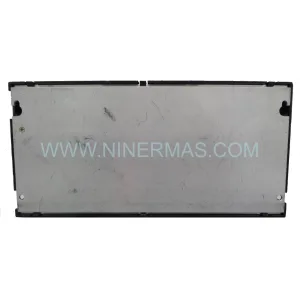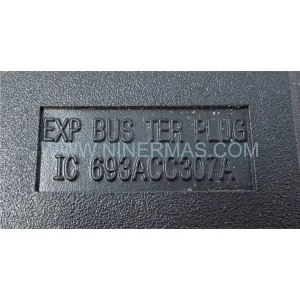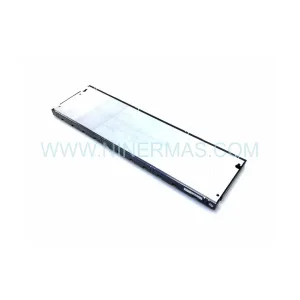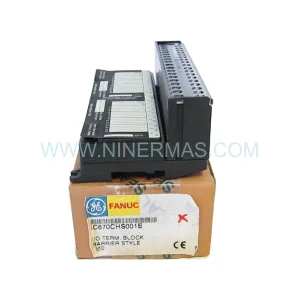
Original Industrial Spare Part
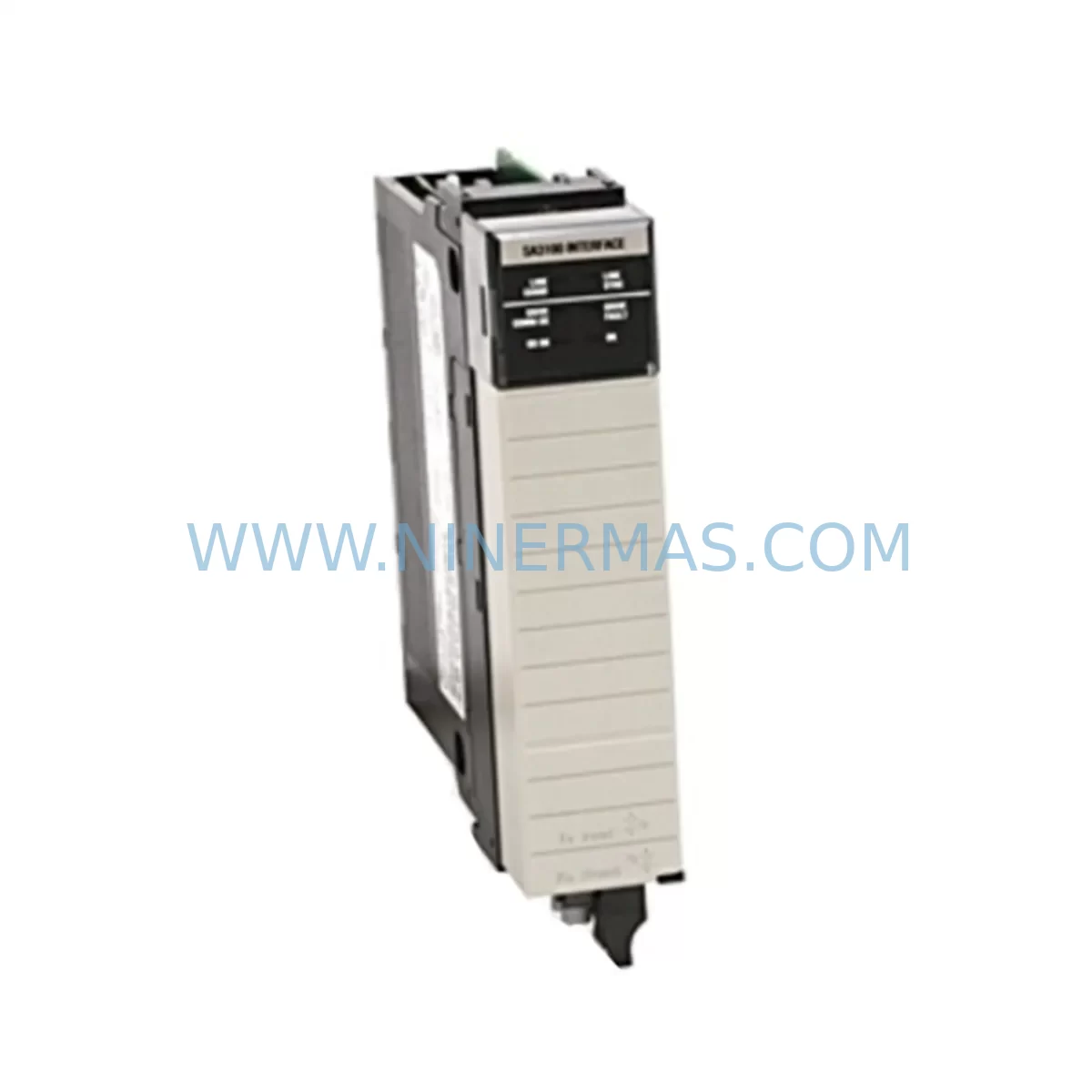
Allen-Bradley 1756-DMF30 Service-Ready Spare Part
Verify the part, confirm the platform family, and move straight into quotation with the right commercial details.
RFQ Ready
- SKU1756-DMF30
- CategoryPLC & Industrial Automation Modules
- BrandAllen-Bradley
- SupportAvailability, lead time, condition, and shipping coordination
How Buyers Usually Use This Page
- Confirm the exact part number and platform family before sending the quote request.
- Use direct email when quantity, condition, and destination are already defined internally.
- Switch to the broader brand or category archive when you need alternates nearby.
Series Navigation
Move through the most common platform families behind this part.
Product RFQ
Send this part directly for quotation.
Include quantity, required condition, destination country, and target delivery timing. Current reference: Allen-Bradley 1756-DMF30 Service-Ready Spare Part with SKU 1756-DMF30.
Allen-Bradley 1756-DMF30 Service-Ready Spare Part: Minimizing Downtime Risk in Industrial Drive Systems
The Allen-Bradley 1756-DMF30 is a ruggedized drive module designed for deployment within the ControlLogix 1756 chassis platform, engineered to operate reliably in harsh industrial environments where temperature extremes, vibration, and electrical noise are constant operational realities. For maintenance engineers managing aging automation infrastructure, the 1756-DMF30 represents a critical line item on any serious spare parts inventory list — a module whose failure can cascade into unplanned production stoppages affecting entire drive and motion control loops.
At NINERMAS, we stock the 1756-DMF30 as a tested, service-ready spare part with full 12-month warranty coverage. Each unit undergoes pre-shipment functional verification to confirm module integrity before it leaves our facility. Whether you are responding to an emergency breakdown, executing a planned annual overhaul, or building out a preventive maintenance buffer stock, our supply chain is structured to support your procurement timeline with reliable lead times and long-term availability commitments.
From the perspective of a maintenance engineer, the 1756-DMF30 is rarely a standalone failure point. When this module is flagged during fault isolation, experienced technicians know to simultaneously inspect the broader drive and power distribution ecosystem within the same control cabinet. The 1756-PA75 or 1756-PB75 chassis power supply should be load-tested to confirm it is delivering stable DC bus voltage within specification — an undersized or degraded power supply is a common root cause of drive module faults that are misattributed to the module itself. Similarly, the 1756-A17 or 1756-A10 backplane chassis should be inspected for physical damage, connector wear, and proper seating of all installed modules.
I/O integrity is equally important during a 1756-DMF30 replacement event. The 1756-IB16 digital input modules and 1756-OB16E digital output modules connected to the drive control loop should be verified for correct signal levels and absence of blown output channels. If the system architecture includes analog speed reference or feedback signals, the 1756-IF8 analog input module should be checked for signal drift or calibration offset that could cause erratic drive behavior after module replacement. Communication health across the ControlLogix backplane should be confirmed using the 1756-EN2T EtherNet/IP communication module or equivalent, ensuring that the controller can re-establish deterministic communication with the replacement drive module without requiring a full program download.
For facilities running coordinated motion or multi-axis drive systems, the replacement of a 1756-DMF30 is also an appropriate trigger to audit the condition of associated motion feedback wiring, encoder cables, and any 1756-M02AE or similar motion module that shares the same chassis slot neighborhood. Thermal management within the enclosure — including cabinet cooling fans, heat exchangers, and door-mounted air conditioners — should be inspected to ensure the replacement module will not be immediately stressed by an overtemperature environment.
Procurement engineers sourcing the 1756-DMF30 should be aware that this module series has a documented history of extended lead times through standard distribution channels, particularly for ruggedized variants. Building a minimum one-unit buffer stock per production line is a widely adopted risk mitigation strategy in facilities where a single drive module failure can result in hours or days of lost production. NINERMAS maintains forward stock of the 1756-DMF30 specifically to support customers who cannot afford to wait on standard procurement cycles during a breakdown event.
Spare Maintenance Table
| Part Number | 1756-DMF30 |
| Brand | Allen-Bradley (Rockwell Automation) |
| Series | ControlLogix 1756 |
| Module Type | Ruggedized Drive Module |
| Form Factor | 1756 Chassis Plug-In Module |
| Environmental Rating | Ruggedized — Extended Temperature & Vibration Tolerance |
| Compatible Chassis | 1756-A4, 1756-A7, 1756-A10, 1756-A13, 1756-A17 |
| Compatible Power Supplies | 1756-PA75, 1756-PB75, 1756-PA72, 1756-PB72 |
| Communication Interface | ControlLogix Backplane |
| Application Environment | Industrial Automation, Harsh Environment Drive Control |
| Condition | New / Service-Ready Original Spare |
| Origin | United States |
| Pre-Shipment Testing | Yes — Functional Verification Included |
| Warranty | 12 Months |
| Long-Term Supply | Available — Contact for Volume Pricing |
Maintenance Planning for Continuous Operation
A structured maintenance plan built around the 1756-DMF30 should account for the full electrical ecosystem in which this module operates. During scheduled cabinet inspections, technicians should verify the condition of the 1756-PA75 chassis power supply output voltage under load, inspect the 1756-A17 backplane for slot connector integrity, and confirm that all 1756-IB16 input modules are receiving clean 24VDC field signals without noise or ground loops. The 1756-EN2T EtherNet/IP communication module should be checked for firmware currency and network error counters, as communication faults can mask or trigger false drive module alarms.
In drive-intensive applications, the motor branch circuit protection — including dedicated fuses, circuit breakers, and contactor coils — should be inspected on the same maintenance cycle as the 1756-DMF30. Terminal blocks and field wiring terminations within the drive section of the cabinet are a common source of intermittent faults that are incorrectly attributed to the drive module. Signal isolators used to condition analog speed references or process feedback signals should be tested for output accuracy, as a drifting isolator can cause the drive to operate outside its commanded setpoint even after a module replacement.
For systems that include HMI interfaces connected to the ControlLogix platform, the PanelView Plus or equivalent HMI should be verified for correct tag mapping to the replacement module’s I/O addresses, particularly if the replacement involves a firmware or hardware revision change. Backplane communication diagnostics available through RSLogix 5000 or Studio 5000 Logix Designer should be run post-installation to confirm clean module recognition and absence of inhibited or faulted module states.
Site Replacement Workflow
Replacing the 1756-DMF30 in a live production environment requires a disciplined workflow to minimize downtime and avoid secondary faults. Begin by exporting the current controller program and module configuration from Studio 5000 Logix Designer as a backup before any physical intervention. Power down the chassis using the correct lockout/tagout procedure, then remove the faulted module by releasing the top and bottom locking tabs and sliding it clear of the backplane connector.
Inspect the backplane slot connector for bent pins or contamination before inserting the replacement 1756-DMF30. Seat the module firmly until both locking tabs engage. Restore power to the chassis and observe the module status indicators — a solid green RUN LED confirms successful backplane communication and module self-test passage. If the controller is configured for automatic module recognition, the replacement module should be detected within seconds of power restoration without requiring a program download, provided the hardware revision is compatible with the existing configuration file.
For facilities transitioning from older 1756-series drive module variants, the 1756-DMF30 ruggedized specification provides an upgrade path that maintains full software and chassis compatibility while delivering improved environmental tolerance. This makes it a preferred replacement choice for systems operating in foundry, chemical processing, oil and gas, or outdoor enclosure environments where standard commercial-grade modules have demonstrated reduced service life. Documenting the replacement in the site maintenance management system with the new module serial number and installation date establishes the baseline for the 12-month warranty period and supports future lifecycle planning.
Spare Parts Support FAQ
Q: Is the 1756-DMF30 a direct drop-in replacement for earlier 1756 drive module variants?
A: The 1756-DMF30 is designed for compatibility within the ControlLogix 1756 chassis platform. For specific hardware revision compatibility with your existing controller program configuration, we recommend confirming the module catalog number against your Studio 5000 project file before installation. Our technical team can assist with compatibility verification prior to shipment.
Q: What pre-shipment testing does NINERMAS perform on the 1756-DMF30?
A: Each 1756-DMF30 unit shipped from NINERMAS undergoes functional verification testing to confirm module power-up, backplane communication readiness, and absence of physical damage. Test records are available upon request. All units are shipped with 12-month warranty coverage from the date of delivery.
Q: How should I manage 1756-DMF30 buffer stock for a multi-line facility?
A: Industry best practice for ruggedized drive modules in critical production environments is to maintain a minimum of one spare unit per production line, with a facility-level strategic reserve of two to three units for sites with four or more lines. NINERMAS offers volume pricing and reserved stock agreements for customers requiring guaranteed availability. Contact our sales team to discuss a long-term supply arrangement.
Q: What is the recommended action if the replacement 1756-DMF30 shows a fault LED after installation?
A: A fault LED after installation typically indicates a configuration mismatch, backplane connector issue, or power supply problem rather than a module defect. Verify that the chassis power supply output is within specification, confirm the backplane slot connector is clean and undamaged, and check the controller fault log in Studio 5000 for a specific fault code. If the fault persists after these checks, contact NINERMAS support — all units are covered under our 12-month warranty and we will arrange a replacement or technical assistance as required.
| Product Series | ControlLogix |
|---|---|
| Country of Origin | US |
Catalog Continuation
More Allen-Bradley modules in the catalog.
Use the brand lane to compare nearby part numbers, platform-adjacent modules, and other inquiry-ready listings before sending your final RFQ.
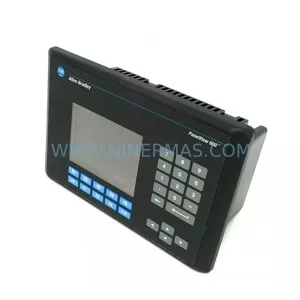
Catalog Continuation
Alternative parts within PLC & Industrial Automation Modules.
Stay inside the same system family when you need substitutes, adjacent modules, or a broader shortlist for procurement review.
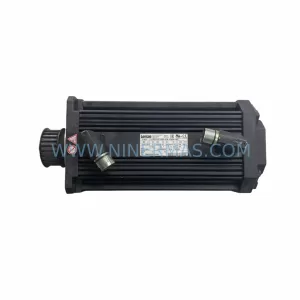
SKU: 14L41-RS0B0-B24R-ST5S00N-R0SU
LENZE 14L41-RS0B0-B24R-ST5S00N-R0SU Retrofit for Legacy Systems
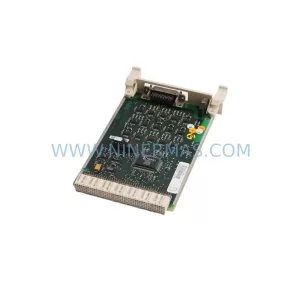
SKU: CI540 3BSE001077R1
ABB CI540 3BSE001077R1 Spare Part for Industrial Maintenance
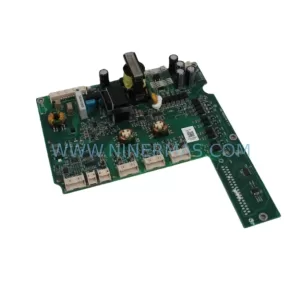
SKU: ZINT-541 3AUA00000658960
ABB ZINT-541 3AUA00000658960 Retrofit-Compatible Inverter Power Module
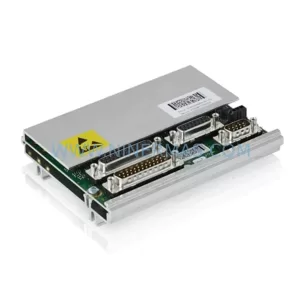
SKU: DSQC633 3HAC022286-001
ABB DSQC633 3HAC022286-001 Service-Ready Spare Part