Original Industrial Spare Part
API PS-3306D-E Retrofit-Compatible Servo Drive for Legacy Systems
Verify the part, confirm the platform family, and move straight into quotation with the right commercial details.
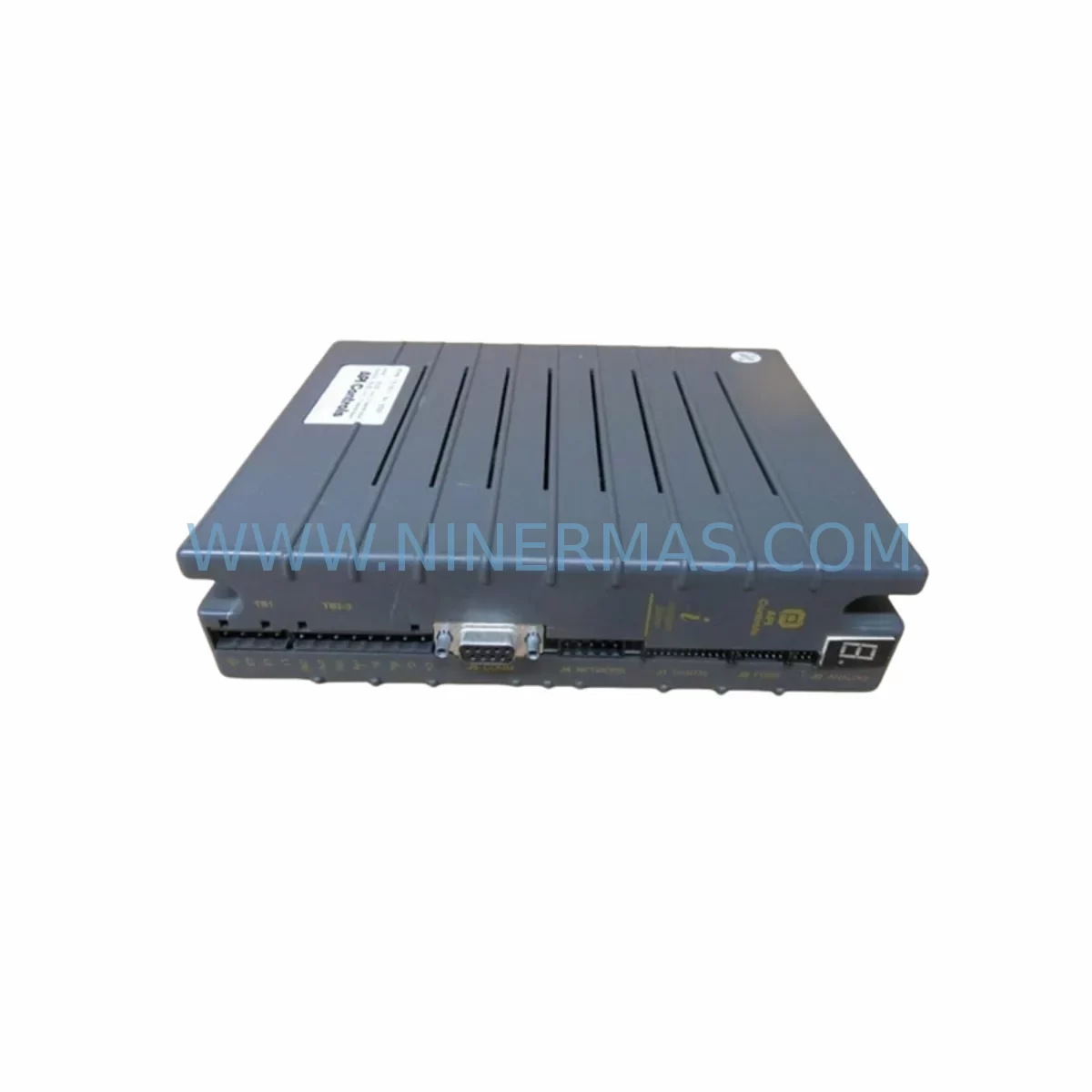
RFQ Ready
- SKUPS-3306D-E
- CategoryPLC & Industrial Automation Modules
- BrandAPI
- SupportAvailability, lead time, condition, and shipping coordination
How Buyers Usually Use This Page
- Confirm the exact part number and platform family before sending the quote request.
- Use direct email when quantity, condition, and destination are already defined internally.
- Switch to the broader brand or category archive when you need alternates nearby.
Series Navigation
Move through the most common platform families behind this part.
Product RFQ
Send this part directly for quotation.
Include quantity, required condition, destination country, and target delivery timing. Current reference: API PS-3306D-E Retrofit-Compatible Servo Drive for Legacy Systems with SKU PS-3306D-E.
API PS-3306D-E Retrofit-Compatible Servo Drive for Legacy Systems
The API PS-3306D-E is a high-performance AC servo drive engineered for seamless integration into legacy automation environments where the original PS-3306 series units have reached end-of-life or are no longer available through standard supply channels. Designed by Advanced Power Electronics Corp. (API), this drive is widely deployed across discrete manufacturing, packaging machinery, CNC machining centers, and process automation lines that rely on the PS-3306 platform for precise motion control. As OEM support for the PS-3306 series winds down, the PS-3306D-E has become the preferred retrofit-compatible replacement for maintenance engineers and system integrators managing aging control cabinets and production lines that cannot afford extended downtime or full-system overhauls.
The PS-3306D-E maintains electrical and mechanical compatibility with the PS-3306 series form factor, making it a practical drop-in solution for facilities that need to restore servo axis functionality without redesigning the control architecture. Its compact DIN-rail or panel-mount profile fits within existing control cabinet layouts, reducing the need for cabinet modification or additional mounting hardware. The drive supports standard RS-232 and RS-485 serial communication interfaces, enabling it to interface with legacy PLCs, motion controllers, and HMI systems that rely on these protocols — a critical advantage when the broader control system is not being replaced as part of the retrofit scope.
Upgrade Compatibility Table
| Parameter | PS-3306 (Legacy) | PS-3306D-E (Retrofit) |
|---|---|---|
| Input Voltage | Single/Three Phase AC | Single/Three Phase AC (matched) |
| Communication Interface | RS-232 / RS-485 | RS-232 / RS-485 (compatible) |
| Mounting Style | Panel Mount / DIN Rail | Panel Mount / DIN Rail (same footprint) |
| Control Mode | Position / Speed / Torque | Position / Speed / Torque |
| Encoder Feedback | Incremental Encoder | Incremental Encoder (compatible) |
| Terminal Wiring | Standard screw terminal block | Compatible terminal layout — verify CN1/CN2 pinout |
| Backplane / Rack | Standalone unit | Standalone unit (no rack dependency) |
| Parameter Migration | Manual parameter entry | RS-232 upload via API servo tuning software |
| Replacement Recommendation | Direct retrofit candidate | Confirm motor nameplate and encoder resolution |
| Commissioning Focus | Gain tuning, I/O mapping | Re-verify gain parameters after swap |
| Warranty | OEM EOL — no coverage | 12-Month Warranty (NINERMAS) |
Retrofit Planning for Existing Automation Systems
Successful integration of the PS-3306D-E into a legacy production line requires a structured pre-retrofit assessment. Before removing the failed or obsolete PS-3306 unit, maintenance teams should document all existing parameter settings using the original servo tuning software or by manually recording values from the drive’s front panel. Key parameters include position loop gain, speed loop gain, torque limit, acceleration/deceleration ramp times, and electronic gear ratio settings — all of which must be re-entered or uploaded to the PS-3306D-E after installation.
Terminal wiring verification is a mandatory step. The CN1 I/O connector and CN2 encoder connector pinouts on the PS-3306D-E should be cross-referenced against the original PS-3306 wiring diagram before any cables are reconnected. In many retrofit scenarios, the existing motor cable and encoder cable can be reused without modification, provided the connector types are compatible. Where connector types differ, field-fabricated adapter cables or commercially available breakout boards can bridge the gap without requiring new cable runs throughout the cabinet.
Power supply capacity must be confirmed before commissioning. The PS-3306D-E’s input power requirements should be matched against the existing control cabinet’s power distribution, including the 24VDC logic supply rail and the main AC servo power feed. In cabinets where multiple servo axes are driven — for example, systems using an API PS-3310D or PS-3315D alongside the PS-3306 — the total power budget must account for simultaneous peak current draw across all axes. If the existing power supply unit (PSU) is marginal, this is an appropriate time to upgrade to a higher-capacity unit before completing the retrofit.
For systems where the PS-3306D-E interfaces with a PLC — such as a Mitsubishi MELSEC Q-series, Omron CJ2M, or Siemens S7-300 — the I/O signal mapping must be verified. Pulse train output (PTO) from the PLC to the servo drive’s position command input, along with servo-ready, alarm, and in-position feedback signals, should be tested in jog mode before enabling full automatic operation. Where the original system used an analog ±10V speed command interface, confirm that the PS-3306D-E’s analog input channel is correctly configured and that the PLC analog output module is calibrated to the expected voltage range.
In systems that include an HMI — such as a Weintek MT8000 series or Proface GP4000 series panel — servo status screens and alarm code displays may reference drive-specific register addresses. After replacing the PS-3306 with the PS-3306D-E, verify that the HMI communication address map remains valid or update the HMI project file to reflect any register address changes. This step is frequently overlooked and can result in misleading alarm displays or non-functional status indicators on the operator panel.
For multi-axis systems that include additional motion components — such as an API PS-3308D on an adjacent axis, a servo motor matched to the PS-3306 power class, a regenerative braking resistor, an EMI line filter, or a DC bus capacitor bank — each component’s compatibility with the retrofit configuration should be confirmed. The regenerative resistor value and wattage rating should be re-evaluated if the duty cycle or inertia ratio of the load has changed since the original system was commissioned.
Downtime Control During System Migration
Minimizing production downtime during a servo drive retrofit requires advance preparation and a disciplined swap procedure. The most effective approach is to pre-configure the PS-3306D-E on the bench before the scheduled maintenance window. Using the API servo configuration software connected via RS-232, all known parameters from the original PS-3306 can be entered, verified, and saved to the drive before it is installed in the cabinet. This bench pre-configuration step can reduce in-cabinet commissioning time from several hours to under thirty minutes in straightforward single-axis applications.
During the swap window, the sequence should follow a defined order: isolate and lock out the main power feed, remove the original PS-3306 unit, install the PS-3306D-E in the same mounting position, reconnect the motor power cable (U/V/W phases and PE ground), reconnect the encoder cable to CN2, reconnect the I/O signal cable to CN1, and restore control power before main power. After power-up, confirm that the drive displays no fault codes and that the servo-ready output is asserted before enabling the PLC’s servo axis control block.
The original PLC program logic does not need to be modified in most retrofit scenarios, provided the I/O signal interface is electrically compatible. However, if the original system used drive-specific function codes or communication commands over RS-485 Modbus, the register map should be verified against the PS-3306D-E’s communication specification to confirm that all read/write addresses remain valid. Retaining the original program logic intact — rather than modifying it during the retrofit — is the safest approach to preserving control continuity and reducing the risk of introducing new faults during the changeover.
Post-installation, a controlled jog test at reduced speed and torque limit should be performed before returning the axis to full automatic production. Monitor motor current, encoder feedback, and drive temperature during the initial run-in period. If the system includes a safety relay or safety PLC monitoring the servo drive’s fault output, confirm that the safety circuit responds correctly to a simulated drive fault before releasing the machine for production.
Retrofit Support FAQ
Q1: Is the PS-3306D-E a direct replacement for the PS-3306 without any wiring changes?
In most installations, the PS-3306D-E can be installed using the existing motor cable, encoder cable, and I/O signal wiring. However, the CN1 and CN2 connector pinouts should always be verified against the original wiring diagram before reconnecting cables. Minor wiring adaptations may be required depending on the specific revision of the original PS-3306 installed in the field.
Q2: Can the PS-3306D-E be commissioned without the original parameter backup file?
Yes. If the original parameter file is unavailable, parameters can be re-entered manually based on the motor nameplate data and the original system’s motion profile requirements. NINERMAS recommends starting with the API default parameter set for the matched motor frame size and then performing a gain tuning procedure under no-load conditions before running the axis under full production load.
Q3: What pre-shipment testing is performed on the PS-3306D-E before delivery?
Each PS-3306D-E unit supplied by NINERMAS undergoes a functional power-on test, communication interface verification, and I/O signal check prior to shipment. Units are inspected for physical condition and packaged in anti-static protective materials. A 12-month warranty is provided from the date of shipment, covering manufacturing defects and functional failures under normal operating conditions.
Q4: What is the typical lead time and stock availability for the PS-3306D-E?
NINERMAS maintains stock inventory of the PS-3306D-E to support urgent retrofit and breakdown replacement requirements. Standard orders are processed and shipped within 3–5 business days. For bulk procurement or long-term spare parts programs, NINERMAS offers committed stock reservation agreements to ensure supply continuity for facilities managing extended lifecycle automation systems.
| Product Series | Legacy |
|---|
Catalog Continuation
More API modules in the catalog.
Use the brand lane to compare nearby part numbers, platform-adjacent modules, and other inquiry-ready listings before sending your final RFQ.
Catalog Continuation
Alternative parts within PLC & Industrial Automation Modules.
Stay inside the same system family when you need substitutes, adjacent modules, or a broader shortlist for procurement review.
SKU: A05B-2518-C200
FANUC A05B-2518-C200 Retrofit Teach Pendant for Legacy Systems
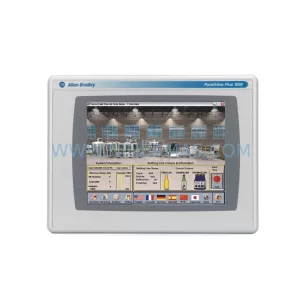
SKU: 2711PC-T10C4D8
Allen-Bradley 2711PC-T10C4D8 Retrofit-Compatible HMI Terminal