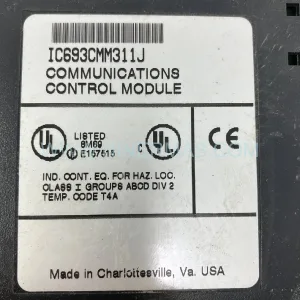
Original Industrial Spare Part
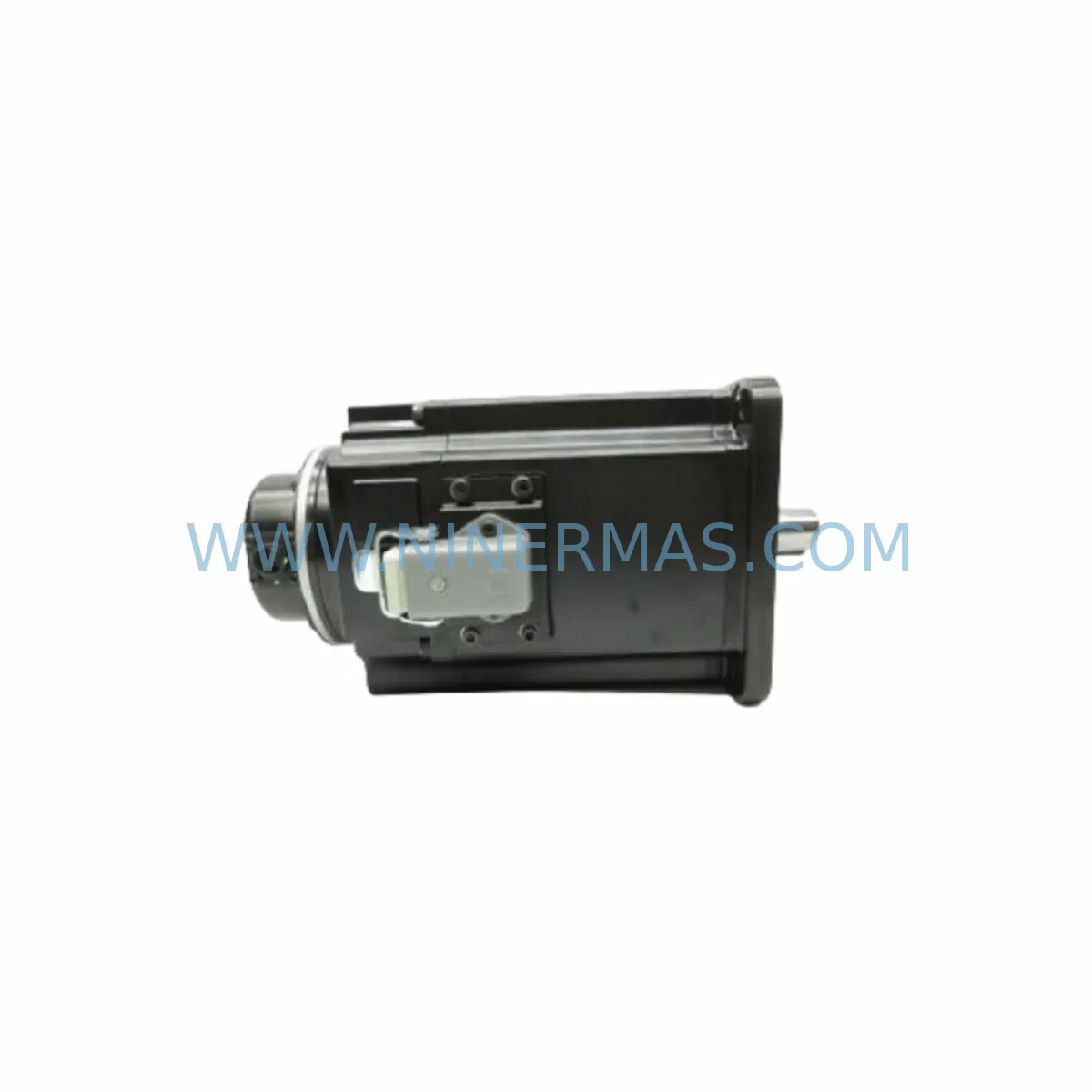
Kawasaki 50601-1460 Retrofit Servo Motor for Legacy Systems
Verify the part, confirm the platform family, and move straight into quotation with the right commercial details.
RFQ Ready
- SKU50601-1460/R2AA13200LCP2S
- CategoryPLC & Industrial Automation Modules
- BrandKawasaki
- SupportAvailability, lead time, condition, and shipping coordination
How Buyers Usually Use This Page
- Confirm the exact part number and platform family before sending the quote request.
- Use direct email when quantity, condition, and destination are already defined internally.
- Switch to the broader brand or category archive when you need alternates nearby.
Series Navigation
Move through the most common platform families behind this part.
Product RFQ
Send this part directly for quotation.
Include quantity, required condition, destination country, and target delivery timing. Current reference: Kawasaki 50601-1460 Retrofit Servo Motor for Legacy Systems with SKU 50601-1460/R2AA13200LCP2S.
Kawasaki 50601-1460 Retrofit Servo Motor for Legacy Systems: Seamless Upgrade for Aging Robot Controllers
The Kawasaki 50601-1460, cross-referenced to the Mitsubishi R2AA13200LCP2S AC servo motor, is a precision-engineered axis drive motor originally deployed across Kawasaki’s D-series and E-series industrial robot arms. As these platforms approach end-of-life and OEM support windows close, maintenance engineers and system integrators face increasing pressure to source verified replacement units that can be installed without reprogramming the robot controller or modifying the existing wiring harness. This retrofit-compatible servo motor is pre-tested, serialized, and shipped with a 12-month warranty, making it a reliable solution for production lines that cannot afford extended downtime or unplanned capital expenditure on full robot replacement.
Whether you are restoring a single-axis failure on a welding cell, replacing a degraded motor on a palletizing arm, or executing a planned preventive maintenance cycle across a multi-robot line, the Kawasaki 50601-1460 provides a direct mechanical and electrical fit for the original installation envelope. The motor’s rated output, encoder resolution, and connector pinout are fully compatible with the original Kawasaki servo amplifier and controller architecture, eliminating the need for parameter re-mapping or drive firmware updates in most standard retrofit scenarios.
Upgrade Compatibility Table
| Parameter | Specification | Notes |
|---|---|---|
| Cross-Reference SKU | R2AA13200LCP2S | Mitsubishi OEM motor used in Kawasaki robot assembly |
| Kawasaki Part Number | 50601-1460 | Direct Kawasaki BOM reference for D/E-series robots |
| Motor Type | AC Servo Motor | Brushless, permanent magnet |
| Rated Output | 200W (0.2 kW) | Confirm axis load requirements before installation |
| Rated Speed | 3000 rpm | Match to original axis speed profile in controller |
| Encoder Type | Incremental / Absolute (model-dependent) | Verify encoder type with existing Kawasaki 50999-0037 encoder cable |
| Mounting Flange | 60 mm square flange | Standard IEC frame; confirm clearance in robot joint housing |
| Shaft Diameter | 14 mm (keyed) | Check coupling bore on gearbox or harmonic drive |
| Connector Pinout | Compatible with OEM harness | No rewiring required in standard replacement; verify with Kawasaki 50999-0025 signal cable |
| Communication Protocol | Analog / Pulse train (via servo amplifier) | Interfaces with Kawasaki 50607-1136 servo amplifier |
| Installation Dimensions | Match original envelope | Confirm axial and radial clearance in joint compartment |
| Warranty | 12 Months | Covers manufacturing defects; pre-shipment load test included |
Retrofit Planning for Existing Automation Systems
A successful retrofit of the Kawasaki 50601-1460 begins well before the motor arrives on-site. Engineers should start by auditing the existing servo amplifier — typically the Kawasaki 50607-1136 — to confirm that its rated current output matches the replacement motor’s demand curve. If the amplifier shows signs of capacitor aging or IGBT degradation, replacing it in the same maintenance window avoids a second unplanned shutdown. The Kawasaki 50611-1038 power supply module should also be inspected for output voltage stability, as a sagging DC bus can cause the new motor to fault on overcurrent during acceleration ramps.
Encoder cable integrity is a frequent source of post-installation faults. The Kawasaki 50999-0037 encoder cable should be tested for continuity and shielding integrity before the new motor is connected. A damaged shield on the encoder line can introduce noise that causes the Kawasaki 1JA-03 robot controller board to log position deviation alarms, which are often misdiagnosed as motor faults. Similarly, the Kawasaki 50999-0025 signal cable connecting the servo amplifier to the controller backplane should be inspected for pin corrosion, particularly in humid or coolant-exposed environments.
For robots where the 50601-1460 drives a wrist or elbow axis, the harmonic drive or gearbox coupling must be inspected for backlash before the new motor is installed. Excessive backlash will cause the robot to fail its mastering calibration, requiring a full axis re-mastering procedure using the Kawasaki 50607-0009 backplane unit’s diagnostic interface. If the robot controller is running an older firmware version, verify that the axis parameter file stored on the Kawasaki 1JA-03 board is backed up before any hardware change — controller boards can lose parameter data during power cycling if the backup battery is depleted.
In multi-axis robot installations, it is common to find that adjacent axes use the Kawasaki 50601-1459 (smaller output variant) or the Kawasaki 50601-1462 (higher torque variant) depending on the kinematic load distribution. Documenting which motor variant is installed on each axis before beginning work prevents cross-installation errors that are difficult to diagnose after reassembly. Where the original Kawasaki servo amplifier is no longer available, the Mitsubishi MR-J4-200B servo drive has been used as a functional substitute in some retrofit projects, though this requires parameter re-configuration and should only be attempted by engineers familiar with both platforms. The Mitsubishi HG-SR series motors are also referenced in some cross-brand retrofit guides as dimensional equivalents, but electrical compatibility must be verified on a case-by-case basis.
Downtime Control During System Migration
Minimizing production downtime during a servo motor replacement requires a structured pre-work protocol. Before the maintenance window opens, the robot’s current position data and axis parameters should be exported from the controller and stored on an external device. If the Kawasaki controller supports it, a full system backup including ladder logic, motion programs, and I/O mapping should be completed. This protects against data loss if the controller requires a cold restart after the motor swap.
During the physical replacement, the robot should be placed in a mechanically safe position — ideally with all axes at their mastering reference points — before power is removed. This simplifies the re-mastering procedure after the new motor is installed. The replacement motor should be pre-warmed to ambient temperature if it has been stored in a cold warehouse, as thermal expansion differences between a cold motor and a warm gearbox can affect coupling fit and bearing preload.
After installation, the servo amplifier’s auto-tuning function should be run before the robot is returned to automatic operation. This recalibrates the velocity and position loop gains to match the mechanical characteristics of the new motor, reducing the risk of oscillation or overshoot on the first production cycle. A trial run at reduced speed with a test payload is recommended before full production speed is restored. Pre-shipment load testing of the 50601-1460 at our facility ensures that the motor’s performance envelope is verified before it reaches the customer, reducing the risk of infant mortality failures during the critical commissioning phase.
Retrofit Support FAQ
Q1: Is the Kawasaki 50601-1460 a direct drop-in replacement for the R2AA13200LCP2S without any parameter changes?
In most standard D-series and E-series robot configurations, yes. The motor’s electrical and mechanical specifications match the original OEM unit. However, if the robot controller has been modified or the servo amplifier firmware has been updated since original installation, we recommend verifying the axis parameter file before installation. Our technical team can assist with compatibility verification based on your robot’s serial number and controller version.
Q2: What wiring adaptations are required when installing this motor?
The 50601-1460 uses the same connector pinout as the original OEM motor, so no rewiring of the power or encoder harness is required in standard installations. If the existing Kawasaki 50999-0037 encoder cable or 50999-0025 signal cable shows wear or damage, we recommend replacing them at the same time to avoid post-installation faults. All connector types and pin assignments are documented in the product datasheet provided with each unit.
Q3: How is the motor tested before shipment, and what does the 12-month warranty cover?
Each unit undergoes a pre-shipment load test that verifies rated torque output, encoder signal integrity, and thermal performance at rated speed. The 12-month warranty covers manufacturing defects and premature failure under normal operating conditions. It does not cover damage caused by incorrect installation, electrical overstress, or mechanical impact. Warranty claims are processed with a replacement-first policy to minimize customer downtime.
Q4: What is the typical lead time, and do you maintain stock for urgent orders?
We maintain ready stock of the Kawasaki 50601-1460 for immediate dispatch. Standard orders ship within 1–3 business days. For urgent production recovery situations, expedited shipping options are available. Contact our sales team to confirm current inventory levels and arrange priority dispatch if your production line is down.
| Product Series | Legacy |
|---|
Catalog Continuation
More Kawasaki modules in the catalog.
Use the brand lane to compare nearby part numbers, platform-adjacent modules, and other inquiry-ready listings before sending your final RFQ.
SKU: 50999-2254 50999-0020 50999-1692
Kawasaki 50999-2254 Safety-Reliable PLC Board for Critical Sites
SKU: 50817-0096L05 R2AA06020FCPPJ 50601-1462
Kawasaki 50817-0096L05 Safety-Reliable Pendant for Critical Sites
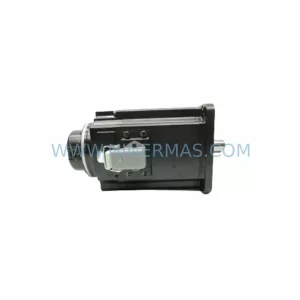
SKU: AVR50630-0033 50632-1066 R2AA13200LCPKZ
Kawasaki AVR50630-0033 Safety-Reliable AC Servo for Critical Sites
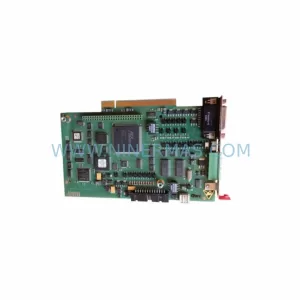
SKU: 50607-1273 50607-1273 50999-1950R00
Kawasaki 50607-1273 Safety-Reliable Robot Controller for Critical Sites
Catalog Continuation
Alternative parts within PLC & Industrial Automation Modules.
Stay inside the same system family when you need substitutes, adjacent modules, or a broader shortlist for procurement review.
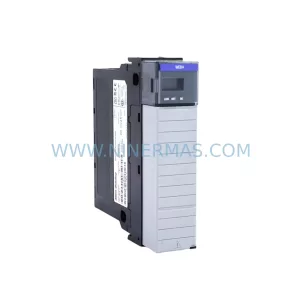
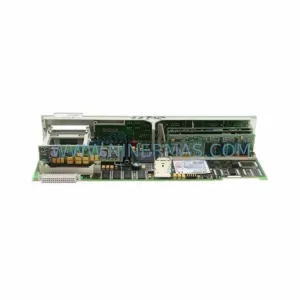
SKU: 6FC5357-0BB12-0AE0
Siemens 6FC5357-0BB12-0AE0 Service-Ready Industrial Spare Part
SKU: 3BSE011790R1(PXHK401)
ABB 3BSE011790R1 PXHK401 Retrofit-Ready Communication Module