Original Industrial Spare Part
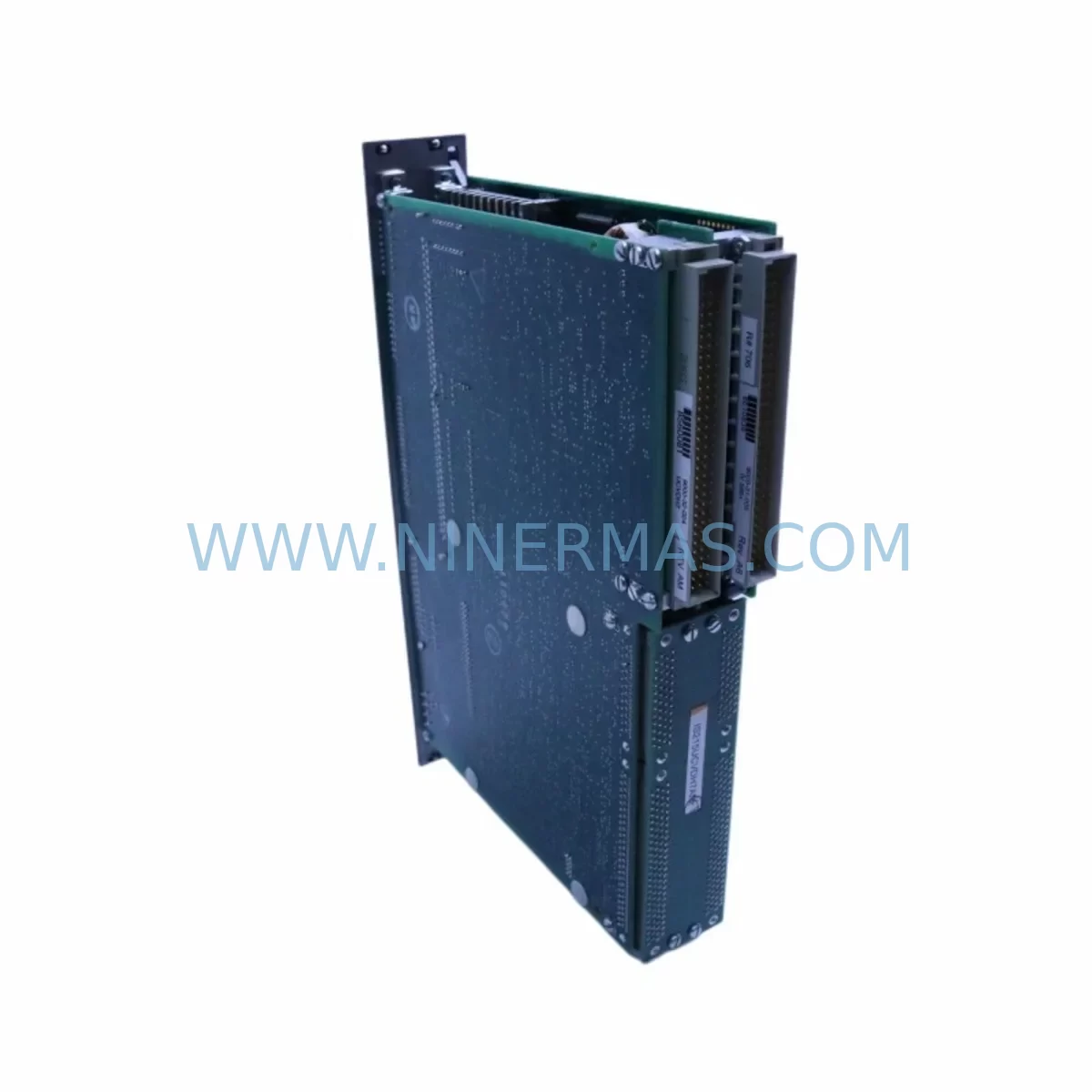
GE IS215UCVDH7AM Retrofit-Compatible I/O Module for Legacy Systems
Verify the part, confirm the platform family, and move straight into quotation with the right commercial details.
RFQ Ready
- SKUIS215UCVDH7AM
- CategoryPLC & Industrial Automation Modules
- BrandGE
- SupportAvailability, lead time, condition, and shipping coordination
How Buyers Usually Use This Page
- Confirm the exact part number and platform family before sending the quote request.
- Use direct email when quantity, condition, and destination are already defined internally.
- Switch to the broader brand or category archive when you need alternates nearby.
Series Navigation
Move through the most common platform families behind this part.
Product RFQ
Send this part directly for quotation.
Include quantity, required condition, destination country, and target delivery timing. Current reference: GE IS215UCVDH7AM Retrofit-Compatible I/O Module for Legacy Systems with SKU IS215UCVDH7AM.
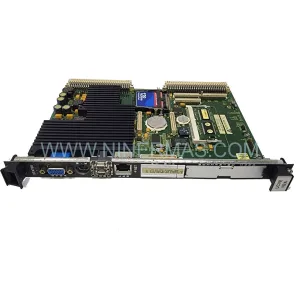
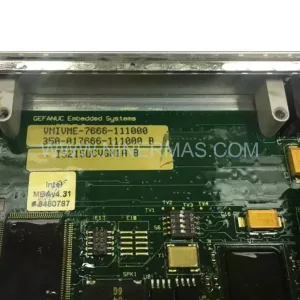
GE IS215UCVDH7AM Retrofit-Compatible I/O Module for Legacy Mark VI Speedtronic Systems
The GE IS215UCVDH7AM is a high-reliability Universal Controller Voter I/O module designed for the GE Mark VI Speedtronic turbine control platform. As original equipment manufacturers phase out support for aging distributed control systems, the IS215UCVDH7AM has become a critical retrofit component for power generation facilities, petrochemical plants, and industrial automation environments that continue to operate legacy GE Mark VI control cabinets. Whether you are managing a planned upgrade, responding to an unexpected module failure, or executing a phased modernization of your turbine control infrastructure, this module provides a verified, tested replacement path that minimizes engineering risk and reduces total downtime.
The IS215UCVDH7AM interfaces directly with the GE Mark VI VME backplane, occupying a standard slot within the VCMI or VTUR controller rack. Before installation, engineers must confirm available backplane slot assignments, verify that the rack’s power supply — typically the IS200EPCTG1A or equivalent — can support the additional load, and review the existing I/O terminal block wiring against the module’s channel map. Mismatch between legacy terminal assignments and the replacement module’s pinout is one of the most common sources of commissioning delay, and a careful pre-installation audit of the IS215UCVDH7AM wiring diagram against the original as-built drawings is strongly recommended.
Upgrade Compatibility Table
| Parameter | Details |
|---|---|
| SKU / Part Number | IS215UCVDH7AM |
| Series / Platform | GE Mark VI Speedtronic Turbine Control |
| Module Type | Universal Controller Voter I/O Module |
| Backplane Interface | VME Bus — Mark VI VCMI / VTUR Rack Compatible |
| Communication Protocol | IONet (GE proprietary) — compatible with existing Mark VI IONet topology |
| Power Requirement | Supplied via backplane; verify IS200EPCTG1A or equivalent PSU capacity |
| Terminal / Wiring | Confirm terminal block assignments against original as-built drawings before installation |
| Module Address | Must be configured in ToolboxST to match original slot address and I/O map |
| HMI Compatibility | Compatible with existing Mark VI HMI screens when I/O map is preserved |
| Installation Space | Standard Mark VI VME rack slot — no mechanical modification required |
| Replacement Recommendation | Direct replacement for failed or end-of-life IS215UCVDH7AM units |
| Commissioning Note | Requires ToolboxST configuration verification and I/O loop check after installation |
| Warranty | 12-Month Warranty — tested and verified before shipment |
Retrofit Planning for Existing Automation Systems
Integrating the IS215UCVDH7AM into an existing Mark VI control system requires a structured retrofit plan that accounts for every layer of the control architecture. The module sits within a broader ecosystem of interconnected components, and a successful replacement depends on understanding how changes to one element propagate through the rest of the system.
At the controller level, the IS215UCVDH7AM communicates with the main turbine controller — typically the IS215VCMIH2A or IS215VCMIH2B VCMI module — over the internal VME bus. Engineers should verify that the VCMI firmware version is compatible with the replacement I/O module revision and that the ToolboxST application database reflects the correct module type and slot assignment. Any discrepancy between the physical hardware configuration and the ToolboxST project file will prevent the controller from recognizing the new module and may trigger a system fault.
The IONet communication network connecting the Mark VI controller to remote I/O panels and the IS215UCVDH7AM should be inspected for cable integrity, switch health, and network topology consistency. If the existing IONet infrastructure includes aging IS200IOCIH1A I/O controller interface modules or deteriorating fiber optic links, these should be evaluated as part of the same retrofit scope to avoid secondary failures after the primary module replacement is complete.
Power distribution within the control cabinet is another critical consideration. The IS215UCVDH7AM draws power from the backplane, which is fed by the cabinet’s DC power supply. If the existing IS200EPCTG1A power supply is already operating near capacity — a common situation in cabinets where additional I/O modules have been added over the years — the retrofit plan must include a power budget review before the new module is installed. In some cases, a supplementary power supply or load redistribution across multiple supply rails may be required.
Signal isolation is another area that deserves attention during retrofit planning. Where the IS215UCVDH7AM interfaces with field instruments — thermocouples, RTDs, 4–20 mA transmitters, or discrete contact inputs — the integrity of the signal path must be verified. If legacy signal isolators or barriers are present in the loop, their compatibility with the replacement module’s input impedance and signal range should be confirmed. In some retrofit scenarios, replacing aging signal isolators alongside the I/O module eliminates a latent source of measurement error that may have been masked by the original module’s input conditioning circuitry.
For facilities that are also planning a broader migration from the Mark VI platform to a newer GE Mark VIe or third-party DCS, the IS215UCVDH7AM replacement can serve as a bridge solution that stabilizes the existing system while the longer-term migration project is engineered and funded. In this context, the module’s 12-month warranty provides assurance that the interim solution will remain reliable throughout the transition period. Companion modules commonly involved in such migrations include the IS215UCVEH2A voter module, the IS200TSVOH1A servo output module, and the IS200TREGH1A terminal board, all of which may require parallel evaluation during the retrofit scope definition phase.
Downtime Control During System Migration
Minimizing unplanned downtime is the primary operational concern when replacing a critical I/O module in a live turbine control system. The IS215UCVDH7AM retrofit process should be planned during a scheduled maintenance window, with all replacement hardware on-site and pre-tested before the turbine is taken offline. Shipping lead times for industrial control modules can be unpredictable, and maintaining a verified spare unit in local inventory is the most effective way to eliminate logistics-driven downtime extension.
Before the maintenance window begins, the engineering team should complete a full backup of the ToolboxST application database, including all controller configurations, I/O maps, alarm setpoints, and sequence logic. This backup serves as both a recovery baseline and a reference document for the post-replacement commissioning verification. If the original module failure has already caused a controller fault, the backup from the most recent known-good state should be used as the restoration baseline rather than any auto-saved configuration that may have been generated during the fault condition.
During the physical replacement, the IS215UCVDH7AM should be installed in the same VME rack slot as the original module, with all terminal block connections verified against the as-built wiring documentation before power is restored. After power-up, the ToolboxST diagnostic interface should be used to confirm that the controller has recognized the new module, that all I/O channels are reporting correctly, and that no new faults have been generated. A systematic loop check — verifying each input and output channel against the field instrument or actuator it controls — should be completed before the turbine is returned to service.
For facilities operating triple-redundant Mark VI configurations, the replacement of a single voter module can often be performed with the turbine remaining online, provided that the remaining two voter channels are healthy and the control system is configured to tolerate a single-channel maintenance bypass. This approach eliminates the need for a full turbine shutdown and significantly reduces the operational impact of the module replacement. However, this procedure requires careful coordination with the site’s safety management system and should only be performed by engineers with direct experience in Mark VI redundancy management.
Retrofit Support FAQ
Q1: Is the IS215UCVDH7AM a direct drop-in replacement for the original module?
Yes. The IS215UCVDH7AM is designed as a direct replacement for the same part number in GE Mark VI Speedtronic control systems. It occupies the same VME rack slot, uses the same backplane interface, and is recognized by ToolboxST without requiring hardware-level configuration changes, provided the slot address and I/O map in the application database match the original module assignment. A post-installation loop check and ToolboxST verification are still required before returning the system to service.
Q2: What commissioning steps are required after installation?
After physical installation, the following commissioning steps are required: (1) Power up the rack and confirm the module is recognized in ToolboxST. (2) Verify that all I/O channels are reporting correctly and that no new controller faults are present. (3) Perform a systematic loop check on all input and output channels associated with the module. (4) Confirm that HMI displays are updating correctly for all signals routed through the IS215UCVDH7AM. (5) Document the commissioning results and update the site’s maintenance records.
Q3: How is the module tested before shipment?
Every IS215UCVDH7AM unit is functionally tested before shipment to verify that all I/O channels, backplane communication, and onboard diagnostics are operating within specification. Test results are documented and available upon request. Units are shipped in anti-static packaging with appropriate mechanical protection to prevent transit damage.
Q4: What warranty coverage is provided?
All IS215UCVDH7AM units supplied by NINERMAS carry a 12-month warranty from the date of shipment. The warranty covers defects in materials and workmanship under normal operating conditions. In the event of a warranty claim, NINERMAS will provide a replacement unit or repair service with priority handling to minimize the impact on your operations. Warranty support is available through sale@ninermas.com or by calling +0086 187 5021 5667.
| Product Series | Mark VI |
|---|---|
| Country of Origin | US |
Catalog Continuation
Nearby part numbers around IS215UCV.
Use this lane when the buyer is comparing adjacent model numbers, revision-near items, or closely related spare variants within the same brand family.
Catalog Continuation
More GE modules in the catalog.
Use the brand lane to compare nearby part numbers, platform-adjacent modules, and other inquiry-ready listings before sending your final RFQ.
SKU: IC698ETM001-EM
GE IC698ETM001-EM Safety-Reliable Ethernet Interface Module
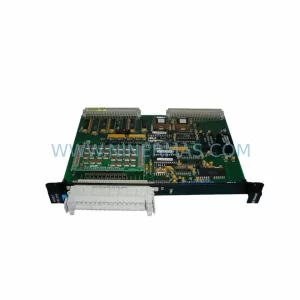
SKU: IC697VAL134/3801
GE IC697VAL134/3801 Safety-Reliable Analog I/O Module
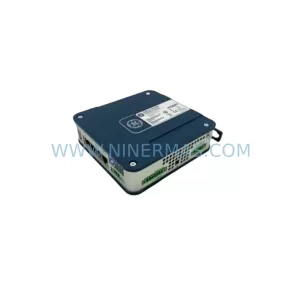
SKU: EPSCPE115-AAAB
GE EPSCPE115-AAAB Retrofit-Compatible CPU for Legacy Systems
Catalog Continuation
Alternative parts within PLC & Industrial Automation Modules.
Stay inside the same system family when you need substitutes, adjacent modules, or a broader shortlist for procurement review.
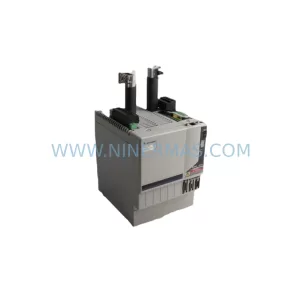
SKU: 2094-BC07-M05-S SER C
Allen-Bradley 2094-BC07-M05-S SER C Safe Servo Drive Module
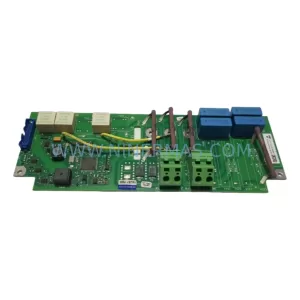
SKU: 6RY1803-0CA11 C98043-A7115-L21-7
SIEMENS 6RY1803-0CA11 C98043-A7115-L21-7 Service-Ready Spare Part