Original Industrial Spare Part
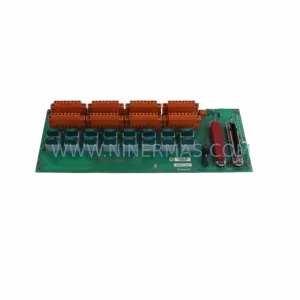
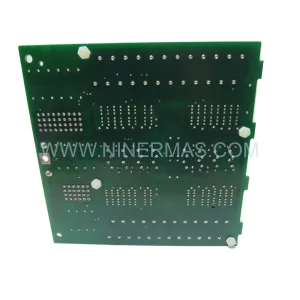
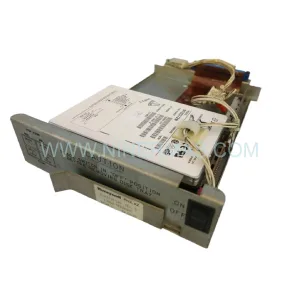
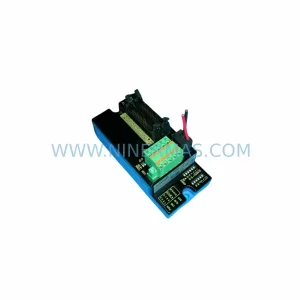
YOKOGAWA ADM52-2 S4 Retrofit Analog Output Module
Verify the part, confirm the platform family, and move straight into quotation with the right commercial details.
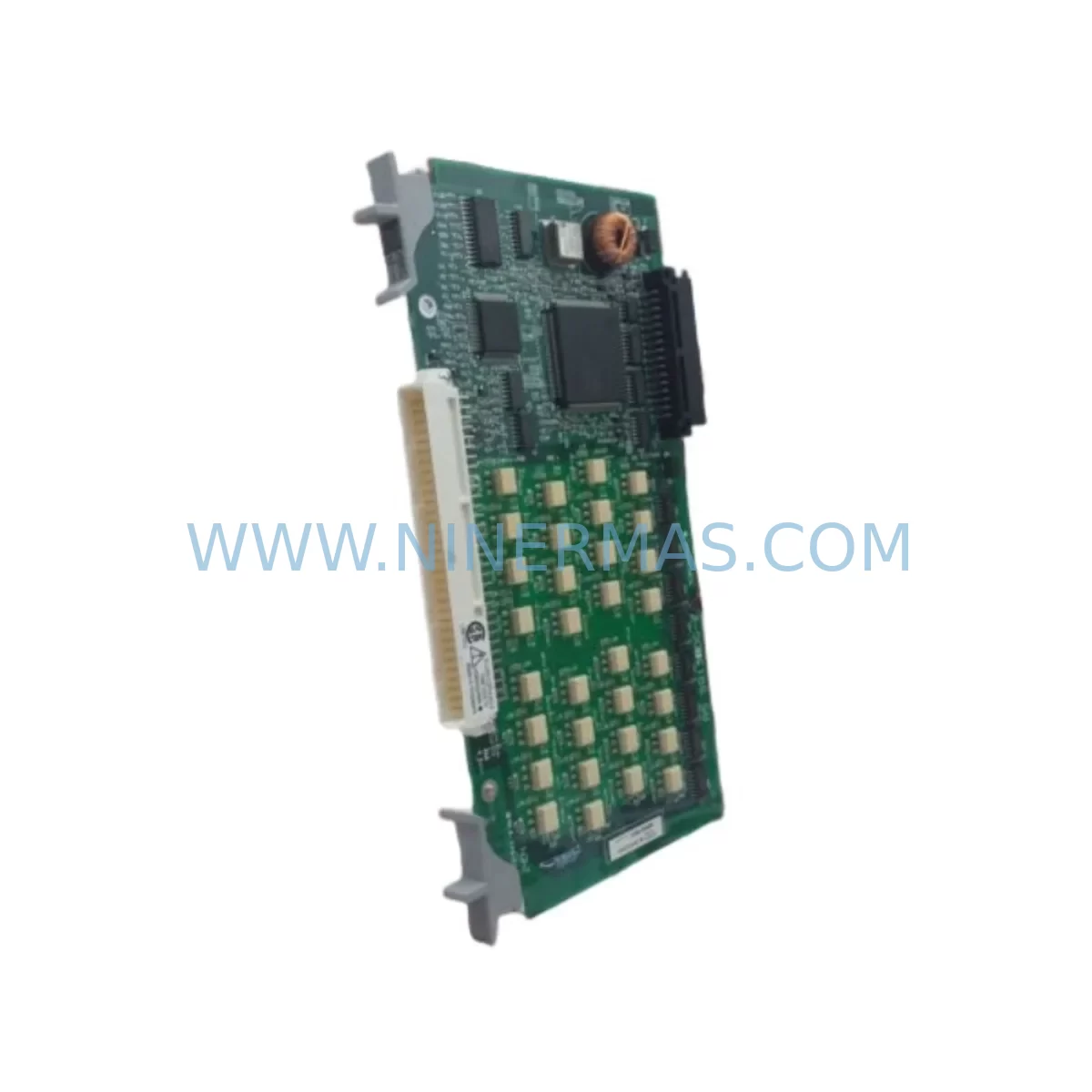
RFQ Ready
- SKUADM52-2 S4
- CategoryDCS Distributed Control Systems
- BrandYokogawa
- SupportAvailability, lead time, condition, and shipping coordination
How Buyers Usually Use This Page
- Confirm the exact part number and platform family before sending the quote request.
- Use direct email when quantity, condition, and destination are already defined internally.
- Switch to the broader brand or category archive when you need alternates nearby.
Series Navigation
Move through the most common platform families behind this part.
Product RFQ
Send this part directly for quotation.
Include quantity, required condition, destination country, and target delivery timing. Current reference: YOKOGAWA ADM52-2 S4 Retrofit Analog Output Module with SKU ADM52-2 S4.
YOKOGAWA ADM52-2 S4 Retrofit Analog Output Module: Legacy System Compatibility & Smooth Upgrade
The YOKOGAWA ADM52-2 S4 is a field-proven analog output module designed for the CENTUM VP distributed control system platform. As production facilities worldwide face the challenge of maintaining aging automation infrastructure, the ADM52-2 S4 has become a critical component in retrofit projects, discontinued spare part replacement programs, and control cabinet modernization initiatives. With verified compatibility across multiple CENTUM VP generations, this module supports engineers and maintenance teams in executing low-risk, minimum-downtime system migrations without requiring full platform replacement.
Whether your facility is replacing a failed unit on an active production line, building a strategic spare inventory ahead of a planned shutdown, or executing a phased DCS upgrade, the ADM52-2 S4 delivers the electrical and functional compatibility required to restore system integrity quickly and confidently.
Upgrade Compatibility Table
| Parameter | Details |
|---|---|
| Model | ADM52-2 S4 |
| Brand | YOKOGAWA |
| Series | CENTUM VP / CENTUM CS 3000 (compatible) |
| Module Type | Analog Output Module |
| Signal Type | 4–20 mA DC analog output |
| Channel Configuration | Multi-channel analog output (per CENTUM VP I/O spec) |
| Backplane Interface | CENTUM VP standard I/O bus — direct slot replacement |
| Installation | Hot-swap capable in supported CENTUM VP node configurations |
| Communication Compatibility | Vnet/IP, Ethernet-based CENTUM VP control bus |
| Replacement Recommendation | Direct drop-in for ADM52-2 S4; verify node address and tag mapping before commissioning |
| Commissioning Notes | Confirm I/O builder configuration, channel scaling, and FAIL-SAFE output values in CENTUM VP Engineering Environment |
| Warranty | 12 Months — covers manufacturing defects, functional failure under normal operating conditions |
| Testing | Pre-shipment functional test performed; test report available on request |
| Stock Status | In stock — ready for immediate dispatch |
Retrofit Planning for Existing Automation Systems
Successful integration of the ADM52-2 S4 into an existing CENTUM VP system begins well before the module arrives on site. Retrofit planning must account for the full scope of the control architecture — from the field instrument wiring at the marshalling cabinet, through the I/O node and field control station (FCS), to the operator station (HIS) and engineering workstation.
Start by auditing the target I/O node. Confirm the node type — whether it is an RIO (Remote I/O) node or a local FCS-integrated node — and verify that the backplane slot assigned to the ADM52-2 S4 matches the I/O builder configuration in the CENTUM VP Engineering Environment. Slot address mismatches are among the most common causes of commissioning delays in analog output module replacements. If the original module was part of a redundant pair using an ADM52-2 S4R configuration, ensure the replacement module is also rated for redundant operation before installation.
Terminal wiring at the field terminal block (FTB) must be verified against the original loop drawings. The ADM52-2 S4 uses standard CENTUM VP terminal assignments; however, field wiring polarity, shield grounding, and loop power supply configuration (internally or externally powered loops) must be confirmed before energizing the output channels. In legacy installations where the original wiring documentation is incomplete, a point-to-point continuity check from the FTB to the field device is strongly recommended.
Power supply capacity is another critical checkpoint. The CENTUM VP I/O node draws power from a dedicated node power supply unit — typically a PW481 or PW482 series module. Before adding or replacing analog output modules, confirm that the node power budget accommodates the ADM52-2 S4’s current draw, particularly in fully populated nodes. In cases where the existing power supply is operating near capacity, a parallel power supply or a PW482 upgrade may be required to maintain system stability.
For facilities migrating from older CENTUM CS 3000 platforms to CENTUM VP, the ADM52-2 S4 is frequently used as part of a phased I/O migration strategy. In these projects, the existing CS 3000 I/O modules — including analog input modules such as the AAM11 or AAM21, and digital output modules such as the ADV151 — are replaced incrementally while the control logic is migrated to the CENTUM VP FCS. The ADM52-2 S4 integrates directly into the new CENTUM VP I/O node structure, eliminating the need for signal conversion hardware in most standard 4–20 mA loop applications.
Communication link integrity must also be verified during retrofit planning. CENTUM VP relies on the Vnet/IP control network for real-time communication between the FCS and I/O nodes. Before commissioning the replacement ADM52-2 S4, confirm that the Vnet/IP switch configuration, node IP addressing, and FCS domain settings are consistent with the engineering database. Any discrepancy between the physical node configuration and the CENTUM VP project database will prevent the module from being recognized by the FCS after installation.
HMI screen validation is a frequently overlooked step in analog output module replacements. After the ADM52-2 S4 is installed and the FCS has recognized the module, verify that all associated HMI faceplates on the CENTUM VP HIS display correct engineering unit values, alarm limits, and output status indicators. In systems where the original module failure caused a loss of output signal, the HIS may retain latched alarm states that must be manually cleared after the replacement module is commissioned.
For projects involving I/O expansion — such as adding new control loops to an existing CENTUM VP node — the ADM52-2 S4 can be installed in previously unoccupied backplane slots, provided the node’s I/O builder configuration is updated in the engineering environment and downloaded to the FCS before the new module is powered. Signal isolators may be required between the ADM52-2 S4 output and field devices in installations where ground loop interference or long cable runs are present.
Downtime Control During System Migration
Minimizing production downtime during an analog output module replacement requires a structured approach that protects the existing control program, maintains field device continuity, and reduces the risk of unplanned process upsets.
Where the CENTUM VP FCS supports hot-swap I/O replacement, the ADM52-2 S4 can be installed without shutting down the FCS or interrupting other I/O channels in the same node. Before initiating a hot-swap, confirm that the FCS firmware version and node hardware revision support this capability. In nodes where hot-swap is not supported, a controlled shutdown of the affected I/O node — rather than a full FCS shutdown — is typically sufficient to replace the module while minimizing the scope of the process interruption.
Prior to removing the failed module, export a backup of the current CENTUM VP project database from the engineering workstation. This backup preserves the complete I/O builder configuration, control logic, alarm settings, and HMI graphics, and serves as the recovery baseline if any configuration changes are required during commissioning of the replacement module. Do not rely solely on the FCS resident copy of the project database as the backup source.
During the physical replacement, use the original loop drawings to verify terminal connections before re-energizing the output channels. After installation, perform a channel-by-channel output verification using a calibrated loop calibrator or HART communicator to confirm that each output channel is delivering the correct milliamp signal at the field device. This step is particularly important in applications where the ADM52-2 S4 drives control valves, variable speed drives, or other final control elements where an incorrect output signal could cause a process upset.
Once the replacement module is confirmed operational, update the maintenance record in the plant asset management system and notify the operations team that the affected control loops have been restored to normal service. If the facility uses a YOKOGAWA PRM (Plant Resource Manager) asset management platform, register the new module serial number and update the module health baseline to support future predictive maintenance activities.
Retrofit Support FAQ
Q1: Is the ADM52-2 S4 a direct replacement for the original module without any configuration changes?
In most CENTUM VP installations, the ADM52-2 S4 is a direct slot-for-slot replacement. However, you should verify the I/O builder slot address, channel scaling parameters, and FAIL-SAFE output values in the CENTUM VP Engineering Environment before commissioning. If the original module was configured with non-default output ranges or custom FAIL-SAFE values, these settings must be confirmed in the project database and re-downloaded to the FCS after the replacement module is installed.
Q2: What testing is performed before shipment, and is a test report available?
Every ADM52-2 S4 unit undergoes a pre-shipment functional test that verifies output channel accuracy, backplane communication, and power consumption within YOKOGAWA specifications. A test report is available on request. Units are shipped with protective packaging to prevent ESD damage and physical shock during transit.
Q3: Can the ADM52-2 S4 be used in a CENTUM CS 3000 system, or is it exclusively for CENTUM VP?
The ADM52-2 S4 is designed for the CENTUM VP I/O architecture. While some CENTUM CS 3000 to CENTUM VP migration projects use ADM52-2 S4 modules as part of the new CENTUM VP I/O node build-out, the module is not directly interchangeable with CENTUM CS 3000 I/O modules such as the AAM21 or ADV151. If you are migrating from CS 3000 to CENTUM VP, contact our technical team to confirm the correct module selection for your specific node and slot configuration.
Q4: What is covered under the 12-month warranty, and what is the process for a warranty claim?
The 12-month warranty covers manufacturing defects and functional failure under normal operating conditions from the date of shipment. It does not cover damage resulting from incorrect installation, overvoltage, physical impact, or unauthorized modification. To initiate a warranty claim, contact our sales team with the module serial number, purchase order reference, and a description of the failure. Replacement units are dispatched from stock to minimize your downtime, and the failed unit is returned for failure analysis.
| Product Series | CENTUM VP |
|---|---|
| Country of Origin | JP |
Catalog Continuation
More Yokogawa modules in the catalog.
Use the brand lane to compare nearby part numbers, platform-adjacent modules, and other inquiry-ready listings before sending your final RFQ.
Catalog Continuation
Alternative parts within DCS Distributed Control Systems.
Stay inside the same system family when you need substitutes, adjacent modules, or a broader shortlist for procurement review.