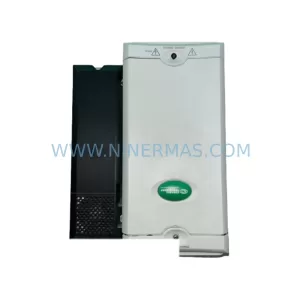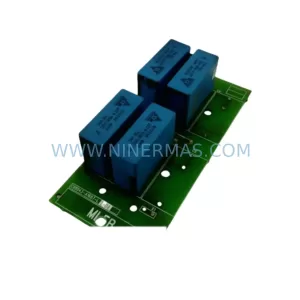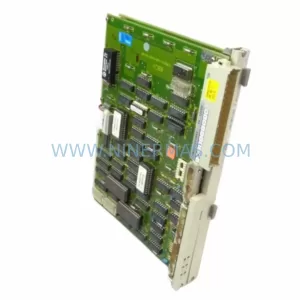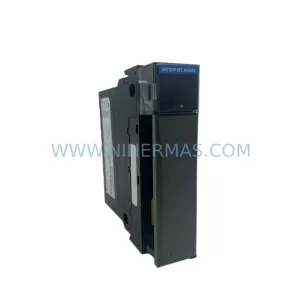
Original Industrial Spare Part
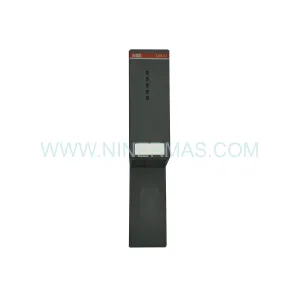
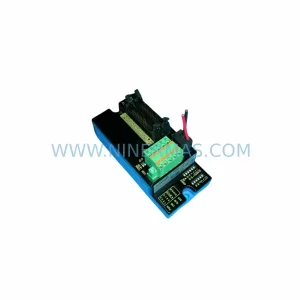
Yokogawa ADV151-P60 S2 Retrofit-Compatible Digital Input Module
Verify the part, confirm the platform family, and move straight into quotation with the right commercial details.
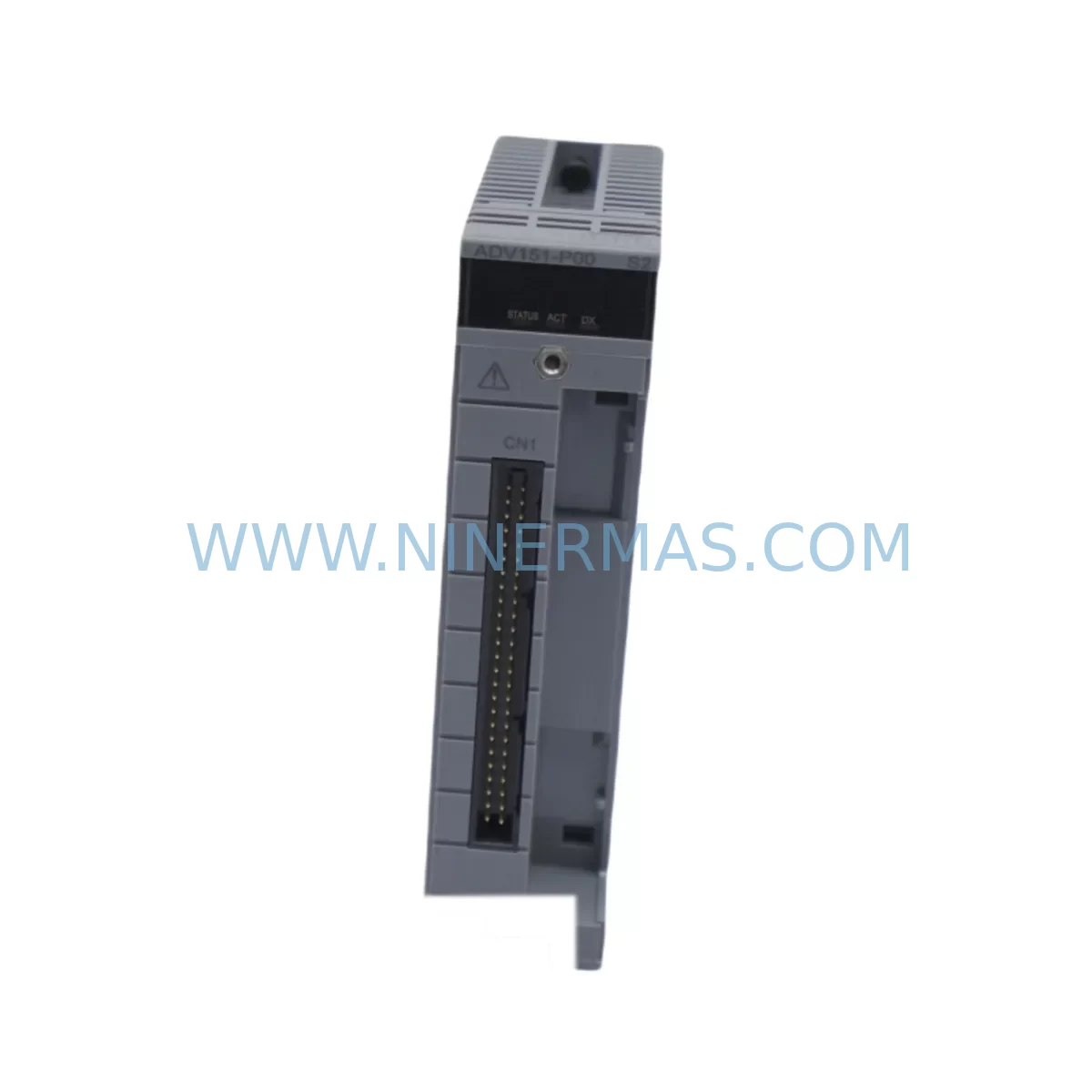
RFQ Ready
- SKUADV151-P60 S2
- CategoryDCS Distributed Control Systems
- BrandYokogawa
- SupportAvailability, lead time, condition, and shipping coordination
How Buyers Usually Use This Page
- Confirm the exact part number and platform family before sending the quote request.
- Use direct email when quantity, condition, and destination are already defined internally.
- Switch to the broader brand or category archive when you need alternates nearby.
Series Navigation
Move through the most common platform families behind this part.
Product RFQ
Send this part directly for quotation.
Include quantity, required condition, destination country, and target delivery timing. Current reference: Yokogawa ADV151-P60 S2 Retrofit-Compatible Digital Input Module with SKU ADV151-P60 S2.
Yokogawa ADV151-P60 S2 Retrofit-Compatible Digital Input Module: Legacy System Compatibility & Smooth Upgrade
The Yokogawa ADV151-P60 S2 is a ruggedized digital input module engineered for demanding industrial environments and designed to serve as a reliable retrofit solution within existing CENTUM CS, CENTUM CS 3000, and CENTUM VP distributed control system (DCS) architectures. As legacy automation infrastructure ages and original spare parts reach end-of-life, the ADV151-P60 S2 provides a verified, drop-in compatible replacement that preserves existing wiring configurations, backplane slot assignments, and control logic without requiring a full system overhaul. For plant engineers and maintenance teams managing aging control cabinets, this module represents a cost-effective path to extending system life while maintaining operational continuity.
Designed to accept discrete field signals from limit switches, proximity sensors, push buttons, and relay contacts, the ADV151-P60 S2 integrates directly into the Yokogawa field control station (FCS) environment. Its ruggedized construction — rated for operation in high-vibration, high-humidity, and wide-temperature-range conditions — makes it particularly well-suited for petrochemical, refining, power generation, and heavy manufacturing applications where environmental stress is a constant factor.
Upgrade Compatibility Table
| Parameter | ADV151-P60 S2 (This Module) | Retrofit Notes |
|---|---|---|
| Module Type | Digital Input (DI), 32-channel | Confirm channel count matches legacy slot assignment |
| Compatible Platform | CENTUM CS, CS 3000, CENTUM VP | Verify FCS generation and firmware revision |
| Backplane Interface | Yokogawa standard I/O bus | Confirm node address and slot position before installation |
| Input Voltage Range | 24 VDC (typical) | Verify field wiring voltage; check terminal block compatibility |
| Terminal Wiring | Screw-type terminal block | Re-use existing field cables where terminal pitch matches |
| Communication Protocol | Proprietary Yokogawa I/O bus (internal) | No protocol migration required for same-platform replacement |
| Installation Space | Standard Yokogawa I/O module form factor | Confirm rack/nest slot dimensions; no mechanical modification needed |
| Program Compatibility | Fully compatible with existing FCS function blocks | No control logic rewrite required; verify tag assignments in Engineering Builder |
| HMI Impact | No HMI screen changes required | Confirm I/O tag mapping in CENTUM VP HIS or legacy HMI station |
| Commissioning | Hot-swap capable (platform-dependent) | Perform loop check and force test after installation |
| Warranty | 12 Months | Covered from date of shipment; includes functional verification |
Retrofit Planning for Existing Automation Systems
Successful integration of the ADV151-P60 S2 into an existing control system begins well before the module arrives on site. A thorough retrofit plan must account for the full scope of the I/O subsystem, the power distribution architecture, and the communication topology of the field control station.
Start by auditing the power supply module — typically an AVR511 or equivalent Yokogawa DCS power unit — to confirm that the nest’s total power budget can accommodate the ADV151-P60 S2 alongside other installed modules such as analog output cards, pulse input modules, and communication interface units. Overloaded power rails are a common cause of intermittent faults after module replacement and must be ruled out before commissioning.
Next, inspect the I/O nest or rack — such as the ANB10D or ANB11D node unit — to confirm the physical slot position, backplane bus integrity, and node address configuration. The ADV151-P60 S2 must be installed in the correct slot to match the existing I/O address map defined in the FCS database. Mismatched slot assignments will cause the FCS to report hardware faults and may prevent the control loop from executing.
Terminal wiring is the next critical checkpoint. The field cables connected to the legacy digital input module must be carefully documented — including signal polarity, common return wiring, and any existing signal isolators or signal conditioning modules in the loop — before the old module is removed. In many legacy installations, signal isolators such as Yokogawa MTL or equivalent DIN-rail-mounted barriers are present between the field device and the DCS terminal block. These must remain in place and their output specifications verified against the ADV151-P60 S2 input threshold levels.
For plants migrating from older CENTUM CS installations toward CENTUM VP, the ADV151-P60 S2 may be part of a broader I/O migration that also involves replacing communication bus couplers, updating Vnet/IP network interface cards, and reconfiguring the Engineering Builder (EB) project database to reflect the new hardware. In these cases, the ADV151-P60 S2 should be treated as one component within a coordinated upgrade that may also include AAI141 analog input modules, ADV551 digital output modules, and AOM111 analog output modules — all of which share the same backplane architecture and can be replaced or upgraded in parallel to minimize total downtime.
Where the retrofit involves a control cabinet upgrade — for example, replacing an aging FCS cabinet with a new CENTUM VP R6 field control unit — the ADV151-P60 S2 can be pre-installed and pre-tested in the new cabinet before the cutover, allowing the engineering team to validate all I/O points, confirm tag assignments, and complete loop checks offline. This pre-commissioning approach is strongly recommended for critical process loops where unplanned downtime carries significant production or safety risk.
For installations that include FOUNDATION Fieldbus or HART-enabled field devices alongside conventional discrete I/O, the retrofit plan should also address the ALF111 FOUNDATION Fieldbus communication module and any associated field device coupler wiring, ensuring that the digital input channels handled by the ADV151-P60 S2 are clearly segregated from the fieldbus segment topology to avoid grounding conflicts.
Downtime Control During System Migration
Minimizing production downtime during a DCS module replacement is a primary concern for any plant operations team. The ADV151-P60 S2 retrofit process is designed to support a controlled, low-risk cutover when the following practices are observed.
Pre-cutover preparation is the single most effective downtime reduction strategy. Before the scheduled maintenance window, the engineering team should export a full backup of the FCS database from CENTUM VP Engineering Builder, document all active I/O tag assignments for the affected nest, and prepare a loop check sheet for every channel on the ADV151-P60 S2. This documentation ensures that if any unexpected issue arises during installation, the team can quickly identify the affected channel and restore the original configuration.
Protecting existing program logic requires that no changes be made to the FCS function block diagram (FBD) or sequence table (SFC) during the hardware replacement. The ADV151-P60 S2 is designed to be recognized by the FCS as a direct replacement for the legacy module, meaning the control program does not need to be recompiled or re-downloaded in a same-platform replacement scenario. This is a critical advantage over cross-platform migrations, where program conversion and re-validation can add days or weeks to the project schedule.
Maintaining field control continuity during the cutover can be achieved by placing the affected control loops in manual mode at the CENTUM VP HIS (Human Interface Station) operator console before removing the legacy module. This prevents the FCS from generating spurious output commands based on stale or invalid input readings during the brief period when the module is physically absent from the nest. Once the ADV151-P60 S2 is installed and the FCS has confirmed hardware recognition, the loops can be returned to automatic mode after a brief verification of input signal integrity.
Post-installation verification should include a channel-by-channel force test using the FCS diagnostic tools, confirmation that all input signals are reading correctly at the HIS, and a review of the FCS alarm log to ensure no hardware fault alarms remain active. The entire cutover process — from module removal to verified operation — can typically be completed within a single planned maintenance window of two to four hours when the pre-cutover preparation has been completed thoroughly.
All ADV151-P60 S2 units supplied by NINERMAS are covered by a 12-month warranty from the date of shipment and are subject to functional verification testing prior to dispatch, ensuring that every module arrives ready for installation without the need for incoming inspection delays.
Retrofit Support FAQ
Q1: Is the ADV151-P60 S2 a direct drop-in replacement for the legacy ADV151-P60 installed in my CENTUM CS 3000 system?
In most cases, yes. The ADV151-P60 S2 is designed to be physically and electrically compatible with the same backplane slot and terminal wiring as the original ADV151-P60. However, you should confirm the hardware revision of your FCS and the firmware version of the node unit before installation, as certain early-generation CENTUM CS 3000 configurations may require a firmware update to recognize the S2 revision. Our technical team can assist with compatibility verification prior to shipment.
Q2: Do I need to modify my existing field wiring or terminal blocks when installing the ADV151-P60 S2?
In a standard same-platform replacement, no wiring changes are required. The ADV151-P60 S2 uses the same terminal block pitch and signal polarity convention as the original module. If your installation includes external signal isolators or surge protection devices between the field and the DCS terminal, these should remain in place and do not need to be reconfigured.
Q3: What commissioning steps are required after installing the ADV151-P60 S2?
After physical installation, the recommended commissioning sequence is: (1) confirm FCS hardware recognition via Engineering Builder or the FCS diagnostic display; (2) perform a channel-by-channel loop check using field signal injection or device actuation; (3) verify all input tags are reading correctly at the HIS operator console; (4) clear any hardware fault alarms in the FCS alarm log; and (5) return all affected control loops from manual to automatic mode. Full commissioning documentation is available upon request.
Q4: What is the warranty coverage and what does pre-shipment testing include?
All ADV151-P60 S2 modules supplied by NINERMAS carry a 12-month warranty from the date of shipment. Prior to dispatch, each unit undergoes functional verification testing that confirms digital input channel operation, backplane interface integrity, and power consumption within specification. Units that do not pass testing are not shipped. In the event of a warranty claim, NINERMAS will arrange replacement or repair with priority handling to minimize impact on your production schedule. Contact sale@ninermas.com for warranty registration and support.
| Product Series | CENTUM VP |
|---|---|
| Country of Origin | JP |
Catalog Continuation
More Yokogawa modules in the catalog.
Use the brand lane to compare nearby part numbers, platform-adjacent modules, and other inquiry-ready listings before sending your final RFQ.
Catalog Continuation
Alternative parts within DCS Distributed Control Systems.
Stay inside the same system family when you need substitutes, adjacent modules, or a broader shortlist for procurement review.