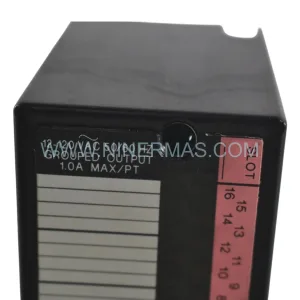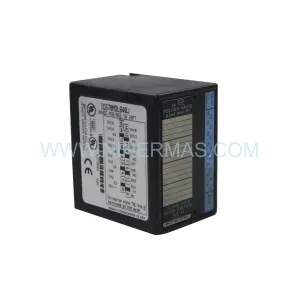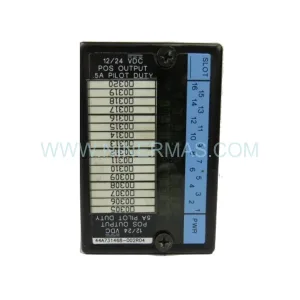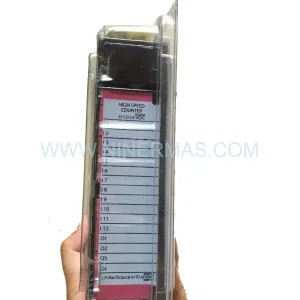
Original Industrial Spare Part
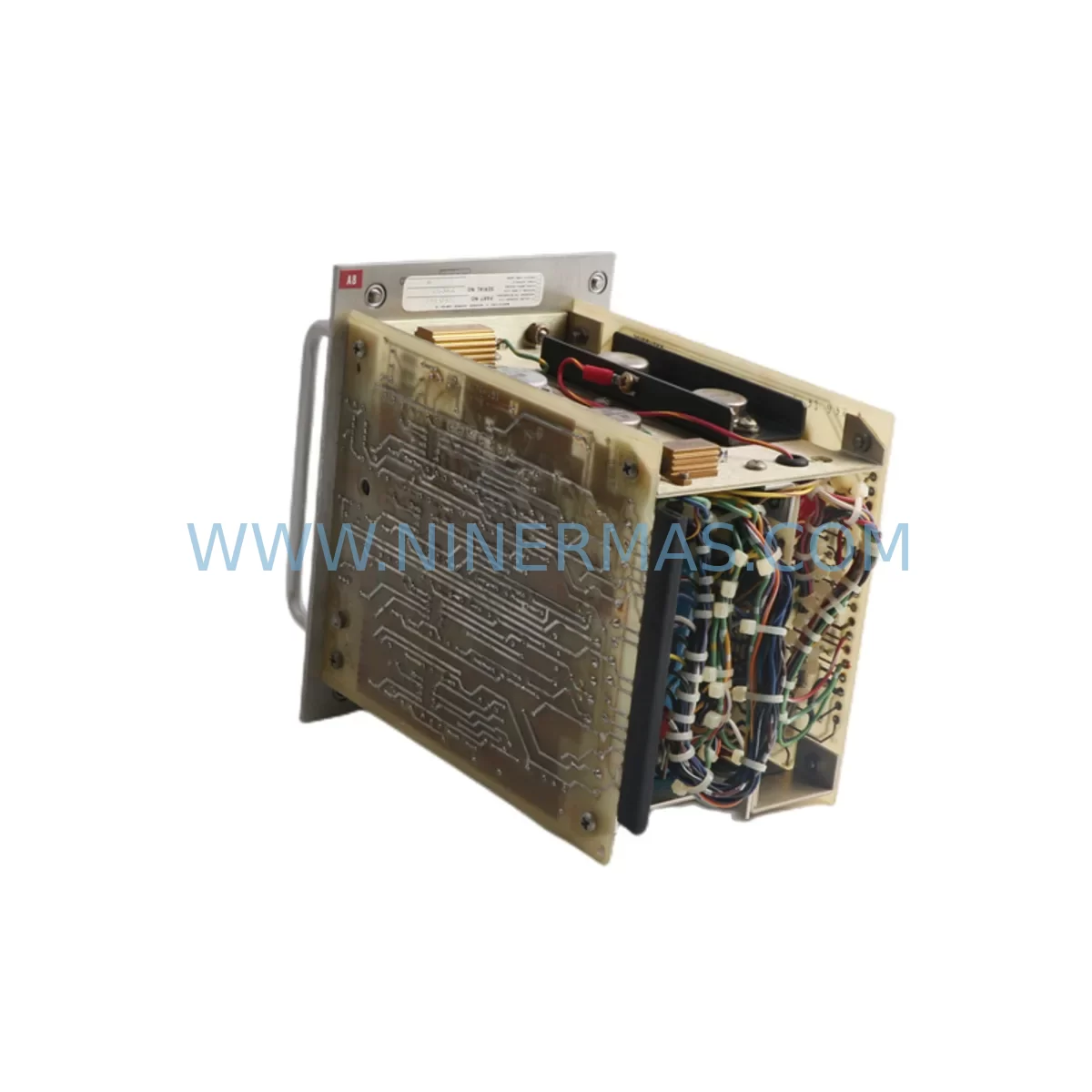
WOODWARD 5460-667 Retrofit-Compatible DC/DC Power for Legacy Systems
Verify the part, confirm the platform family, and move straight into quotation with the right commercial details.
RFQ Ready
- SKU5460-667
- CategoryPLC & Industrial Automation Modules
- BrandWoodward
- SupportAvailability, lead time, condition, and shipping coordination
How Buyers Usually Use This Page
- Confirm the exact part number and platform family before sending the quote request.
- Use direct email when quantity, condition, and destination are already defined internally.
- Switch to the broader brand or category archive when you need alternates nearby.
Series Navigation
Move through the most common platform families behind this part.
Product RFQ
Send this part directly for quotation.
Include quantity, required condition, destination country, and target delivery timing. Current reference: WOODWARD 5460-667 Retrofit-Compatible DC/DC Power for Legacy Systems with SKU 5460-667.
WOODWARD 5460-667 Retrofit-Compatible DC/DC Power Module for Legacy System Modernization
The WOODWARD 5460-667 is a DC/DC power converter module engineered for seamless integration into aging industrial control architectures. As legacy automation platforms approach end-of-life and OEM support windows close, the 5460-667 serves as a proven retrofit-compatible replacement that preserves existing wiring infrastructure, minimizes panel rework, and restores full power regulation capability without requiring a full system overhaul. Whether you are managing a scheduled upgrade or responding to an unplanned failure, the 5460-667 is stocked and ready to ship with a 12-month warranty covering parts and workmanship.
Designed for industrial environments where uptime is non-negotiable, the 5460-667 delivers stable, regulated DC output suitable for powering field I/O modules, communication cards, and distributed control nodes within legacy WOODWARD governor and turbine control panels. Its compact form factor and standard terminal pitch make it compatible with a wide range of existing backplane and DIN-rail mounting configurations, reducing the mechanical adaptation work required during a retrofit campaign.
Upgrade Compatibility Table
| Parameter | Details |
|---|---|
| SKU / Part Number | 5460-667 |
| Brand / OEM | WOODWARD |
| Module Type | DC/DC Power Converter Module |
| Typical Input Voltage | 24 VDC (verify against legacy panel nameplate) |
| Mounting Style | DIN-rail / Panel-mount (confirm backplane slot compatibility) |
| Terminal Interface | Screw-terminal block; verify pitch against existing wiring harness |
| Communication Compatibility | Passive power supply — no protocol dependency; compatible with RS-232, RS-485, and CAN-based control networks downstream |
| Replacement Suitability | Direct retrofit for legacy WOODWARD 5460-series power supply positions |
| Installation Space | Confirm available panel depth and rail clearance before ordering |
| Commissioning Notes | Verify output voltage under load before reconnecting downstream I/O; check address jumpers if applicable |
| Warranty | 12 Months — Parts & Workmanship |
| Availability | In Stock — Ready to Ship |
Retrofit Planning for Existing Automation Systems
A successful retrofit using the WOODWARD 5460-667 begins well before the module arrives on site. Engineers responsible for legacy turbine governor panels, compressor control cabinets, and power generation skids should conduct a thorough pre-replacement audit covering power budget, terminal mapping, and downstream device dependencies.
Start by documenting the existing power rail topology. In many legacy WOODWARD control systems, the DC/DC converter feeds multiple downstream loads simultaneously — including analog I/O expansion cards, digital output relay modules, and serial communication interface boards. Confirm that the 5460-667’s output current rating meets or exceeds the aggregate load of all connected devices. If the original panel was designed around a now-discontinued power module with a higher output rating, a supplementary WOODWARD power supply module may be required in parallel to cover the full load budget.
Terminal wiring is one of the most common sources of delay during a retrofit. Before removing the legacy unit, photograph and document every terminal connection, including shield grounds and chassis earth bonds. The 5460-667 uses a screw-terminal interface; verify that the existing wire gauges and ferrule types are compatible. In panels where the original wiring was routed for a different terminal pitch, short jumper extensions may be needed — plan for this in your bill of materials.
Backplane and rack compatibility must also be confirmed. In WOODWARD 5008 and 5009 series control platforms, the power module occupies a dedicated slot on the main backplane. Ensure that the 5460-667 aligns with the backplane connector pinout and that no mechanical interference exists with adjacent modules such as the WOODWARD 5501-470 digital I/O module or the 5417-1088 analog input card. If the control rack also houses a WOODWARD 5464-839 communication module for Modbus or CAN connectivity, verify that the power budget accounts for the communication card’s standby and active current draw.
For systems that include a WOODWARD 723PLUS or ProAct series controller, the 5460-667 typically powers the field termination assembly and associated signal conditioning circuits. During the swap, isolate the controller from the field wiring before removing the old power module to prevent transient voltages from reaching sensitive analog input channels. After installing the 5460-667, restore power incrementally and monitor the controller’s diagnostic display or HMI screen for any power fault or undervoltage alarms before reconnecting field devices.
If the legacy panel includes a WOODWARD 5466-258 or similar operator interface panel, confirm that the HMI’s power input is sourced from the same DC rail being replaced. Some older HMI configurations draw directly from the DC/DC converter output; a brief power interruption during module swap will clear volatile display memory, so ensure that the HMI configuration file is backed up before beginning work. Similarly, if a WOODWARD 8200-226 programming cable or equivalent service tool is connected for live monitoring, disconnect it before cutting power to avoid communication errors that could corrupt the active program session.
Finally, for panels that integrate third-party signal isolators or loop-powered transmitters alongside WOODWARD modules, verify that the 5460-667’s output ripple specification is within the acceptable range for those devices. Excessive ripple on the DC rail can introduce noise into 4–20 mA analog loops, leading to erratic readings on the control system’s process variables. A brief post-installation load test with a calibrated DC load bank is recommended before returning the system to automatic control.
Downtime Control During System Migration
Minimizing production downtime during a DC/DC power module replacement requires a structured migration plan that addresses both the physical swap and the logical continuity of the control system. For critical processes — such as gas turbine governor control, reciprocating compressor management, or boiler feed pump regulation — even a brief, unplanned power interruption can trigger a full process shutdown with extended restart sequences.
The most effective downtime reduction strategy is to pre-stage the WOODWARD 5460-667 as a tested, bench-verified spare before the scheduled maintenance window. Bench testing should include applying rated input voltage, measuring output voltage under a representative load, and confirming that the module’s output remains stable across the expected ambient temperature range of the installation environment. Modules supplied by NINERMAS undergo pre-shipment functional testing as part of the standard quality process, but a site-level acceptance test is always recommended before installation in a live panel.
During the actual swap, use a structured lockout/tagout procedure to isolate the panel from upstream power sources. If the control system supports a hot-standby or redundant power architecture — common in newer WOODWARD 5009 XT configurations — activate the standby power path before removing the primary module to maintain continuous power to the control processor and I/O bus. This approach eliminates the need to perform a full controller restart and preserves the active program state, including PID tuning parameters, setpoint values, and alarm thresholds.
After installing the 5460-667, restore power in stages: energize the module first, verify output voltage at the terminal block, then reconnect the downstream I/O and communication loads one group at a time. Monitor the system’s diagnostic channel — whether through a connected HMI, a laptop running the WOODWARD service tool, or a handheld multimeter at the test points — before releasing the system back to automatic control. Document the as-found and as-left voltage readings for the maintenance record, as this data supports future predictive maintenance decisions and warranty claims.
Retrofit Support FAQ
Q1: Is the WOODWARD 5460-667 a direct drop-in replacement for the original module in my legacy panel?
In most WOODWARD 5460-series panel configurations, the 5460-667 is a direct positional and electrical replacement. However, you should verify the terminal pinout, output voltage specification, and mounting dimensions against your panel’s original engineering drawings before installation. If you can share your panel model number or original part number with our team, we can confirm compatibility before shipment.
Q2: What commissioning steps are required after installing the 5460-667?
After physical installation, apply input power and measure the output voltage at the terminal block under no-load conditions, then under full load. Confirm that the output is within the specified tolerance band. If the downstream system includes a WOODWARD controller with a self-diagnostic routine, run the diagnostic cycle and clear any power-related fault codes before returning to automatic operation. Check all terminal screws for proper torque after the first thermal cycle.
Q3: Does the 5460-667 come with a warranty, and what does it cover?
Yes. All WOODWARD 5460-667 modules supplied by NINERMAS carry a 12-month warranty covering manufacturing defects and workmanship failures under normal operating conditions. The warranty does not cover damage resulting from incorrect installation, overvoltage events, or operation outside the module’s rated environmental specifications. Warranty claims are processed directly through NINERMAS with a target response time of one business day.
Q4: How quickly can the 5460-667 be shipped, and is inventory maintained for urgent orders?
NINERMAS maintains stock of the WOODWARD 5460-667 to support both planned maintenance schedules and emergency breakdown situations. Standard orders are processed and dispatched within one to two business days. For urgent requirements, contact our team directly to confirm real-time stock availability and expedited shipping options. We serve customers across Asia-Pacific, the Middle East, and Europe with experience in time-critical industrial spare parts logistics.
| Product Series | Legacy |
|---|---|
| Country of Origin | US |
Catalog Continuation
More Woodward modules in the catalog.
Use the brand lane to compare nearby part numbers, platform-adjacent modules, and other inquiry-ready listings before sending your final RFQ.

Catalog Continuation
Alternative parts within PLC & Industrial Automation Modules.
Stay inside the same system family when you need substitutes, adjacent modules, or a broader shortlist for procurement review.