Original Industrial Spare Part
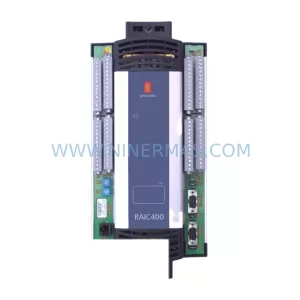
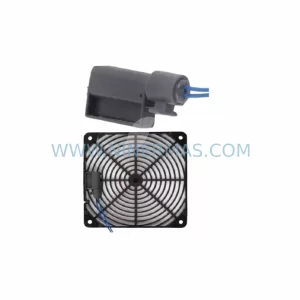
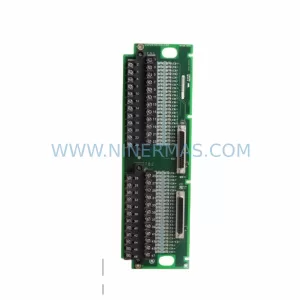
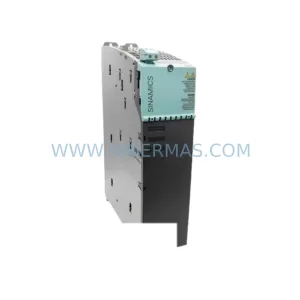
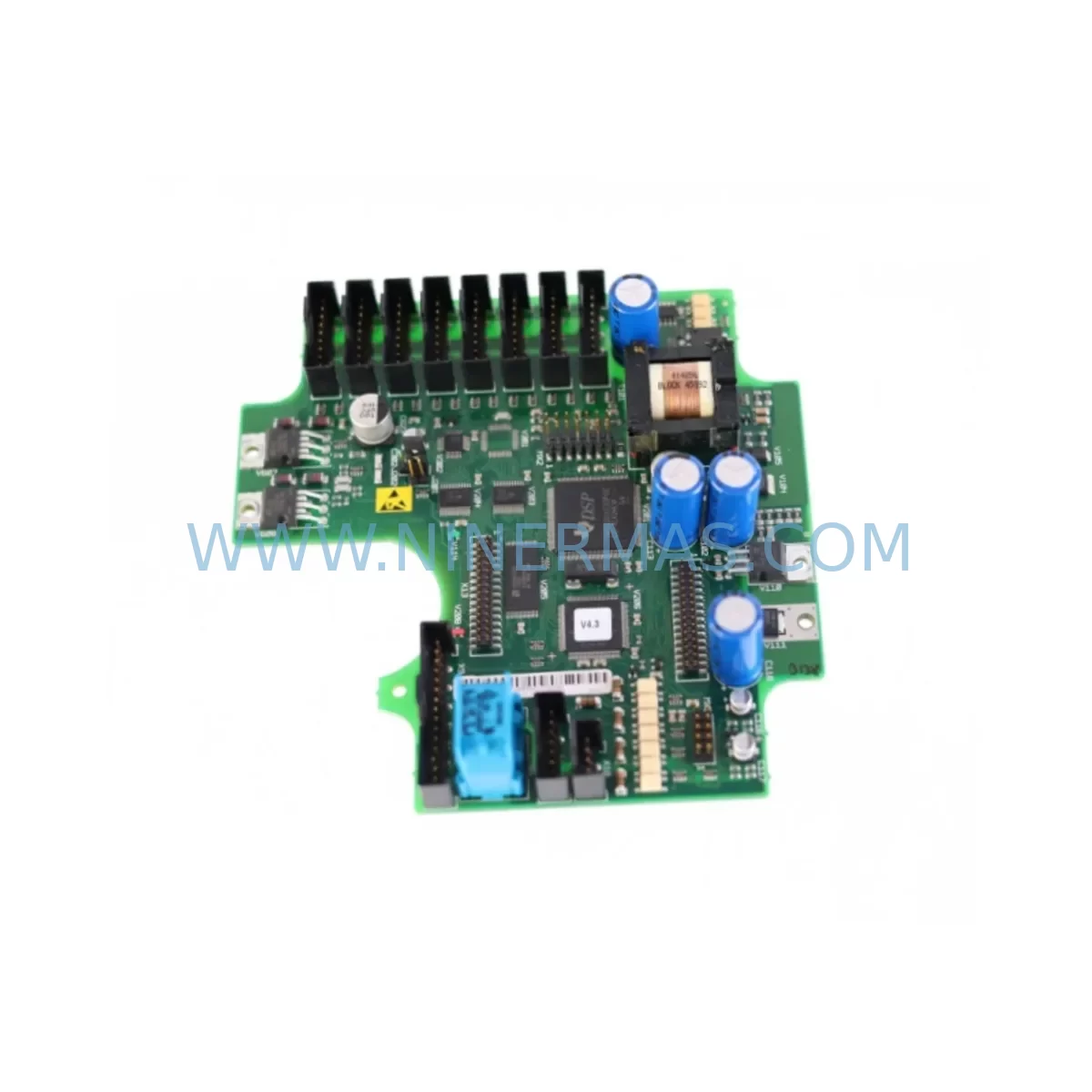
KUKA 00-168-334 Retrofit-Compatible Controller for Legacy Systems
Verify the part, confirm the platform family, and move straight into quotation with the right commercial details.
RFQ Ready
- SKUKRC4 00-168-334 00-181-563 KRC2 00-126-383 KRC2RDW 00-119-966
- CategoryPLC & Industrial Automation Modules
- BrandKUKA
- SupportAvailability, lead time, condition, and shipping coordination
How Buyers Usually Use This Page
- Confirm the exact part number and platform family before sending the quote request.
- Use direct email when quantity, condition, and destination are already defined internally.
- Switch to the broader brand or category archive when you need alternates nearby.
Series Navigation
Move through the most common platform families behind this part.
Product RFQ
Send this part directly for quotation.
Include quantity, required condition, destination country, and target delivery timing. Current reference: KUKA 00-168-334 Retrofit-Compatible Controller for Legacy Systems with SKU KRC4 00-168-334 00-181-563 KRC2 00-126-383 KRC2RDW 00-119-966.
KUKA 00-168-334 Retrofit-Compatible Controller for Legacy Systems
The KUKA 00-168-334 is a retrofit-compatible robot controller module designed to serve as a direct replacement and upgrade solution for legacy KUKA KRC4 and KRC2 series robotic control systems. As industrial automation facilities face increasing pressure to extend the operational life of existing robot installations while maintaining production continuity, the 00-168-334 provides a reliable, tested, and immediately deployable hardware solution. This unit is compatible with the KRC4 control cabinet architecture and supports seamless substitution for the discontinued 00-181-563 variant, as well as the KRC2-series modules 00-126-383 and 00-119-966 (KRC2RDW), making it a versatile choice for multi-generation KUKA robot fleets.
Whether your facility operates KUKA KR 6, KR 16, KR 60, KR 150, or KR 210 series articulated robots, the 00-168-334 is engineered to restore full controller functionality with minimal reconfiguration. Each unit undergoes pre-shipment functional testing to verify power-on behavior, communication link integrity, and I/O response before dispatch. A 12-month warranty is included with every shipment, providing procurement and maintenance teams with the assurance required for safety-critical automation environments.
Upgrade Compatibility Table
| Parameter | KRC4 (00-168-334) | KRC2 (00-126-383) | KRC2RDW (00-119-966) |
|---|---|---|---|
| Controller Generation | KRC4 | KRC2 | KRC2 RDW Variant |
| Backplane Interface | KRC4 standard backplane | KRC2 backplane | KRC2 RDW backplane |
| Communication Protocol | EtherCAT / ProfiNet | DeviceNet / Interbus | DeviceNet / Interbus |
| Power Supply Requirement | 24 VDC / 400 VAC 3-phase | 24 VDC / 400 VAC 3-phase | 24 VDC / 400 VAC 3-phase |
| Terminal Wiring | X11 / X13 safety terminal | X11 safety terminal | X11 safety terminal |
| Module Address Config | Software-defined via WorkVisual | DIP switch / KRL | DIP switch / KRL |
| HMI Compatibility | KCP4 / smartPAD | KCP2 teach pendant | KCP2 teach pendant |
| Installation Space | Standard KRC4 cabinet slot | Standard KRC2 cabinet slot | Standard KRC2 cabinet slot |
| Replacement Recommendation | Direct drop-in for 00-181-563 | Direct drop-in for 00-126-383 | Direct drop-in for 00-119-966 |
| Commissioning Tool | WorkVisual 6.x | KUKA.WorkVisual / OfficeLite | KUKA.WorkVisual / OfficeLite |
| Warranty | 12 Months | 12 Months | 12 Months |
Retrofit Planning for Existing Automation Systems
Successful integration of the KUKA 00-168-334 into an existing production line requires a structured retrofit plan that addresses hardware compatibility, software configuration, and field commissioning in sequence. Before initiating any replacement, maintenance engineers should verify the available power capacity within the control cabinet. The KRC4 cabinet requires a stable 400 VAC three-phase supply and a dedicated 24 VDC logic power rail. If the existing cabinet was originally configured for a KRC2 system, the KUKA KPP 00-151-172 (KUKA Power Pack) may require replacement or reconfiguration to match KRC4 power delivery specifications.
Terminal wiring is a critical checkpoint. The X11 and X13 safety terminal blocks on the KRC4 platform differ from the KRC2 X11 layout. Engineers must remap emergency stop circuits, enabling switch inputs, and external axis enable signals according to the KRC4 wiring diagram. The KUKA SIB 00-119-966 (Safety Interface Board) and the ESC 00-109-802 (Electronic Safety Controller) must be verified for compatibility with the replacement module before powering on the system.
Backplane interface alignment is equally important. The KRC4 backplane accommodates the CCU (Cabinet Control Unit), and the 00-168-334 must be seated correctly in the designated slot. If the retrofit involves migrating from a KRC2 system, the KRC2 RDC 00-130-764 (Resolver Digital Converter) board will need to be replaced with the KRC4-compatible RDC variant to ensure accurate axis position feedback. Failure to address this step will result in axis initialization errors during startup.
Module address configuration differs significantly between KRC2 and KRC4 platforms. KRC2 systems relied on DIP switch settings and KRL (KUKA Robot Language) parameter files, while KRC4 uses WorkVisual 6.x for network topology mapping and module address assignment. Engineers should archive the existing KRL program files and robot configuration data before beginning the hardware swap. The KUKA KEB 00-128-358 (KUKA Energy Block) should also be inspected during this phase, as energy recovery behavior differs between controller generations.
For facilities operating multiple robots on a shared DeviceNet or ProfiNet network, the communication protocol migration must be planned carefully. KRC2 systems commonly used DeviceNet and Interbus, while KRC4 natively supports EtherCAT and ProfiNet. If the plant network infrastructure is not yet upgraded, a protocol gateway or bridge device may be required during the transition period. The KUKA KCP4 00-168-334 smartPAD teach pendant replaces the KCP2 pendant and must be paired with the new controller before HMI screen layouts and program navigation can be verified.
I/O expansion requirements should be assessed before finalizing the retrofit scope. If the existing system used KUKA-specific I/O modules mounted on the KRC2 backplane, these may need to be replaced with KRC4-compatible I/O expansion units. Signal isolators between the robot controller and field devices should be tested to confirm that 24 VDC signal levels and response times remain within specification after the hardware change. The PMB 00-151-172 (Power Management Board) within the KRC4 cabinet should be inspected and replaced if signs of wear or thermal stress are present.
Installation space confirmation is a practical but often overlooked step. The KRC4 cabinet has a larger footprint than the KRC2 cabinet in most configurations. If the retrofit involves a full cabinet replacement rather than a module-level swap, floor space, cable routing, and cooling airflow must be re-evaluated. Ninermas maintains reserved inventory of the 00-168-334 and associated KRC4 components to support planned retrofit projects with predictable lead times, reducing the risk of extended downtime caused by parts shortages.
Downtime Control During System Migration
Minimizing unplanned downtime is the primary operational concern during any robot controller migration. A structured approach to the 00-168-334 replacement begins with a full backup of the existing robot program, including all KRL source files, machine data, tool and base coordinate frames, and safety configuration parameters. This backup should be stored on an external USB drive and verified before the hardware swap begins.
The recommended migration sequence is to power down the robot and controller in the correct order, disconnect all field wiring at labeled terminal blocks, remove the legacy module, install the 00-168-334, reconnect wiring according to the KRC4 terminal diagram, and power on in stages — first the 24 VDC logic supply, then the main 400 VAC drive power. This staged power-on sequence allows engineers to verify controller boot behavior and communication link establishment before enabling robot motion.
Original program logic is preserved through the KRL archive and can be restored via WorkVisual after the hardware replacement is confirmed stable. HMI screen layouts on the KCP4 smartPAD may require minor reconfiguration if custom user interface panels were defined in the KRC2 environment. Communication links to upstream PLC systems — such as Siemens S7-300, S7-400, or S7-1500 controllers — should be verified by checking ProfiNet or EtherCAT diagnostic status in the WorkVisual network view before releasing the robot for production.
Field commissioning should include a full axis mastering verification, brake test, and a slow-speed dry run of the existing program before returning to full production speed. Ninermas provides pre-shipment tested units to reduce the risk of DOA (dead on arrival) hardware failures, which are a significant source of extended downtime in unplanned replacement scenarios. With reserved stock availability and a 12-month warranty, the 00-168-334 supports both planned maintenance windows and emergency breakdown recovery.
Retrofit Support FAQ
Q1: Is the KUKA 00-168-334 a direct replacement for the 00-181-563 and 00-126-383?
Yes. The 00-168-334 is designed as a compatible replacement for the discontinued 00-181-563 (KRC4 variant) and the KRC2-series 00-126-383. Physical mounting, backplane connector layout, and functional behavior are equivalent. Minor firmware version differences may require a WorkVisual project update before full commissioning.
Q2: What commissioning steps are required after installing the 00-168-334?
After hardware installation, connect the KCP4 smartPAD, power on the 24 VDC logic supply, and verify controller boot. Load the archived WorkVisual project, confirm module addresses, restore the KRL program archive, perform axis mastering, and conduct a brake test before resuming production. Safety function verification per the original risk assessment is mandatory before releasing the robot.
Q3: How is the unit tested before shipment?
Each 00-168-334 unit undergoes a pre-shipment functional test that includes power-on verification, communication interface check, and I/O response validation. Test records are available upon request. All units are shipped with a 12-month warranty covering manufacturing defects and functional failures under normal operating conditions.
Q4: What is the typical lead time and inventory availability?
Ninermas maintains reserved inventory of the 00-168-334 to support both planned retrofit projects and emergency breakdown scenarios. Standard lead time for in-stock units is 3–7 business days for international shipments. Long-term supply commitments and reserved stock programs are available for facilities managing multi-robot fleets or scheduled maintenance cycles.
| Product Series | Legacy |
|---|---|
| Country of Origin | DE |
Catalog Continuation
More KUKA modules in the catalog.
Use the brand lane to compare nearby part numbers, platform-adjacent modules, and other inquiry-ready listings before sending your final RFQ.
SKU: 033.56.84.10C CLOOS 033.56.84.10D
KUKA 033.56.84.10C Retrofit-Compatible Gearbox for Legacy Systems
SKU: 00-117-606 1FK7100-5AZ91-1ZZ9-Z S05 3.2kw 00-122-284C2ksd1-08 00-119-768 1FK7103-5AZ91-1ZZ9-Z S08 5.9kw
KUKA 00-117-606 Retrofit-Compatible Servo Motor for Legacy Systems
SKU: 00-226-59600226596 KR6R900 56 TSMY0141
KUKA 00-226-596 Retrofit-Compatible Servo Drive for Legacy Systems
Catalog Continuation
Alternative parts within PLC & Industrial Automation Modules.
Stay inside the same system family when you need substitutes, adjacent modules, or a broader shortlist for procurement review.