Original Industrial Spare Part
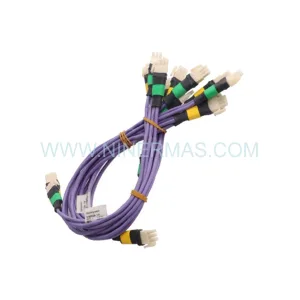
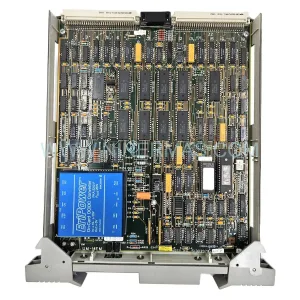
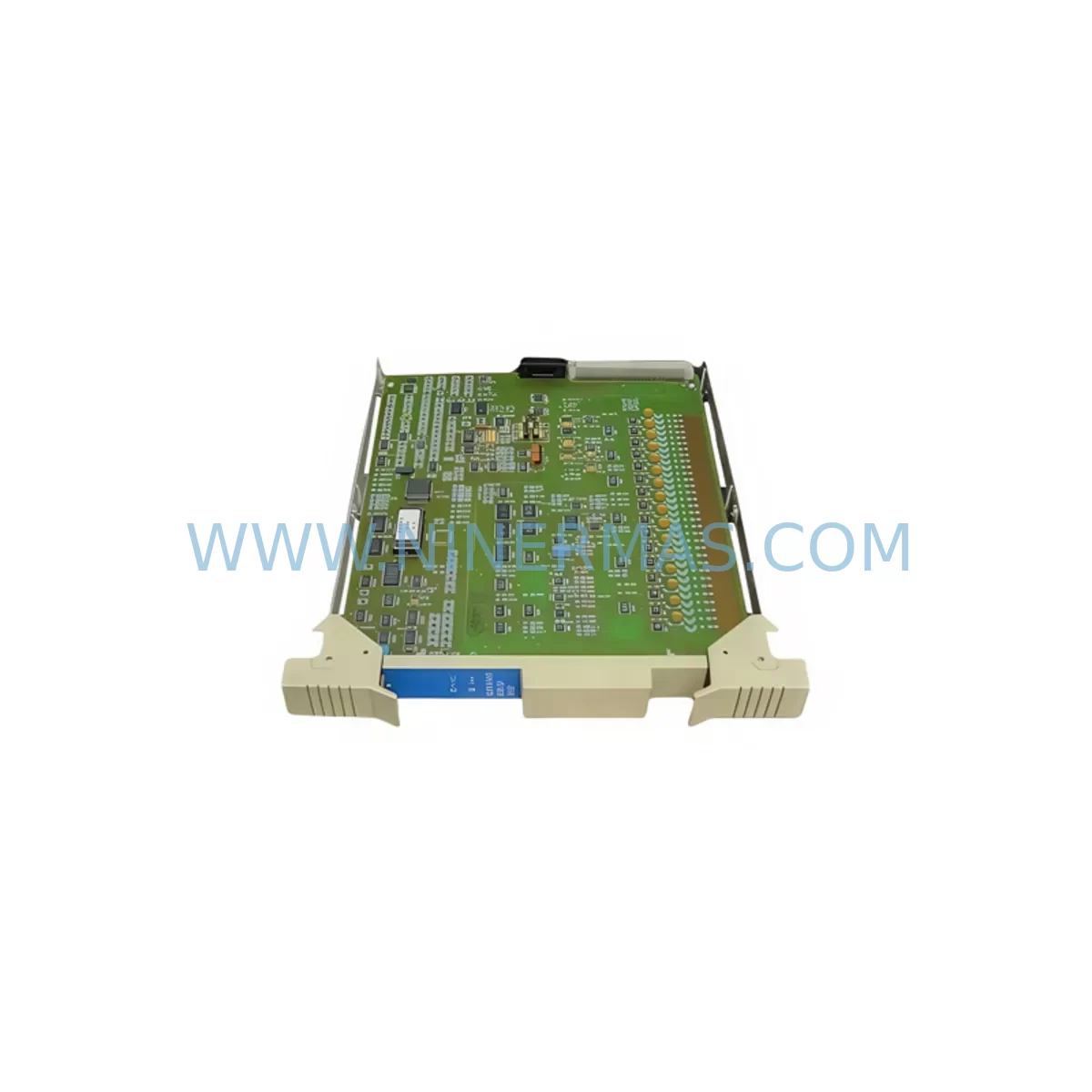
Honeywell 51304754-100 Retrofit-Compatible I/O for Legacy Systems
Verify the part, confirm the platform family, and move straight into quotation with the right commercial details.
RFQ Ready
- SKU51304754-100
- CategoryDCS Distributed Control Systems
- BrandHoneywell
- SupportAvailability, lead time, condition, and shipping coordination
How Buyers Usually Use This Page
- Confirm the exact part number and platform family before sending the quote request.
- Use direct email when quantity, condition, and destination are already defined internally.
- Switch to the broader brand or category archive when you need alternates nearby.
Series Navigation
Move through the most common platform families behind this part.
Product RFQ
Send this part directly for quotation.
Include quantity, required condition, destination country, and target delivery timing. Current reference: Honeywell 51304754-100 Retrofit-Compatible I/O for Legacy Systems with SKU 51304754-100.
Honeywell 51304754-100 Retrofit-Compatible I/O Module for Legacy Systems
The Honeywell 51304754-100 is a proven I/O module widely deployed in TDC 3000 distributed control system environments. As aging automation infrastructure reaches end-of-life, plant engineers and maintenance teams increasingly rely on verified retrofit-compatible replacements to extend the operational lifespan of existing control cabinets without committing to a full platform migration. This module serves as a direct replacement candidate for facilities running legacy Honeywell TDC 3000 architectures, offering a controlled upgrade path that minimizes engineering risk and unplanned downtime.
When planning a retrofit around the 51304754-100, the first step is confirming power supply capacity within the existing rack. TDC 3000 systems typically use dedicated power conditioners and backplane bus arrangements that must be validated before swapping any I/O module. Engineers should verify that the existing Honeywell power supply module — often a 51190076-100 or equivalent — can sustain the additional load introduced by the replacement unit. Backplane slot addressing must also be confirmed, as module address assignments in the TDC 3000 environment are tied to physical slot positions and must match the original configuration to avoid I/O mapping conflicts in the control database.
Terminal wiring compatibility is a critical checkpoint. Field wiring connected to the original 51304754-100 must be documented prior to removal, including signal type (4–20 mA, discrete, thermocouple, or RTD), wire gauge, and shield grounding practice. If the retrofit involves migrating to a newer Honeywell Experion PKS platform, terminal block adapters or marshalling panels may be required to bridge legacy field wiring to the new I/O sub-system. In some cases, a Honeywell LLMUX or equivalent signal conditioning component may already be present in the cabinet and should be retained during the transition.
Program compatibility is another area requiring careful attention. The control strategy residing in the Honeywell Universal Control Network (UCN) or Local Control Network (LCN) must be exported and reviewed before any hardware change. CL (Control Language) programs referencing the specific I/O point addresses associated with the 51304754-100 must be updated if the replacement module uses a different channel mapping. Coordination with the HMI layer — typically a Honeywell GUS (Global User Station) or a more modern Experion Flex Station — is essential to ensure that display faceplates, alarm setpoints, and trend configurations remain aligned with the updated I/O structure.
Communication link integrity should be verified throughout the retrofit process. TDC 3000 systems rely on the Honeywell Data Hiway or Local Control Network for real-time data exchange between controllers, I/O modules, and operator stations. Any disruption to the hiway connection during module replacement must be managed carefully to avoid cascading alarms or process upsets. Where possible, the replacement module should be pre-configured and bench-tested against a spare rack or simulator before installation in the live cabinet.
Installation space confirmation is straightforward for like-for-like replacements within the same TDC 3000 rack, as the 51304754-100 follows standard Honeywell card dimensions. However, if the retrofit involves migrating to a Honeywell Series C or Experion C300 controller environment, rack depth, card guide spacing, and backplane connector type must all be re-evaluated. In mixed-generation cabinets, it is common to find a combination of legacy TDC 3000 modules alongside newer Honeywell HC900 or Safety Manager components, and physical clearance between card types must be maintained.
Upgrade Compatibility Table
| Parameter | Details |
|---|---|
| SKU / Part Number | 51304754-100 |
| Brand / Series | Honeywell TDC 3000 |
| Module Type | I/O Module (Retrofit-Compatible) |
| Backplane Interface | TDC 3000 standard card slot (verify slot address before installation) |
| Communication Compatibility | Honeywell Data Hiway / Local Control Network (LCN) |
| Power Requirement | Confirm with existing power supply module (e.g. 51190076-100 series) |
| Terminal Wiring | Field wiring documentation required prior to swap; adapter may be needed for Experion migration |
| Installation Space | Standard TDC 3000 card dimensions; verify rack clearance for mixed-generation cabinets |
| Replacement Recommendation | Direct drop-in for TDC 3000; engineering review required for Experion PKS migration |
| Commissioning Notes | Bench-test recommended; verify I/O address mapping and HMI faceplate alignment |
| Warranty | 12-Month Warranty included |
Retrofit Planning for Existing Automation Systems
A successful retrofit centered on the Honeywell 51304754-100 requires a structured bill-of-materials review covering all interdependent components in the control cabinet. Beyond the I/O module itself, engineers typically need to account for the associated Honeywell FTA (Field Termination Assembly), which provides the physical interface between field wiring and the card cage. The FTA model must match the I/O module type — mismatches between the FTA and the card are a common source of commissioning delays.
In systems where the 51304754-100 handles analog input signals, signal isolators or Honeywell SLLAI (Smart Line Load Analog Input) components may be present in the signal path and should be inspected for compatibility with the replacement module. If the retrofit extends to the controller level, a Honeywell PM (Process Manager) or HPM (High-Performance Process Manager) module may need firmware updates to recognize the new I/O configuration. The HPM is a common upgrade target in TDC 3000 modernization projects and is often replaced or supplemented by a Honeywell C300 Controller when migrating to the Experion PKS platform.
For facilities managing a phased migration, it is practical to maintain a parallel inventory of both legacy TDC 3000 spares and Experion-compatible components. This approach allows maintenance teams to address emergency breakdowns on the legacy system while progressively commissioning the new platform. Key spare items in this scenario typically include the Honeywell 51304476-100 or similar I/O interface modules, power supply units, and communication interface cards for the UCN or LCN network. Programming cables and configuration tools — such as the Honeywell Control Builder or legacy LCN engineering workstation software — must also be available on-site during the transition period.
Where I/O expansion is required as part of the upgrade, Honeywell IOTA (I/O Termination Assembly) panels provide a structured approach to adding signal capacity without redesigning the entire cabinet layout. Combining the 51304754-100 replacement with an I/O expansion strategy allows plant operators to increase point count while maintaining backward compatibility with existing field instruments and junction boxes.
Downtime Control During System Migration
Minimizing production downtime during a TDC 3000 retrofit requires a disciplined change management process. The recommended approach is to complete all pre-migration tasks — including program backup, I/O list verification, spare parts staging, and HMI screenshot documentation — before any physical work begins in the cabinet. A full export of the control database from the Honeywell Engineering Workstation (EWS) should be archived and stored off-site as a recovery baseline.
During the actual module swap, the sequence of operations should follow a defined isolation procedure: confirm process is in manual or safe state, de-energize the card slot, remove the legacy 51304754-100, install the replacement unit, restore power, and verify I/O point status on the operator station before returning the loop to automatic control. This sequence, when followed consistently, typically limits the active intervention window to under 30 minutes per module, significantly reducing exposure to process upsets.
For critical control loops where even brief interruptions are unacceptable, a hot-standby or redundant I/O configuration should be evaluated. Honeywell TDC 3000 supports redundant module configurations in certain rack types, and this capability should be leveraged wherever the process criticality justifies the additional hardware cost. Post-installation, a structured loop check — verifying signal range, alarm response, and HMI display accuracy — should be completed and documented before the retrofit is considered closed.
Maintaining field control continuity also depends on preserving the integrity of the communication link throughout the migration. Any temporary disconnection of the Data Hiway or LCN segment must be coordinated with the control room team to ensure that operators are aware of reduced visibility and can manage the affected process area manually during the transition window.
Retrofit Support FAQ
Q: Is the 51304754-100 a direct drop-in replacement for the original TDC 3000 module?
A: In most cases, yes — provided the replacement unit is the same revision level and the FTA model matches. We recommend confirming the revision suffix and FTA compatibility before installation. Our team can assist with cross-reference verification prior to shipment.
Q: What commissioning steps are required after installing the replacement module?
A: After physical installation, verify that the module is recognized by the HPM or PM controller, confirm I/O address mapping in the control database, perform a loop check on all associated field points, and validate HMI faceplate displays and alarm setpoints. A bench test prior to site installation is strongly recommended.
Q: How is the module tested before shipment?
A: All units undergo functional testing prior to dispatch, including power-on verification and I/O channel continuity checks. Each module ships with a test report. Units are covered by a 12-month warranty from the date of shipment.
Q: What is the typical lead time and inventory availability?
A: We maintain stock of the 51304754-100 and related TDC 3000 components to support urgent retrofit and breakdown requirements. Standard orders ship within 3–5 business days. For large-quantity or project-based requirements, please contact our sales team for availability confirmation and project pricing.
| Product Series | TDC 3000 |
|---|---|
| Country of Origin | US |
Catalog Continuation
Nearby part numbers around 51304754.
Use this lane when the buyer is comparing adjacent model numbers, revision-near items, or closely related spare variants within the same brand family.
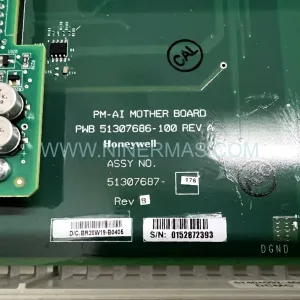
SKU: 51304754-150 MC-PAIH03
Honeywell 51304754-150 MC-PAIH03 Service-Ready Spare Part
SKU: MC-PAIH03 51304754-150
Honeywell MC-PAIH03 51304754-150 Safety-Reliable AI Module
Catalog Continuation
More Honeywell modules in the catalog.
Use the brand lane to compare nearby part numbers, platform-adjacent modules, and other inquiry-ready listings before sending your final RFQ.
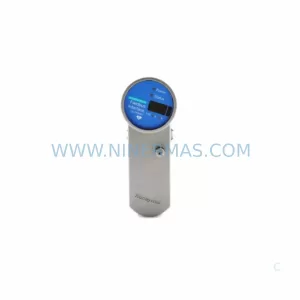
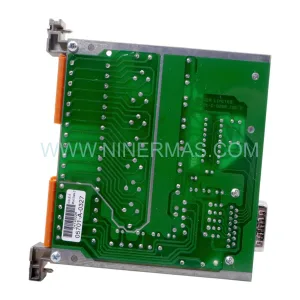
SKU: CC-PDIL51 CC-PDOD51 CC-PAIH51 CC-PAOH51
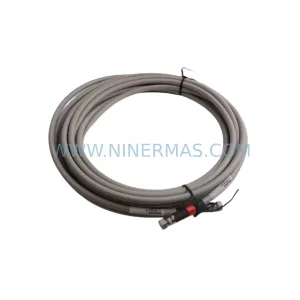
Honeywell CC-PDIL51 Service-Ready Spare Part for Industrial Maintenance
Catalog Continuation
Alternative parts within DCS Distributed Control Systems.
Stay inside the same system family when you need substitutes, adjacent modules, or a broader shortlist for procurement review.
SKU: AI880A 3BSE039293R1
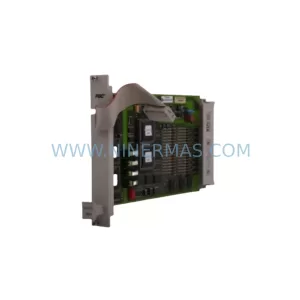
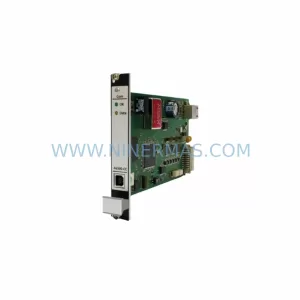
ABB 3BSE039293R1 Service-Ready Spare Part for Industrial Maintenance
SKU: TB825 3BSE036634R1
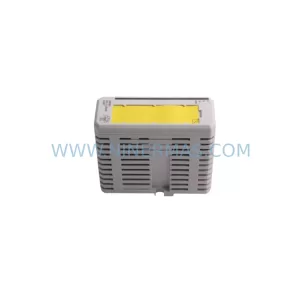
ABB TB825 3BSE036634R1 Retrofit-Compatible Terminal for Legacy Systems