Original Industrial Spare Part
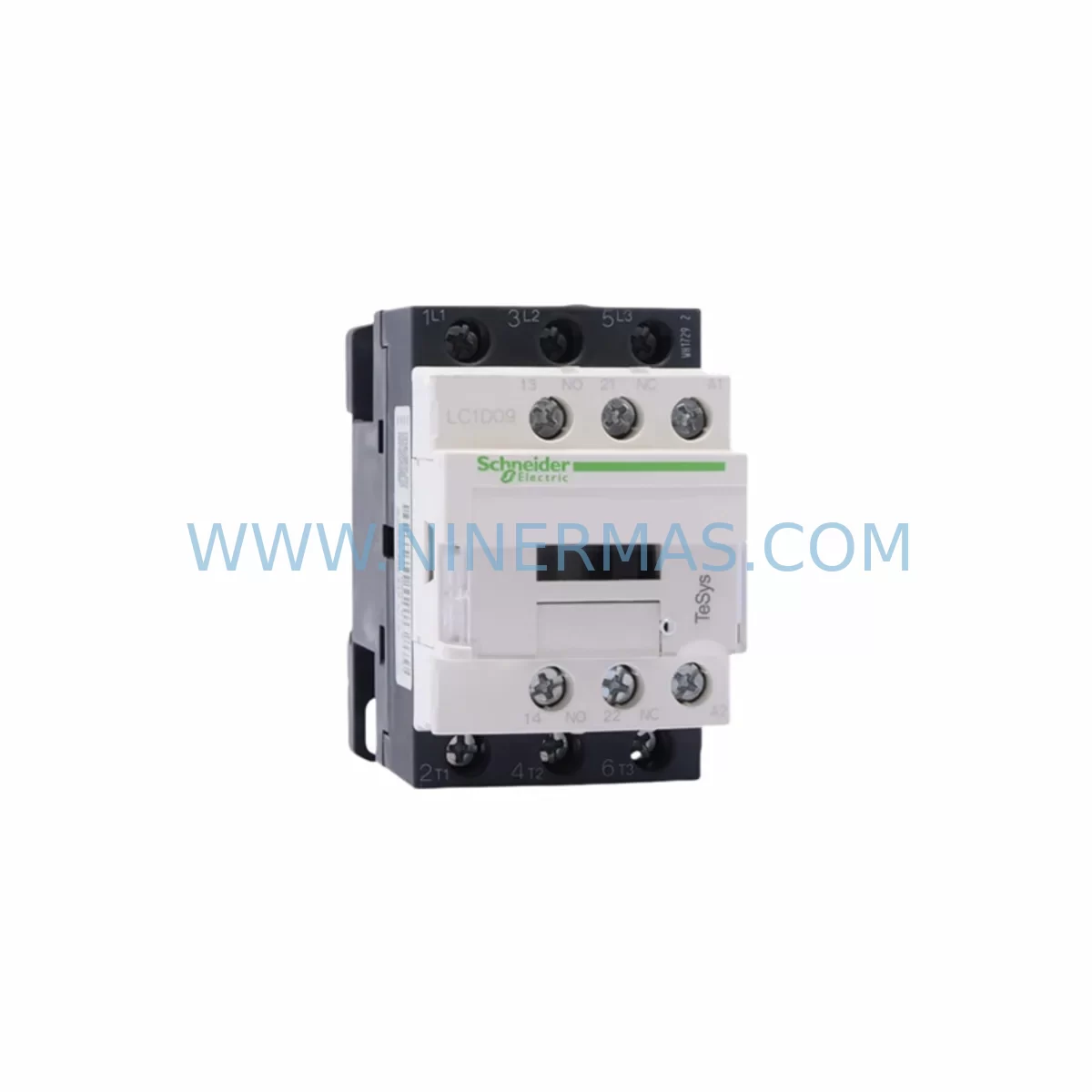
Schneider LC1D95M7C Retrofit-Compatible Contactor for Legacy Systems
Verify the part, confirm the platform family, and move straight into quotation with the right commercial details.
RFQ Ready
- SKULC1D95M7C
- CategoryPLC & Industrial Automation Modules
- BrandSchneider Electric
- SupportAvailability, lead time, condition, and shipping coordination
How Buyers Usually Use This Page
- Confirm the exact part number and platform family before sending the quote request.
- Use direct email when quantity, condition, and destination are already defined internally.
- Switch to the broader brand or category archive when you need alternates nearby.
Series Navigation
Move through the most common platform families behind this part.
Product RFQ
Send this part directly for quotation.
Include quantity, required condition, destination country, and target delivery timing. Current reference: Schneider LC1D95M7C Retrofit-Compatible Contactor for Legacy Systems with SKU LC1D95M7C.
Schneider LC1D95M7C Retrofit-Compatible Contactor for Legacy Systems
The Schneider Electric LC1D95M7C is a 95A three-pole AC contactor from the TeSys D series, widely deployed across industrial motor control centers, control cabinets, and legacy automation panels worldwide. As production lines age and original equipment manufacturers discontinue support for older control architectures, the LC1D95M7C has become one of the most sought-after retrofit and replacement components in the industrial controls market. Whether you are upgrading a 1990s-era motor starter panel, restoring a decommissioned production line, or extending the service life of a legacy MCC bucket, this contactor delivers the electrical and mechanical compatibility required for a smooth, low-risk transition.
Rated at 95A AC-3 duty with a 220V AC coil (M7 coil code), the LC1D95M7C fits directly into existing TeSys D mounting footprints without panel modification. Its 3-pole main contact configuration and standard 35mm DIN rail or direct panel mounting make it interchangeable with earlier TeSys D variants including the LC1D80, LC1D115, and LC1D150 in many partial-load retrofit scenarios. Engineers replacing aging LC1D80M7C or LC1D115M7C units in mixed-vintage panels will find the LC1D95M7C’s terminal pitch and busbar spacing consistent with existing wiring harnesses, significantly reducing rewiring labor and the risk of miswiring during hot-swap maintenance windows.
Before committing to a retrofit using the LC1D95M7C, site engineers should verify several critical parameters. Power supply capacity at the control cabinet must be confirmed to support the 220V AC coil inrush current, particularly in panels where multiple contactors share a single control transformer. Terminal block compatibility should be checked against existing cable cross-sections — the LC1D95M7C accepts conductors up to 50mm² on the main terminals, which aligns with most legacy 95A motor feeder installations. If the existing panel uses a LAD9R1 reversing interlock or a LAD4RCU suppressor module, these accessories remain mechanically and electrically compatible with the LC1D95M7C and do not require replacement during the retrofit.
For installations integrated with Schneider Electric Modicon PLCs — including legacy Modicon TSX Micro, Modicon M340, or Modicon M580 platforms — the LC1D95M7C can be controlled directly via discrete output modules such as the BMX DDO 3202K or BMX DDO 6402K without any program logic modification, provided the existing output addressing and coil voltage assignments remain unchanged. Sites running older Quantum PLC architectures with 140DAO84200 or 140DDO35300 output cards will similarly find the LC1D95M7C a transparent replacement at the field device level.
In communication-integrated motor control applications where the contactor is supervised via a TeSys T motor management relay (LTM R series) or a TeSys U starter-controller, the LC1D95M7C slots into the existing control chain without requiring re-parameterization of the motor management device, as long as the CT ratio and overload relay settings — typically handled by a LRD332 or LRD340 thermal overload relay mounted directly to the contactor — are verified against the motor nameplate data. The LRD332 and LRD340 remain the recommended overload relay pairing for the LC1D95M7C in standard motor protection applications and are mechanically clip-mounted to the contactor’s base without additional hardware.
For sites migrating from older pneumatic or electromechanical timer-based control schemes to solid-state or PLC-based sequencing, the LC1D95M7C can be paired with a LA4DA2U electronic coil suppressor to reduce EMI interference on sensitive analog I/O cards during switching transients. This is particularly relevant in panels where the contactor shares an enclosure with analog input modules handling 4–20mA process signals or thermocouple inputs, where coil switching noise can introduce measurement errors if unsuppressed.
Installation space confirmation is a mandatory pre-retrofit step. The LC1D95M7C has an overall height of approximately 145mm with the LRD overload relay attached, a width of 90mm, and a depth of 130mm. Panels with tight vertical clearances — common in legacy 600mm-deep MCC sections — should be measured carefully before ordering, particularly if the existing contactor was a non-TeSys D frame that may have had a different profile. Horizontal spacing between adjacent contactors should allow for at least 5mm clearance on each side to ensure adequate heat dissipation at full load.
Commissioning the LC1D95M7C after installation follows a straightforward sequence: verify coil voltage at the A1/A2 terminals under no-load conditions before energizing the main circuit, confirm main contact closure with a continuity check across T1/T2/T3, and validate auxiliary contact states (if a LADN11 or LADN22 auxiliary contact block is fitted) against the existing HMI screen logic to ensure status feedback signals are correctly mapped. If the site uses a SCADA system with hardwired status inputs, the auxiliary contact wiring should be traced and verified before returning the motor to service to avoid false-run or false-fault indications on the operator interface.
Upgrade Compatibility Table
| Parameter | LC1D95M7C (This Unit) | Retrofit Notes |
|---|---|---|
| Main Contact Rating | 95A AC-3 | Verify motor FLA does not exceed 95A; derate for high-cycle applications |
| Coil Voltage | 220V AC 50/60Hz (M7) | Confirm control transformer output voltage before installation |
| Mounting | 35mm DIN rail / direct panel mount | Compatible with existing TeSys D DIN rail brackets; no adapter required |
| Terminal Pitch | Standard TeSys D pitch | Existing busbars and cable lugs typically reusable |
| Overload Relay Pairing | LRD332 / LRD340 (clip-mount) | Existing LRD overload relay can be transferred if within service life |
| Auxiliary Contact Block | LADN11 / LADN22 (add-on) | Existing auxiliary blocks are transferable; verify contact ratings |
| Communication Integration | Via TeSys T (LTM R) or TeSys U | No re-parameterization required if coil voltage unchanged |
| PLC Output Compatibility | Modicon M340, M580, Quantum | No program changes required; verify output card current capacity |
| Coil Suppressor | LA4DA2U (recommended) | Install if panel contains sensitive analog I/O modules |
| Warranty | 12 Months | Covers manufacturing defects; includes pre-shipment functional test |
Retrofit Planning for Existing Automation Systems
A successful LC1D95M7C retrofit begins well before the maintenance window opens. The planning phase should include a full audit of the existing motor control circuit: document the existing contactor model, coil voltage, auxiliary contact configuration, overload relay type and setting, and any add-on accessories such as surge suppressors, mechanical interlocks, or timing relays. In many legacy panels, the contactor is paired with a LAD9R1 reversing interlock assembly — this assembly is directly compatible with the LC1D95M7C and should be retained to avoid unnecessary disassembly of the reversing starter circuit.
For panels incorporating a Schneider Electric Zelio Logic smart relay (SR2 or SR3 series) as the sequencing controller, the LC1D95M7C’s coil can be driven directly from the relay’s transistor or relay output without modification, provided the output contact rating is sufficient for the coil inrush current. Similarly, sites using a Magelis HMI (HMIGTO or HMISTO series) for operator control should verify that the run/stop pushbutton logic mapped to the contactor’s auxiliary contacts is correctly reflected in the HMI screen after the replacement, as auxiliary contact numbering conventions can occasionally differ between contactor generations if a non-standard wiring scheme was used in the original installation.
Power distribution within the control cabinet should also be reviewed during retrofit planning. If the panel feeds multiple LC1D-series contactors from a shared busbar — for example, a bank of LC1D25, LC1D40, and LC1D65 contactors on a common 400V supply — the addition or replacement of a 95A frame contactor may require a busbar capacity check to confirm that the aggregate connected load remains within the busbar’s rated current. Incoming circuit breakers, typically a GV2 or GV3 series motor circuit breaker for smaller feeders or a Compact NSX for larger installations, should also be verified for coordination with the LC1D95M7C’s short-circuit withstand rating.
Signal isolation requirements should not be overlooked in mixed-voltage panels. Where the LC1D95M7C’s 220V AC coil circuit shares an enclosure with 24V DC PLC I/O wiring, a signal isolator or interposing relay may be required to prevent voltage crossover during maintenance activities. This is standard practice in IEC 60204-1 compliant installations and should be documented in the panel’s updated wiring diagram following the retrofit.
Downtime Control During System Migration
Minimizing production downtime during a contactor replacement requires a structured approach to pre-staging, execution, and verification. Before the maintenance window begins, the replacement LC1D95M7C should be pre-tested on a bench setup: apply 220V AC to the A1/A2 coil terminals, verify main contact closure with a multimeter, and confirm auxiliary contact states match the expected NO/NC configuration. This pre-shipment functional test — included as standard with every unit supplied by NINERMAS — eliminates the risk of installing a defective unit and discovering the fault only after the panel is reassembled.
During the replacement, the original PLC program should not be modified. The LC1D95M7C is a like-for-like electrical replacement for the existing TeSys D contactor, and no changes to output coil addresses, auxiliary contact input addresses, or motor management relay parameters should be necessary. If the site’s Modicon PLC is running a program that includes contactor feedback monitoring via auxiliary contact inputs, the program logic should be placed in forced-output mode during the swap to prevent nuisance fault trips while the contactor is physically disconnected.
After installation, a controlled restart sequence should be followed: energize the control circuit first and verify coil pickup at the A1/A2 terminals, then close the main circuit breaker and verify motor rotation direction before returning the load to automatic control. If the motor is part of a variable-speed drive system where the LC1D95M7C serves as a bypass or line contactor, the drive’s output should be inhibited during the contactor swap to prevent back-EMF from appearing on the contactor’s load-side terminals during installation.
Total planned downtime for a straightforward LC1D95M7C replacement in a well-documented panel is typically 30 to 90 minutes, including isolation, removal, installation, wiring verification, and controlled restart. Sites with complex interlock schemes or undocumented wiring should budget additional time for tracing and verification. NINERMAS recommends having a spare LADN11 auxiliary contact block and a spare LRD332 overload relay on-site during the retrofit in case inspection reveals wear or damage to these components during disassembly.
Retrofit Support FAQ
Q: Is the LC1D95M7C a direct drop-in replacement for my existing TeSys D contactor?
A: In most cases, yes. The LC1D95M7C shares the TeSys D mounting footprint, terminal pitch, and accessory interface with other contactors in the TeSys D range. Verify that your existing coil voltage is 220V AC (M7 coil code) and that your motor load does not exceed 95A AC-3. If your existing unit is a different frame size (e.g., LC1D80 or LC1D115), confirm that the LC1D95M7C’s current rating is appropriate for your application before ordering.
Q: Can I reuse my existing overload relay and auxiliary contact blocks?
A: Yes, in most cases. The LRD series thermal overload relays and LADN series auxiliary contact blocks are clip-mounted accessories that are mechanically compatible across the TeSys D range. Inspect the existing accessories for contact wear, housing cracks, or heat discoloration before reusing them. If in doubt, replace them alongside the contactor to ensure the full motor protection assembly is in known-good condition.
Q: What is included in the pre-shipment testing and what does the 12-month warranty cover?
A: Every LC1D95M7C supplied by NINERMAS undergoes a functional test prior to shipment, including coil energization verification and main/auxiliary contact continuity checks. The 12-month warranty covers manufacturing defects in materials and workmanship from the date of shipment. It does not cover damage resulting from incorrect installation, overvoltage, or operation outside the rated specifications. Warranty claims are processed directly through NINERMAS — contact sale@ninermas.com for support.
Q: Do you maintain stock for urgent retrofit requirements?
A: NINERMAS maintains inventory of the LC1D95M7C and related TeSys D accessories to support urgent retrofit and emergency replacement requirements. Lead times for in-stock units are typically 1–3 business days for international shipment. For large-quantity orders or scheduled maintenance programs requiring multiple units, contact our sales team in advance to confirm availability and arrange consolidated shipment.
| Product Series | TeSys |
|---|---|
| Country of Origin | FR |
Catalog Continuation
More Schneider Electric modules in the catalog.
Use the brand lane to compare nearby part numbers, platform-adjacent modules, and other inquiry-ready listings before sending your final RFQ.
Catalog Continuation
Alternative parts within PLC & Industrial Automation Modules.
Stay inside the same system family when you need substitutes, adjacent modules, or a broader shortlist for procurement review.
SKU: 6FC5357-0BB12-0AE0
Siemens 6FC5357-0BB12-0AE0 Service-Ready Industrial Spare Part
SKU: 3BSE011790R1(PXHK401)
ABB 3BSE011790R1 PXHK401 Retrofit-Ready Communication Module