Original Industrial Spare Part
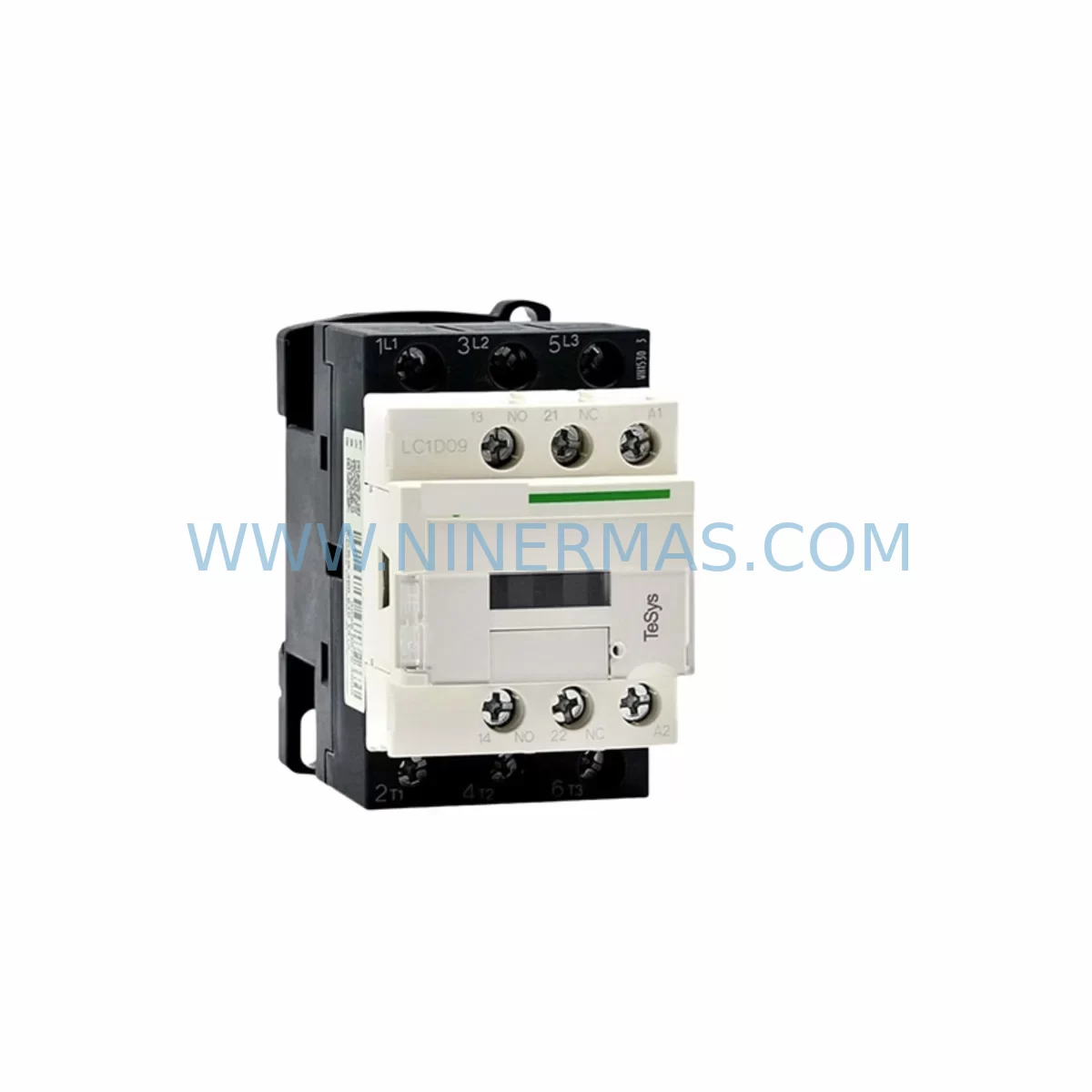
Schneider LC1D38M7C Service-Ready Spare Part for Industrial Maintenance
Verify the part, confirm the platform family, and move straight into quotation with the right commercial details.
RFQ Ready
- SKULC1D38M7C
- CategoryPLC & Industrial Automation Modules
- BrandSchneider Electric
- SupportAvailability, lead time, condition, and shipping coordination
How Buyers Usually Use This Page
- Confirm the exact part number and platform family before sending the quote request.
- Use direct email when quantity, condition, and destination are already defined internally.
- Switch to the broader brand or category archive when you need alternates nearby.
Series Navigation
Move through the most common platform families behind this part.
Product RFQ
Send this part directly for quotation.
Include quantity, required condition, destination country, and target delivery timing. Current reference: Schneider LC1D38M7C Service-Ready Spare Part for Industrial Maintenance with SKU LC1D38M7C.
Schneider LC1D38M7C Service-Ready Spare Part for Industrial Maintenance
The Schneider Electric LC1D38M7C is an original TeSys D Series AC contactor rated for 38A at AC-3 duty, with a 220V AC coil voltage. Designed for motor control, power switching, and load management in industrial automation panels, this contactor is a critical component in production lines, HVAC systems, pump stations, compressor controls, and conveyor drive circuits. When a contactor fails unexpectedly, the result is immediate production downtime — often measured in hours of lost output. Stocking the LC1D38M7C as a verified spare ensures your maintenance team can execute a rapid swap and restore operations without waiting on procurement lead times.
At NINERMAS, every LC1D38M7C unit is sourced from authorized supply channels, inspected prior to dispatch, and shipped with full traceability documentation. Our 12-month warranty covers manufacturing defects and operational failures under normal service conditions, giving procurement engineers confidence in long-term supply continuity.
Spare Maintenance Table
| Parameter | Specification |
|---|---|
| Part Number / SKU | LC1D38M7C |
| Brand | Schneider Electric |
| Series | TeSys D |
| Product Type | AC Contactor (3-Pole) |
| Rated Current (AC-3) | 38A |
| Coil Voltage | 220V AC / 50–60Hz |
| Rated Power (AC-3, 400V) | 18.5 kW |
| Auxiliary Contacts | 1NO + 1NC (integrated) |
| Mounting | DIN Rail / Screw Mount |
| Enclosure / IP Rating | Open Type (IP20 terminals) |
| Operating Temperature | -5°C to +60°C |
| Compatibility | TeSys D Series; replaces LC1D38M7, LC1D38M7TQ |
| Application Environment | Motor control centers, MCC panels, pump/compressor control, conveyor drives, HVAC |
| Origin | France (EU manufactured) |
| Warranty | 12 Months — Manufacturing defects & operational failure coverage |
| Inspection & Testing | Pre-shipment coil energization and contact resistance test |
| Certifications | CE, IEC 60947-4-1, RoHS compliant |
Maintenance Planning for Continuous Operation
Replacing the LC1D38M7C in the field is rarely an isolated task. Experienced maintenance engineers know that a failed contactor is often a symptom of broader stress in the electrical circuit. During any planned or emergency replacement, the following components in the same control cabinet or motor circuit should be inspected simultaneously to prevent repeat failures and maximize uptime:
Thermal Overload Relay (LRD Series): The LC1D38M7C is typically paired with a Schneider LRD325 or LRD332 thermal overload relay. If the contactor has failed due to overload conditions, the relay’s bimetal elements may have been stressed. Verify trip class settings and reset behavior before returning the circuit to service.
Control Power Supply (Phaseo ABL Series): The 220V AC coil circuit depends on a stable control voltage. Inspect the Schneider Phaseo ABL7RE2402 or equivalent 24VDC SMPS if the coil is driven through a step-down transformer or DC interface relay. Voltage fluctuations are a leading cause of premature coil burnout.
Auxiliary Contact Blocks (LA1DN / LA1DK Series): If the original LC1D38M7C had add-on auxiliary contact blocks (e.g., LA1DN11 or LA1DK10) for feedback signals to the PLC or interlock circuits, inspect these for contact wear and replace as a set to maintain signal integrity.
Control Relay (RXM / RSB Series): In many motor starter circuits, a Schneider RXM2AB2P7 or RSB1A160P7 intermediate relay drives the contactor coil from a PLC digital output. Check coil resistance and contact condition on these relays — a degraded relay can cause erratic contactor operation even after the contactor itself is replaced.
Terminal Blocks and Wiring (Linergy / NSYTRV Series): Inspect the power terminals (L1/L2/L3 and T1/T2/T3) and control wiring terminals for signs of thermal discoloration, loose crimps, or oxidation. Schneider Linergy FK or NSYTRV series terminal blocks in the same row should be checked for torque compliance per IEC standards.
Miniature Circuit Breaker (iC60 / GV2 Series): The upstream protection device — typically a Schneider iC60N or GV2ME motor circuit breaker — should be tested for proper trip characteristics. A breaker that has operated multiple times near its trip threshold may have degraded interrupting capacity and should be replaced preventively.
Surge Suppressor / RC Snubber (LAD Series): If the LC1D38M7C coil circuit lacks a surge suppressor (e.g., Schneider LADR2 RC snubber or LAD9R1 varistor), switching transients can damage PLC output cards or intermediate relays. Install or verify the suppressor condition during replacement.
PLC Digital Output Module: In Modicon M340, M580, or Quantum PLC systems, the DO module driving the contactor coil (e.g., BMX DDO 3202K or 140DDO35300) should be checked for output channel health. A shorted output channel can cause continuous coil energization and accelerated contactor wear.
Fuse and Fuse Holder (DF2 / DF6 Series): Control circuit fuses (e.g., Schneider DF2BA10 or DF6FA10) protecting the 220V coil supply should be inspected and replaced if there is any evidence of thermal stress or discoloration on the fuse holder body.
HMI / SCADA Feedback Verification: After replacement, confirm that the Magelis HMIGTO or equivalent HMI panel correctly reflects the contactor status via the auxiliary contact feedback. Incorrect status indication can mask future faults and delay maintenance response.
Site Replacement Workflow
The LC1D38M7C is a direct form-fit-function replacement for earlier TeSys D variants including the LC1D38M7 and LC1D38M7TQ. The mounting footprint, terminal pitch, and coil interface are identical, allowing in-place substitution without panel modification. Follow this workflow to minimize downtime:
Step 1 — Isolation and Lockout/Tagout: De-energize the motor circuit and control supply. Apply LOTO per site safety procedures. Verify absence of voltage on all three power poles and the coil terminals using a calibrated voltage tester.
Step 2 — Documentation: Photograph the existing wiring configuration, terminal labeling, and any add-on auxiliary contact blocks before disassembly. This is especially important in older systems where as-built drawings may not reflect field modifications.
Step 3 — Removal: Disconnect power cables (L1/L2/L3, T1/T2/T3) and control wiring from the coil terminals (A1/A2) and auxiliary contacts. Release the DIN rail locking tab and slide the contactor free. Note the orientation of any add-on blocks.
Step 4 — Inspection of Mating Components: Before installing the new LC1D38M7C, inspect the cable lugs, terminal screws, and adjacent components as described in the Maintenance Planning section above. Address any identified issues before energization.
Step 5 — Installation: Clip the new LC1D38M7C onto the DIN rail. Reconnect all power and control wiring to the correct terminals. Reattach any auxiliary contact blocks. Torque all terminals to the manufacturer’s specified values (typically 4–6 Nm for power terminals).
Step 6 — Functional Test: Restore control power and perform a no-load energization test. Verify coil pull-in and drop-out at rated voltage. Confirm auxiliary contact switching via PLC I/O status or continuity test. Restore motor load and monitor for abnormal temperature or noise during the first 30 minutes of operation.
Step 7 — Documentation Update: Record the replacement in the maintenance log with the new unit’s serial number, installation date, and technician ID. Update the spare parts inventory to trigger reorder of a replacement LC1D38M7C unit.
Spare Parts Support FAQ
Q1: Is the LC1D38M7C a direct drop-in replacement for the LC1D38M7 and LC1D38M7TQ?
Yes. The LC1D38M7C shares the same mechanical footprint, terminal layout, and electrical ratings as the LC1D38M7 and LC1D38M7TQ. The suffix “C” denotes the coil voltage variant (220V AC, 50/60Hz). No panel modifications are required for in-place substitution. Always verify the coil voltage suffix matches your control circuit before installation.
Q2: What is the recommended spare parts stocking strategy for the LC1D38M7C?
For production-critical applications, we recommend maintaining a minimum of 2 units on-site per motor control center (MCC) section. For facilities with 10 or more LC1D38M7C installations, a buffer stock of 10–15% of the installed base is a common industry practice. NINERMAS supports blanket purchase orders and scheduled delivery programs to help procurement engineers maintain optimal inventory levels without excessive capital commitment.
Q3: How does NINERMAS verify authenticity and functionality before shipment?
Every LC1D38M7C unit undergoes a pre-shipment inspection that includes coil energization at rated voltage, contact resistance measurement on all three power poles, and visual inspection for mechanical integrity. Units are shipped with original manufacturer packaging where available, along with a NINERMAS inspection certificate. Our 12-month warranty covers manufacturing defects and operational failures under normal service conditions from the date of delivery.
Q4: Can NINERMAS support long-term supply for legacy TeSys D installations?
Yes. NINERMAS maintains stock of TeSys D Series components including the LC1D38M7C and related accessories to support aging automation systems beyond the manufacturer’s standard availability window. We offer long-term supply agreements for OEMs, system integrators, and end-user maintenance departments managing legacy control infrastructure. Contact our technical sales team to discuss volume pricing, lead time commitments, and extended supply contracts.
| Product Series | TeSys |
|---|---|
| Country of Origin | FR |
Catalog Continuation
More Schneider Electric modules in the catalog.
Use the brand lane to compare nearby part numbers, platform-adjacent modules, and other inquiry-ready listings before sending your final RFQ.
Catalog Continuation
Alternative parts within PLC & Industrial Automation Modules.
Stay inside the same system family when you need substitutes, adjacent modules, or a broader shortlist for procurement review.
SKU: 6FC5357-0BB12-0AE0
Siemens 6FC5357-0BB12-0AE0 Service-Ready Industrial Spare Part
SKU: 3BSE011790R1(PXHK401)
ABB 3BSE011790R1 PXHK401 Retrofit-Ready Communication Module