Original Industrial Spare Part
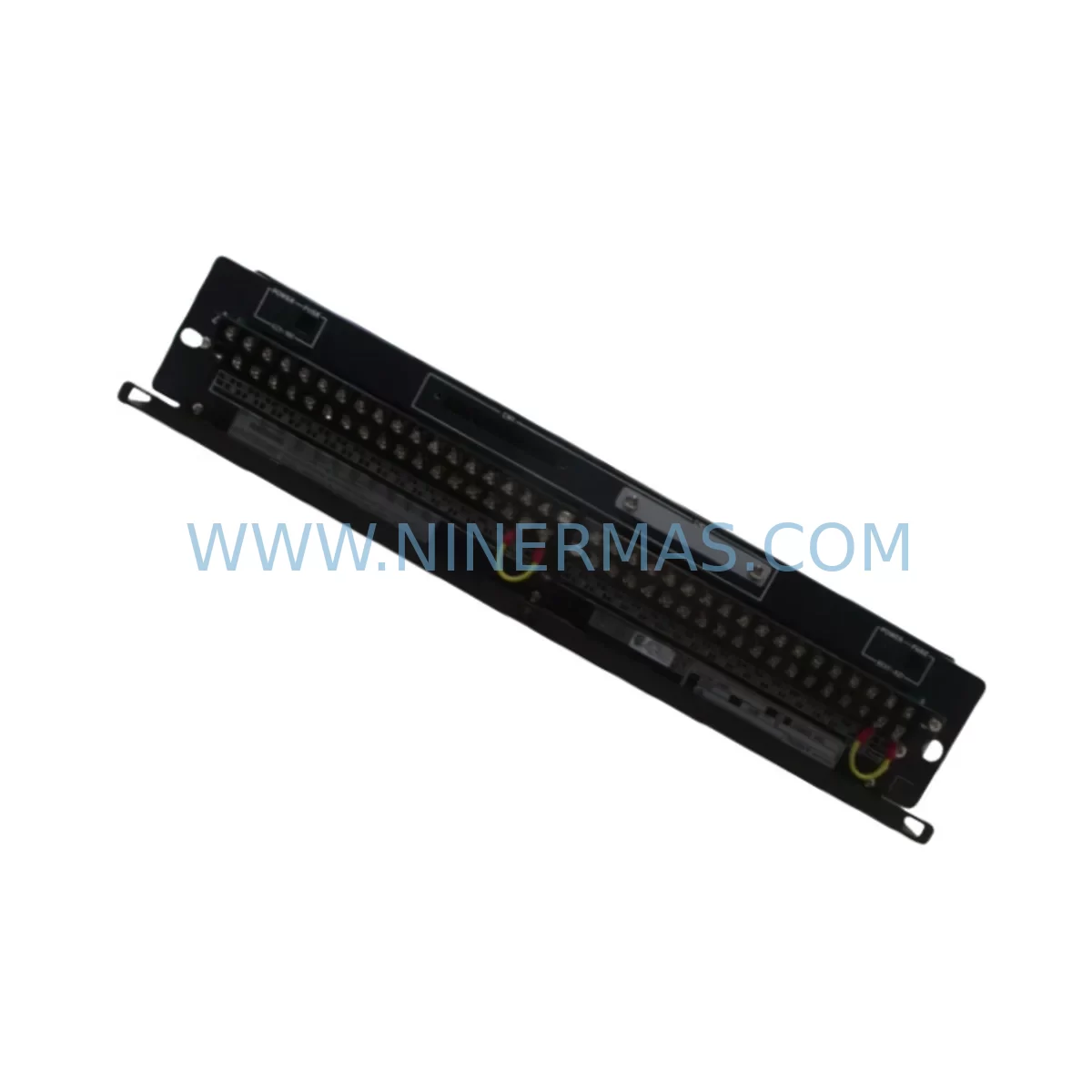
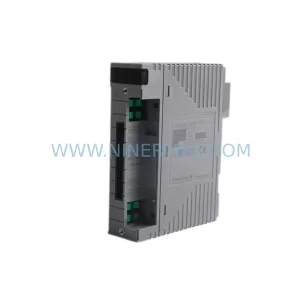
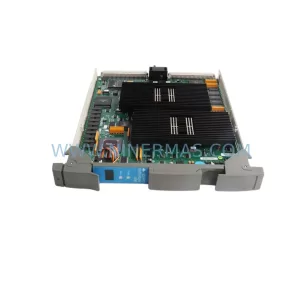
YOKOGAWA AED5D Service-Ready Spare Part for Industrial Maintenance
Verify the part, confirm the platform family, and move straight into quotation with the right commercial details.
RFQ Ready
- SKUAED5D
- CategoryDCS Distributed Control Systems
- BrandYokogawa
- SupportAvailability, lead time, condition, and shipping coordination
How Buyers Usually Use This Page
- Confirm the exact part number and platform family before sending the quote request.
- Use direct email when quantity, condition, and destination are already defined internally.
- Switch to the broader brand or category archive when you need alternates nearby.
Series Navigation
Move through the most common platform families behind this part.
Product RFQ
Send this part directly for quotation.
Include quantity, required condition, destination country, and target delivery timing. Current reference: YOKOGAWA AED5D Service-Ready Spare Part for Industrial Maintenance with SKU AED5D.
YOKOGAWA AED5D Service-Ready Spare Part for Industrial Maintenance
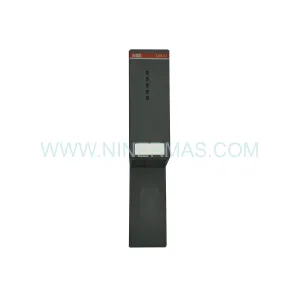
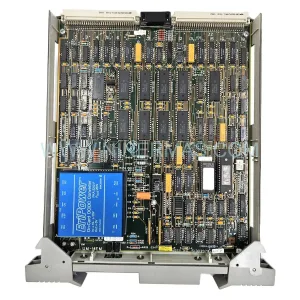
The YOKOGAWA AED5D is a ruggedized terminal board module engineered for demanding industrial environments where signal integrity, mechanical durability, and long-term system reliability are non-negotiable. As a critical interface component within YOKOGAWA’s CENTUM DCS architecture, the AED5D serves as the field-side termination point connecting field instruments, sensors, and actuators to the I/O modules housed in the control cabinet. When this component fails or degrades, the consequences extend far beyond a single signal loop — entire process segments can go offline, triggering unplanned shutdowns and costly production losses.
For maintenance engineers managing aging DCS infrastructure, keeping a verified, tested AED5D in your spare parts inventory is one of the most cost-effective strategies for minimizing mean time to repair (MTTR). At NINERMAS, every AED5D unit is sourced, inspected, and dispatched with a 12-month warranty, giving procurement teams the confidence to stock critical spares without long-term supply risk.
Spare Maintenance Table
| Parameter | Specification / Details |
|---|---|
| Part Number | AED5D |
| Brand | YOKOGAWA |
| Product Type | Ruggedized Terminal Board Module |
| Compatible Series | YOKOGAWA CENTUM VP, CENTUM CS 3000, CENTUM CS |
| Application | Field-side I/O termination in DCS control cabinets |
| Environment Rating | Ruggedized — suitable for harsh industrial environments (vibration, humidity, dust) |
| Installation | DIN rail or panel-mount within YOKOGAWA I/O nest / marshalling cabinet |
| Signal Compatibility | Analog and discrete I/O field wiring termination |
| Origin | Japan |
| Condition | Original spare, tested before shipment |
| Warranty | 12 Months |
| Lead Time | In stock — ships within 1–3 business days |
| Long-Term Supply | Available for ongoing MRO and annual maintenance contracts |
Maintenance Planning for Continuous Operation
The AED5D does not operate in isolation. In a typical YOKOGAWA CENTUM DCS cabinet, the terminal board is the last passive component before field wiring enters the active I/O layer. When planning a replacement or conducting a scheduled cabinet inspection, maintenance engineers should simultaneously verify the condition of all adjacent and dependent components to prevent repeat failures and ensure a complete, reliable restoration.
Start with the I/O module directly mated to the AED5D — commonly an analog input module such as the AAI141 or AAI543, or a digital I/O module like the ADV151. A degraded terminal board often causes intermittent signal faults that are misdiagnosed as I/O module failures; replacing the AED5D without verifying the I/O module leaves a latent fault in the system. Similarly, inspect the field cable connectors and marshalling wiring at the terminal block level — corroded terminals or loose field wiring are frequent co-failure points in harsh environments.
Within the same control cabinet, check the 24VDC power supply module (such as the YOKOGAWA PW481 or equivalent) that feeds the I/O nest. Voltage sags or ripple on the DC bus can accelerate terminal board degradation and cause erratic signal behavior. If the cabinet includes signal isolators or barriers — particularly in hazardous area installations — verify that Zener barriers or galvanic isolators on the affected loops are within specification, as these components share the same field wiring path as the AED5D.
For systems with HART-enabled field devices, confirm that the HART multiplexer or HART interface module connected through the terminal board is functioning correctly after the AED5D swap. HART communication failures post-replacement are often traced back to wiring polarity errors or impedance mismatches introduced during the terminal board change. Additionally, inspect the backplane connector on the I/O nest for bent pins or oxidation — a common issue in older CENTUM CS installations that can cause the new AED5D to seat improperly.
If the affected cabinet also houses communication modules (such as an ESB bus coupler or Vnet/IP interface card), verify their status after the replacement, as power cycling the I/O nest during maintenance can occasionally trigger communication timeouts that require a module reset. Finally, review the fuse or circuit breaker protecting the field loop circuit — a blown fuse is sometimes the root cause of the terminal board fault, and replacing the AED5D without restoring loop power will result in a no-signal condition that mimics a module failure.
For annual maintenance programs, consider stocking the AED5D alongside related consumables: terminal block inserts, cable ferrules, and DIN rail end stops. These low-cost items are frequently overlooked in spare parts budgets but are critical for a clean, code-compliant installation during emergency replacements.
Site Replacement Workflow
Step 1 — Isolation and Documentation: Before removing the AED5D, document all field wiring connections using the as-built loop drawings or take a high-resolution photograph of the terminal block. Isolate the affected I/O channel at the marshalling cabinet and confirm loop de-energization with a calibrated multimeter. For live process environments, coordinate with the control room to place the affected loops in manual mode via the CENTUM operator station (HIS) before proceeding.
Step 2 — Module Removal: Disconnect field wiring from the terminal block in sequence, labeling each conductor. Release the AED5D from its mounting position — DIN rail clip or panel fasteners depending on cabinet configuration. Inspect the vacated slot for debris, moisture ingress, or corrosion that may have contributed to the original failure.
Step 3 — New Module Installation: Seat the replacement AED5D firmly into the mounting position and verify mechanical engagement with the I/O module connector. Reconnect field wiring in reverse sequence, torquing terminal screws to the manufacturer’s specification (typically 0.5–0.6 Nm for standard terminal blocks). Verify wiring polarity for analog loops before re-energizing.
Step 4 — Loop Verification: Re-energize the field loop and confirm signal readback at the CENTUM operator station. For analog inputs, inject a known reference signal (4 mA, 12 mA, 20 mA) using a loop calibrator and verify that the DCS reading matches within the expected accuracy band. For discrete I/O, exercise the field device and confirm status change at the HIS screen.
Step 5 — Return to Service: Remove manual mode overrides at the operator station, confirm alarm status is clear, and update the maintenance log with the replacement date, new module serial number, and post-installation test results. Retain the removed AED5D for failure analysis if root cause investigation is required.
This workflow is compatible with YOKOGAWA CENTUM VP and CENTUM CS 3000 systems and can be adapted for older CENTUM CS installations with minor procedural adjustments. The AED5D’s ruggedized design means that a correctly installed replacement unit should deliver equivalent service life to the original — typically 10–15 years in a well-maintained cabinet environment.
Spare Parts Support FAQ
Q1: Is the YOKOGAWA AED5D compatible with both CENTUM VP and CENTUM CS 3000 systems?
The AED5D terminal board module is designed for use within YOKOGAWA’s CENTUM DCS family. Compatibility with a specific system revision depends on the I/O module type and nest configuration in your installation. We recommend confirming the mating I/O module part number against your system’s engineering documentation before ordering. Our technical team can assist with compatibility verification based on your cabinet layout and I/O nest model.
Q2: How is the AED5D tested before shipment?
Every AED5D unit dispatched by NINERMAS undergoes a pre-shipment inspection covering physical condition, connector integrity, and terminal block functionality. Units are packaged in anti-static, moisture-resistant packaging suitable for international freight. A 12-month warranty is provided from the date of shipment, covering manufacturing defects and functional failures under normal operating conditions.
Q3: What is the recommended spare parts stocking strategy for the AED5D?
For facilities operating YOKOGAWA CENTUM DCS systems with more than 10 AED5D units installed, we recommend maintaining a minimum of 2 units in on-site inventory. For critical process lines where unplanned downtime carries high financial or safety risk, a 5–10% spare ratio relative to installed quantity is a common industry benchmark. NINERMAS supports long-term supply agreements for customers requiring guaranteed stock availability over multi-year maintenance cycles.
Q4: Can the AED5D replace older or discontinued terminal board variants in legacy CENTUM systems?
In many cases, the AED5D can serve as a functional replacement for earlier terminal board revisions within the same CENTUM I/O family, provided the mechanical form factor and connector pinout are compatible. However, cross-revision substitution should always be validated against YOKOGAWA’s official compatibility matrix or confirmed with a qualified DCS engineer before installation in a live system. NINERMAS can provide technical documentation support to assist with this evaluation.
| Product Series | CENTUM VP |
|---|---|
| Country of Origin | JP |
Catalog Continuation
More Yokogawa modules in the catalog.
Use the brand lane to compare nearby part numbers, platform-adjacent modules, and other inquiry-ready listings before sending your final RFQ.
Catalog Continuation
Alternative parts within DCS Distributed Control Systems.
Stay inside the same system family when you need substitutes, adjacent modules, or a broader shortlist for procurement review.
SKU: PM632 3BSE005831R1
ABB PM632 3BSE005831R1 Retrofit-Compatible Processor for Legacy Systems
SKU: High Performance Communication Controller
Honeywell 51401635-150 Service-Ready Spare for C300