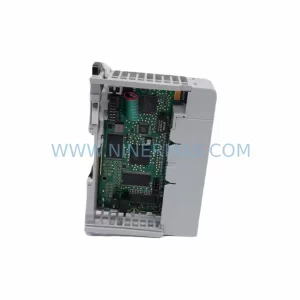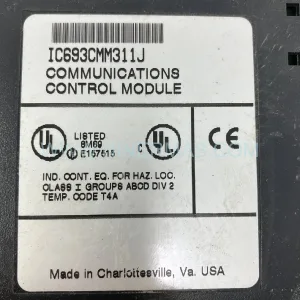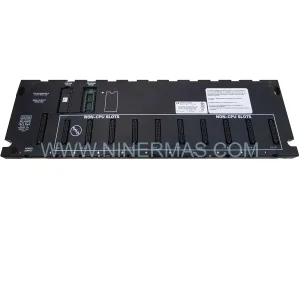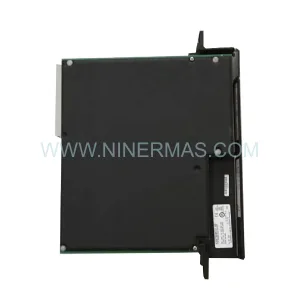
Original Industrial Spare Part
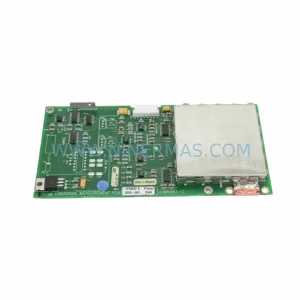
MSA AUER 10019468 N73/20 Retrofit Controller Card
Verify the part, confirm the platform family, and move straight into quotation with the right commercial details.
RFQ Ready
- SKU10019468 N73/20
- CategoryPLC & Industrial Automation Modules
- BrandMSA AUER
- SupportAvailability, lead time, condition, and shipping coordination
How Buyers Usually Use This Page
- Confirm the exact part number and platform family before sending the quote request.
- Use direct email when quantity, condition, and destination are already defined internally.
- Switch to the broader brand or category archive when you need alternates nearby.
Series Navigation
Move through the most common platform families behind this part.
Product RFQ
Send this part directly for quotation.
Include quantity, required condition, destination country, and target delivery timing. Current reference: MSA AUER 10019468 N73/20 Retrofit Controller Card with SKU 10019468 N73/20.
MSA AUER 10019468 N73/20 Retrofit Controller Card: Legacy-Compatible Upgrade for Aging Industrial Control Systems
The MSA AUER 10019468 N73/20 is a retrofit-compatible controller card engineered to serve as a direct replacement for discontinued N73-series control modules deployed across gas detection, safety monitoring, and industrial process control systems. As original MSA AUER N73/20 units reach end-of-life and factory support is withdrawn, facilities managers and automation engineers face mounting pressure to source verified replacement hardware that preserves existing panel wiring, backplane connections, and field-proven control logic without triggering a full system overhaul.
NINERMAS maintains verified stock of the 10019468 N73/20 controller card, pre-tested prior to shipment and backed by a 12-month warranty. Each unit undergoes functional verification covering power rail integrity, communication link handshake, and I/O channel response before dispatch. This ensures that replacement cards arrive ready for installation, minimising commissioning time and reducing the risk of extended unplanned downtime in critical safety or process environments.
When planning a retrofit around the N73/20, engineers must confirm several key parameters before removing the legacy card. Power supply compatibility is the first checkpoint: the N73/20 operates within the MSA AUER N73 rack power envelope, and the existing PSU module — often an MSA AUER N73 power supply unit — must be verified to deliver stable voltage within tolerance before the replacement card is seated. If the power supply has aged alongside the controller card, simultaneous replacement of both units is strongly recommended to avoid introducing a new fault source into a freshly commissioned rack.
Terminal wiring is the second critical area. The N73/20 uses a defined terminal block layout for field sensor inputs, relay outputs, and signal commons. Before disconnecting the legacy card, a full terminal photograph and wiring schedule should be captured. Any deviation from the original wiring diagram — accumulated through years of field modifications — must be documented and reconciled against the replacement card’s terminal map. Where field wiring uses non-standard colour coding or has been extended with junction boxes, each circuit should be continuity-tested after reconnection.
Backplane interface compatibility is equally important. The N73/20 seats into the MSA AUER N73 rack backplane, sharing the bus with adjacent modules such as N73 zone input cards, N73 relay output modules, and N73 display or annunciator cards. The backplane connector pins must be inspected for corrosion or mechanical damage before inserting the replacement card. A damaged backplane connector can cause intermittent communication faults that are difficult to diagnose after installation.
Upgrade Compatibility Table
| Parameter | Legacy N73/20 (Original) | 10019468 N73/20 (Retrofit Replacement) |
|---|---|---|
| Part Number | 10019468 N73/20 | 10019468 N73/20 (OEM-equivalent) |
| Series Compatibility | MSA AUER N73 Series | MSA AUER N73 Series (direct fit) |
| Backplane Interface | N73 rack backplane bus | Compatible — same connector footprint |
| Power Requirement | N73 rack PSU (24 VDC nominal) | Same — verify PSU output before installation |
| Communication Protocol | Proprietary N73 internal bus | Compatible — no protocol migration required |
| Terminal Wiring | Original N73/20 terminal block layout | Identical layout — re-use existing field wiring |
| Module Address | DIP switch / jumper configured | Confirm address settings before power-up |
| Installation Space | Standard N73 rack slot | Same form factor — no mechanical modification |
| Commissioning | Factory-configured | Field address setting + functional test required |
| Warranty | OEM warranty (expired) | 12-Month NINERMAS Warranty |
Retrofit Planning for Existing Automation Systems
A successful N73/20 retrofit begins well before the replacement card arrives on site. The first step is a full audit of the existing N73 rack assembly. In a typical N73 panel, the controller card occupies the central slot and communicates with a combination of zone input cards, relay output modules, and a dedicated power supply module. Each of these adjacent components should be assessed for remaining service life. If zone input cards show signs of contact wear or relay output modules exhibit slow response times, replacing the N73/20 controller card alone may not restore full system performance.
Module addressing is a frequently overlooked step in N73/20 replacements. The original card’s address settings — typically configured via DIP switches or solder jumpers on the PCB — must be replicated exactly on the replacement unit. Incorrect address configuration will prevent the controller from communicating with the panel’s central processor or HMI display, resulting in a system fault condition immediately after power-up. Before removing the legacy card, photograph or record all switch positions and jumper configurations.
Where the N73 system interfaces with a supervisory SCADA platform or a building management system via an RS-485 or proprietary serial link, the communication chain must be verified end-to-end after card replacement. The N73/20 controller card sits at the heart of this communication path, and any change in its configuration can affect how the panel reports alarm states, fault conditions, and zone status to upstream systems. A communication loop test — confirming that the SCADA or BMS correctly receives and displays panel status after the replacement — should be included in the commissioning checklist.
For facilities running mixed-generation MSA AUER panels, the N73/20 retrofit often occurs alongside broader control cabinet upgrades. Engineers may simultaneously be replacing an MSA AUER Suprema controller in an adjacent cabinet, updating an MSA AUER Gasman portable detector fleet, or migrating from older MSA AUER Senscient ELDS open-path detectors to newer sensor heads. In these multi-system upgrade scenarios, coordinating the N73/20 replacement with the broader upgrade schedule reduces total site disruption and allows a single commissioning team to verify all affected systems in one visit.
Signal isolation is another consideration when the N73/20 interfaces with third-party field instruments. Where 4–20 mA sensor signals are shared between the N73 panel and a separate DCS or safety PLC, a signal isolator or loop splitter may be required to prevent ground loops or signal interference after the controller card is replaced. This is particularly relevant in older installations where the original wiring was not designed with signal isolation in mind.
Downtime Control During System Migration
Minimising downtime during an N73/20 controller card replacement requires a structured approach that begins with pre-outage preparation and ends with a documented post-commissioning sign-off. The target is to complete the physical card swap, address configuration, wiring verification, and functional test within a single planned maintenance window — typically two to four hours for an experienced team working from a complete wiring schedule and a pre-verified replacement card.
Before the maintenance window opens, the replacement N73/20 card should be bench-tested in a representative rack or test jig if available. Confirming that the card powers up correctly, responds to address configuration, and passes a basic I/O channel test before it reaches the site eliminates the risk of discovering a card fault during the live replacement window. NINERMAS pre-tests all N73/20 units prior to shipment, but a site-side bench test adds a further layer of confidence.
During the card swap, the existing control program logic stored in the panel’s central processor is not affected by the N73/20 replacement, provided the module address is correctly replicated. The N73/20 is a hardware interface card rather than a program storage device, so the panel’s zone configuration, alarm thresholds, relay assignments, and delay timers remain intact in the central processor memory. This significantly reduces commissioning risk compared to replacing a programmable controller, where program backup and restore procedures add complexity and time to the migration.
After the replacement card is installed and powered, the commissioning sequence should follow the original panel manufacturer’s procedure: confirm power rail voltages, verify module address recognition, test each zone input channel with a calibrated gas source or test signal, confirm relay output operation, and verify communication link status with any connected SCADA or BMS. A written commissioning record should be completed and retained as part of the site’s maintenance documentation.
For sites where continuous gas detection coverage is a regulatory requirement, a temporary portable gas detection arrangement — using MSA AUER Altair or equivalent portable detectors — should be deployed in the affected zones during the maintenance window to maintain personnel safety coverage while the fixed panel is offline.
Retrofit Support FAQ
Q: Is the 10019468 N73/20 a direct drop-in replacement for the original MSA AUER N73/20 controller card?
A: Yes. The NINERMAS-supplied 10019468 N73/20 is dimensionally and electrically compatible with the original MSA AUER N73/20 controller card. It uses the same backplane connector, the same terminal block layout, and the same module address configuration method. No mechanical modification to the rack or panel is required. The replacement card is pre-tested prior to shipment and covered by a 12-month warranty.
Q: Do I need to reconfigure the panel program after replacing the N73/20 card?
A: No. The N73/20 is a hardware interface card and does not store the panel’s zone configuration or control program. The program logic, alarm thresholds, relay assignments, and delay timers remain in the panel’s central processor memory and are unaffected by the card replacement. The only configuration required on the replacement card is replicating the original module address settings (DIP switches or jumpers) before power-up.
Q: What pre-shipment testing does NINERMAS perform on the N73/20?
A: Each 10019468 N73/20 unit supplied by NINERMAS undergoes functional verification covering power rail integrity, backplane communication handshake, and I/O channel response before dispatch. Units that do not pass functional verification are not shipped. All units are covered by a 12-month warranty from the date of delivery, covering manufacturing defects and functional failures under normal operating conditions.
Q: What is the typical lead time and stock availability for the 10019468 N73/20?
A: NINERMAS maintains stock of the 10019468 N73/20 to support urgent replacement requirements. Standard orders are dispatched within 3–5 business days. For urgent requirements, expedited dispatch options are available — contact sale@ninermas.com or call +0086 187 5021 5667 to confirm current stock levels and lead time before placing your order.
| Product Series | Other series |
|---|
Catalog Continuation
Alternative parts within PLC & Industrial Automation Modules.
Stay inside the same system family when you need substitutes, adjacent modules, or a broader shortlist for procurement review.
SKU: 16-167627-00 8122 410 05002, 4022.470.78191 8122 410 55702 16-273491-00
Novellus 16-167627-00 Service-Ready Industrial Spare Part
SKU: 2305451-C DT2000 0626 P2, OLE36-10632-02
Advanced Energy 2305451-C Service-Ready Industrial Spare Part