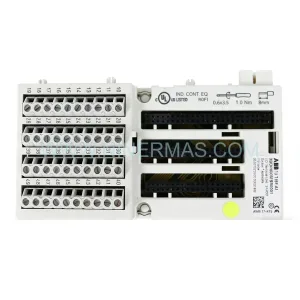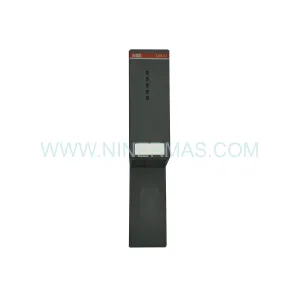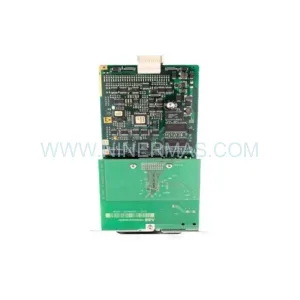
Original Industrial Spare Part
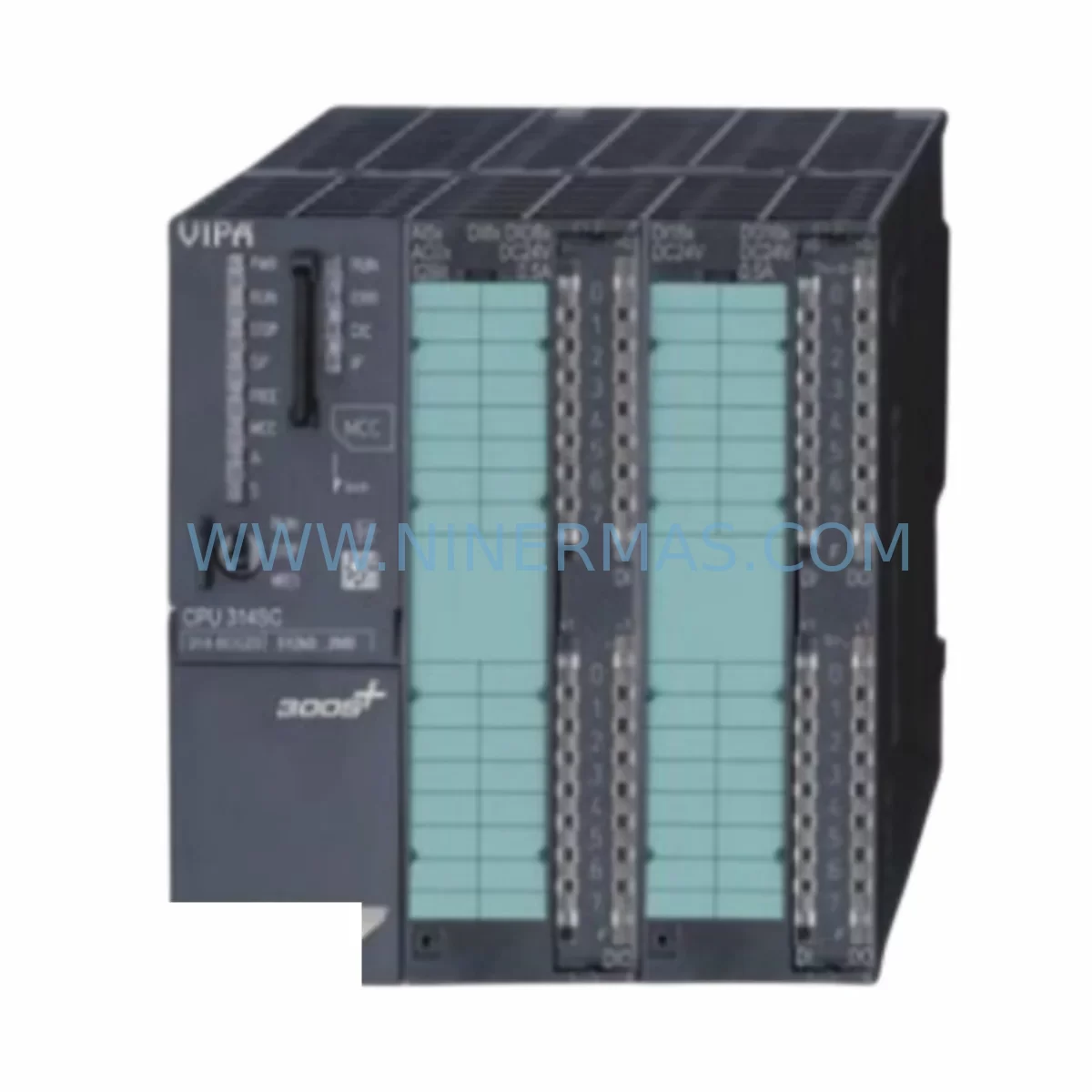
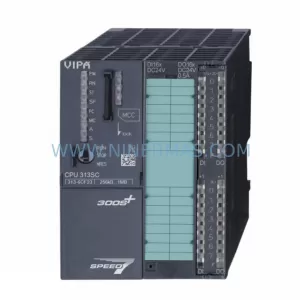
VIPA 314-6CG13 Retrofit-Compatible CPU for Legacy Systems
Verify the part, confirm the platform family, and move straight into quotation with the right commercial details.
RFQ Ready
- SKU314-6CG13 CPU 314SC/DPM-SPEED7
- CategoryPLC & Industrial Automation Modules
- BrandVIPA
- SupportAvailability, lead time, condition, and shipping coordination
How Buyers Usually Use This Page
- Confirm the exact part number and platform family before sending the quote request.
- Use direct email when quantity, condition, and destination are already defined internally.
- Switch to the broader brand or category archive when you need alternates nearby.
Series Navigation
Move through the most common platform families behind this part.
Product RFQ
Send this part directly for quotation.
Include quantity, required condition, destination country, and target delivery timing. Current reference: VIPA 314-6CG13 Retrofit-Compatible CPU for Legacy Systems with SKU 314-6CG13 CPU 314SC/DPM-SPEED7.
VIPA 314-6CG13 Retrofit-Compatible CPU for Legacy Systems
The VIPA 314-6CG13 (CPU 314SC/DPM-SPEED7) is a high-performance central processing unit engineered for seamless integration into existing SIMATIC S7-300 control architectures and legacy VIPA SPEED7 300S installations. As production lines age and original equipment manufacturers discontinue support for older PLC platforms, the 314-6CG13 has become a critical retrofit solution for automation engineers tasked with extending system life cycles without full platform migration. Its SPEED7 processing core delivers execution speeds significantly faster than the standard Siemens CPU 314 it is designed to replace, making it an ideal drop-in upgrade for time-critical process control and discrete manufacturing environments.
Procurement teams and maintenance engineers sourcing this module for brownfield retrofit projects will find the 314-6CG13 particularly valuable in scenarios where the original Siemens CPU 314 or CPU 315-2DP has reached end-of-life and spare parts availability has become unreliable. The 314-6CG13 supports PROFIBUS-DP master/slave communication natively, allowing it to interface directly with existing distributed I/O networks without requiring protocol converters or gateway devices. This compatibility is essential when the existing field bus topology includes legacy DP slaves such as ET 200M remote I/O stations, frequency inverters, or third-party field devices that cannot be easily re-addressed or replaced during a short maintenance window.
NINERMAS maintains verified stock of the VIPA 314-6CG13 with full pre-shipment functional testing, 12-month warranty coverage, and documented quality assurance records available upon request. All units are tested against VIPA’s original factory acceptance criteria before dispatch.
Upgrade Compatibility Table
| Parameter | VIPA 314-6CG13 (SPEED7) | Siemens CPU 314 (6ES7 314-1AG14) | Retrofit Notes |
|---|---|---|---|
| CPU Architecture | SPEED7 Core | Standard S7-300 | SPEED7 executes S7-300 STL/LAD/FBD programs natively |
| Work Memory | 512 KB (expandable) | 96 KB | No program modification required for standard projects |
| PROFIBUS-DP | Integrated DP Master/Slave | Not integrated (requires CP) | Eliminates need for separate CP 342-5 communication processor |
| MPI Interface | Yes (MPI/DP combined) | Yes | Compatible with existing STEP 7 programming cable (PC Adapter USB) |
| Backplane Interface | S7-300 standard bus | S7-300 standard bus | Direct slot replacement on UR1/UR2 racks; no rack modification needed |
| Power Consumption | 1.0 A at 5 VDC (backplane) | 0.8 A at 5 VDC | Verify PS 307 power supply capacity; upgrade to 5A or 10A unit if marginal |
| Installation Space | Single slot (40 mm width) | Single slot (40 mm width) | No cabinet re-layout required |
| Communication Protocols | MPI, PROFIBUS-DP, PtP (RS-485) | MPI only (base unit) | Existing DP network preserved; PtP port available for serial device integration |
| Programming Software | STEP 7 V5.x / TIA Portal (via proxy) | STEP 7 V5.x | Existing STEP 7 projects upload without modification in most cases |
| Warranty | 12-Month Warranty — All NINERMAS-supplied units include 12-month warranty with pre-shipment functional test documentation | ||
Retrofit Planning for Existing Automation Systems
A successful retrofit using the VIPA 314-6CG13 begins with a thorough audit of the existing control cabinet. Engineers should document the current rack configuration, noting the slot positions of all installed modules including the power supply unit (typically a Siemens PS 307 5A or 10A), the existing CPU, and any signal modules such as SM 321 digital input modules, SM 322 digital output modules, SM 331 analog input modules, and SM 332 analog output modules. The 314-6CG13 occupies a single 40 mm slot on standard S7-300 UR1 or UR2 racks, so physical installation is straightforward provided the rack bus connector is in good condition.
Before removing the legacy CPU, engineers must perform a full program backup using STEP 7 or the VIPA SPEED7 Studio programming environment. The existing project should be archived with all hardware configuration data, symbol tables, and data blocks preserved. When the 314-6CG13 is installed, the hardware configuration in STEP 7 must be updated to reflect the new CPU type. In most cases, selecting the VIPA 314-6CG13 from the STEP 7 hardware catalog (available via VIPA’s GSD/HSP installation package) and downloading the updated configuration is sufficient to restore normal operation.
For systems that include a CP 342-5 PROFIBUS communication processor, engineers should evaluate whether this module can be decommissioned after the retrofit, since the 314-6CG13 integrates a native DP master port. Removing the CP 342-5 frees a rack slot and reduces backplane current draw, which can be significant in densely populated racks. The freed slot can be repurposed for additional I/O expansion using SM 374 universal I/O modules or VIPA’s own 300S series signal modules, which are fully compatible with the 314-6CG13’s backplane interface.
Communication link verification is a critical step in any PROFIBUS-DP retrofit. After installing the 314-6CG13, engineers should use a PROFIBUS diagnostic tool or the integrated diagnostic buffer in STEP 7 to confirm that all DP slaves — including ET 200M distributed I/O stations, Siemens SINAMICS or MICROMASTER frequency drives, and any third-party DP devices — are communicating correctly. Bus termination resistors at both ends of the PROFIBUS segment must be confirmed active, and cable lengths should be verified against the baud rate in use.
HMI connectivity is another area requiring attention. If the existing system uses a Siemens TP 177B or OP 177B operator panel connected via MPI, the 314-6CG13’s combined MPI/DP port will maintain this connection without modification. For systems using WinCC flexible or TIA Portal-based HMI projects, the CPU address in the HMI project must be verified to match the MPI address configured in the 314-6CG13’s hardware configuration. Address conflicts between the CPU, HMI, and programming device are a common source of commissioning delays and should be resolved before the system is returned to production.
Where the legacy system includes a VIPA 953-0DP00 PROFIBUS DP slave interface or a VIPA 962-2AA00 EtherNet/IP communication module mounted in the same rack, these modules will continue to operate normally alongside the 314-6CG13, as the SPEED7 CPU’s backplane interface is fully compatible with the standard S7-300 module bus. Engineers planning to add Modbus TCP or EtherNet/IP connectivity as part of the upgrade should consider the VIPA 340-1BA00 Ethernet CP module, which integrates cleanly with the 314-6CG13 and supports simultaneous STEP 7 programming access over TCP/IP.
Downtime Control During System Migration
Minimizing production downtime during a CPU retrofit is the primary concern for most plant maintenance teams. The VIPA 314-6CG13 supports a structured hot-swap preparation process that allows engineers to pre-configure and test the replacement CPU offline before the scheduled maintenance window. Using a bench test rack — even a minimal UR1 rack with a PS 307 power supply and the 314-6CG13 alone — engineers can load the archived STEP 7 project, verify program execution in simulation mode using PLCSIM, and confirm that all data block initial values and retentive memory areas are correctly configured before the unit is transported to site.
During the actual swap, the recommended sequence is: power down the rack, remove the legacy CPU, install the 314-6CG13 in the same slot, reconnect the MPI/DP bus connector and PROFIBUS cable, restore power, and download the updated hardware configuration followed by the program. In most S7-300 installations, this sequence can be completed in under 30 minutes by an experienced engineer. The 314-6CG13’s SPEED7 core initializes quickly, and the integrated DP master begins scanning the PROFIBUS network within seconds of program start, reducing the time before field devices return to controlled states.
To protect original program logic, engineers should never overwrite the archived project during the retrofit. A separate project copy should be used for any hardware configuration changes, and the original archive should be stored on a network drive or USB media independent of the programming laptop. Retentive data areas — including DB contents marked as retentive and M-bit retentive ranges — should be documented before the swap and restored manually if the CPU’s memory card does not carry over the retentive data automatically. The 314-6CG13 supports a standard S7-300 MMC (Micro Memory Card) for program storage, and transferring the MMC from the legacy CPU to the new unit is often the fastest method of restoring the program without a full download cycle.
Post-retrofit commissioning should include a structured I/O check covering all digital and analog channels, a PROFIBUS diagnostic scan confirming zero bus errors, an HMI screen navigation test to verify all dynamic tags are updating correctly, and a timed cycle check to confirm that the program scan time is within acceptable limits. The 314-6CG13’s faster SPEED7 execution core may reduce scan times compared to the legacy CPU, which is generally beneficial but should be verified against any time-dependent logic in the existing program.
Retrofit Support FAQ
Q1: Is the VIPA 314-6CG13 a direct drop-in replacement for the Siemens CPU 314 (6ES7 314-1AG14)?
In most cases, yes. The 314-6CG13 occupies the same single rack slot, uses the same S7-300 backplane bus, and executes standard S7-300 STL, LAD, and FBD programs without modification. A hardware configuration update in STEP 7 is required, and the VIPA HSP (Hardware Support Package) must be installed in STEP 7 to add the 314-6CG13 to the hardware catalog. Engineers should verify power supply capacity and PROFIBUS address assignments before going live.
Q2: What pre-shipment testing does NINERMAS perform on the 314-6CG13?
Every unit supplied by NINERMAS undergoes functional power-on testing, MPI communication verification, and PROFIBUS-DP port diagnostics before dispatch. Test records are available upon request. Units are shipped in anti-static packaging with protective bus connectors installed. The 12-month warranty covers manufacturing defects and functional failures under normal operating conditions.
Q3: Can the 314-6CG13 communicate with legacy Siemens HMI panels connected via MPI?
Yes. The 314-6CG13’s integrated MPI/DP port is fully compatible with Siemens MPI-connected HMI devices including TP 177, OP 177, MP 277, and MP 377 series panels. The CPU’s MPI address must match the address configured in the HMI project. No additional communication hardware is required for MPI-based HMI connections.
Q4: What is the lead time and stock availability for the VIPA 314-6CG13?
NINERMAS maintains ready stock of the 314-6CG13 to support urgent retrofit and breakdown replacement requirements. Standard orders are dispatched within 1–3 business days. For volume procurement or long-term supply agreements covering multi-year spare parts programs, please contact our sales team to discuss stock commitment and pricing arrangements. All units are covered by a 12-month warranty from the date of shipment.
| Product Series | Legacy |
|---|
Catalog Continuation
More VIPA modules in the catalog.
Use the brand lane to compare nearby part numbers, platform-adjacent modules, and other inquiry-ready listings before sending your final RFQ.
Catalog Continuation
Alternative parts within PLC & Industrial Automation Modules.
Stay inside the same system family when you need substitutes, adjacent modules, or a broader shortlist for procurement review.
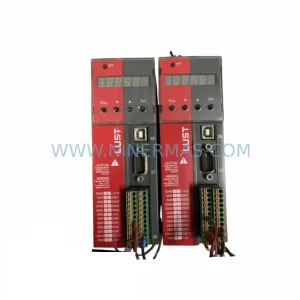
SKU: SC34.0300.0011.0000.0-JW1 SC34.0300.0011.0000.0
LUST SC34.0300.0011.0000.0-JW1 Service-Ready Spare Part
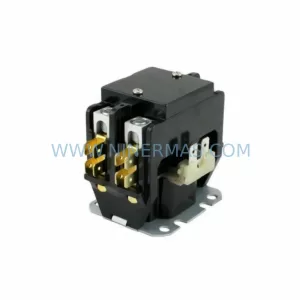
SKU: LSC-096-2-30-560-P5B0H2MM0
LTi Motion LSC-096-2-30-560-P5B0H2MM0 Retrofit Servo Drive
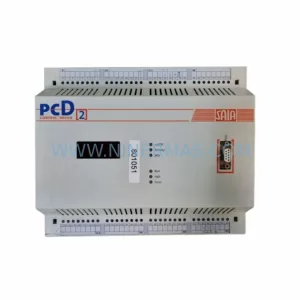
SKU: DS200SHVMG1AFE
GE DS200SHVMG1AFE Retrofit-Compatible Interface Module