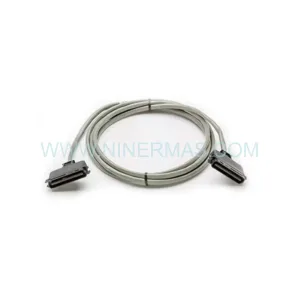
Original Industrial Spare Part
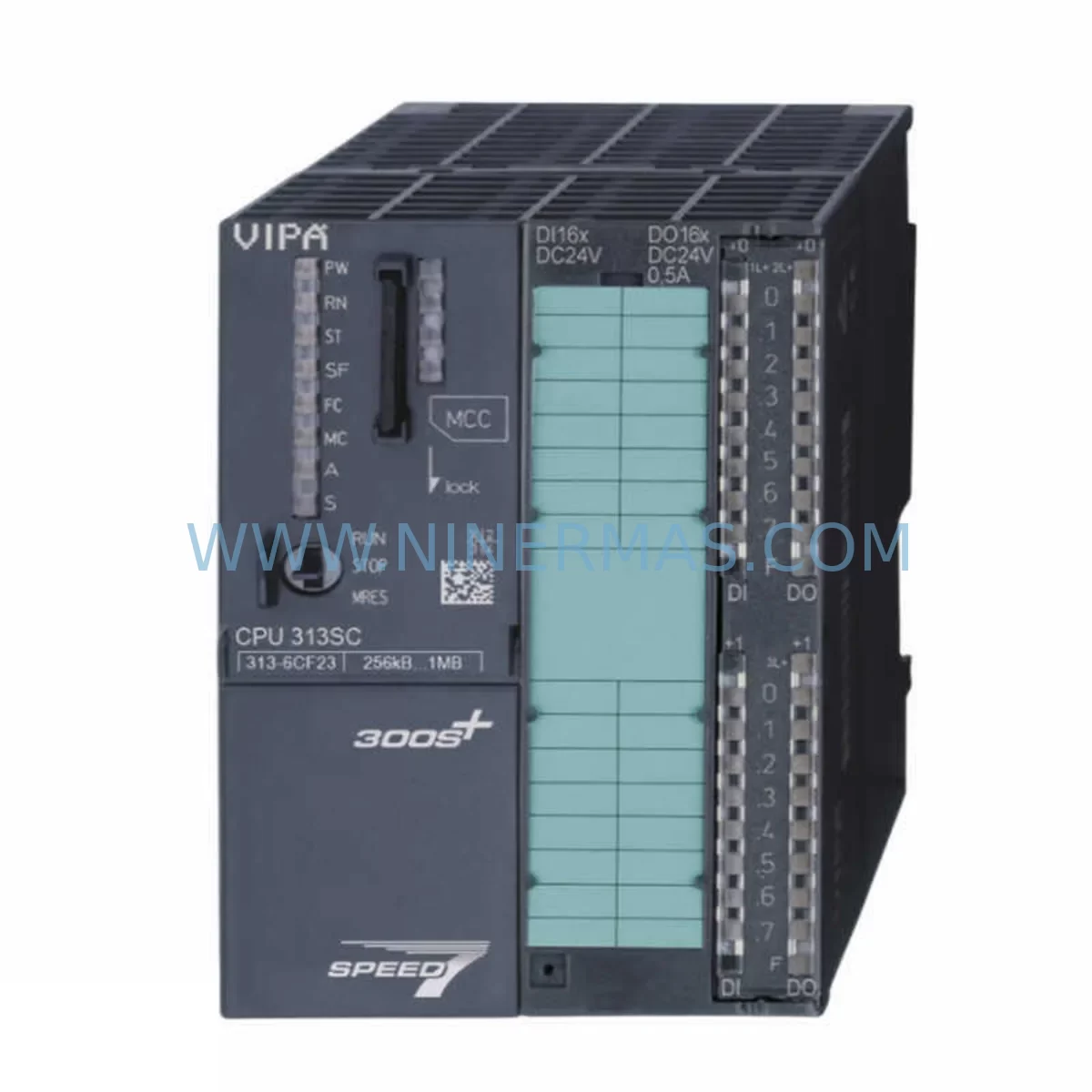
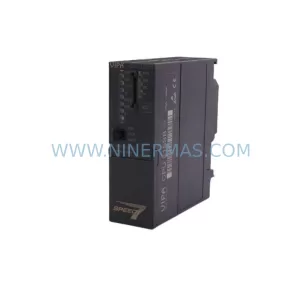
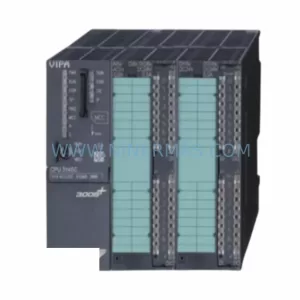
VIPA 313-6CF13 Retrofit-Compatible CPU for Legacy Systems
Verify the part, confirm the platform family, and move straight into quotation with the right commercial details.
RFQ Ready
- SKUCPU313SC 313-6CF13
- CategoryPLC & Industrial Automation Modules
- BrandVIPA
- SupportAvailability, lead time, condition, and shipping coordination
How Buyers Usually Use This Page
- Confirm the exact part number and platform family before sending the quote request.
- Use direct email when quantity, condition, and destination are already defined internally.
- Switch to the broader brand or category archive when you need alternates nearby.
Series Navigation
Move through the most common platform families behind this part.
Product RFQ
Send this part directly for quotation.
Include quantity, required condition, destination country, and target delivery timing. Current reference: VIPA 313-6CF13 Retrofit-Compatible CPU for Legacy Systems with SKU CPU313SC 313-6CF13.
VIPA 313-6CF13 Retrofit-Compatible CPU for Legacy Systems
The VIPA 313-6CF13 CPU313SC is a high-performance, ruggedized central processing unit designed for seamless integration into legacy VIPA 300S-series automation architectures and Siemens S7-300-compatible control platforms. As production lines age and original equipment manufacturers discontinue support for older CPU variants, the 313-6CF13 has become a critical retrofit solution for engineers managing long-lifecycle systems in process manufacturing, discrete assembly, and utility control environments. Whether you are replacing a failed CPU, upgrading a control cabinet, or migrating from an end-of-life controller, the 313-6CF13 provides a reliable, field-proven path forward with minimal disruption to existing program logic and I/O configurations.
The CPU313SC integrates onboard digital and analog I/O, reducing the need for additional expansion modules in space-constrained control cabinets. Its compatibility with standard VIPA 300S backplanes and bus connectors means that existing rack infrastructure — including the VIPA 300S bus rail and terminal block wiring — can typically be retained during a swap, significantly reducing retrofit labor hours and downtime exposure. Engineers replacing older VIPA 313-2AG10 or 313-2AJ10 units will find the 313-6CF13 a direct functional successor, with expanded memory capacity and improved cycle time performance that supports more complex ladder logic and structured text programs without requiring a full system redesign.
Upgrade Compatibility Table
| Parameter | VIPA 313-6CF13 (This Unit) | Typical Legacy Predecessor |
|---|---|---|
| Form Factor | VIPA 300S Standard Rail Mount | VIPA 300S / S7-300 Rail Mount |
| Backplane Interface | VIPA 300S Bus Connector (compatible) | Standard 300S Bus Connector |
| Onboard I/O | 24 DI / 16 DO / 4 AI / 2 AO (SC variant) | CPU-only (external I/O modules required) |
| Communication | MPI / Profibus DP (integrated) | MPI (external CP module for Profibus) |
| Program Memory | Up to 512 KB work memory | 64–128 KB typical |
| Power Supply Requirement | DC 24V via VIPA PS 307 or equivalent | DC 24V (same rail) |
| Programming Software | STEP 7 / WinPLC7 / SPEED7 Studio | STEP 7 v5.x |
| Installation Space | Standard 300S slot width | Standard 300S slot width |
| Replacement Recommendation | Direct replacement for 313-2AG10, 313-2AJ10 | — |
| Commissioning Focus | Address assignment, OB1 reload, HMI tag remap | — |
| Warranty | 12-Month Warranty (pre-shipment tested) | — |
Retrofit Planning for Existing Automation Systems
A successful retrofit using the VIPA 313-6CF13 begins well before the unit arrives on site. Engineers should start by auditing the existing control cabinet layout to confirm available rack slots, verify that the installed VIPA 300S backplane or UR2/UR1 rack has a compatible bus connector position, and document all existing module addresses. In most 300S installations, the CPU occupies slot 2, with signal modules beginning at slot 4. This slot convention is preserved with the 313-6CF13, which means the hardware address map in the existing STEP 7 project typically requires no modification — a significant advantage when working with legacy programs that have not been maintained in source form.
Power budget verification is a mandatory pre-retrofit step. The VIPA PS 307 power supply module — commonly found in 300S cabinets — must be confirmed to deliver sufficient current for the 313-6CF13 plus all connected I/O modules. The onboard SC I/O of the 313-6CF13 draws from the same 24V bus, so engineers should calculate the total current draw including any VIPA SM 321 digital input modules, VIPA SM 322 digital output modules, and VIPA SM 331 or SM 332 analog I/O modules installed in the same rack. If the existing power supply is marginal, a VIPA PS 307 5A or 10A replacement should be sourced concurrently.
Terminal block wiring on the front connectors of existing signal modules does not need to be disturbed during a CPU swap, provided the module slot assignments remain unchanged. However, if the retrofit also involves replacing aging VIPA SM 321 or SM 322 modules with updated variants, engineers should photograph and document all terminal wiring before removal. For systems using VIPA CP 342-5 or CP 343-1 communication processors for Profibus DP or Industrial Ethernet connectivity, the 313-6CF13’s integrated MPI port can often absorb the programming and HMI communication load, potentially freeing a rack slot previously occupied by a dedicated CP module.
HMI panel updates are frequently overlooked during CPU retrofits. If the existing installation uses a VIPA TP 608C or a third-party HMI connected via MPI, the HMI project’s PLC connection settings must be verified to ensure the CPU address matches the new unit’s configured MPI node address. Tag databases linked to internal memory markers (M-area), data blocks, or timer/counter addresses should be validated against the reloaded program before the system is returned to production. For installations using Profibus DP field devices — including remote I/O stations, variable frequency drives, or valve manifolds — the GSD file assignments and DP slave addresses must be confirmed in the hardware configuration before the first program download.
Downtime Control During System Migration
Minimizing unplanned downtime is the primary concern in any live production environment. When replacing the CPU in an active 300S system, the recommended approach is to perform a full program backup from the existing CPU using STEP 7 or WinPLC7 before any hardware is disturbed. If the existing CPU is non-functional and the program cannot be read back from the module, the backup should be sourced from the engineering workstation’s project archive or from the memory card if one is installed. The VIPA 313-6CF13 supports standard VIPA memory cards, allowing a pre-loaded program to be inserted and booted without a live PC connection — a critical capability for remote or unmanned installations.
The physical swap itself — removing the old CPU, seating the 313-6CF13, and reconnecting the MPI programming cable — typically takes under 30 minutes for an experienced technician. The longer activities are program validation, I/O force testing, and HMI screen verification. To compress total downtime, these steps should be pre-staged: the replacement CPU should be bench-configured, the program downloaded and verified offline using SPEED7 Studio simulation, and a commissioning checklist prepared covering each I/O point, each Profibus slave, and each HMI screen group. A structured cold-start sequence — powering the rack, confirming the CPU reaches RUN mode, verifying the first scan cycle completes without fault — should be documented and followed on site.
For systems where even brief interruptions are unacceptable, a parallel commissioning approach can be used: the replacement rack with the 313-6CF13 is assembled and tested offline, then swapped into the cabinet during a scheduled maintenance window. This approach is particularly effective in multi-rack installations where a VIPA IM 360/361 interface module pair connects expansion racks, as the expansion rack wiring can be pre-verified independently. All units shipped by NINERMAS undergo pre-shipment functional testing and are covered by a 12-month warranty, reducing the risk of commissioning delays caused by infant-failure hardware.
Retrofit Support FAQ
Q1: Is the VIPA 313-6CF13 a direct drop-in replacement for the 313-2AG10 or 313-2AJ10?
In most installations, yes. The 313-6CF13 uses the same 300S rail and bus connector system, occupies the same CPU slot, and is programmable with STEP 7 v5.5 or later. The primary difference is the integrated SC I/O, which adds onboard signal capacity. Existing signal module wiring and slot assignments are unaffected. A program reload and I/O force test are required before returning to production.
Q2: What commissioning steps are required after installation?
After seating the 313-6CF13 and powering the rack, download the program from the engineering workstation or memory card, set the MPI node address to match the previous CPU configuration, verify the hardware configuration matches the installed module set, and perform a full I/O scan. For Profibus DP systems, confirm all slave devices are recognized and in data exchange state before enabling outputs. HMI communication should be tested by cycling through all screen groups and confirming tag values update correctly.
Q3: Does NINERMAS provide pre-shipment testing and what does the 12-month warranty cover?
Yes. Every VIPA 313-6CF13 unit shipped by NINERMAS is functionally tested prior to dispatch, including power-on verification, memory check, and I/O scan confirmation where applicable. The 12-month warranty covers manufacturing defects and functional failures under normal operating conditions. Units that fail within the warranty period are replaced or repaired at no charge. Warranty claims should be initiated by contacting sale@ninermas.com with the order reference and a description of the fault.
Q4: What is the typical lead time and stock availability?
NINERMAS maintains stock of the VIPA 313-6CF13 and related 300S-series components to support urgent retrofit and breakdown replacement requirements. Standard orders are dispatched within 1–3 business days. For large-quantity or long-term supply commitments, NINERMAS offers stock reservation programs with fixed lead times to support planned maintenance schedules and lifecycle extension programs. Contact our team for current availability and volume pricing.
| Product Series | Legacy |
|---|
Catalog Continuation
More VIPA modules in the catalog.
Use the brand lane to compare nearby part numbers, platform-adjacent modules, and other inquiry-ready listings before sending your final RFQ.
Catalog Continuation
Alternative parts within PLC & Industrial Automation Modules.
Stay inside the same system family when you need substitutes, adjacent modules, or a broader shortlist for procurement review.
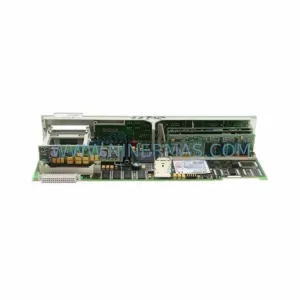
SKU: 6FC5357-0BB12-0AE0
Siemens 6FC5357-0BB12-0AE0 Service-Ready Industrial Spare Part
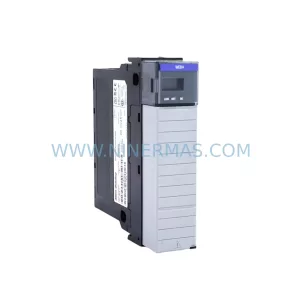
SKU: 3BSE011790R1(PXHK401)
ABB 3BSE011790R1 PXHK401 Retrofit-Ready Communication Module